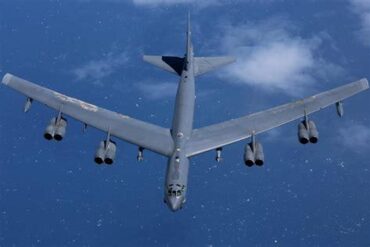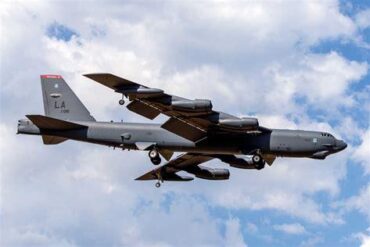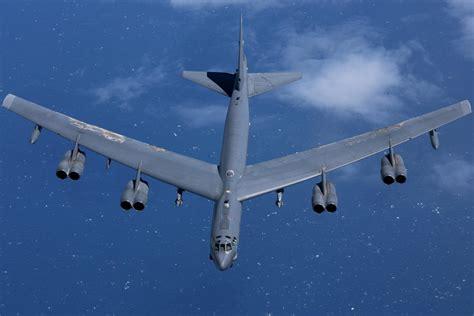
The U.S. Air Force is preparing for a future beyond the legendary B-52 Stratofortress, even as the iconic bomber remains central to American airpower strategy. Originally introduced during the Eisenhower era, the B-52 has survived generations of technological revolutions, geopolitical shifts, and changing doctrines of warfare. Few military aircraft in history have demonstrated the same level of endurance. Yet while the Air Force expects the bomber to remain operational until at least 2050, planning for its eventual replacement has already started behind closed doors.
The decision highlights an unusual reality in modern defense aviation. America’s most dependable long-range bomber is also one of its oldest. The B-52H models currently flying entered service in 1961, making them older than many retired Cold War aircraft displayed in museums. Despite their age, the aircraft continue to play a frontline role in deterrence missions, nuclear readiness, and recent combat operations in the Middle East.
The Air Force is now requesting funding in its 2027 budget to formally begin defining what comes after the Stratofortress. Although the initial amount — roughly $1 million — appears modest compared to major Pentagon programs, the request signals the opening phase of what could become one of the most significant strategic aviation projects of the coming decades.
The early funding will support classified concept exploration, performance studies, and assessments of future industry partners capable of building a next-generation bomber platform. Officials are reportedly examining key operational attributes such as survivability, payload flexibility, long-range strike capability, and compatibility with emerging hypersonic weapons systems.
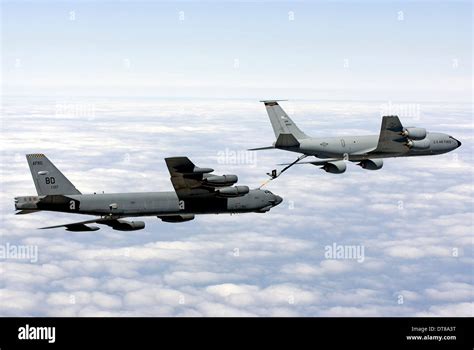
The B-52 Still Anchors America’s Bomber Force
Even in an age dominated by stealth aircraft and autonomous systems, the B-52 remains indispensable. The aircraft’s unmatched payload capacity allows it to carry an enormous range of conventional and nuclear weapons. According to Air Force data, each bomber can haul up to 70,000 pounds of munitions while operating over distances approaching 8,800 miles without refueling.
Its versatility explains why military planners continue investing heavily in the platform. During recent tensions involving Iran, B-52 bombers played a visible role in strategic deterrence operations. Their presence alone carries psychological weight, serving as a reminder of America’s ability to project force globally within hours.
The bomber’s longevity also comes from decades of continuous modernization. While the external appearance has changed little since the Cold War, the aircraft’s internal systems have evolved dramatically. Avionics, radar suites, communications systems, and targeting capabilities have been repeatedly upgraded to keep the platform relevant against modern threats.
Today, the Air Force operates 58 active B-52 bombers alongside 18 reserve aircraft. Crewed by five personnel — including pilots, navigators, and electronic warfare officers — the aircraft continue to perform missions that newer bombers sometimes cannot match economically.
Massive B-52J Upgrade Program Extends Service Life
Rather than retiring the bomber fleet, the Air Force is investing billions to transform existing aircraft into a modernized variant known as the B-52J. The overhaul is one of the largest aviation sustainment programs currently underway inside the Pentagon.
Central to the modernization effort is a complete engine replacement initiative. The aging Pratt & Whitney engines that powered the bomber for decades are being replaced with new Rolls-Royce F130 engines designed to improve fuel efficiency, maintenance reliability, and operational lifespan.
In May 2026, the Air Force confirmed completion of a critical design review for the engine integration project. Boeing’s facility in San Antonio, Texas, is scheduled to begin modifications on the first two aircraft before flight testing takes place at Edwards Air Force Base in California.
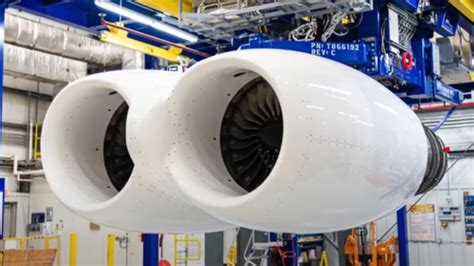
The scale of the investment underscores how valuable the bomber remains. The engine program alone carries an estimated price tag of approximately $15 billion, while the broader modernization effort could reach nearly $48.6 billion. Beyond propulsion upgrades, the B-52J will receive advanced radar systems, updated avionics, improved landing gear, and compatibility with future hypersonic and nuclear weapons.
Searching For The Bomber After The Stratofortress
Although the B-21 Raider represents the Air Force’s newest stealth bomber, defense planners appear interested in developing an additional long-range strike platform specifically suited to replace the B-52’s heavy payload mission. That future aircraft may prioritize endurance, affordability, and weapons capacity over pure stealth characteristics.
Very little public information exists regarding the classified proof-of-concept studies now underway. However, analysts expect any successor to incorporate artificial intelligence-assisted mission systems, advanced electronic warfare protection, and the ability to coordinate with autonomous drone swarms.
The challenge facing the Air Force is enormous. Replacing the B-52 means replacing more than an aircraft — it means replacing a strategic symbol that has defined American bomber power for nearly a century. Few military machines have remained operational across so many generations of conflict, from the Cold War to the modern era of hypersonic warfare.