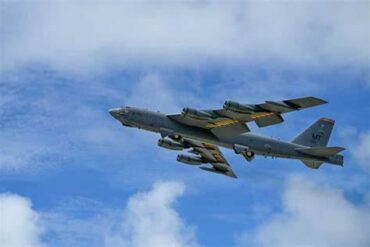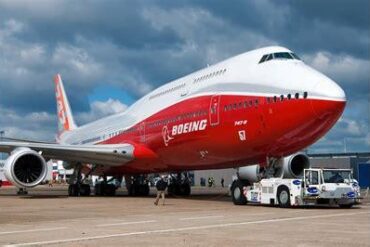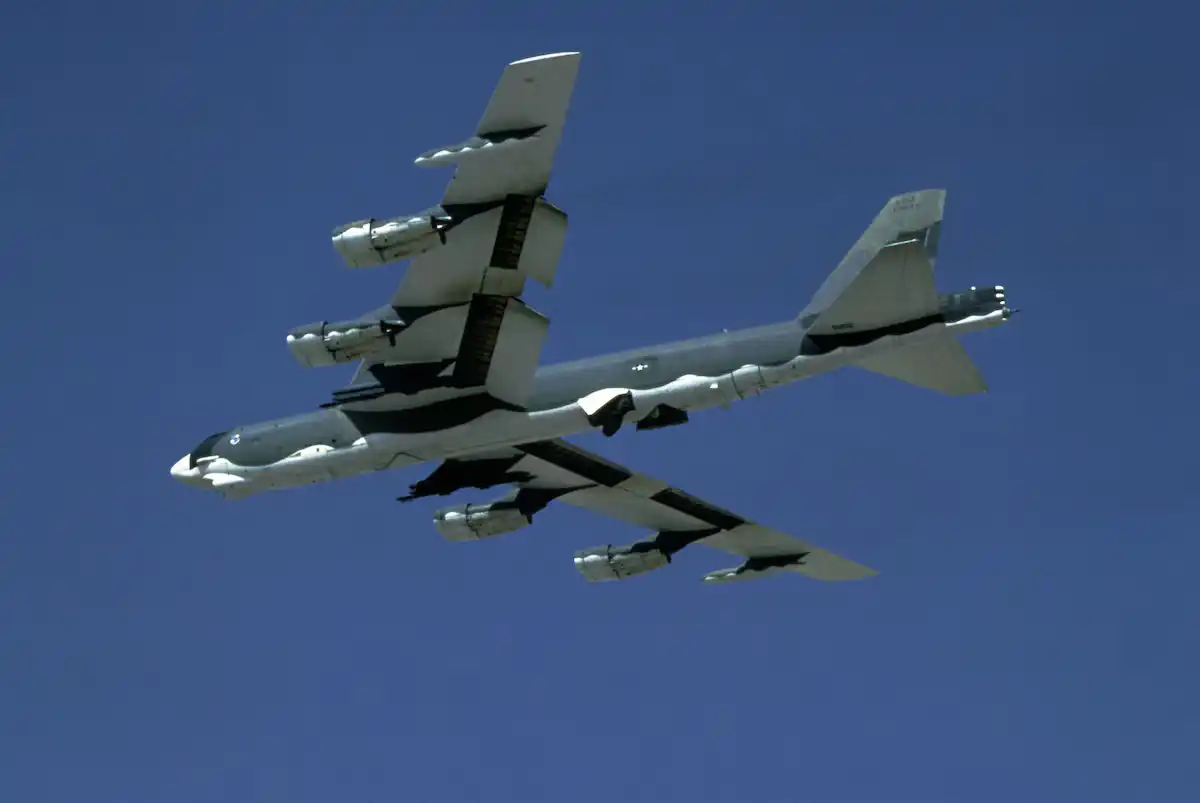
The silhouette is unmistakable, a long, narrow fuselage stretched beneath wings so broad they seem to bend the sky around them. More than seven decades after it first lifted off the runway, the Boeing B-52H Stratofortress remains the last Boeing-built heavy bomber still airworthy, a living artifact that refuses to become history. This aircraft is not preserved behind velvet ropes or confined to ceremonial flyovers. It launches on real missions, carries real weapons, and shapes real geopolitical decisions in the present tense.
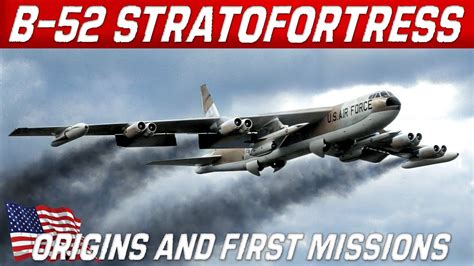
First flown in April 1952, the Stratofortress emerged from an era defined by existential anxiety and breathtaking technological ambition. It was conceived as a high-altitude nuclear bomber capable of reaching deep into hostile territory, delivering weapons whose destructive power had no historical precedent. That original purpose might have doomed it to irrelevance once technology moved on, yet the opposite occurred. The B-52 evolved, adapted, and absorbed new roles with a flexibility few designers could have imagined, becoming less a single aircraft and more an airborne framework for American airpower.
Longevity alone does not explain why the B-52H still flies. Plenty of aircraft grow old; few remain essential. The Stratofortress persists because its core design was both radical and forgiving. Its immense wings generate prodigious lift, its structure tolerates upgrades without protest, and its performance envelope leaves room for growth. Each decade has layered new capabilities onto the same airframe, turning age into an advantage rather than a liability.
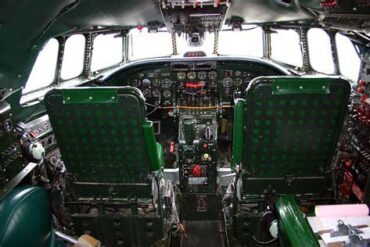
By the time the B-52B entered operational service in 1955, it was already rewriting expectations of range and payload. What followed was an aviation career so long that multiple generations of pilots have flown the same basic aircraft, sometimes within the same family. When the Stratofortress first roared into the air during the Eisenhower administration, no one anticipated that their grandchildren would still be strapping into its cockpit, guided by digital displays where once there were only analog dials.
Cold War Origins and a Design Built for Tomorrow
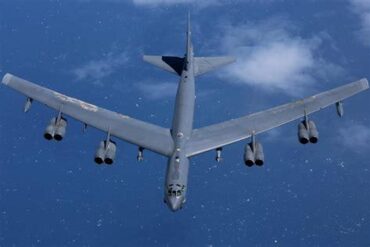
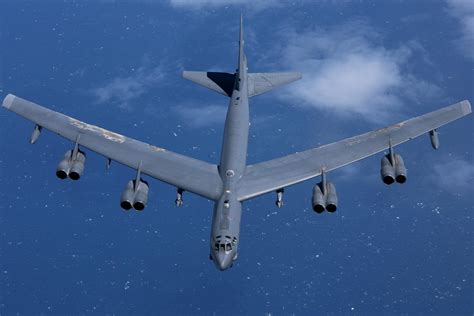
The B-52 was born into the early Cold War, when strategic bombers represented the sharpest edge of deterrence. Speed, altitude, and range mattered more than stealth, and the Stratofortress delivered all three in abundance. Its swept wings and eight-engine configuration gave it intercontinental reach, while its massive bomb bay was sized for weapons that had barely been invented when the design was finalized.
Yet what truly set the aircraft apart was not raw performance but adaptability. Engineers at Boeing created an airframe with generous margins, allowing it to absorb changes without structural compromise. That foresight would prove decisive. As surface-to-air missiles and radar networks matured, the original high-altitude penetration doctrine became increasingly risky. The B-52 responded by changing tactics rather than retiring, flying lower, carrying different weapons, and embracing stand-off attack concepts.
The Stratofortress quickly demonstrated its ability to transcend theory and operate in practice. In January 1957, three B-52Bs completed the first jet-powered nonstop flight around the world during Operation Power Flite, circling the globe in just over forty-five hours with the aid of in-flight refueling. The message was unambiguous: distance no longer guaranteed safety. Strategic reach had become effectively global.
From Nuclear Sentinel to Multi-Role Arsenal
Originally designed to deliver nuclear gravity bombs, the B-52 gradually transformed into one of the most versatile combat aircraft ever fielded. It exchanged its singular apocalyptic role for a portfolio of missions that expanded rather than narrowed its relevance. Over time, it became a cruise-missile carrier, a conventional bomb truck, a maritime patrol asset, and even a platform for electronic warfare.
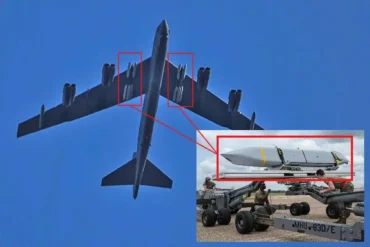
This evolution was not cosmetic. The Stratofortress learned to carry precision weapons with an accuracy once reserved for fighters. Joint Direct Attack Munitions turned unguided bombs into GPS-guided instruments of exactitude, allowing the B-52 to strike targets with surgical precision from high altitude. At the same time, its cavernous bomb bay and heavy-duty wing pylons enabled it to haul cruise missiles in numbers that rival the inventory of smaller squadrons.
The aircraft’s ability to switch roles quickly is central to its enduring value. Ground crews can reconfigure a B-52’s loadout to suit changing missions, while its size and power allow it to accommodate new weapons without radical redesign. This modularity means the bomber remains relevant not because it excels at one task, but because it performs many well enough to matter.
The B-52H: The Sole Survivor
Of the many variants produced, the B-52H stands alone as the only model still in service. Entering the fleet in the early 1960s, it introduced more efficient turbofan engines and improvements that quietly extended the aircraft’s operational life. Decades later, those same airframes continue to fly, supported by meticulous maintenance and a modernization philosophy that treats obsolescence as a solvable problem.
The statistics remain imposing. With a wingspan of 185 feet and a maximum takeoff weight approaching half a million pounds, the B-52H is a heavyweight in every sense. Its combat range of approximately 8,800 miles allows it to reach targets continents away, while aerial refueling extends that reach almost indefinitely. These numbers are not abstract; they translate directly into strategic options for commanders who require presence without permanent basing.
Inside the Next-Generation BUFF Upgrade
The nickname BUFF, short for “Big Ugly Fat Fellow,” masks a serious commitment to the aircraft’s future. The planned B-52J upgrade represents one of the most significant transformations in the bomber’s history, ensuring it remains viable well into the 2050s. Central to this effort is a complete re-engining, replacing the venerable Pratt & Whitney TF33 engines with eight new Rolls-Royce F130 turbofans.

The benefits are tangible. Improved fuel efficiency extends range and loiter time, while modern reliability reduces maintenance hours on the ramp. For an aircraft that spends much of its life far from home bases, these improvements translate directly into operational flexibility. Fewer engine issues mean more sorties, more presence, and fewer logistical headaches.
Avionics upgrades are equally transformative. The installation of the APG-79 radar, already proven on the F/A-18 Super Hornet, gives the B-52 a far more detailed picture of the battlespace. Analog instruments give way to integrated digital displays, improving situational awareness and reducing crew workload. The result is a cockpit that feels less like a museum and more like a command center.
A Platform for Hypersonic and Stand-Off Power
Modern warfare increasingly favors stand-off weapons, and the Stratofortress is uniquely suited to carry them. Among the most anticipated additions to its arsenal is the Hypersonic Attack Cruise Missile, a weapon designed to travel at blistering speeds while striking from outside defended airspace. The B-52’s size, payload capacity, and electrical power make it an ideal launch platform for such systems.
This role plays to the aircraft’s strengths. Rather than penetrating heavily defended zones, the Stratofortress acts as a flying arsenal, launching weapons that do the dangerous work at a distance. This approach preserves the aircraft while amplifying its impact, aligning perfectly with modern concepts of distributed lethality and risk management.
The Global Strike Command and Strategic Presence
The B-52H operates under the umbrella of Air Force Global Strike Command, a formation that embodies both restraint and resolve. Alongside the supersonic B-1B Lancer, the stealthy B-2 Spirit, and the forthcoming B-21 Raider, the Stratofortress forms a triad of manned bombers that project power across the globe.
Bombers occupy a unique strategic niche. Unlike missiles locked into silos, they can be deployed visibly, redirected mid-flight, or recalled entirely. This flexibility gives political leaders options that are both credible and reversible. When a pair of B-52s appears over a region, the signal is unmistakable yet measured, a demonstration of capability without immediate escalation.
In recent years, bomber task force missions have kept the Stratofortress in near-constant motion. Crews deploy to distant theaters, fly continental-to-continental sorties, and integrate with allied forces. This persistent presence reassures partners while reminding adversaries that distance offers no sanctuary.
Weapons That Redefine Reach and Volume
Few aircraft can match the B-52’s airborne arsenal. Up to twenty cruise missiles can be carried internally and externally, including terrain-hugging systems designed to evade radar for hundreds of miles. Cluster munitions, conventional bombs, and precision-guided weapons all coexist within its loadout options, giving commanders a menu that reads like the inventory of an entire wing.
This diversity matters. Modern conflicts rarely follow a single script, and the ability to adapt weapons to evolving conditions is invaluable. The Stratofortress can transition from overwhelming force to pinpoint accuracy without changing aircraft, only payloads. That flexibility explains why it remains a first choice whenever reach, volume, and endurance are required in one package.
Heavyweight Comparisons and Enduring Advantages
Against newer bombers, the B-52 lacks stealth and raw speed. The B-1B can sprint at supersonic velocities, while the B-2 slips through defenses unseen. Even Russia’s Tupolev Tu-95 Bear, with its distinctive turboprops, parallels the Stratofortress in strategic role. Yet none combine payload, range, and adaptability in quite the same way.
The Stratofortress endures because it complements rather than competes with its successors. Its immense capacity and unrefueled reach secure its place in the nuclear triad, while its ability to carry emerging weapons ensures relevance in conventional conflict. In practice, it provides capabilities that more exquisite platforms struggle to replicate economically or at scale.
A Combat Record Spanning Generations
From Vietnam to the Middle East, the B-52’s combat history reads like a survey of late-twentieth- and early-twenty-first-century conflict. During Operation Linebacker II, it delivered massive conventional strikes over North Vietnam. In 1991, it launched from bases in the continental United States to strike targets in Iraq during Operation Desert Storm, a feat that redefined global reach.
Later conflicts in Bosnia, Kosovo, Afghanistan, and against ISIL further demonstrated its adaptability. In each case, the Stratofortress adjusted tactics, weapons, and integration with other forces, proving that age does not preclude relevance when design and doctrine evolve together.
Keeping the Human in the Loop
Despite advances in unmanned systems, the B-52 remains resolutely crewed. This choice reflects a belief that human judgment matters most when conditions are complex and stakes are high. Experienced pilots and officers evaluate ambiguous data, adapt to electronic warfare, and make real-time decisions that no algorithm can fully replicate.
Unmanned aircraft excel in permissive environments, but contested airspace demands resilience and improvisation. The Stratofortress, carrying heavier and longer-range weapons than any drone, places that responsibility in the hands of professionals who face risk directly. This human presence anchors the aircraft’s role in both ethical and operational terms.
Why the Last Boeing-Built Heavy Bomber Still Matters
The continued airworthiness of the B-52H is not an accident of nostalgia but a deliberate choice rooted in performance, adaptability, and strategic logic. Modernization programs treat the airframe as a platform rather than a relic, layering new engines, sensors, and weapons onto a proven foundation.
As the B-21 Raider approaches service, the Stratofortress will not fade quietly into retirement. Instead, it will operate alongside newer bombers, leveraging its unique strengths to complement stealth and speed. In that synergy lies the secret of its longevity. The last Boeing-built heavy bomber still airworthy endures not because it resists change, but because it has mastered it, turning decades into an advantage and history into a launchpad for the future.