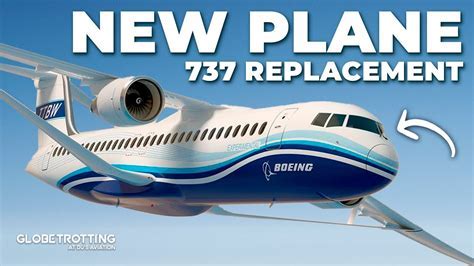
Boeing has taken a major step toward redefining the future of narrowbody aviation by issuing a formal request for information (RFI) to top-tier engine manufacturers. This pivotal move signals the company’s intent to launch a clean-sheet replacement for its storied 737 family, a cornerstone of global air travel that has, in recent years, become a symbol of both market dominance and regulatory scrutiny. Boeing’s outreach to the propulsion sector underscores not only its technical ambition but also the stakes involved in retaining leadership in the fiercely competitive single-aisle market.

Boeing Breaks From Tradition with Clean-Sheet Design
For decades, Boeing has iteratively updated the 737 platform, from the Classic series to the Next Generation (NG), and most recently, the 737 MAX. However, the MAX program has been marred by catastrophic safety issues, regulatory groundings, and reputational damage. The company’s decision to abandon further 737 development in favor of a completely new airframe marks a profound philosophical and engineering pivot. It suggests that Boeing is ready to leave legacy limitations behind and build an aircraft optimized from the ground up for 21st-century operational, environmental, and regulatory demands.
Rather than incrementally improve upon the MAX’s architecture, the future aircraft will likely emphasize aerodynamic efficiency, fuel economy, and cutting-edge propulsion — the last of which now takes center stage with this RFI.
Engine Makers Receive Boeing’s Strategic RFI
In a clear bid to accelerate its next-generation narrowbody development, Boeing formally requested information for an advanced ducted propulsion platform. This engine is expected to produce around 30,000 pounds of thrust, aligning with the thrust class needed for short-to-medium haul aircraft that serve the highest-density routes worldwide.
The manufacturer reiterated its preference for ducted engines — a configuration where the fan blades are enclosed by a nacelle — citing performance reliability and industry familiarity. Though the possibility of open fan or unducted designs was not entirely dismissed, Boeing appears cautious about deviating too far from proven architectures, especially given the technical risks and certification complexities associated with unconventional engine types.
Potential Contenders: The Big Three Gear Up
Three global aerospace giants are now poised to answer Boeing’s call:
Pratt & Whitney
Famous for its Geared Turbofan (GTF) engine that powers the Airbus A320neo, Pratt & Whitney is expected to present an evolved version of this architecture. The GTF platform emphasizes fuel efficiency and lower noise, both key selling points for future sustainability regulations.
Rolls-Royce
With its Trent engine pedigree and advanced UltraFan™ technology, Rolls-Royce is seen as a formidable candidate. Though the company stepped back from narrowbody engines in recent years, the high-profile nature of the 737 replacement may justify a re-entry. UltraFan’s variable pitch fan system and scalable core could provide significant advantages in both performance and lifecycle costs.
CFM International
As the incumbent supplier for the 737 MAX via the LEAP-1B engine, CFM International — a joint venture between GE Aerospace and Safran — is widely viewed as the front-runner. Their current RISE (Revolutionary Innovation for Sustainable Engines) initiative includes both ducted and open-fan solutions. While the public face of RISE is an open rotor engine, the underlying tech could be adapted for a more conventional ducted application, satisfying Boeing’s current preference.
Boeing’s Conservative Ducted Preference vs. Emerging Open-Fan Ambitions
The aviation industry stands at a crossroads between incremental propulsion evolution and revolutionary aerodynamic configurations. Open-fan engines — long considered a futuristic promise — offer substantial fuel burn reduction, yet they raise serious concerns around noise, certification pathways, and passenger perception.
Boeing’s cautious stance reflects a company still recovering from recent reputational blows. Embracing a tried-and-true ducted system ensures a lower-risk pathway to certification and operational deployment. However, should open-fan testing, especially in conjunction with Airbus via CFM’s RISE demonstrator, prove commercially viable, Boeing may face strategic pressure to reconsider its propulsion architecture.
Dual Engine Options Could Shape Market Dynamics
In the past, Boeing offered engine choice on its aircraft — notably the 787 Dreamliner, which supports both Rolls-Royce Trent and GE engines. This strategy enables greater customer flexibility, strengthens competitive pricing, and spreads technological risk.
It remains unclear whether Boeing will replicate this model with the 737 successor. Supporting both ducted and open-fan engines on a single airframe would present design and logistical challenges — such as differing nacelle structures, weight balances, and maintenance protocols. Nonetheless, airlines may demand options as sustainability mandates and emissions targets become stricter.
Timeline, Risks, and Competitive Pressure
Boeing has not publicly committed to a firm timeline for launching its new single-aisle aircraft, but analysts speculate that a 2030–2035 entry into service is likely if the project receives internal green light within the next few years. Engine development cycles typically span 7–10 years, meaning that RFI responses and subsequent partnerships must materialize rapidly.
Compounding the urgency is the looming threat of Airbus’ next-generation A320 successor, which could benefit from early adoption of RISE or alternative propulsion concepts. If Boeing is unable to move swiftly and decisively, it risks losing further ground to its European rival, especially among environmentally conscious carriers.
Sustainability: The Engine of Innovation
A key undercurrent in Boeing’s propulsion strategy is the push for sustainability and emissions reduction. Global regulators are tightening carbon emissions caps, and customers are increasingly favoring aircraft that support long-term environmental goals.
This means that engine proposals will be evaluated not just on thrust and reliability, but also on metrics like:
- Fuel efficiency improvements (targeting 20% or more over current models)
- Compatibility with Sustainable Aviation Fuels (SAF)
- Reduced NOx emissions and contrail formation
- Lifecycle noise profiles
- Maintenance and materials sustainability
Boeing’s choice of engine partner will therefore serve as a public endorsement of its environmental vision, influencing how both investors and regulators perceive the company’s future.
Supply Chain and Industrial Readiness
Even the most advanced engine technology is useless without a reliable, scalable production network. Boeing will closely scrutinize the industrial readiness of each engine partner — including supply chain resilience, global MRO (Maintenance, Repair, and Overhaul) capabilities, and scalability.
Recent supply chain disruptions in the aerospace sector have shown how critical this aspect is. Pratt & Whitney, for instance, has faced delivery backlogs due to titanium supply issues and casting delays, highlighting that technical promise must be matched with industrial execution.
Conclusion: A Defining Chapter for Boeing
Boeing’s issuance of a formal RFI to power its next-generation narrowbody aircraft signals more than just the start of a procurement process — it marks the beginning of what may be the most consequential commercial aircraft program since the launch of the original 737 in 1967.
As it charts a new course beyond the MAX’s troubled legacy, Boeing’s propulsion choices will define the company’s technological identity for decades. The battle now shifts to engine houses, who must bring forth proposals that not only push the limits of engineering, but also reassure a world that is watching Boeing’s next move with relentless scrutiny.
The eyes of the aviation world are fixed firmly on Chicago. What comes next may redefine flight itself.