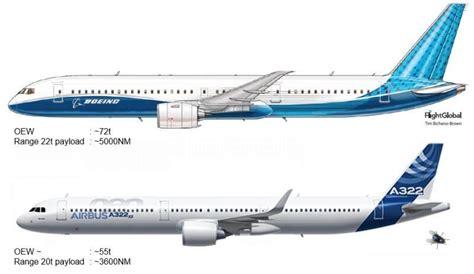
The Airbus A322: A Vision That Never Took Flight
In the evolving landscape of commercial aviation, few concepts have ignited as much speculation and intrigue as the Airbus A322. Initially conceived as a strategic extension of the A321neo family, the A322 promised to elevate Airbus’ stronghold in the middle market sector with a longer, more capable, and technologically advanced single-aisle jet. Yet despite its potential, the A322 remains a shadow project—rumored, explored, but ultimately shelved.
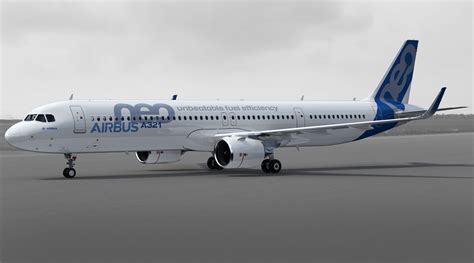
What Was the Airbus A322?
The Airbus A322 was envisioned as the next logical evolution of the A321neo, capitalizing on the unprecedented commercial success of the A320neo family. With the A321XLR setting new benchmarks in range for narrow-body aircraft, the A322 aimed to stretch capabilities even further—not just in distance, but in capacity and efficiency.
The aircraft was expected to feature:
-
A longer fuselage with up to four additional seat rows, potentially increasing total seating by 24–30 passengers
-
An advanced composite wing, a core part of Airbus’ emerging wing innovation programs
-
New, more efficient engines, with early speculation linking it to next-gen LEAP variants or potential Rolls-Royce developments
This expansion of the A320 family could have allowed Airbus to compete more aggressively with widebody aircraft on medium-haul routes, particularly in underserved intercontinental segments.
The Strategic Intention Behind the A322
In 2021, media reports surfaced suggesting Airbus had intensified internal studies around the A322. The strategic intent was clear: fill the market gap between the A321XLR and A330neo, offering airlines an option for high-density, medium-range operations with single-aisle economics.
Market analysis suggested a potential opportunity:
-
Airlines wanted more fuel-efficient aircraft with lower trip costs
-
The COVID-19 pandemic reshaped demand patterns, emphasizing point-to-point service over hub-and-spoke models
-
With Boeing’s NMA program floundering, Airbus had a rare chance to shape an uncontested category
Yet despite this compelling rationale, the A322 did not progress beyond preliminary stages.
Why the A322 Was Never Built
The decision not to proceed with the Airbus A322 was a reflection of real-world pragmatism rather than lack of ambition. While the project garnered significant internal and external attention, Airbus opted instead to channel its resources toward the A321XLR, announced officially in 2019.
The A321XLR offered an incremental but more feasible advancement. By incorporating an additional fuel tank and minimal structural changes, Airbus could deliver extra-long-range capabilities without extensive re-engineering. The XLR’s development cost was relatively modest compared to the A322’s prospective R&D demands.
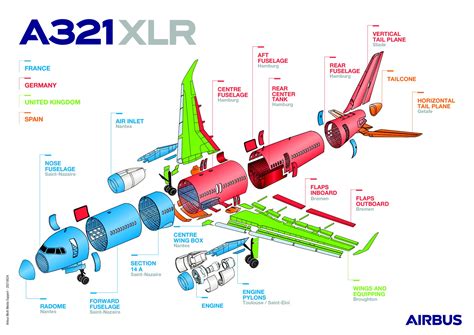
Moreover, airline interest leaned heavily toward the XLR. The aircraft amassed hundreds of orders shortly after its unveiling, signaling that carriers prioritized range and operating cost over capacity growth.
Airbus A321XLR: The A322’s Unintentional Successor
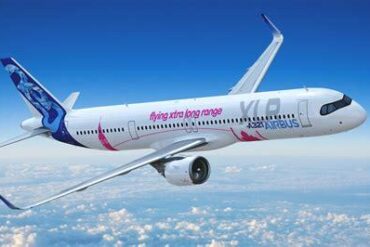
The A321XLR wasn’t just a product—it became a phenomenon. Airlines worldwide embraced the jet as the ultimate solution for thin long-haul routes, providing the range of a widebody with the economics of a narrow-body platform.
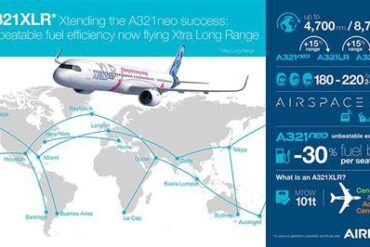
Key performance metrics of the A321XLR:
-
Range: Up to 4,700 nautical miles
-
Fuel burn: Significantly lower per trip than equivalent widebodies
-
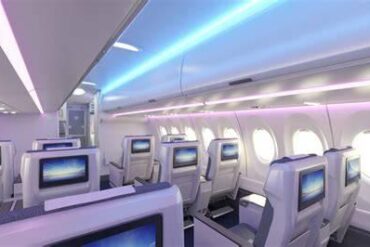
Passenger comfort: Enhanced cabin with Airspace interior, similar to widebody features
From an operational standpoint, the XLR became the ultimate risk-averse decision. While the A322 promised more seats, the XLR promised faster return on investment with minimal operational change. For many airlines, it was the logical choice.
Technological Bottlenecks and Economic Considerations
The envisioned A322 was not a simple stretch. To realize its full potential, Airbus would have needed to:
-
Develop a completely new composite wing optimized for lift and efficiency
-
Potentially reconfigure landing gear and tail structure to support the longer fuselage
-
Certify new engine integrations suitable for the heavier airframe
These technological hurdles came with immense costs—likely billions of euros—without a guaranteed return. In an industry where aircraft programs take 7–10 years to recoup investment, the A322’s high development risk clashed with Airbus’ risk-mitigation strategies post-A380.
Additionally, there was market overlap with the A330neo, particularly the A330-800 variant, which also targets lower-density long-haul operations. Airbus risked cannibalizing its own product line, undermining sales of the A330neo.
Was It a Mistake Not to Build the A322?
In retrospect, Airbus made a calculated and justified decision. The company leveraged its dominant position in the single-aisle segment and poured momentum behind the A321XLR—a proven hit.
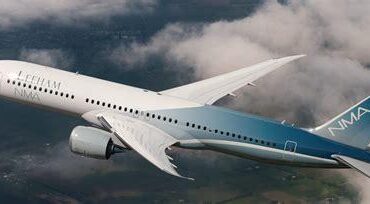
From a competitive standpoint, Boeing’s stagnation in launching a true New Midsize Aircraft (NMA) gave Airbus breathing room. The 797 concept, Boeing’s mooted answer to the middle market, never progressed beyond design renderings.
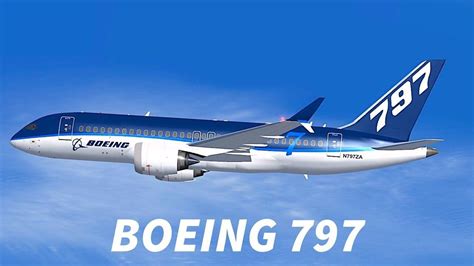
Airbus, instead, became the unofficial owner of the mid-market, capturing demand with the XLR while postponing high-risk projects like the A322. If market demand had been more urgent or Boeing more aggressive, the calculus might have changed.
Looking to the Future: Is the A322 Dead Forever?
The A322 concept may be dormant, but it is far from dead. Airbus is still actively developing new wing technologies through its “Wing of Tomorrow” program and is closely watching how sustainable aviation fuel (SAF) and hybrid-electric propulsion evolve.
In the next five to ten years, technological maturation in these areas could reignite interest in a larger single-aisle platform:
-
Composite wings will improve aerodynamic efficiency
-
Hybrid-electric or ultra-high-bypass engines could enable higher capacity without penalty
-
Airline operating models may evolve to demand higher-density, longer-range narrow-body aircraft
If the economics and engineering align, the A322 could re-emerge—not as a derivative, but as a next-generation product potentially rivaling the scope of the A300 in its day.
Conclusion: A Vision Deferred, Not Abandoned
The Airbus A322 was never just an aircraft concept—it was a symbol of ambition, technical foresight, and strategic vision. Although it never reached the prototype stage, its legacy lives on in the A321XLR and the ongoing evolution of single-aisle capability.
For now, the A322 remains a ghost in Airbus’ archives—a design that came close but was ultimately sacrificed on the altar of market realities. However, as new materials, propulsion systems, and market demands evolve, it is possible that what was once shelved may someday return—reborn and more viable than ever.
FAQs
What would have been the main differences between the A322 and the A321XLR?
The A322 was envisioned to have a longer fuselage with increased seating capacity, potentially up to 240 passengers, along with a new composite wing and next-generation engines. In contrast, the A321XLR focuses on maximum range with minimal structural changes.
Why did Airbus prioritize the A321XLR over the A322?
Airbus chose to develop the A321XLR because it offered greater commercial viability, faster development timelines, and high airline demand. It leveraged existing infrastructure, reducing costs and development risks compared to the A322.
Is there a chance the Airbus A322 will be developed in the future?
Yes, the A322 remains a possibility for the future if demand arises and enabling technologies like composite wings and efficient propulsion mature. Airbus may revisit the concept depending on how airline needs evolve over the next decade.