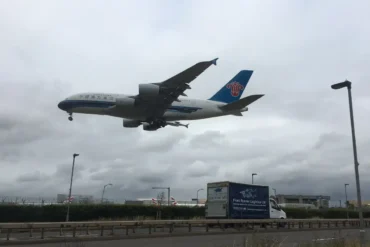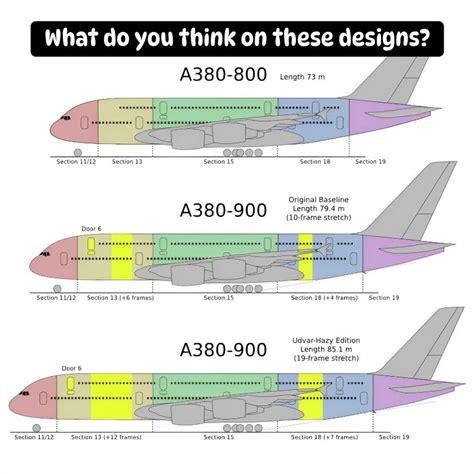
The story of the Airbus A380 is one of ambition colliding with reality. Conceived as the ultimate solution to global air congestion, it represented a bold bet on the future of aviation—a future dominated by mega-hubs, massive passenger volumes, and aircraft that resembled flying cruise ships. Yet hidden within that grand vision was an even more ambitious machine: the A380-900, a stretched, more capable version that was meant to become the flagship of the program.
It never flew. It never even reached final design. And yet, paradoxically, it may have been the version Airbus truly needed all along.
A Superjumbo That Was Always Meant to Grow
From the earliest design studies, Airbus did not envision the A380 as a single aircraft. Instead, it was conceived as a family, much like the successful Boeing 787 or Airbus A350. The baseline A380-800, which ultimately became the only variant produced, was never intended to be the final form.
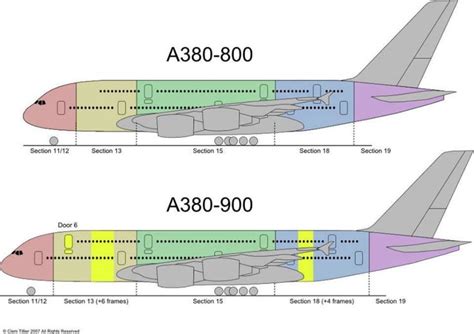
Engineers quietly optimized the aircraft’s wing design, structural margins, and performance envelope with a larger derivative in mind. That derivative was the A380-900—a stretched version designed to carry significantly more passengers while reducing per-seat operating costs.
In theory, this is where the economics would truly shine. Bigger aircraft mean more seats, and more seats mean lower costs per passenger—if you can fill them.
Airbus believed airlines would.
The Vision Behind the A380-900
By the mid-2000s, Airbus executives began openly discussing the A380-900. In 2007, then-Chief Commercial Officer John Leahy confirmed its development path, signaling that the stretched variant was not just conceptual—it was expected.
The numbers were staggering. The A380-900 would have been approximately 6.4 meters longer than the A380-800, pushing its length beyond 79 meters. Passenger capacity would have surged dramatically:
- Around 650 passengers in a typical multi-class layout
- Up to 900 passengers in all-economy configuration
- Potential certification limits approaching 1,000 passengers
That’s not an aircraft. That’s a flying city block.
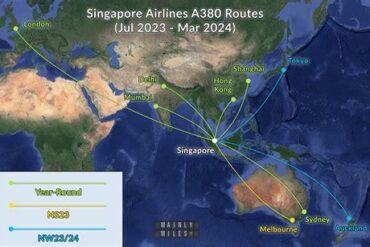
And yet, despite the sheer scale, the design wasn’t about excess—it was about efficiency at scale. Airbus believed that major global hubs like London Heathrow, Dubai, and Singapore would increasingly rely on high-capacity aircraft to handle growing demand without expanding runway slots.
A Market That Shifted Beneath Its Wings
Here’s where things started to unravel.
Airbus made a critical assumption: that the hub-and-spoke model would dominate the future of aviation. Under this model, passengers funnel through mega-hubs, making large aircraft like the A380 indispensable.
But reality had other plans.
The arrival of next-generation twin-engine aircraft—particularly the Boeing 787 and Airbus A350—changed everything. These aircraft offered:
- Lower operating costs
- Longer range
- Greater route flexibility
Airlines no longer needed to funnel passengers through hubs. They could fly point-to-point, connecting secondary cities directly.
That shift quietly killed the A380-900 before it even had a chance.
The Fatal Economics of Scale
Large aircraft only work under very specific conditions. You need:
- Consistently high passenger demand
- Limited airport capacity
- Strong hub concentration
Only a handful of airlines operate in that environment. And among them, one stood above all: Emirates.
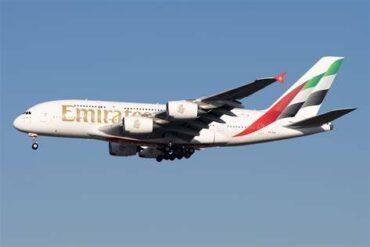
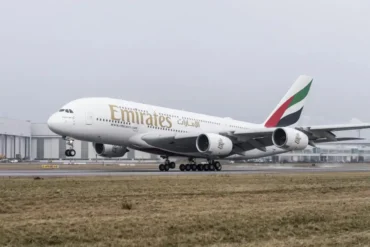
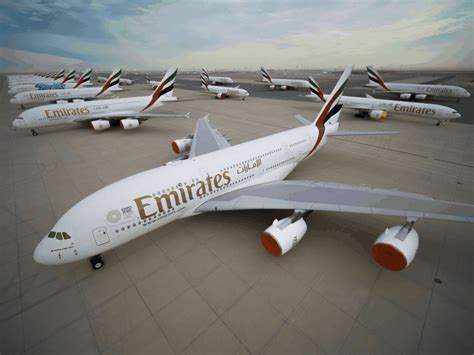
Emirates built its entire strategy around the A380, operating massive volumes of passengers through Dubai. It wasn’t just a customer—it became the lifeline of the program, ordering nearly half of all A380s ever built.
And crucially, Emirates didn’t just want the A380-800.
They wanted the A380-900.
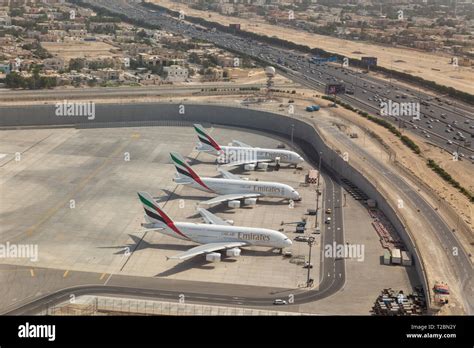
The airline repeatedly pushed Airbus to develop the stretched version, believing it would unlock even greater profitability. But Airbus hesitated. Without broader market support, launching the -900 would have been financially reckless.
And so, the project stalled.
A Program Undermined by Technology Timing
Timing can make or break an aircraft program—and for the A380, it was brutal.
The aircraft relied heavily on traditional aluminum construction, just as the industry was pivoting toward composite materials. The A350 and 787 introduced lighter structures, better aerodynamics, and dramatically improved fuel efficiency.
Then came another blow: engine technology.
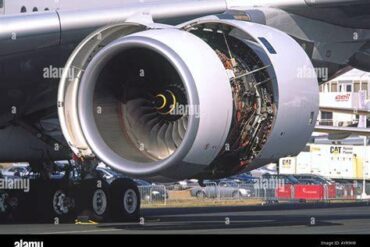
Engine manufacturers initially offered Airbus what seemed like cutting-edge powerplants. But shortly after the A380 program was locked in, they introduced new-generation engines for competing aircraft that delivered up to 15% better fuel efficiency.
Airbus was effectively stuck with yesterday’s technology on tomorrow’s aircraft.
For a machine as large as the A380, that efficiency gap wasn’t minor—it was devastating.
The Missing Variants That Sealed Its Fate
The A380 wasn’t just missing the -900. It lacked an entire ecosystem of variants that could have stabilized the program.
Unlike the Boeing 747-8, which thrived in cargo operations, the A380 failed to secure a foothold in the freighter market. Airbus did propose the A380F, a cargo version capable of carrying 150 tonnes, but it never materialized.
Orders from logistics giants evaporated. Without a cargo variant, Airbus lost a critical buffer against weak passenger demand.
Later proposals attempted to revive the program:
- A380neo: Featuring new engines and improved efficiency
- A380plus: Incorporating aerodynamic tweaks and cabin densification
But these were reactive measures, not strategic breakthroughs. By the time they were proposed, the market had already moved on.
Why Airlines Walked Away
Airlines didn’t reject the A380 because it was flawed. They rejected it because it was too specialized.
Operating a small fleet of A380s creates logistical nightmares:
- High maintenance costs per aircraft
- Complex crew training requirements
- Limited route flexibility
As more airlines opted out, a vicious cycle emerged. Fewer operators meant higher costs, which discouraged new buyers, which further reduced economies of scale.
Even major carriers began retreating. Air France and Malaysia Airlines exited the A380 market entirely. Others reduced their fleets or planned early retirements.
The A380-900, which required even greater scale to succeed, simply had no runway left.
The Irony of What Could Have Worked
Here’s the twist: the A380-900 might have actually fixed some of the A380’s biggest problems.
A stretched version would have:
- Reduced cost per seat significantly
- Better matched the wing’s optimal performance profile
- Improved overall efficiency
In other words, the aircraft Airbus needed to make the A380 truly competitive was the one it never built.
But launching the -900 required confidence in demand—a confidence that had already evaporated.
Boeing’s Parallel Struggle
Airbus wasn’t alone in misreading the market.
Boeing faced similar challenges with the Boeing 747-8. Intended as an evolution of the iconic 747, it failed to gain traction in passenger markets, with most sales coming from cargo operators.
Even newer aircraft like the Boeing 777X now face a narrowing customer base, heavily reliant on Middle Eastern carriers.
The lesson is clear: bigger is no longer universally better.
The End of the Quadjet Era
The decline of the A380 also marked the broader end of four-engine commercial aircraft.
Historically, quadjets dominated long-haul travel because they offered:
- Greater range
- Regulatory advantages over twin-engine aircraft
But advancements in engine reliability and ETOPS certification changed the equation. Modern twinjets can now fly just as far—at a fraction of the cost.
Aircraft like the A350 and 787 deliver:
- Lower fuel burn
- Reduced maintenance complexity
- Greater route flexibility
The A380-900, as a quadjet, would have faced the same fundamental disadvantage—just on a larger scale.
A380 Today: A Giant Without a Successor
Despite its commercial struggles, the A380 is far from irrelevant.
Airlines like British Airways and Emirates continue to operate it on high-density routes where it excels. In these environments, the aircraft is not just viable—it’s highly profitable.
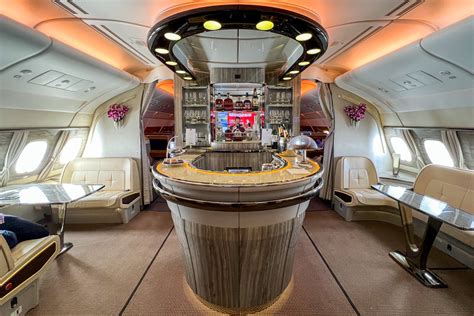
And passengers still love it. The quiet cabin, spacious layout, and premium amenities remain unmatched.
But there will be no successor. No A380-900. No neo revival.
Production ended in 2021, closing the chapter on the most ambitious commercial aircraft program ever attempted.
A Dream That Outgrew Its Time
The A380-900 represents more than an unbuilt aircraft. It symbolizes a fork in aviation history—a future that seemed inevitable but never arrived.
Airbus bet on a world of crowded skies and centralized hubs. Instead, the industry evolved toward flexibility, efficiency, and decentralization.
And so, the aircraft that might have made the A380 truly successful remained forever on paper.
There’s something almost poetic about it. The biggest passenger aircraft ever built was designed to become even bigger—but in the end, the world simply didn’t need it to be.
The A380-900 wasn’t canceled because it lacked engineering brilliance. It was canceled because the future moved in a different direction.
And aviation, like gravity, doesn’t wait for anyone to catch up.