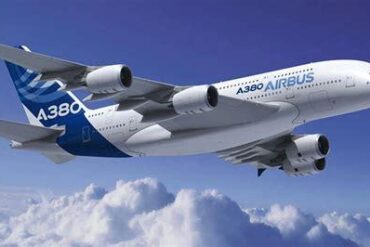
The Airbus A380 was, without doubt, a marvel of aerospace engineering and a symbol of ambition in the world of commercial aviation. Its double-decked frame, capable of carrying over 850 passengers in an all-economy layout, promised to redefine how we traveled between major global hubs. Yet despite its grandeur, the aircraft never soared in the way its creators hoped. Only 251 units were ever delivered, with more than half of those going to a single airline: Emirates. After a relatively short production run that ended in 2021, the A380’s fate was sealed. What exactly caused this iconic aircraft to falter? Below, we analyze the six critical factors that grounded the Superjumbo for good.
An Outdated Design at Birth
The Airbus A380 was a technological triumph in terms of scale, but not necessarily in terms of innovation. When it launched, more than 20% of its structure used composite materials—an impressive figure at the time. However, competitors quickly left it behind. The Airbus A350 utilized 53% composites, and the Boeing 787 Dreamliner went even further, with 80% composite by volume (50% by weight).
This difference was not merely academic. Composites offered significant advantages in terms of weight reduction, corrosion resistance, and long-term maintenance costs. While the A380 was still being tested and prepared for launch in the early 2000s, Boeing took a bold leap forward with the 787 in 2003. As Aviation Week later observed, “the writing may have been on the wall” for the A380 even before it entered commercial service.
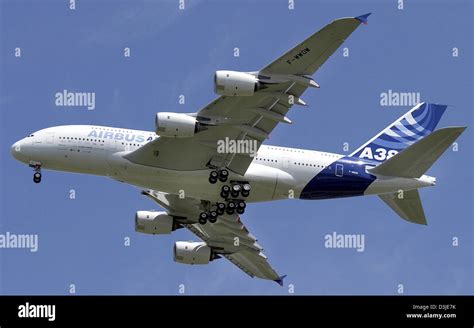
The A380 remained a structurally conventional aircraft. It prioritized size over agility, power over efficiency. In hindsight, Airbus may have overestimated the industry’s desire for sheer capacity and underestimated the speed at which airlines and regulators would embrace more flexible, fuel-efficient models.
Engines That Couldn’t Compete
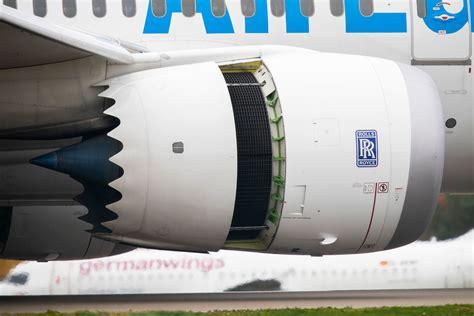
One of the most decisive issues that plagued the A380 was its engines. Developed by Rolls-Royce and the Engine Alliance (a joint venture between GE and Pratt & Whitney), the Trent 900 and GP7200 turbofans each delivered around 78,000 pounds of thrust. But what they didn’t deliver was next-generation fuel efficiency.
When Airbus began designing the A380 around the year 2000, engine manufacturers assured them that there were no upcoming innovations in specific fuel consumption (SFC). This turned out to be disastrously incorrect. Just a few years later, Rolls-Royce and GE released engines for the 787 Dreamliner that boasted a 15% improvement in SFC.
This caught Airbus flat-footed. By the time the A380 was ready for mass production, it was already outclassed by smaller, more efficient aircraft in terms of fuel economy. Emirates President Tim Clark openly lamented this shortcoming, stating, “I regret that [the A380] was not reengined, and the weight was not taken out.”
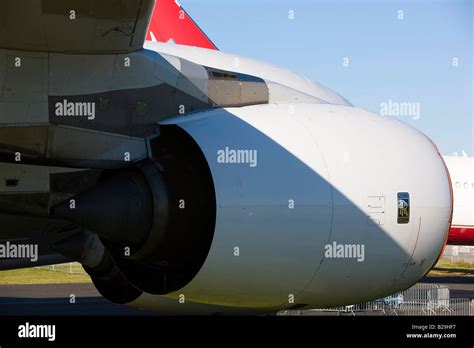
This technical miscalculation made operating the A380 far more expensive than newer twinjets like the A350 and 787, especially for long-haul routes where fuel costs add up quickly.
The Decline of the Quad-Jet Era
The A380 was the last of a dying breed: the quad-engined passenger aircraft. Others in this category include the Boeing 747, Airbus A340, and Ilyushin Il-96. None are in active production anymore, and most have disappeared from commercial service.
Technological advances in twin-engine reliability and the loosening of ETOPS (Extended-range Twin-engine Operational Performance Standards) regulations meant that twinjets could now safely fly the same long-haul routes that previously required four engines. The A350’s ETOPS rating of 370 and the 787’s rating of 350 allow them to roam almost anywhere on Earth with only two engines.
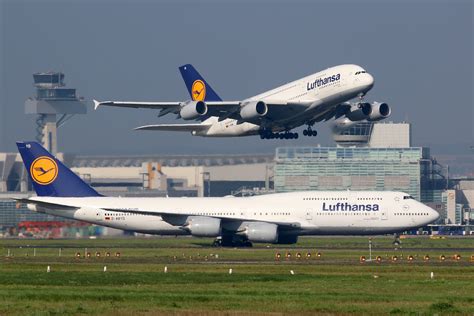
These shifts undermined one of the A380’s few remaining advantages: redundancy. When airlines could achieve the same range and safety with half the engine count—and at lower fuel and maintenance costs—there was little incentive to stick with four-engine designs.
Hub-and-Spoke Model: A Strategic Misfire
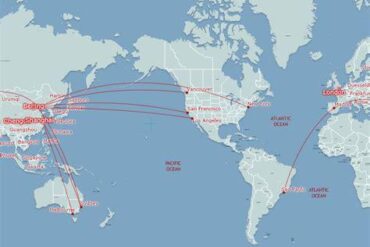
Airbus envisioned the A380 as a solution to congested hubs like London Heathrow, Dubai, and Singapore. The assumption was that as airport slots became scarce, larger planes would allow airlines to move more people per flight using limited takeoff and landing permissions.
This was aligned with the prevailing hub-and-spoke model used by legacy carriers. Passengers from smaller cities would connect through mega-hubs on their way to final destinations. In theory, this meant full A380s and efficient throughput.
In practice, however, airline strategies evolved. The rise of low-cost carriers and the emergence of point-to-point connectivity—enabled by long-range, small-capacity aircraft—meant that more passengers wanted nonstop flights to specific destinations without layovers. Aircraft like the Boeing 787, A321XLR, and A350 made this feasible.
Consequently, airlines found it difficult to consistently fill an A380 unless they were operating only on the world’s busiest routes. This made the aircraft inflexible and financially risky to operate.
A Vicious Cycle of Low Demand
Only 251 Airbus A380s were ever delivered, and 107 orders were canceled, including plans for a freighter version that never made it to production. With limited uptake, the economies of scale never materialized.
This lack of demand was partially self-reinforcing. As more airlines passed on the A380, it became riskier for others to invest in it. Groupthink among decision-makers likely played a role. Airlines tend to benchmark against one another; when major global players hesitate on a big-ticket item, smaller carriers follow suit.
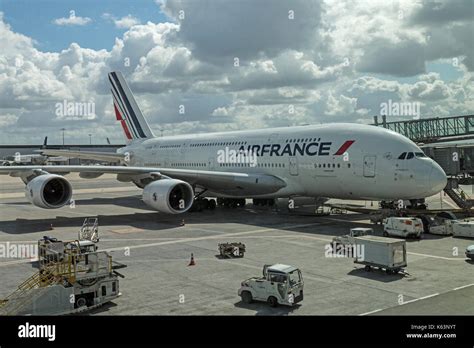
Infrastructure challenges added to the hesitation. Few airports were equipped to handle the A380 without significant investments in gates, taxiways, and runways. The return on such investments was questionable if only a small number of these aircraft would ever fly through their terminals.
Thus, the A380 became unsuccessful because it was unsuccessful. The low numbers increased per-unit costs and reduced motivation for airports and operators alike to make the necessary adjustments.
Emirates’ Withdrawal: The Final Blow
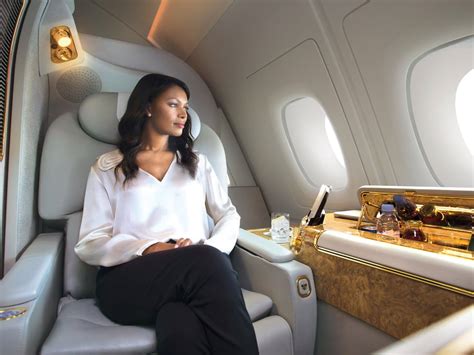
For years, Emirates was the linchpin of the A380 program. With 162 total orders and 123 deliveries, no other airline came close to matching their commitment. The aircraft suited their strategy of making Dubai a global super-hub, and they invested heavily in marketing the A380 as a flying luxury hotel.
However, even Emirates eventually pivoted. In February 2019, the airline canceled 39 orders, reducing its total commitment to 123 aircraft. This move was not the cause of the A380’s cancellation, but it was undeniably the final straw.
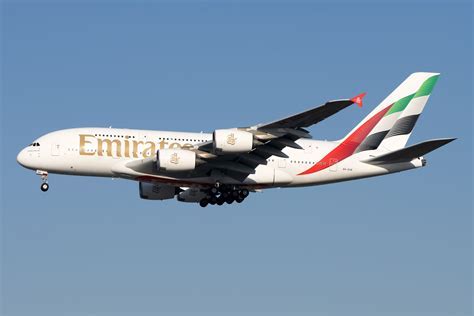
The cancellation was part of a broader fleet diversification strategy that included switching to 30 A350s and 40 A330neos. Emirates later canceled the A330neo order but increased its A350-900 orders to 65 units.
Without Emirates’ support, the program was financially untenable. No other carrier was willing—or able—to take up the slack. While Airbus floated the idea of restarting production in 2024, it remains unlikely.
The Airbus A380 will be remembered as a technical masterpiece and a bold statement of engineering prowess. However, its commercial failure underscores a crucial lesson in aviation: bigger isn’t always better. Market timing, strategic foresight, and adaptability to changing airline economics are equally important as innovation. The A380 didn’t fail because it was a bad plane. It failed because the world moved on without it.