The Airbus A380: An Engineering Marvel Doomed by Market Realities
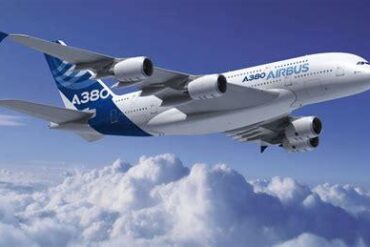
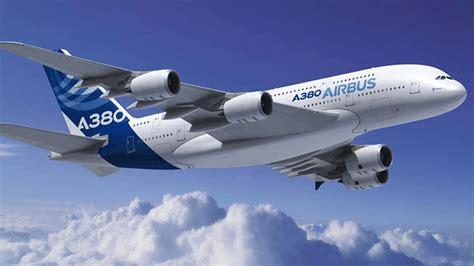
The Airbus A380, once celebrated as the largest passenger aircraft in aviation history, was an ambitious leap into the future of air travel. Introduced with grandeur and a vision to revolutionize long-haul journeys, the A380 was an audacious response to congested airports and a bold bid to redefine global connectivity. However, behind the impressive wingspan and double-decked luxury lay a collection of strategic miscalculations and shifting industry dynamics that ultimately grounded this superjumbo prematurely.
From its maiden flight in 2005 to the cessation of production in 2021—with only 251 units delivered—the A380 struggled to remain economically viable. The program consumed an estimated $25 billion in development, yet failed to achieve the economies of scale necessary for profitability. Despite its awe-inspiring presence and a loyal fanbase, the aircraft’s fate was sealed by six decisive factors that reveal much about the evolution of modern aviation.
A Design Outpaced by Innovation
At its core, the A380 was a product of traditional engineering brilliance. Yet, it emerged into a world that was already shifting toward a different technological paradigm. While Airbus succeeded in building something unparalleled in size, it fell short in adopting next-generation materials and structures that its rivals were rapidly embracing.
The A380 contained just over 20% composite materials, a figure that paled in comparison to the 53% in the Airbus A350 and 80% by volume in the Boeing 787 Dreamliner. These advanced composites significantly reduced aircraft weight, thereby improving fuel efficiency—a metric where the A380 lagged. The aircraft was essentially designed to compete with the Boeing 747, but it found itself outpaced by newer, lighter twin-engine aircraft that were cheaper to operate and more flexible for airlines to deploy.
While its wingspan, capacity, and range were impressive, its conventional structural philosophy—combined with an enormous size—rendered it outdated upon arrival. As the industry embraced fuel efficiency and flexible operations, the A380 increasingly looked like a relic of a bygone era.
The Engine Setback That Changed Everything
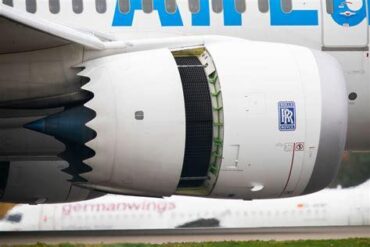
Perhaps the most significant technical blow to the A380 program came not from its size but from what powered it. The Rolls-Royce Trent 900 and Engine Alliance GP7200 turbofans that lifted the superjumbo into the sky were already behind the curve by the time the first aircraft entered service.
Engine manufacturers had assured Airbus in 2000 that no major fuel efficiency breakthroughs were on the horizon. Yet by 2003, both GE and Rolls-Royce were already introducing engines for the Boeing 787 with 15% better specific fuel consumption (SFC). These technological leaps blindsided Airbus, leaving it with an aircraft whose fuel economy couldn’t compete.
This misstep left the A380 vulnerable to cost-conscious airlines. Emirates Airline President Tim Clark later admitted, “I regret that [the A380] was not reengined, and the weight was not taken out.” These words echo the industry sentiment that the aircraft, while monumental, was inherently compromised by its outdated propulsion technology. As newer engines drove down operational costs elsewhere, the A380 remained expensive and inflexible.
The End of the Quad-Jet Era
The A380 wasn’t just the largest passenger jet—it was also the last all-new quad-engine commercial aircraft to be developed. While four-engine designs were once necessary for long-haul over-ocean flights, those days were rapidly ending thanks to the rise of ETOPS-rated twin-engine aircraft.
With modern aircraft like the A350 (ETOPS 370) and Boeing 787/777 (ETOPS 350) capable of flying virtually anywhere on Earth with just two engines, the need for four-engine aircraft disappeared. The fuel burn, maintenance costs, and noise regulations associated with quadjets became liabilities, not advantages.
This technological evolution spelled the end not just for the A380, but also for the Boeing 747 and Airbus A340. Airlines preferred flexible, economical widebodies capable of flying ultra-long-haul missions without the overhead of four engines. The operational paradigm had shifted—and the A380 was left on the wrong side of history.
The Hub-and-Spoke Fallacy
The A380’s strategy hinged on a specific model of aviation: the hub-and-spoke system. In theory, large aircraft like the A380 would thrive by transporting huge volumes of passengers between global mega-hubs such as London Heathrow, Dubai, and Singapore Changi, feeding regional flights at each end.
But reality told a different story. The global trend in aviation has moved steadily toward point-to-point travel, fueled by the rise of low-cost carriers and next-gen long-range narrowbodies like the A321XLR. These aircraft can economically fly between smaller cities without the need for passengers to transit through congested hubs.
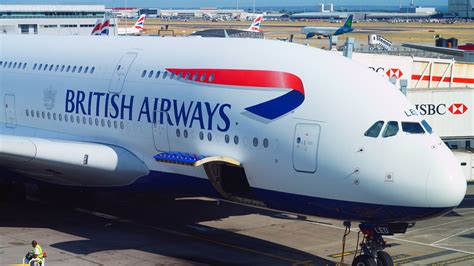
Airlines found the flexibility and profitability of smaller jets far more attractive than filling a 600+ seat A380 on limited trunk routes. The sheer size of the A380 became a constraint—it could only be profitably deployed on high-demand routes, which limited its utility. As aviation moved toward decentralization, the A380 became a symbol of the old world order.
Market Perception and the Vicious Cycle of Low Orders
Sales success—or the lack thereof—can profoundly shape the fate of an aircraft program. The A380 suffered from a phenomenon often overlooked in technical discussions: groupthink and perception-based hesitation. With only 251 deliveries and over 107 canceled orders, airlines hesitated to adopt the jet precisely because others weren’t adopting it.
Buyers viewed the A380 as risky. Without widespread adoption, support infrastructure—such as gates, maintenance hangars, and specialized ground vehicles—remained scarce. This limited confidence in the program’s long-term viability. And with each missed sale, Airbus’s ability to reach economies of scale diminished. This, in turn, increased the per-unit cost and discouraged further purchases.
In essence, the A380 became unsuccessful because it was unsuccessful. It entered a self-perpetuating cycle of limited uptake and rising costs, making it increasingly unattractive to potential customers, even those with operational needs suited to high-capacity aircraft.
Emirates’ Cancellation: The Final Nail in the Coffin
Though not the original cause of the A380’s failure, Emirates’ decision in 2019 to cancel 39 remaining orders was the moment the program’s fate was sealed. Emirates had been the backbone of the A380’s commercial success, accounting for 123 of the 251 aircraft delivered. Its loyalty to the aircraft was unmatched—but not infinite.
As Emirates sought to diversify its fleet and embrace more fuel-efficient aircraft, it struck a deal with Airbus to replace A380 orders with 30 A350s and 40 A330neos. While the A330neos order was later scrapped, Emirates has continued to take delivery of the A350-900s, embracing the next-generation long-haul solution Airbus had hoped the A380 would become.
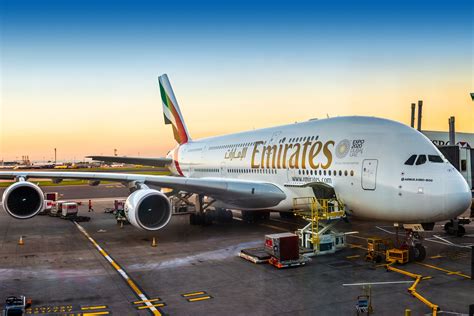
This cancellation wasn’t merely a logistical move—it was symbolic. Without Emirates’ continued commitment, the A380 lacked a viable customer base. The world’s only consistent buyer had stepped away, and Airbus was left with no path forward. The cancellation marked not a sudden collapse, but the inevitable culmination of market trends that had long been eroding the A380’s future.
Legacy of the Superjumbo: Nostalgia Without Continuation
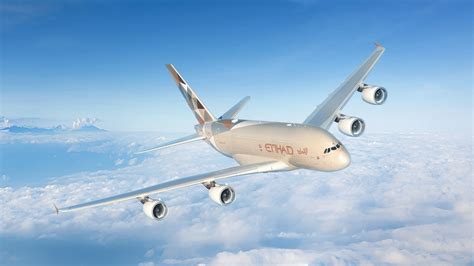
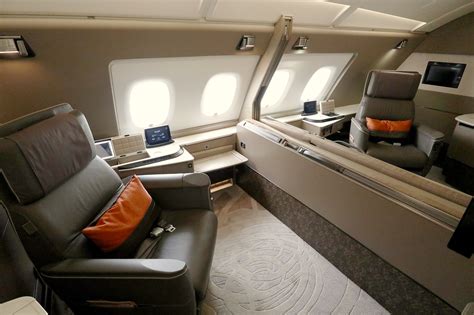
Even as the final Airbus A380 was delivered in December 2023, nostalgia surrounded the program. The aircraft remains a marvel of modern engineering, loved by passengers for its spacious interiors, quiet cabins, and iconic upper deck. Flagship carriers like Singapore Airlines, British Airways, and Emirates deployed it on premium long-haul routes, elevating air travel experiences to new heights.
But sentimentality couldn’t save the superjumbo. In a world shaped by fuel prices, fleet flexibility, and post-COVID recovery, airlines needed leaner, smarter aircraft. The pandemic accelerated the retirement of older, less efficient widebodies, and the A380 was often at the top of the chopping block. Five airlines had retired their A380 fleets by 2025, including Air France, China Southern, and Thai Airways.
While Airbus hasn’t completely ruled out restarting A380 production someday, such a move seems unlikely without a radical shift in aviation economics. The A380’s legacy will endure not in continued service, but in the imagination of aviation enthusiasts and the experience of passengers who were lucky enough to fly on this one-of-a-kind aircraft.
Conclusion: A Monument to an Era That Passed Too Quickly
The Airbus A380 was a stunning achievement. It redefined what was possible in commercial aviation, offering luxury, capacity, and spectacle unmatched by any other passenger jet. But it also serves as a cautionary tale—proof that technological marvels must align with economic realities and shifting market behaviors.
It was defeated not by poor design, but by better timing, smarter efficiency, and adaptive innovation elsewhere. As the skies grow quieter with each retired A380, the aircraft remains a bittersweet reminder of a world that dreamed bigger than the runway could support.
In the end, the Airbus A380 wasn’t just a superjumbo—it was the last of its kind.