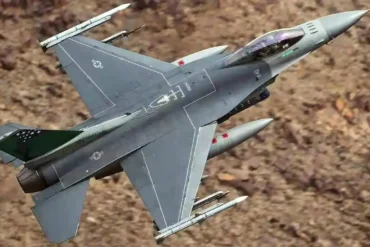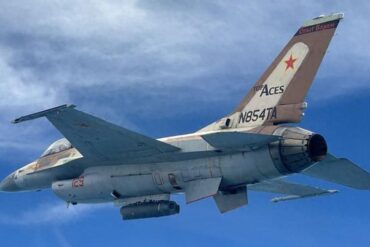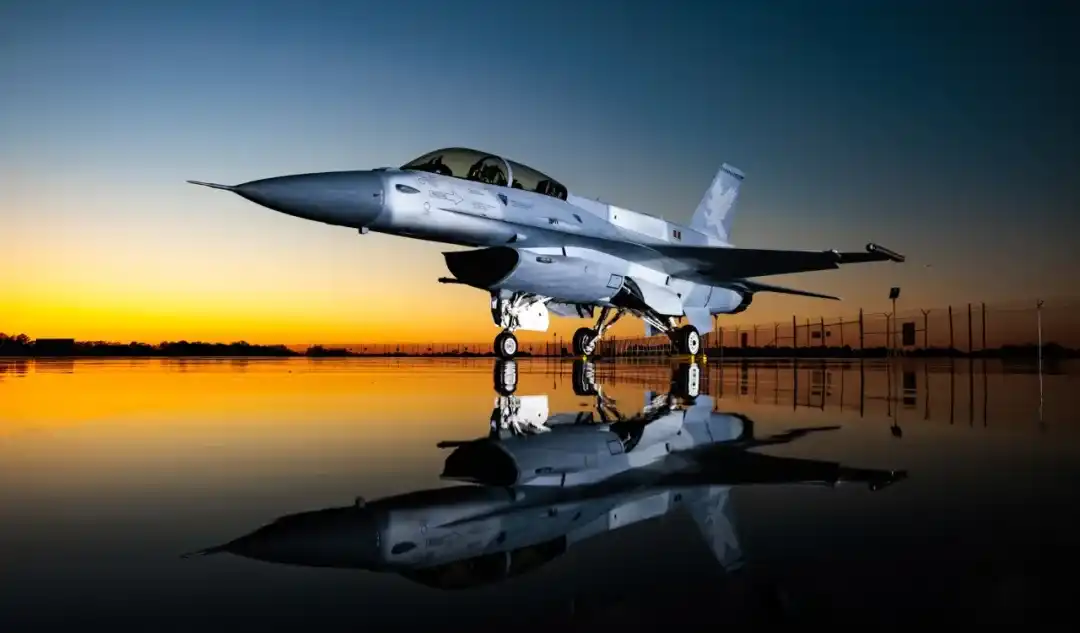
The F-16 Fighting Falcon, a widely used multirole fighter aircraft, is known for its agility, versatility, and combat effectiveness. One crucial aspect of its operational performance is its landing distance, which determines its ability to operate on various airfields, including shorter runways. Understanding the F-16’s landing performance requires an in-depth analysis of approach speed, braking systems, environmental factors, and loadout configurations.
F-16 Standard Landing Distance
Under normal conditions, the F-16’s typical landing distance is approximately 762 meters (2,500 feet). This value serves as a reference and does not account for external payloads, environmental conditions, or emergency braking scenarios.
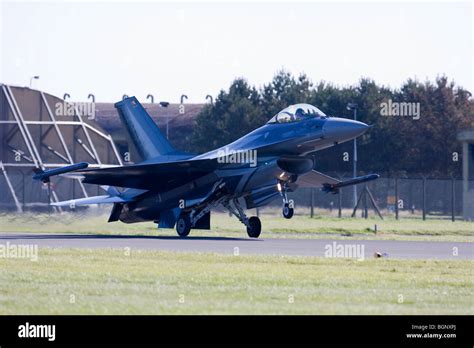
The landing rollout of an aircraft like the F-16 depends heavily on various aerodynamic and mechanical factors. Unlike carrier-based aircraft, which rely on arrestor cables, the F-16 primarily utilizes its airbrakes, wheel brakes, and aerodynamic deceleration to come to a stop efficiently.
F-16 Landing Approach Speed and Angle
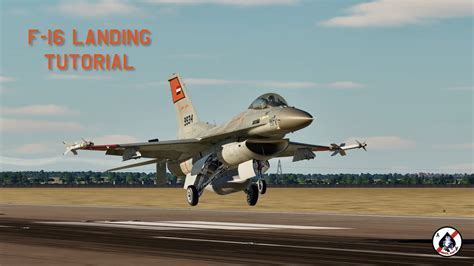
A critical parameter in the landing sequence of the F-16 is its approach speed, which directly impacts the landing roll distance. Typically, an F-16 approaches the runway at a speed of 278 km/h (173 mph). The aircraft maintains an angle of attack (AoA) of approximately 10°, ensuring a stable and controlled descent before touchdown.
This precise balance between speed and angle is crucial for achieving optimal aerodynamic braking while avoiding excessive stress on the landing gear.
Key Factors Affecting F-16 Landing Distance
Several factors influence the actual landing distance of an F-16. These variables determine whether the aircraft can safely land within the standard 762-meter distance or require additional runway length.
1. External Loadout Configuration
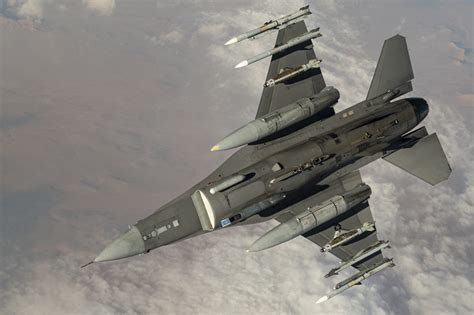
The payload carried by an F-16 significantly impacts its landing characteristics. Additional weight from external fuel tanks, air-to-air missiles, air-to-ground munitions, or reconnaissance pods can increase the required landing distance.
For instance, the F-16XL, an experimental variant, demonstrated the ability to land even while carrying 12 bombs. However, precise landing distance figures for such configurations remain undocumented.
2. Engine Variants and Braking Efficiency
Different engine configurations on F-16 variants influence thrust, drag, and braking efficiency. Notably, models equipped with the F110-GE-129 engine (such as the F-16 Block 50/52) feature improved thrust performance, which can affect landing characteristics.
While higher thrust engines primarily enhance takeoff and combat maneuverability, they also contribute to greater aerodynamic braking effectiveness due to increased reverse airflow resistance after touchdown.
3. Runway Conditions and Surface Type
The type and condition of the runway play a significant role in determining braking efficiency and overall landing distance. Factors include:
- Dry Concrete Runway: Provides optimal braking performance, allowing the F-16 to stop within the standard 762 meters.
- Wet or Icy Runway: Requires additional stopping distance due to reduced friction.
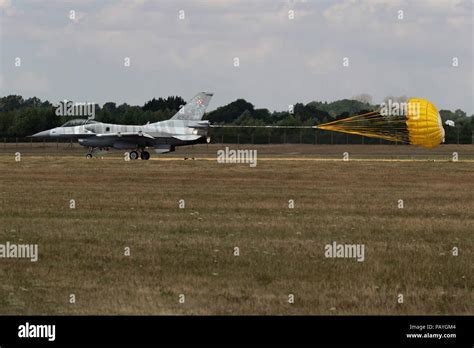
- Short or Unprepared Runways: May necessitate the use of additional aerodynamic braking techniques or, in rare cases, a drag parachute.
Comparison with Other Fighter Jets
To put the F-16’s landing distance into perspective, it is useful to compare it with other contemporary fighter aircraft. The table below highlights the landing distance of similar aircraft:
| Aircraft Model | Landing Distance (meters) |
|---|---|
| F-16 Fighting Falcon | 762 meters |
| F-15 Eagle | 1,067 meters |
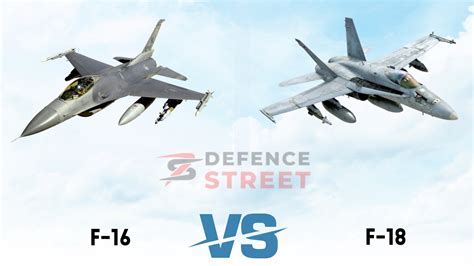
| F/A-18 Hornet | 670-810 meters |
| MiG-29 Fulcrum | 600 meters |
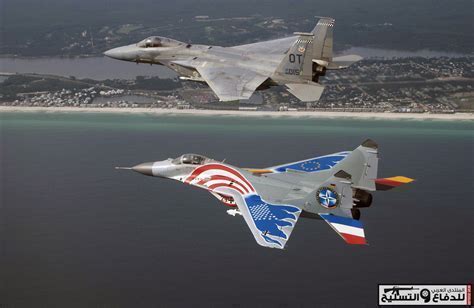
As seen above, the F-16’s landing performance falls within a mid-range category, making it adaptable for both long and short runways. In contrast, the F-15 Eagle requires significantly more runway, while the MiG-29, designed for rapid deployment, boasts a shorter landing roll.
Techniques Used to Minimize Landing Distance
1. Aerodynamic Braking
One of the most effective ways an F-16 reduces its landing roll is by utilizing aerodynamic braking. After touchdown, pilots keep the nose high to maximize drag, reducing speed before applying wheel brakes.
2. Wheel Braking System
The F-16 is equipped with an advanced anti-skid braking system, allowing it to maximize braking efficiency without locking the wheels. This ensures optimal control even under wet or icy conditions.
3. Drag Parachute (Selective Use)
While the F-16 does not typically rely on a drag parachute, some modifications, particularly in air forces operating from shorter runways, include an optional brake chute to further reduce landing distance.
Frequently Asked Questions (FAQ)
1. Can the F-16 land on a short runway?
Yes, the F-16 can land on relatively short runways, provided the conditions allow for effective braking. The standard landing distance of 762 meters makes it compatible with many military airbases and forward operating locations.
2. How does a heavy weapons load impact the landing distance of an F-16?
A heavy loadout, such as external fuel tanks and bombs, increases the landing weight, leading to a longer landing roll. The additional mass requires more braking force and a longer stopping distance.
3. How does the F-16’s landing performance compare to carrier-based aircraft?
Unlike carrier-based aircraft like the F/A-18 Hornet, which uses arrestor cables for rapid deceleration, the F-16 relies solely on aerodynamic braking and wheel brakes. As a result, it generally requires a longer landing distance than carrier-optimized jets.
The F-16 Fighting Falcon continues to demonstrate exceptional landing performance, balancing aerodynamic efficiency, braking technology, and adaptability to varying operational environments. Understanding its landing dynamics is crucial for pilots, engineers, and military strategists alike, ensuring effective deployment and mission success across diverse terrains.