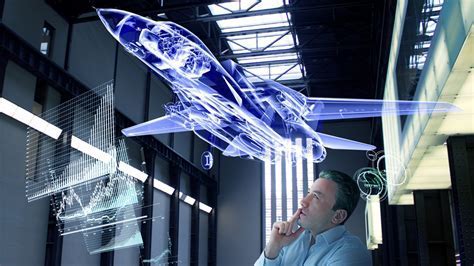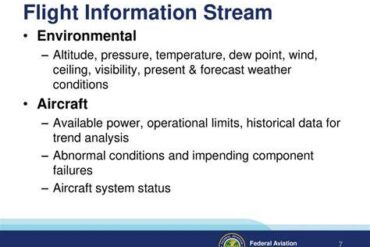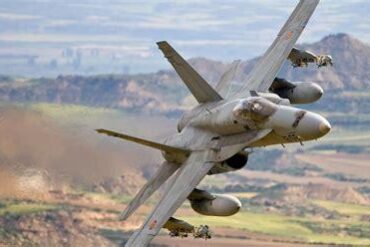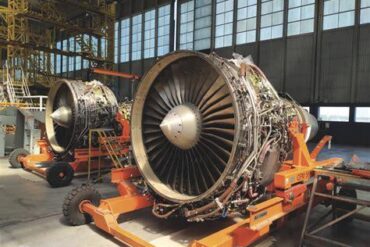
Aerospace engineering is one of the most advanced fields, requiring precision and innovation to ensure the success of various projects, from aircraft design to space exploration. One of the pillars of this industry is aerospace engineering software, which supports engineers in creating, testing, and optimizing designs and systems. This article delves into the most widely used software in the aerospace industry, exploring the key tools for design, simulation, analysis, and programming that engineers use daily.
Design Software in Aerospace Engineering
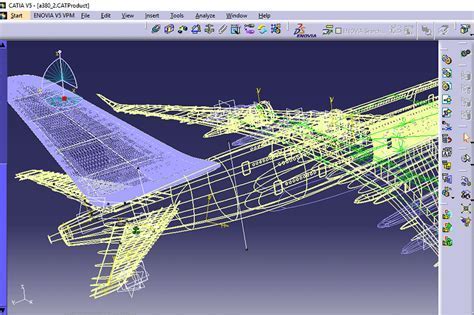
The foundation of aerospace design relies heavily on Computer-Aided Design (CAD) software. These tools allow engineers to create detailed 3D models, simulate real-world conditions, and refine their designs before physical prototyping. Among the most prominent CAD tools in aerospace engineering are CATIA, NX, and SolidWorks.
- CATIA is one of the most used and powerful tools in aerospace design, especially in the design of complex systems such as aircraft and spacecraft. Developed by Dassault Systèmes, CATIA offers a wide range of functionalities, from surface modeling to solid modeling and assembly management. Its advanced capabilities make it particularly useful for large-scale aerospace projects, enabling seamless integration of components and complex structures.
- NX by Siemens is another heavyweight in the aerospace industry, offering capabilities similar to CATIA but with some unique strengths. NX is renowned for its integration of CAD, CAM, and CAE (Computer-Aided Engineering), making it a comprehensive tool for the entire product lifecycle. Its parametric and direct modeling tools make it highly efficient for iterative design, while its capabilities in additive manufacturing and automation offer a significant edge in cutting-edge aerospace engineering.
- SolidWorks, while not as advanced as CATIA or NX in terms of handling massive aerospace projects, still holds a solid position, particularly for smaller scale projects or for engineers just starting in the industry. It is known for its user-friendly interface and is widely used for creating prototypes and simulating mechanical systems.
These software platforms play a crucial role in shaping the future of aerospace design, as they help engineers visualize and solve design challenges before they occur in the physical world.
Simulation and Analysis Software in Aerospace
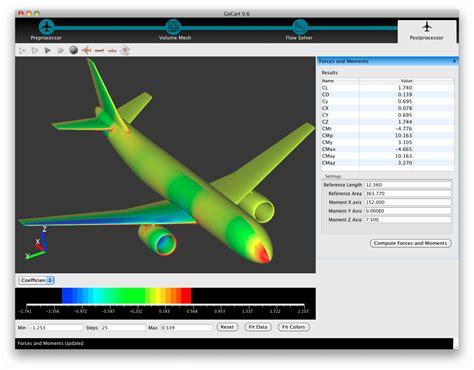
Once the design is completed, the next step involves rigorous testing through simulations to validate performance and functionality. This is where Finite Element Analysis (FEA) and Computational Fluid Dynamics (CFD) software come into play. Some of the leading software in these areas include ANSYS, NASTRAN, and ANSYS Fluent.
- ANSYS is one of the most comprehensive simulation tools in the aerospace industry, offering a wide array of solutions, from structural analysis (via FEA) to thermal simulations and CFD. ANSYS’ advanced simulation capabilities make it indispensable for engineers working on everything from aircraft wings to propulsion systems. The software is particularly valued for its accurate predictions of material behavior and stress distribution, critical in aerospace applications.
- NASTRAN, developed by NASA, is a software tool designed for finite element analysis. Although it is commonly used in the aerospace sector, NASTRAN is also employed in other industries. The software allows engineers to analyze the structural integrity of designs, calculating the stress and strain under various operational conditions. NASTRAN is widely known for its robustness, scalability, and deep integration with other tools.
- ANSYS Fluent is a powerful CFD software that allows engineers to simulate fluid dynamics in complex systems. In aerospace, where air and fluid flow analysis is critical, Fluent is indispensable. It helps engineers understand airflow over aircraft surfaces, combustion processes in jet engines, and the performance of airframes at different speeds and altitudes.
Together, these simulation tools help engineers push the boundaries of innovation in aerospace by ensuring designs are robust, efficient, and reliable.
Programming and Automation in Aerospace Engineering
In addition to CAD and simulation tools, programming languages such as MATLAB and Python are increasingly becoming integral to the aerospace engineering toolkit. These languages are used to automate processes, analyze large datasets, and solve complex mathematical problems.
- MATLAB is an essential tool for aerospace engineers, particularly in the area of control systems, signal processing, and simulation of dynamic systems. MATLAB is particularly useful for analyzing large datasets generated by tests, and it is often used to develop algorithms for control systems, flight dynamics, and avionics. It also integrates well with hardware and other software tools.
- Python has gained popularity in recent years for its simplicity and versatility. In aerospace engineering, Python is often used for data analysis, automation, and interfacing with testing equipment. Python’s open-source libraries, such as NumPy, SciPy, and Pandas, are useful for scientific computing and data manipulation. Additionally, tools like Jupyter Notebooks are widely used for documenting experiments, analyzing test data, and sharing insights within teams.
Both MATLAB and Python provide significant value to aerospace engineers by simplifying calculations, automating repetitive tasks, and enabling more efficient workflows.
Emerging Software Trends in Aerospace Engineering
As the aerospace industry continues to evolve, several emerging software trends are shaping the future of design and analysis. Notably, artificial intelligence (AI) and machine learning (ML) are increasingly being integrated into aerospace engineering software to improve the design process, optimize performance, and reduce testing time.
AI-driven tools are being used to identify patterns in large datasets, predict system behavior, and suggest design improvements. Machine learning algorithms are particularly useful in optimizing flight paths, predicting equipment failures, and automating routine maintenance tasks.
Moreover, the rise of additive manufacturing (3D printing) is influencing the software landscape. Software that supports generative design and optimizes designs for 3D printing is becoming increasingly important in aerospace engineering. Tools that can automatically generate complex, optimized structures for printing are pushing the boundaries of traditional manufacturing and enabling the creation of lightweight and highly efficient aerospace components.
Conclusion
The aerospace engineering field continues to rely heavily on a variety of software tools, each serving distinct purposes. From CATIA and NX for design to ANSYS and NASTRAN for simulation, aerospace engineers have a wide array of powerful software at their disposal to create groundbreaking designs and innovations. As technology advances, the integration of AI, ML, and additive manufacturing into these software platforms promises to revolutionize the industry even further. For aspiring aerospace engineers, mastering these tools is essential for staying competitive and pushing the boundaries of what is possible in aerospace design and analysis.