Aerospace design engineering stands at the confluence of scientific precision, creative ingenuity, and disciplined execution. It is not a discipline for generalists, but one that rewards the rigor of first-principles mastery, the humility to build on established practices, and the insight to innovate meaningfully within stringent engineering boundaries.
At the core of this discipline lies a distinct bifurcation: conceptual design and detail design. These are not simply stages in a development pipeline—they represent fundamentally different skill sets, career paths, and mental models.
Understanding the Divide: Conceptual Design vs Detail Design
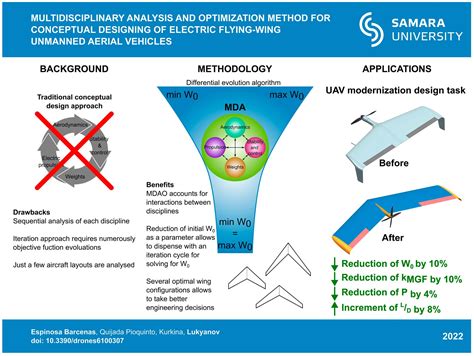
Conceptual design is the crucible in which future aircraft configurations are born. Here, small, highly skilled teams wrestle with configuration trade-offs, explore loft development, and shape the aerodynamic and structural DNA of the vehicle. This is high-stakes engineering—every decision has downstream consequences, and mistakes are costly.
These roles are not commonly advertised, nor are they easily accessed. Organizations seek individuals with Ph.D.-level insight or the kind of decades-spanning experience that allows them to move comfortably in the abstract, multi-disciplinary spaces where multi-disciplinary design optimization (MDO) occurs. For those without this depth, the barrier to entry is formidable.
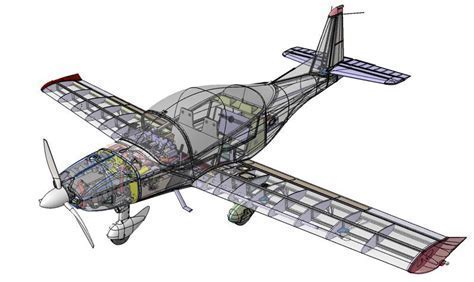
By contrast, detail design is the realm of practicality. It is where component-level design takes place—focusing on physical fit, interface geometry, material compatibility, and producibility. Engineers here must master CAD software, finite element analysis (FEA), and most importantly, the art of simplicity. The ability to reuse known, efficient solutions is far more valuable than flashy originality.
Charting a Path Toward Conceptual Design Mastery
Those who aspire to conceptual design must approach the field strategically. The most direct path is a Ph.D. from a top-tier program where MDO and advanced aerodynamic methods are core competencies. Programs led by researchers like Ilan Kroo and Juan Alonso at Stanford, Dimitri Mavris at Georgia Tech, Quim Martins at Michigan, Mark Drela at MIT, and Bill Crossley at Purdue offer not only technical depth but access to cutting-edge projects and networks.
Beyond formal education, exposure to real-world design philosophies is vital. We recommend the classic, “Skunk Works” by Ben Rich, for understanding the ethos behind innovation under constraints. This book captures the culture of conceptual agility, secrecy, and disciplined prototyping that characterizes high-end design roles.
Building Skill in Detail Design: Simplicity as a Virtue
While the industry often emphasizes tool proficiency—SolidWorks, CATIA, NX, ANSYS, or Abaqus—the true mark of an exceptional detail designer is knowing when not to design something new. Reusing a standard bracket, bolt, or interface can save weeks of validation, reduce manufacturing costs, and minimize integration risks.
This insight isn’t innate. It is developed by deep reading of design literature, exposure to legacy solutions, and what veteran engineers call “Google Fu”—the ability to find credible solutions quickly and integrate them wisely.
Equally crucial is understanding design for manufacturability (DFM). Despite the romantic notion of engineers building side-by-side with technicians, most design engineers are removed from the shop floor in mass production environments. Their involvement may only extend to documentation or clarifying drawings. However, in prototyping and R&D contexts, the relationship is more iterative and symbiotic, offering a rare chance to test, fail, and improve in real time.
Mastering Tools and Resources for First-Principles Excellence
Regardless of the design phase, command of first principles remains non-negotiable. We emphasize a deep engagement with:
- John Anderson’s Performance and Design for aerodynamic fundamentals
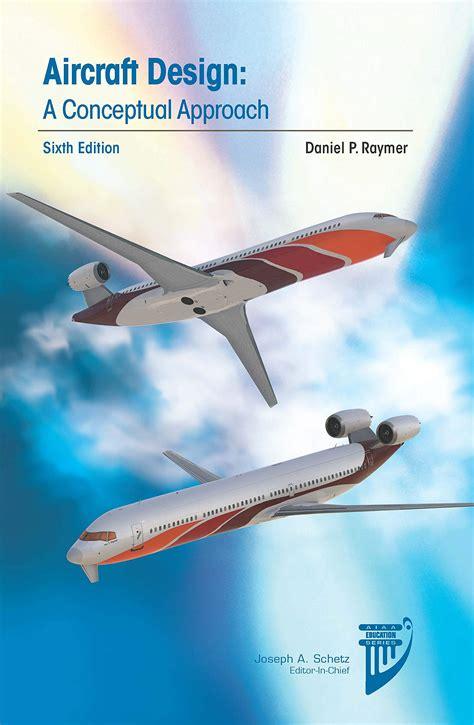
- Raymer’s Aircraft Design as an industry-standard reference
- Roskam, Nicolai, and Torenbeek for specialized structural and configuration insights
Beyond texts, aspiring engineers should develop fluency in Mark Drela’s suite of tools—XFOIL (for airfoil design), XROTOR (for propeller analysis), and DFDC (for lifting surface modeling). These low-order codes offer fast, approximate answers with enough accuracy to shape early decisions, allowing engineers to reach “80% solutions” before committing to expensive simulations.
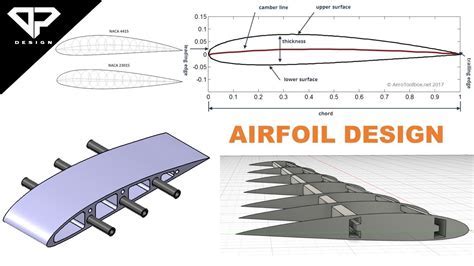
Further into the optimization space, tools like modeFRONTIER and HEEDS allow integrated trade studies across aerodynamics, structures, propulsion, and performance. These are not simply tools—they represent a systems-level design mindset that’s essential for advancing in conceptual roles.
Hands-On Experience: The DBF Pipeline and Beyond
Textbooks and tools must be complemented with hands-on experience. Competitive design teams like Design/Build/Fly (DBF) offer unparalleled training in the end-to-end process of aerospace engineering:
- Writing requirements
- Creating CAD models
- Fabricating airframes
- Conducting flight tests
These teams function like micro-OEMs, requiring skills across design, systems integration, documentation, logistics, and even budgeting. It is often this type of self-driven, iterative learning that employers and graduate programs find most compelling.
In the early stages, balsa models, foam-board gliders, and ready-to-fly RC planes allow students to observe real-world physics and develop an intuition for flight behavior. This tactile understanding often proves more durable than simulations alone.
Navigating Industry Roles: OEMs vs R&D Startups
Aerospace engineers must choose between environments. Major OEMs (e.g., Boeing, Airbus, Lockheed Martin) offer stability, structure, and specialization, but often isolate designers within narrow subdomains. The upside is deep technical growth; the downside is limited systems-level visibility.
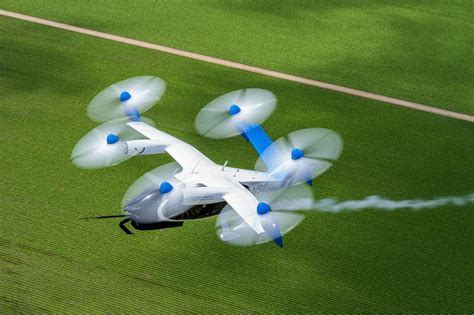
Conversely, R&D startups and prototyping firms like Boom Supersonic, Joby Aviation, or Hermeus offer conceptual breadth, faster iteration cycles, and proximity to decision-makers. However, these roles demand self-direction, ambiguity tolerance, and often, financial trade-offs.
The right environment depends on one’s long-term goals. Those pursuing conceptual roles should prioritize firms or labs that allow broad architectural thinking, even if that means starting in a generalist or hybrid position.
The Real Work: Design Process from Start to Flight
The design process in aerospace spans several interlinked phases:
- Conceptual Design: Vehicle configurations, mission profiles, initial loft development.
- Preliminary Design: Subsystem placement, performance trade-offs, interference resolution.
- Detail Design: Margin verification, fastener choice, precise geometry validation.
- Prototype & Testing: Structural verification, system assembly, test flights.
- Sustainment: In-service support, redesigns, certification compliance.
Each stage demands different competencies, yet all rely on the same backbone: sound engineering judgment, clear documentation, and the ability to communicate across domains.
Conclusion: Becoming a High-Impact Aerospace Design Engineer
The path to becoming an elite aerospace design engineer is neither linear nor easy. It requires a layered blend of technical mastery, design empathy, tool fluency, and strategic career planning. One must learn to think in both abstractions and tolerances, understand both theory and failure modes, and embrace both creativity and constraint.
We are in an era where rapid aerospace innovation—driven by climate imperatives, electric propulsion, and new mobility paradigms—demands designers who are both architects and craftsmen. By committing to a deep, iterative, and purposeful learning journey, aspiring engineers can earn their seat at the table where the next generation of aircraft is imagined.