The Airbus A350 was created as one of the most advanced long-haul aircraft ever developed, designed to challenge Boeing’s dominance in the widebody market while introducing a new generation of efficiency, comfort, and range. Although the aircraft family was built primarily for international operations, airlines have increasingly found value in deploying the A350 on select domestic routes where capacity, premium demand, and operational needs justify the use of a widebody aircraft.
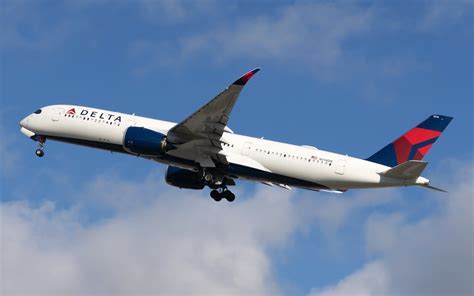
In the United States, domestic Airbus A350 operations remain extremely limited. The aircraft’s size, operating costs, and long-range capability mean that most domestic flights continue to rely on narrowbody aircraft. However, one airline has made unique use of the A350 within the country: Delta Air Lines. By strategically placing the aircraft on specific domestic sectors, Delta can maximize fleet utilization while offering passengers a premium long-haul experience on shorter flights.
Using 2026 schedule data from aviation analytics company Cirium, the six most frequent US domestic Airbus A350 routes reveal how the aircraft is being used beyond its traditional international mission. Some routes see only a handful of special A350 flights, while one major transcontinental market records hundreds of scheduled operations.
Why The Airbus A350 Appears On Domestic US Routes
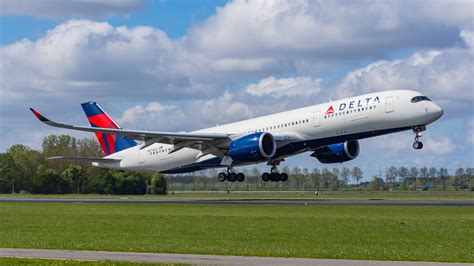
The Airbus A350 is not a typical domestic aircraft. The A350-900, the variant operated by Delta, measures more than 66 meters in length and offers a range of approximately 8,500 nautical miles (15,750 kilometers). It was designed to connect distant international cities such as Atlanta to Johannesburg, Los Angeles to Sydney, and New York to Asia.
Despite its long-range capability, the aircraft can also provide advantages on domestic routes. The most important factor is not distance but demand. Routes with strong premium traffic, high passenger volumes, or scheduling requirements can justify using a widebody aircraft.
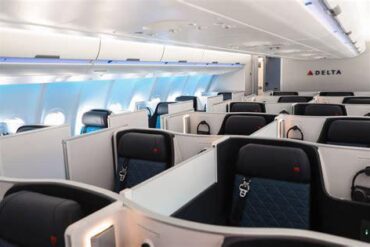
Delta’s A350 fleet includes premium-heavy configurations featuring Delta One Suites, Delta Premium Select, and expanded economy seating. On routes with significant business travel demand, these premium cabins generate additional revenue that cannot always be matched by smaller aircraft.
Another reason is fleet positioning. Widebody aircraft often need to move between international flights. Instead of allowing an aircraft to sit idle between long-haul rotations, airlines can schedule domestic flights to improve utilization and generate additional revenue.
The result is a small but fascinating domestic network where passengers can occasionally experience one of the world’s most advanced aircraft on flights lasting only a few hours.
Atlanta To Los Angeles Remains The Most Frequent US Airbus A350 Route
The clear leader among domestic Airbus A350 routes in 2026 is the connection between Los Angeles International Airport (LAX) and Hartsfield-Jackson Atlanta International Airport (ATL). According to schedule data, the route recorded 742 scheduled A350 flights, making it by far the most frequent domestic A350 operation in the United States.
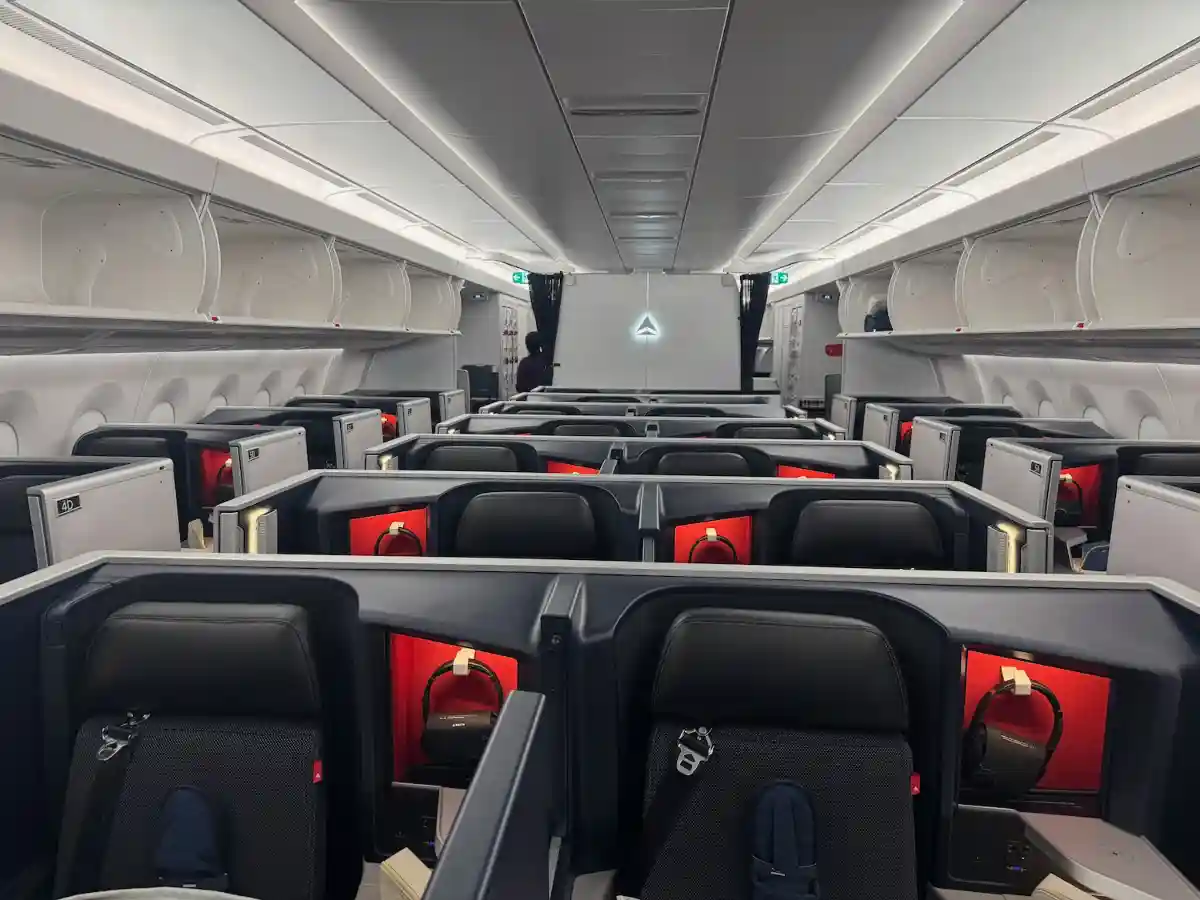
The popularity of this route is closely connected to the characteristics of the market. Atlanta is Delta’s largest hub, while Los Angeles represents one of the most important business, entertainment, and technology centers in the country. The route attracts a significant number of corporate travelers who value premium seating, reliable schedules, and additional comfort.
Delta primarily uses its 275-seat Airbus A350-900 configuration on this service. The aircraft includes 40 Delta One Suites, 40 Delta Premium Select seats, and 195 economy seats. This layout allows the airline to capture high-value passengers while still carrying a large number of economy travelers.
The route also demonstrates why the A350 can make commercial sense domestically. While the flight distance is far shorter than the aircraft’s maximum capability, the combination of premium demand and strong passenger volume creates an environment where a widebody aircraft can be profitable.
For Delta, the Atlanta-Los Angeles route also provides operational flexibility. The aircraft can complete a domestic sector before continuing onto an international mission, helping the airline maximize the daily productivity of its widebody fleet.
Atlanta To Orlando Brings Widebody Capacity To A Leisure Market
The second most frequent domestic Airbus A350 route in the US during 2026 is the service between Atlanta and Orlando International Airport (MCO). The route recorded 28 scheduled A350 flights, significantly fewer than Atlanta-Los Angeles but still notable considering the aircraft’s primary purpose.
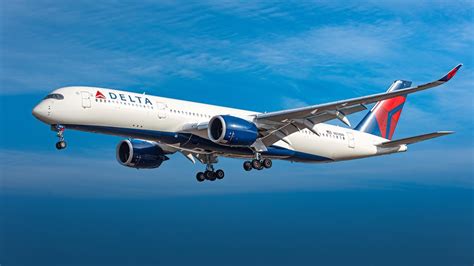
Unlike the Los Angeles market, Atlanta-Orlando is mainly driven by leisure travelers. Orlando is one of the world’s largest tourism destinations, attracting visitors to its theme parks, entertainment venues, and resorts.
The short flight time of approximately 90 minutes means passengers are unlikely to choose the route specifically for the A350 experience. Instead, Delta’s decision to deploy the aircraft is largely connected to operational efficiency and seasonal demand.
The airline has used the A350 on this route during periods when additional capacity was needed or when aircraft scheduling created opportunities. A large aircraft can provide extra seats during busy travel periods while allowing Delta to reposition a widebody aircraft within its network.
This strategy has appeared in previous years as well. Delta has repeatedly scheduled A350 flights between Atlanta and Orlando, showing that the aircraft can serve a useful role even on short domestic sectors.
Atlanta To Salt Lake City Uses The A350 Between Major Delta Hubs
The route between Atlanta and Salt Lake City International Airport (SLC) ranked third among US domestic Airbus A350 services in 2026, with 12 scheduled flights.
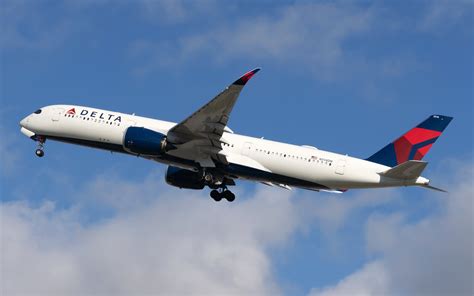
Both Atlanta and Salt Lake City are among Delta’s most important hubs. Atlanta connects passengers throughout the eastern United States, Latin America, and Europe, while Salt Lake City serves as the airline’s primary gateway across the western United States.
The route normally operates with narrowbody aircraft such as the Airbus A320neo and Airbus A321, but the temporary use of the A350 provides additional flexibility. Delta scheduled different A350-900 configurations on the route, including aircraft with either 275 seats or 306 seats.
The larger configuration includes 32 Delta One Suites, 48 Delta Premium Select seats, and 226 economy seats. Although passengers are not flying a long international route, the aircraft offers additional comfort and capacity compared with standard domestic aircraft.
With more than one million passengers traveling between the two markets annually, Atlanta-Salt Lake City represents a strategic connection where a widebody aircraft can support both connecting traffic and operational needs.
Atlanta To Las Vegas Receives Limited Airbus A350 Service
The fourth position belongs to the route between Atlanta and Las Vegas Harry Reid International Airport (LAS), which recorded 11 scheduled A350 flights in 2026.
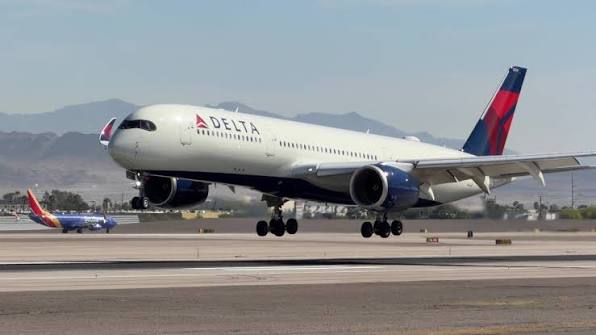
Las Vegas is one of the busiest leisure destinations in the United States, and the Atlanta connection serves both vacation travelers and convention traffic. However, unlike Los Angeles, the market has traditionally relied on narrowbody aircraft.
Delta has previously used the A350 more extensively on this route. In 2024, the airline operated numerous A350 flights between Atlanta and Las Vegas during periods of higher demand.
The temporary nature of the 2026 schedule suggests the aircraft was used primarily for network adjustments rather than permanent deployment. The A350 allows Delta to increase capacity when necessary while keeping its international fleet productive.
Atlanta To Minneapolis Shows Hub-To-Hub Widebody Flexibility
Another unusual domestic A350 route is between Atlanta and Minneapolis-Saint Paul International Airport (MSP). Delta scheduled nine A350 flights across both directions in 2026.
Minneapolis is one of Delta’s strongest hubs, supported by the airline’s 2008 merger with Northwest Airlines. Today, the airport serves hundreds of daily departures to destinations throughout North America, Europe, and Asia.
The Atlanta-Minneapolis route normally operates with smaller aircraft, but the A350 provides additional capacity and helps Delta manage aircraft movements. A widebody aircraft operating between two major hubs can also support connecting passengers traveling beyond either airport.
One scheduled 2026 operation used Delta’s 306-seat A350-900, demonstrating the flexibility of the aircraft even within a domestic network.
Atlanta To Honolulu Completes The Top Six Domestic A350 Routes
The sixth most frequent domestic Airbus A350 route in the United States is Atlanta to Honolulu International Airport (HNL), with eight scheduled flights in 2026.
Hawaii routes are among the few domestic markets where widebody aircraft are common because of longer flight times and strong vacation demand. Delta already serves Honolulu from several mainland cities, including Seattle, Los Angeles, Minneapolis, Detroit, Salt Lake City, and Atlanta.
However, most Atlanta-Honolulu flights continue to use the Airbus A330-300 rather than the A350. The limited A350 schedule reflects the aircraft’s role as a flexible addition rather than the standard aircraft for the route.
The A350 flights provide Delta with another opportunity to optimize its fleet while giving passengers access to one of its most premium aircraft.
Delta’s Unique Domestic Airbus A350 Strategy
The US domestic Airbus A350 network in 2026 highlights how airlines are adapting widebody aircraft beyond traditional long-haul missions. These flights are not about replacing narrowbody aircraft across domestic markets. Instead, they represent carefully selected opportunities where premium demand, capacity needs, and fleet scheduling come together.
From the heavily traveled Atlanta-Los Angeles corridor to occasional services connecting major hubs and leisure destinations, Delta has demonstrated that the A350 can be a valuable tool even within a domestic network.
The aircraft remains fundamentally a long-range machine, but its presence on US domestic routes shows the importance of flexibility in modern airline operations. As fleets become more complex and airlines seek maximum efficiency, passengers may continue to see advanced widebody aircraft appearing in unexpected places.