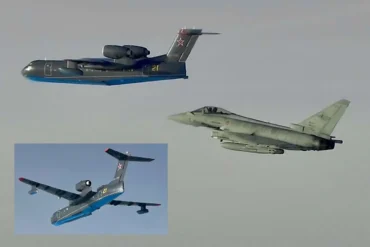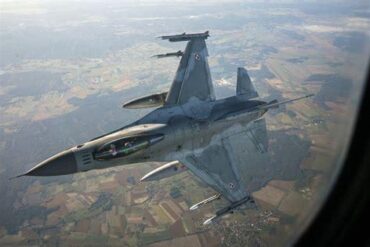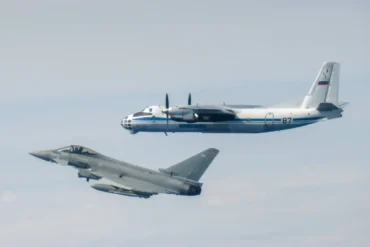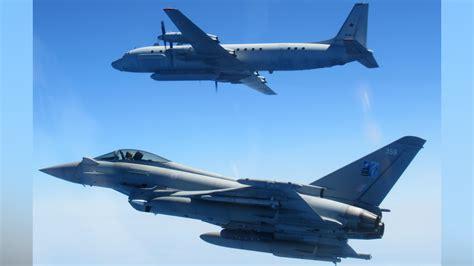
In a striking display of airpower readiness and strategic vigilance, the British Royal Air Force’s Typhoon FGR4 fighter jets, deployed in Poland under Operation Chessman, were scrambled six times over just six days to intercept a surge of Russian military aircraft probing NATO’s airspace. From June 7 to June 12, 2025, RAF pilots engaged in a series of intense intercept missions that underscored the escalating aerial activity over the Baltic region and the enduring importance of NATO’s enhanced Air Policing mission.
Britain’s Commitment Through Operation Chessman
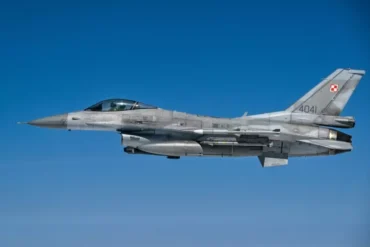
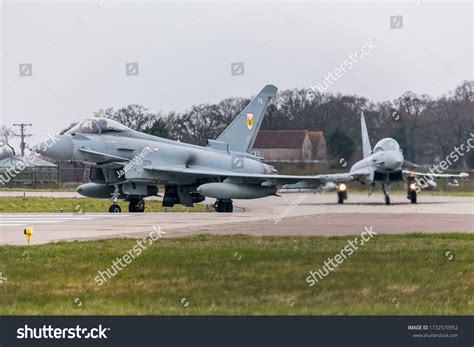
The deployment of British Typhoon FGR4 jets to Poland as part of Operation Chessman reflects the UK’s steadfast commitment to NATO’s collective defense. Operating from Malbork’s 22nd Tactical Air Base, these aircraft are part of the 140 Expeditionary Air Wing, bringing cutting-edge multirole capability to the alliance’s eastern flank. The Typhoon FGR4, a fourth-generation combat jet, is equipped with advanced radar systems, sensor fusion technology, and a comprehensive arsenal of air-to-air and air-to-ground munitions, enabling rapid response and high-precision engagement during complex air policing missions.
The RAF’s rapid deployment capability ensures continuous readiness to safeguard NATO airspace. This is particularly critical given the increasing frequency of Russian reconnaissance and combat aircraft operations along NATO’s borders.
The June 2025 Intercepts: A Surge in Russian Activity
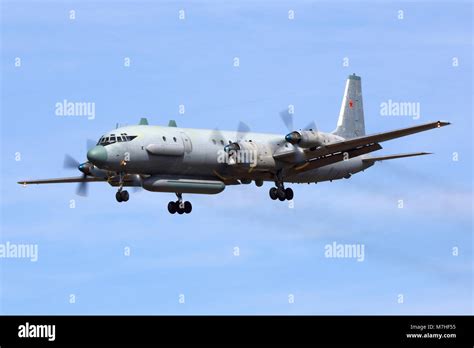
The six-day period beginning June 7, 2025, marked the most intense operational tempo since the RAF’s arrival in Poland. The first mission saw Typhoon fighters intercepting an Antonov An-30 CLANK, a Soviet-era turboprop designed for aerial photography and reconnaissance. The same sortie quickly escalated as the jets were redirected to shadow an Ilyushin Il-20M COOT A, a Cold War relic optimized for signals and electronic intelligence gathering. This dual intercept underscored the adaptability and readiness of RAF crews operating under high-pressure scenarios.
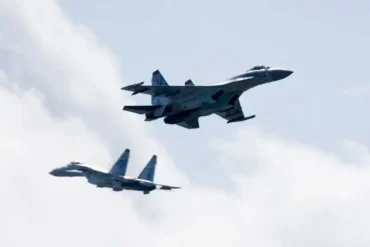
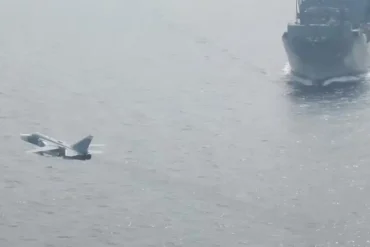
The following day, June 8, RAF Typhoons were dispatched to identify and monitor two Su-24M FENCER D aircraft. These supersonic bombers are notorious for their low-level strike capabilities, and during this mission, one of the Russian jets conducted a provocative low-altitude pass near the USNS William McLean, a U.S. Navy dry cargo vessel navigating international waters. This dangerous maneuver signaled a clear escalation in Russia’s willingness to test NATO’s maritime and aerial defenses.
Patterns of Persistent Russian Reconnaissance
By June 9, a clear pattern had emerged. RAF jets once again intercepted both an An-30 CLANK and an Il-20M COOT A, signaling sustained Russian intelligence-gathering efforts near NATO’s airspace. On June 10, RAF pilots engaged in an even more complex operation. After intercepting another Il-20M, the Typhoons conducted mid-air refueling with a Luftwaffe Airbus A400M Atlas, extending their operational range and endurance. This enabled the RAF to shadow additional aircraft, including a second An-30 and a Tupolev Tu-142 BEAR F maritime patrol plane, which was accompanied by two Su-27 FLANKER B fighters. The coordination of these aircraft suggested a deliberate and highly organized reconnaissance mission focused on NATO’s maritime and aerial posture.
Strategic Significance of June 11–12 Missions
The following two days maintained the high operational tempo. On June 11, RAF Typhoons intercepted another An-30 CLANK, while June 12 featured the shadowing of two additional Su-24 FENCER aircraft and a redirection to an Il-20 COOT A. The regularity and variety of Russian air traffic—ranging from legacy reconnaissance platforms to advanced tactical bombers—highlight a sustained campaign of aerial intelligence collection and airspace testing.
These missions also demonstrated the crucial role of NATO’s Combined Air Operations Centre, which provided real-time vectoring and tactical updates to the RAF crews, enabling effective identification and safe escort or deterrence of potentially hostile aircraft.
NATO’s Vigilance on the Eastern Flank
The RAF’s presence in Poland is integral to NATO’s broader deterrence strategy along its eastern borders. With the addition of Sweden to NATO, Operation Chessman now benefits from enhanced coordination and interoperability across a wider geographical area. This bolstered defensive posture ensures rapid and decisive responses to any airspace violations or intelligence-gathering incursions.
The repeated RAF engagements during these six days also reinforced NATO’s commitment to maintaining the integrity of its airspace, signaling to potential adversaries that the Alliance remains vigilant and prepared to defend its members.
Technical Superiority of the Typhoon FGR4 in Baltic Air Policing
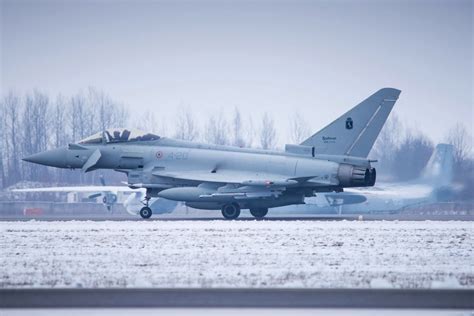
At the heart of these operations lies the Eurofighter Typhoon FGR4, whose performance has proven essential in managing these high-tempo intercepts. Key technical attributes include:
- Multimode Captor radar: enabling long-range detection and precise tracking of multiple aerial targets.
- Sensor fusion systems: integrating data from onboard and offboard sources to create a comprehensive air picture.
- Wide range of munitions: including AIM-120 AMRAAM, Meteor beyond-visual-range missiles, and precision-guided bombs for flexible engagement options.
- Supercruise capability: allowing sustained supersonic flight without afterburner, conserving fuel during extended missions.
Such capabilities provide RAF pilots with the tools necessary to conduct successive, complex intercepts with efficiency and precision.
The Geopolitical Implications of Russian Air Activity
The surge in Russian flights near NATO borders during June 2025 reflects broader geopolitical tensions in the region. These intelligence-gathering missions and provocative maneuvers are designed to test NATO’s readiness, probe its defense architecture, and gather valuable operational data on Allied forces and infrastructure. The frequent deployment of reconnaissance aircraft like the Il-20M and An-30 suggests a sustained Russian interest in monitoring NATO’s military movements, while the presence of Su-24s and Tu-142s indicates an effort to assess maritime operations and potential vulnerabilities.
For NATO, these repeated encounters reaffirm the necessity of forward-deployed air assets and continuous air policing missions. They also highlight the importance of Allied interoperability, as demonstrated by mid-air refueling operations with German aircraft and coordinated tasking through NATO’s command structure.
Conclusion: Vigilance Amid Rising Tensions
The RAF’s six scrambles in as many days over Poland provide a vivid snapshot of the current security environment in the Baltic region. As Russian military aviation continues to challenge NATO’s airspace integrity, the role of forward-deployed forces like the RAF’s Typhoon detachment remains critical. These missions not only ensure the security of NATO’s skies but also send a clear, unambiguous message of the Alliance’s resolve and capability to counter any potential threat at a moment’s notice.