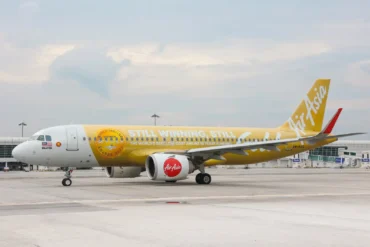
The dream of ultra-cheap long-haul travel aboard large twin-aisle aircraft is entering a new era—not because demand for affordable flights has disappeared, but because the economics behind the model have fundamentally changed. For years, AirAsia X stood as the world’s most recognizable champion of low-cost long-haul flying. By packing hundreds of passengers into Airbus A330 aircraft and offering fares that dramatically undercut traditional airlines, it proved that budget carriers could compete on routes once considered exclusive territory for legacy network airlines.
That strategy reshaped aviation across Asia-Pacific, inspiring competitors and convincing many industry observers that the future of affordable international travel belonged to high-density widebody fleets. Yet in 2026, the very airline that pioneered this approach effectively declared the experiment over by mutually agreeing with Airbus to remove its remaining 15 Airbus A330-900 aircraft from the order backlog. The decision represents far more than a fleet adjustment—it symbolizes a fundamental shift in how low-cost airlines intend to grow over the coming decades.
Rather than expanding around large twin-aisle aircraft, the broader AirAsia Group is committing billions of dollars toward long-range narrowbody aircraft led by the Airbus A321XLR. The move reflects an industry increasingly focused on flexibility, lower operating costs, and route profitability instead of maximizing passenger volume on every departure.
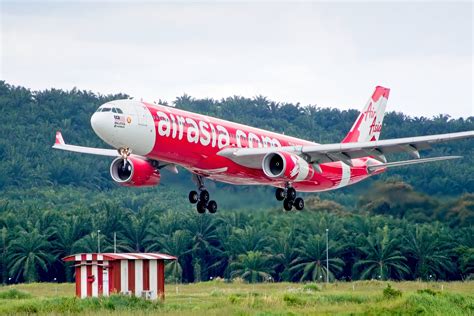
The Airline That Defined Budget Long-Haul Flying
When AirAsia X launched its long-haul operations, many aviation experts questioned whether passengers would embrace budget travel on flights lasting six, eight, or even ten hours. Traditional airlines argued that long-distance routes required premium cabins, cargo revenue, and complex global networks to remain profitable.
AirAsia X challenged that assumption.
Instead of relying on business-class passengers to subsidize economy travelers, the airline focused almost entirely on high-density seating, ancillary revenue, and extremely competitive fares. Its Airbus A330 fleet became the backbone of routes connecting Southeast Asia with Australia, Japan, South Korea, China, India, and the Middle East.
The concept was simple in theory. By spreading operating costs across hundreds of seats, the airline could reduce the cost per passenger and stimulate demand with remarkably low ticket prices. Travelers who previously viewed international vacations as financially impossible suddenly found affordable options.
For much of the 2010s, the model appeared successful enough that numerous airlines explored similar strategies. Budget long-haul flying became one of commercial aviation’s most closely watched business models.
Why Widebody Economics Have Changed
The aviation industry that enabled AirAsia X’s rise is very different from today’s marketplace.
Operating a large aircraft has always involved significant financial commitments, but recent years have amplified every major cost category. Fuel prices remain unpredictable, financing costs have increased, supply chains continue experiencing disruptions, and currency volatility creates additional uncertainty for airlines operating internationally.
These pressures affect every airline, but low-cost carriers experience them differently.
Legacy airlines typically generate substantial revenue from premium cabins, corporate contracts, cargo operations, airport lounges, loyalty programs, and interline partnerships. These diversified income streams provide financial cushions during weaker travel periods.
Budget airlines have a much narrower business model.
Their profitability depends heavily on maintaining consistently high passenger loads while keeping operating costs exceptionally low. Every empty seat represents lost revenue that is difficult to recover elsewhere.
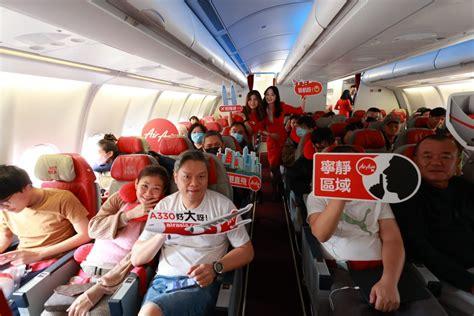
For an airline operating a nearly 400-seat aircraft, even a modest decline in passenger demand can rapidly transform an otherwise profitable flight into a financial liability.
As economic uncertainty becomes more common, airlines increasingly value operational flexibility over maximum seating capacity.
The Problem With Filling Hundreds Of Seats Every Day
The mathematics behind low-cost long-haul flying has always been unforgiving.
Widebody aircraft generate attractive economics only when airlines consistently achieve very high load factors. Missing that target by just a few percentage points has a disproportionate impact because operating expenses remain largely unchanged regardless of how many passengers are onboard.
Unlike short domestic routes, long-haul services involve enormous trip costs. Fuel consumption, flight crews, maintenance reserves, airport fees, navigation charges, and aircraft ownership costs accumulate whether an aircraft departs full or partially occupied.
This creates an uncomfortable reality for airlines relying exclusively on low fares.
A flight carrying 340 passengers instead of 380 may still appear busy to travelers, yet the missing forty customers can significantly alter the route’s profitability.
Seasonal demand fluctuations further complicate the picture. School holidays, business travel cycles, economic downturns, geopolitical events, and changing tourism trends all influence passenger numbers throughout the year.
Large aircraft leave airlines with relatively few options when demand weakens.
Reducing frequencies makes schedules less attractive.
Maintaining frequencies increases financial exposure.
Neither solution aligns well with the flexibility that defines successful low-cost operations.
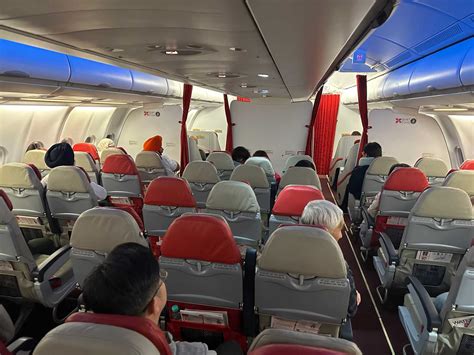
Hub Networks Work Against The Low-Cost Philosophy
Another challenge lies in network design.
Low-cost airlines historically thrive by operating straightforward point-to-point services between cities. This approach minimizes complexity while allowing aircraft to spend more time generating revenue rather than sitting on the ground.
Widebody aircraft naturally encourage hub-and-spoke operations.
Because they require hundreds of passengers per departure, airlines often need connecting traffic from multiple cities to fill the aircraft efficiently. That means coordinating schedules, managing transfer passengers, handling baggage connections, and increasing airport infrastructure requirements.
Each additional layer introduces operational complexity and additional costs.
Ironically, this pushes budget airlines toward the same network structures used by traditional full-service carriers.
For AirAsia X, abandoning further A330neo expansion represents recognition that maintaining a massive twin-aisle fleet increasingly conflicts with the operational simplicity that originally made the AirAsia brand successful.
The Airbus A321XLR Changes The Equation
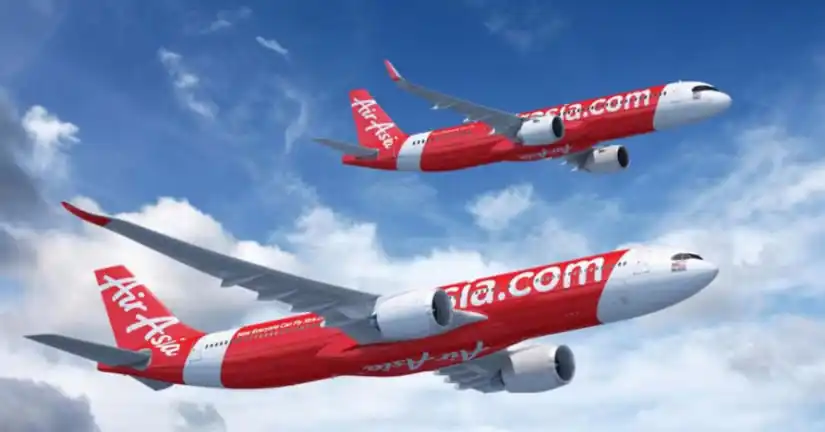
Instead of doubling down on larger aircraft, AirAsia Group is placing its future behind one of the aviation industry’s most influential new aircraft.
The Airbus A321XLR combines the economics of a modern narrowbody with enough range to serve routes previously reserved for much larger aircraft.
Its advertised maximum range approaches 4,700 nautical miles, although airlines typically plan somewhat shorter missions to account for weather, routing changes, headwinds, alternate airports, and regulatory fuel reserves.
Even with practical operational margins, the aircraft dramatically expands route possibilities.
Instead of requiring nearly 400 passengers, airlines can profitably operate aircraft carrying roughly 220 to 240 travelers while enjoying substantially lower trip costs.
This changes the conversation entirely.
Rather than asking whether enough passengers exist to fill a widebody, airlines only need sufficient demand to support a much smaller aircraft operating more frequently.
That flexibility opens numerous opportunities unavailable under previous fleet strategies.
Lower Trip Costs Matter More Than Lower Seat Costs
For decades, airlines emphasized cost per available seat mile as one of aviation’s most important efficiency measurements.
While that metric remains valuable, today’s market increasingly rewards something different: lower total trip cost.
An aircraft may achieve excellent seat economics while still exposing airlines to enormous financial risk if too many seats remain unsold.
Smaller aircraft reduce that exposure.
Operating fewer seats means airlines require fewer passengers to break even. Routes become economically viable even when demand fluctuates, enabling airlines to expand into secondary markets without committing to oversized aircraft.
This approach also allows carriers to adjust schedules more effectively.
Instead of operating two large flights each week, an airline might operate four or five smaller services, giving travelers more convenient departure options while improving aircraft utilization.
Flexibility becomes a competitive advantage rather than simply a cost-saving measure.
Point-To-Point Networks Become Stronger
Long-range narrowbody aircraft unlock entirely different network strategies.
Cities previously considered too small for widebody service suddenly become realistic destinations. Airlines no longer need to funnel passengers through major hubs before continuing to secondary markets.
For AirAsia, this creates opportunities across Asia, the Middle East, Europe, and Africa.
Flights from Kuala Lumpur or Bangkok can reach destinations that previously lacked sufficient demand for large aircraft while still maintaining attractive operating economics.
Passengers also benefit.
Direct flights eliminate lengthy connections while reducing total travel time. Smaller aircraft allow airlines to test new routes with considerably lower financial exposure before expanding frequencies as demand develops.
This network flexibility represents one of the most significant competitive advantages offered by the latest generation of long-range narrowbody aircraft.
Fleet Modernization Extends Beyond New Aircraft
AirAsia’s transformation involves more than purchasing new airplanes.
The airline is simultaneously retiring older Airbus A320 aircraft that have reached approximately 16 to 17 years of service.
Older aircraft inevitably become more expensive to operate.
Heavy maintenance inspections occur more frequently, components require replacement, fuel efficiency declines compared with newer designs, and unexpected technical issues increase operational disruptions.
Replacing these aircraft with modern A321LR and future A321XLR models creates benefits throughout the organization.
Engineering operations become simpler.
Maintenance inventories shrink.
Pilot training becomes more standardized.
Fuel consumption decreases.
Aircraft spend more time flying and less time undergoing maintenance.
These improvements directly support the high utilization rates that remain essential for every successful low-cost airline.
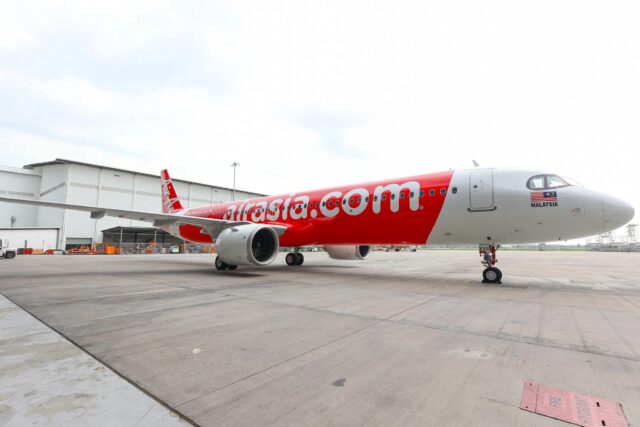
Why Other Airlines Are Following The Same Path
AirAsia is far from alone.
Across the global aviation industry, airlines are increasingly embracing long-range narrowbody aircraft for routes once considered exclusive widebody territory.
The reasons are remarkably consistent.
Modern engines deliver significantly lower fuel consumption.
Advanced aerodynamics improve efficiency over long distances.
Composite materials reduce aircraft weight.
Improved cabin designs allow passengers to remain comfortable on flights lasting eight or more hours.
These technological improvements reduce many of the historical disadvantages associated with narrowbody long-haul flying.
As a result, airlines gain access to markets that previously involved excessive financial risk.
Rather than making billion-dollar bets on very large aircraft, carriers can gradually build international networks while maintaining greater financial discipline.
The strategy aligns particularly well with today’s uncertain global economy.
Does This Mean Widebody Aircraft Are Becoming Obsolete?
Absolutely not.
Widebody aircraft remain indispensable for many airline business models.
Major intercontinental routes connecting cities such as London, Singapore, Dubai, Los Angeles, Tokyo, and New York continue generating sufficient demand to justify large twin-aisle aircraft. Premium cabins, extensive cargo capacity, and dense passenger flows ensure these aircraft remain profitable on high-volume routes.
The difference is that not every long-haul route requires a widebody anymore.
Advances in narrowbody technology have expanded airlines’ choices.
Instead of forcing every intercontinental market into the same fleet strategy, carriers can now match aircraft size much more precisely with passenger demand.
That flexibility represents a profound structural change for commercial aviation.
The End Of One Revolution And The Beginning Of Another
AirAsia X’s decision to abandon its remaining Airbus A330neo order is significant because it closes an important chapter in airline history.
The carrier helped prove that low-cost airlines could operate intercontinental services using high-capacity widebody aircraft. Its success inspired competitors, expanded international tourism, and permanently changed passenger expectations regarding airfare.
Yet innovation rarely stands still.
The same airline that pioneered one revolutionary business model is now embracing another.
Rather than maximizing seat count, the future increasingly centers on maximizing efficiency, flexibility, and sustainable profitability. Long-range narrowbody aircraft provide airlines with the ability to match capacity more closely to real-world demand while reducing financial exposure during periods of economic uncertainty.
The broader significance extends well beyond AirAsia.
Across the aviation industry, carriers are recognizing that future growth will depend less on operating the largest possible aircraft and more on deploying the right aircraft for each individual route. That philosophy promises more nonstop connections, greater scheduling flexibility, improved fleet utilization, and stronger financial resilience.
In many ways, AirAsia is once again helping redefine budget aviation. Two decades ago, it demonstrated that affordable long-haul travel could become mainstream through high-density widebody operations. Today, by pivoting toward advanced long-range narrowbody aircraft, it is signaling that the next generation of low-cost international flying will prioritize smarter capacity, lower trip costs, and greater network agility over sheer aircraft size.
The low-cost long-haul model has not disappeared. It has simply evolved into something far more adaptable for the realities of modern commercial aviation.