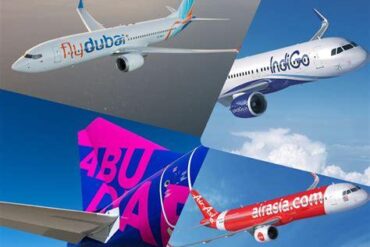
Founded on 20 December 1993, AirAsia has evolved from a financially ailing full-service airline into Asia’s most prominent low-cost carrier, a transformation defined by sharp strategic pivots, bold market entries, and relentless operational efficiency. Headquartered at Kuala Lumpur International Airport (KLIA), the airline commands a fleet of 255 aircraft, including its affiliates, and serves 166 destinations across 25 countries. With a corporate structure under Capital A Berhad, AirAsia today stands not only as a major aviation player in Southeast Asia but also as a business entity with digital aspirations, spanning logistics, e-commerce, and financial services.
From Collapse to Reinvention: The Birth of a Low-Cost Giant
AirAsia’s journey began under the ownership of DRB-HICOM, launching commercial operations in November 1996 with Boeing 737-300s. However, burdened by financial mismanagement and the global shockwaves of 9/11, the airline faced liabilities of nearly US$11 million by 2001.
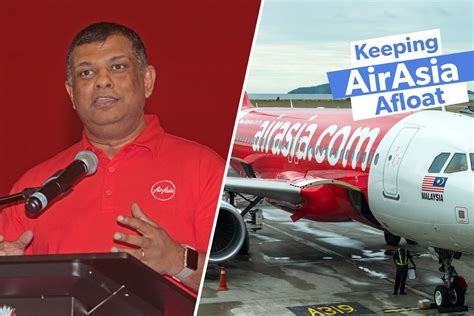
The turning point came on 5 September 2001, when Tony Fernandes and Kamarudin Meranun acquired the airline through Tune Air Sdn Bhd for the symbolic price of RM 1. The duo swiftly restructured the business model, stripping away frills, introducing point-to-point services, and leveraging secondary airports to reduce costs. With fare promotions as low as RM 10, AirAsia became profitable within its first year under new leadership.
Strategic Expansion Across Southeast Asia
Between 2003 and 2006, AirAsia implemented a bold expansion plan. It opened its second hub in Johor Bahru and launched its first international routes to Phuket and Bangkok in 2004, followed by Manila and Xiamen in 2005. These moves were strategic, tapping into underserved regional corridors with high traffic potential. AirAsia was also an early adopter of digital platforms, pioneering online and SMS ticketing in Asia well before many full-service carriers.
This era saw the creation of critical affiliate operations: Thai AirAsia (2003) and Indonesia AirAsia (2005). These subsidiaries allowed the airline to penetrate local markets with country-specific regulatory compliance while maintaining brand cohesion. By 2006, the fleet had expanded to 35 Boeing 737-300s and eight Airbus A320s, with an order for 100 additional A320s signaling the airline’s long-term ambitions.
Operational Hubs and Fleet Modernization
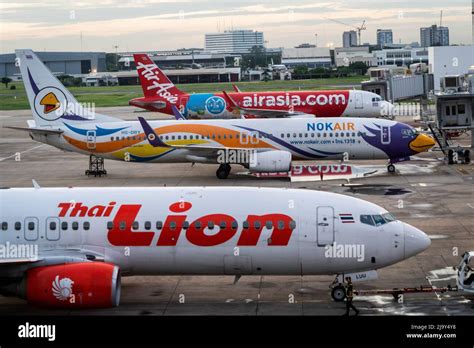
AirAsia’s network strategy relies on a hub-and-spoke model centered on KLIA Terminal 2, with secondary hubs at Penang, Kota Kinabalu, Kuching, and Johor Bahru. These regional nodes support high-frequency domestic and cross-border services.
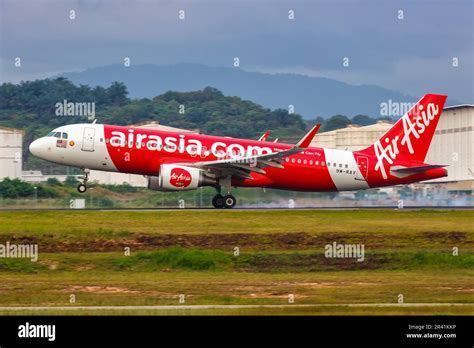
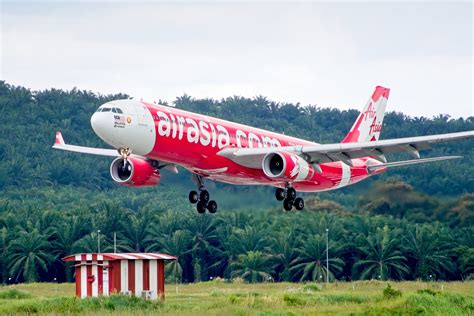
As of December 2024, the airline’s primary fleet includes:
- 69 Airbus A320-200s
- 29 Airbus A320neos
- 8 Airbus A321neos
An additional 36 Airbus A321LRs are on order to support longer-haul operations within the Asia-Pacific corridor. Teleport, AirAsia’s freight arm, operates three A321-200/P2Fs, while its private aviation division maintains a Bombardier Global Express.
Surviving the Pandemic and Embracing Digital Transformation
The COVID-19 pandemic marked an existential crisis for global aviation. For AirAsia, the impact was severe, forcing a full suspension of flights in March 2020, aggressive cost-cutting measures, and fleet grounding. Amid this turbulence, the company diversified rapidly. The AirAsia Super App, launched in late 2020, combined food delivery, e-commerce, ride-hailing, and logistics under a single digital ecosystem. This bold pivot aimed to buffer the airline from the volatility of travel demand.
Domestic flights resumed by April 2021, and international routes followed in late 2022. In 2023, AirAsia reported a nine-fold seat capacity increase, supported by restored demand and the relaunch of strategic routes like Thailand–China. Passenger numbers rebounded to 9.95 million, reflecting restored consumer confidence.
AirAsia X and the Capital A Merger
The future of AirAsia lies in its ongoing merger with AirAsia X, expected to finalize by 30 May 2025, under the Capital A umbrella. This unification consolidates over 200 aircraft and a combined order book of 361 units, creating a streamlined, synergized entity positioned to dominate both short-haul and long-haul low-cost travel.
In March 2024, the airline launched Perth services using A321neos, marking its renewed ambition in the Australia–Southeast Asia travel corridor. The fleet is expected to grow from 79 to 92 aircraft by the end of 2024, including plans to add eight new destinations. The airline also entered exploratory talks to acquire up to 100 regional jets (such as the Airbus A220, COMAC C919, and Embraer E2) aimed at penetrating underserved secondary markets.
A Regional Powerhouse with Global Aspirations
AirAsia’s affiliate network represents a significant strength. Thai AirAsia and Thai AirAsia X provide extensive domestic and intercontinental connectivity. Indonesia AirAsia, launched in 2005, plays a key role in one of the region’s largest aviation markets. Philippines AirAsia, since 2012, continues to develop its domestic footprint amid competitive pressures. The most recent entrant, AirAsia Cambodia, began operations in May 2024, further solidifying the airline’s footprint in Indochina.
The carrier’s ambitions extended to Japan (twice) and India, though not all ventures succeeded. The Indian subsidiary, launched in 2014, was sold to Tata Sons in 2022, while AirAsia Japan ceased operations in 2020. These exits reflect the airline’s pragmatic approach to restructuring unprofitable ventures.
Passenger Experience and Loyalty Programs
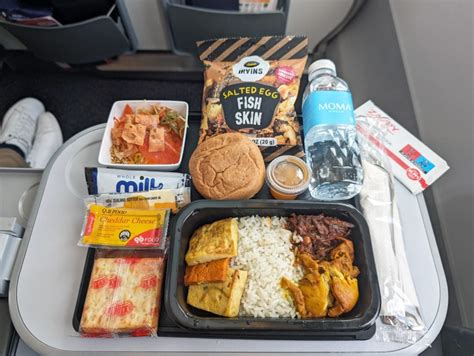
AirAsia offers a streamlined onboard product centered around low-cost efficiency. Passengers can pre-purchase meals from the ‘Santan’ menu, which features regional dishes, but excludes alcohol and pork on regional services due to cultural considerations. Discounts apply for pre-booked meals.
The AirAsia Rewards program enables passengers to accumulate and redeem points for flights, with additional perks for active Super App users. Integration with digital services fosters customer retention beyond aviation, a model inspired by Southeast Asia’s broader super app ecosystem.
Corporate Infrastructure and Financial Resilience
AirAsia operates from its headquarters known as RedQuarters, located in KLIA Terminal 2, a facility spanning 56,985 m² and housing approximately 2,000 staff members. This centralized setup enables streamlined coordination across its complex network.
Financially, AirAsia has demonstrated both volatility and resilience. Revenues grew from RM 2.9 billion (2008) to RM 14.7 billion (2023). Pandemic-induced losses triggered a PN17 classification, but a formal exit plan was submitted in December 2024, with approval anticipated by Q1 2025. This milestone would mark a full regulatory and financial recovery.
Awards, Recognition, and Public Scrutiny
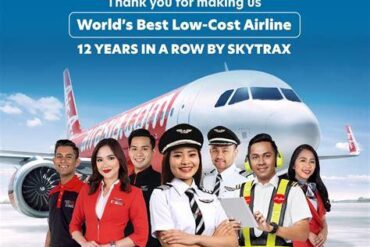
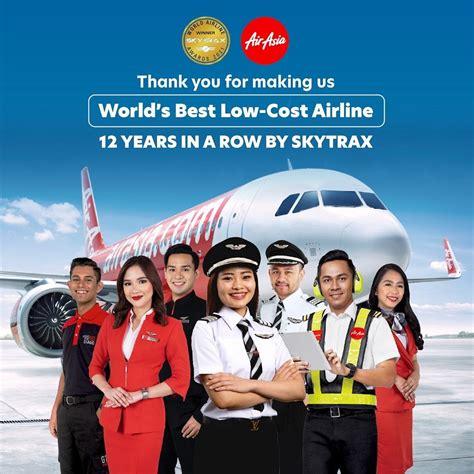
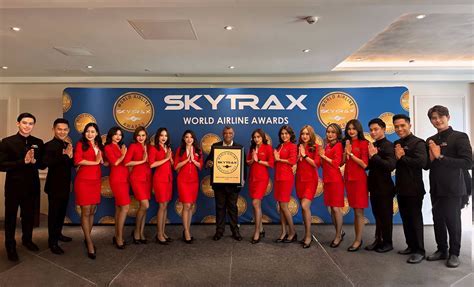
AirAsia has consistently been recognized as a customer favorite, securing the Skytrax World’s Best Low-Cost Airline award eleven consecutive times (2009–2019). It also holds accolades from the World Travel Awards and has been acknowledged for its cabin crew excellence.
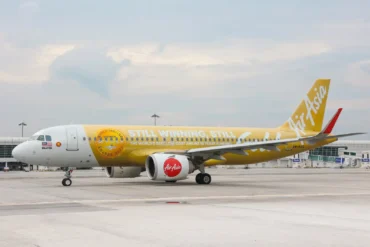
Nevertheless, the airline has not been without criticism. A politically themed aircraft livery ahead of the 2018 Malaysian general elections attracted backlash for perceived partisanship. In 2007, disability access issues led to public complaints, prompting policy adjustments. Despite these controversies, AirAsia has largely maintained a positive brand image rooted in affordability and innovation.
Conclusion: AirAsia’s Ascent as a Digital-Aviation Hybrid
From near bankruptcy to an award-winning industry leader, AirAsia’s trajectory is marked by visionary leadership, agile adaptation, and regional dominance. With its eyes now set on digital integration, secondary markets, and sustainable fleet expansion, the airline is redefining what it means to be a low-cost carrier in the 21st century. The upcoming Capital A merger symbolizes not just a consolidation of assets, but the rebirth of a bolder, more connected AirAsia for the post-pandemic era.