The transformation of aging commercial aircraft into highly specialized government platforms is no longer a niche strategy—it is becoming a defining trend in modern aviation. At first glance, a luxury Boeing 747-8 linked to Donald Trump and a heavily modified Boeing 777-200ER operated by NASA seem worlds apart. One embodies political power and executive mobility, while the other represents scientific exploration and environmental research. Yet beneath these contrasting identities lies a shared philosophy: repurposing proven airframes into mission-critical assets faster and more efficiently than building from scratch.
This convergence reveals more than just engineering ingenuity. It highlights a strategic pivot toward adaptive reuse, cost control, and operational flexibility in an era where time, budget constraints, and technological urgency collide. These aircraft are not just machines—they are statements about how governments rethink aviation in the 21st century.
The Strategic Shift Toward Repurposed Widebodies
Modern aviation programs often suffer from delays, ballooning costs, and shifting requirements. Against this backdrop, repurposing existing aircraft offers a compelling alternative. Instead of waiting years—sometimes decades—for new builds, agencies can leverage the reliability of commercial platforms and accelerate deployment timelines.
Both the Boeing 747-8 and Boeing 777-200ER represent the pinnacle of long-haul aviation engineering. Their structural integrity, range, and onboard systems make them ideal candidates for reinvention. What changes is not the skeleton, but everything layered on top of it—electronics, interiors, mission systems, and operational purpose.
This approach is not merely pragmatic; it is transformative. By adopting existing aircraft, organizations bypass the risks associated with clean-sheet designs while still achieving cutting-edge capability through targeted modification.
Inside Trump’s Boeing 747-8: From Luxury Jet to Airborne Command Center

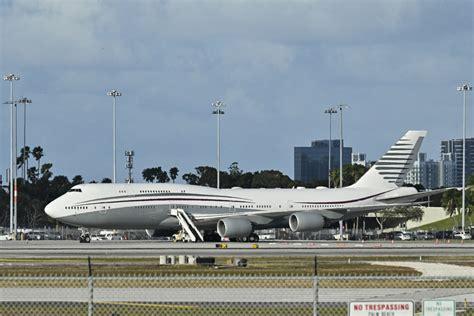
The Boeing 747-8 in question began life as a high-end VIP aircraft, reportedly tied to Qatar’s elite aviation fleet. Designed for opulence, it featured lavish interiors, expansive cabins, and premium materials. However, luxury alone does not meet the demands of presidential transport.
To function as a viable Air Force One platform—even on an interim basis—the aircraft must undergo a radical transformation. This involves stripping much of its original interior and rebuilding it around security, communication, and survivability requirements.
Unlike commercial or private jets, a presidential aircraft is effectively a flying command post. It must support secure communications at all times, withstand potential threats, and maintain operational continuity under extreme conditions. This includes hardened systems, encrypted networks, and defensive countermeasures.
The appeal of the 747-8 lies in its modern design and superior capabilities compared to older VC-25A aircraft, which are based on decades-old technology. However, its prior configuration means extensive retrofitting is unavoidable. Every system must be vetted, replaced, or upgraded to meet strict military standards.
The result is not just a plane—it is a mobile nerve center of national authority, capable of operating in scenarios where ground-based infrastructure may be compromised.
NASA’s Boeing 777-200ER: Turning a Passenger Jet into a Flying Laboratory
While the 747-8 focuses on power and protection, NASA’s Boeing 777-200ER represents a completely different kind of transformation. Originally flown by Japan Airlines, this aircraft has been reborn as a next-generation airborne science platform, replacing the agency’s aging DC-8 research aircraft.
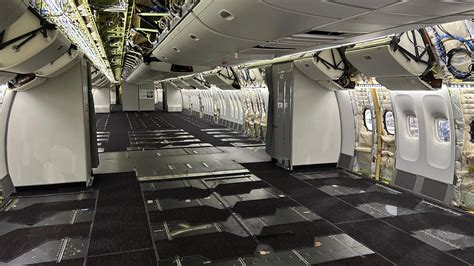
Its mission is not to transport passengers but to enable complex scientific operations in the sky. This requires extensive modifications, including the installation of research workstations, sensor systems, specialized wiring, and structural enhancements that allow instruments to interact with the external environment.
The advantages of the 777 platform are substantial. Compared to the DC-8, it offers greater range, higher payload capacity, increased electrical power, and significantly more onboard workspace. These improvements allow scientists to conduct longer missions with more sophisticated equipment and larger teams.
In practical terms, the aircraft becomes a flying laboratory, capable of supporting atmospheric studies, climate research, and Earth observation missions. It bridges the gap between ground-based science and satellite data, providing a unique perspective that neither can fully replicate.
Engineering Reinvention: What It Takes to Transform a Widebody
Converting a commercial aircraft into a specialized platform is far from straightforward. It involves deep structural, electrical, and systems-level modifications that go well beyond cosmetic changes.
For both the 747-8 and the 777-200ER, engineers must address several key challenges:
- Rewiring the aircraft to support new systems, from secure communications to scientific instruments
- Reinforcing structural components to accommodate additional equipment or mission-specific loads
- Integrating advanced electronics without interfering with existing avionics
- Redesigning interiors to balance functionality, safety, and operational efficiency
These modifications often require collaboration between multiple contractors and agencies. In both cases, facilities in Waco, Texas—particularly those operated by L3Harris—have played a central role in executing these complex transformations.
The process is meticulous and time-intensive, but it ultimately delivers an aircraft that is tailored to its mission in ways no off-the-shelf solution could achieve.
Cost Dynamics: Efficiency Versus Complexity
One of the most compelling aspects of these programs is their cost structure. While repurposing aircraft is generally more economical than building new ones, the extent of modification can significantly influence the final price.
The Boeing 747-8 conversion is expected to cost hundreds of millions of dollars, largely due to the stringent requirements for presidential operations. Security systems, defensive capabilities, and classified technologies drive up costs, even though the base aircraft itself is already built.
In contrast, NASA acquired its Boeing 777-200ER for under $30 million, a fraction of the cost of a new widebody. While additional expenses for modifications are substantial, the overall program remains far more cost-effective than developing a dedicated research aircraft from scratch.
This contrast highlights a crucial insight: the mission dictates the cost, not just the aircraft. A plane designed to protect national leadership will inevitably require more investment than one focused on scientific research, even if both start from similar commercial origins.
Diverging Missions, Shared Philosophy
Despite their differences, the 747-8 and 777-200ER share a common foundation. Both are examples of commercial aircraft being reimagined to meet highly specialized government needs.
The 747-8 serves as a symbol of authority and continuity, ensuring that the president can operate effectively from anywhere in the world. Its value lies in its ability to maintain communication, coordination, and control under any circumstances.
The 777-200ER, on the other hand, is a tool of discovery, enabling scientists to explore the atmosphere and gather critical data about the planet. Its importance lies in expanding human understanding and supporting informed decision-making on global issues.
What unites them is the concept of adaptive reuse—taking something designed for one purpose and transforming it into something entirely new.
Why Repurposing Aircraft Is Gaining Momentum
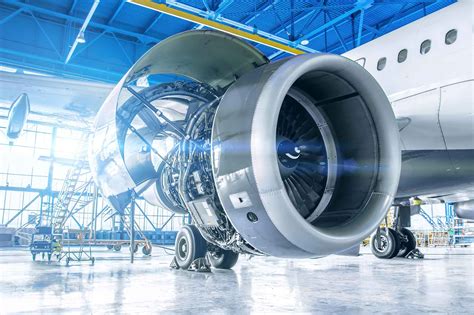
The growing reliance on repurposed aircraft reflects broader trends in aviation and government procurement. As budgets tighten and timelines shrink, organizations are increasingly looking for ways to maximize existing resources.
Repurposing offers several advantages:
- Faster deployment compared to new aircraft programs
- Reduced development risk due to proven airframes
- Flexibility to customize systems for specific missions
- Lower upfront acquisition costs
At the same time, it allows agencies to respond more quickly to emerging challenges, whether they involve national security, scientific research, or humanitarian efforts.
This approach is not without its challenges. Integrating new systems into older platforms can be complex, and maintaining modified aircraft requires specialized expertise. However, the benefits often outweigh the drawbacks, particularly when time is a critical factor.
The Role of Contractors and Industrial Expertise
Behind every successful aircraft transformation is a network of contractors, engineers, and technicians who bring these projects to life. Companies like L3Harris play a pivotal role in bridging the gap between commercial aviation and specialized government requirements.
Their work involves not only technical execution but also systems integration, testing, and certification, ensuring that the modified aircraft meets rigorous standards for safety and performance.
This collaboration between government agencies and private industry is essential. It enables the rapid development of capabilities that would be difficult to achieve through traditional procurement methods alone.
Challenges of Operating Beyond Original Design
Repurposed aircraft must operate in ways their original designers never intended. This introduces a unique set of challenges that require careful management.
For the 747-8, this means handling the demands of secure, high-stakes operations while maintaining reliability and performance. For the 777-200ER, it involves supporting complex scientific missions that push the limits of onboard systems.
In both cases, engineers must ensure that modifications do not compromise the aircraft’s structural integrity or operational safety. This requires extensive testing, validation, and ongoing maintenance.
Yet these challenges also drive innovation. By pushing the boundaries of what these aircraft can do, engineers are effectively expanding the possibilities of aviation itself.
A Glimpse Into the Future of Specialized Aviation
The stories of these two aircraft offer a glimpse into the future of aviation, where flexibility, adaptability, and efficiency take center stage. As technology continues to evolve, the ability to repurpose existing platforms will become even more valuable.
This trend is likely to extend beyond government use. Commercial operators, cargo companies, and even private organizations may increasingly adopt similar strategies, transforming aircraft to meet changing demands.
In this context, the Boeing 747-8 and 777-200ER are more than isolated examples. They are early indicators of a broader shift in how the aviation industry approaches innovation.
Conclusion: Reinvention as the New Standard
The transformation of Trump’s Boeing 747-8 and NASA’s upgraded Boeing 777-200ER underscores a powerful idea: innovation does not always require starting from scratch. Sometimes, the most effective solutions come from reimagining what already exists.
These aircraft demonstrate how engineering expertise, strategic thinking, and operational necessity can converge to create something entirely new. Whether serving as a flying command center or a mobile research laboratory, they embody the potential of repurposed aviation.
As the demands on aviation continue to grow, this approach will likely become more common, shaping the future of flight in ways that are both practical and profound.