The modern battlefield has exposed a harsh truth: technological superiority alone no longer guarantees survival. In the aftermath of the Iran conflict, the United States Air Force finds itself confronting a deeply uncomfortable reality—its most advanced aircraft are operating without a fully unified picture of the battlespace. The result has been costly, visible, and strategically alarming.
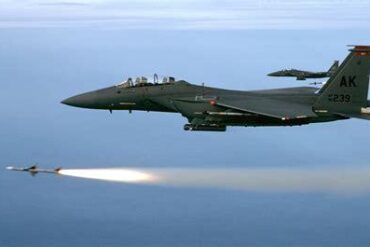
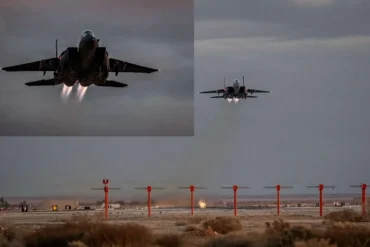
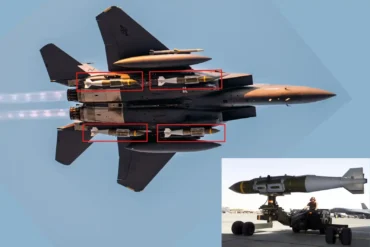
In just over a month of sustained operations, the U.S. military suffered the loss of multiple high-value assets, including four F-15E Strike Eagles, an A-10 Thunderbolt II, a KC-135 Stratotanker, and several support aircraft. Even more striking was the damage inflicted on platforms once considered nearly untouchable, including the F-35 Lightning II, marking a psychological and operational turning point.
What makes these losses particularly unsettling is not just their frequency—but their preventability.
A War That Exposed Critical Gaps in Aircrew Awareness
The Iran conflict highlighted a systemic issue: aircrews often lacked access to a real-time, integrated common operating picture (COP). This gap proved deadly.
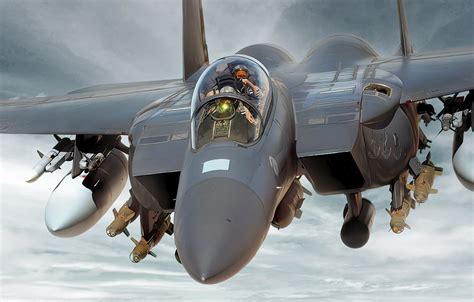
Three F-15E Strike Eagles were lost in what is believed to be friendly fire incidents in Kuwaiti airspace—a scenario that underscores a failure in blue-force identification and coordination. In another incident, two KC-135 tankers collided mid-air, a catastrophic event that could likely have been avoided with better positional awareness.
Meanwhile, the destruction of two MC-130J transport aircraft, stranded in muddy terrain during a rescue mission, revealed another blind spot: inadequate real-time environmental and terrain intelligence.
These incidents are not isolated anomalies. They point to a deeper, structural weakness in how data is gathered, processed, and delivered to those who need it most—the pilots.
The F-35 “Shock”: A Wake-Up Call for Stealth Warfare
Perhaps the most symbolic moment of the conflict came when an F-35 Lightning II was successfully struck. Long regarded as the pinnacle of stealth and sensor fusion, the F-35’s vulnerability sent shockwaves through defense circles.
The issue was not that the aircraft lacked capability. Instead, it revealed a crucial limitation: even the most advanced platforms are only as effective as the information ecosystem they operate within.
In contested environments, where communications are degraded or denied, the ability to synthesize fragmented data into actionable intelligence becomes more valuable than stealth alone.
This realization has driven urgency within the Pentagon—and directly led to the push for a transformative solution.
OMEN: The U.S. Air Force’s Answer to Battlefield Fragmentation
Enter the Open Mission Engine (OMEN)—a next-generation initiative spearheaded by the Defense Innovation Unit (DIU). Its mission is both ambitious and essential: to unify disparate data streams into a single, coherent, real-time operational picture for aircrews.
At its core, OMEN is designed as a modular, open-architecture software platform capable of integrating multiple data sources across different aircraft and mission systems. Unlike legacy systems, which are often siloed and platform-specific, OMEN aims to deliver interoperability at scale.
This is not just an upgrade—it is a fundamental shift in how air combat information is processed and delivered.
Why Current Systems Are Failing in Contested Environments
The problem is not a lack of data. In fact, modern aircraft are flooded with it. The issue lies in integration and accessibility.
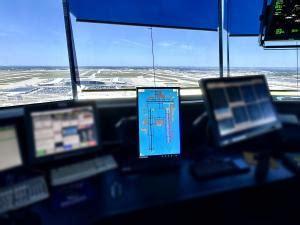
Many U.S. aircraft—particularly tankers and transport planes—still rely on pre-mission planning tools, static maps, and voice communications. These methods are increasingly inadequate in fast-evolving combat scenarios where conditions change by the minute.
Worse still, existing systems struggle under DDIL conditions (Degraded, Disrupted, Intermittent, or Limited communications). In such environments, data links fail, updates lag, and pilots are left making critical decisions with incomplete information.
The consequences are predictable: reduced survivability, slower response times, and increased risk of friendly fire or mission failure.
The Tactical Moving Map: OMEN’s First Breakthrough Application
The first major application under the OMEN framework is a Tactical Moving Map system—a deceptively simple concept with transformative implications.
This tool will provide pilots with a real-time, map-based interface that integrates:
- Threat detection and prioritization
- Blue-force tracking and identification
- Dynamic airspace updates
- Route optimization and mission adjustments
- Environmental and terrain intelligence
Unlike traditional cockpit displays, this system is designed to function even in offline or degraded communication scenarios, ensuring continuity of awareness when it matters most.
It essentially transforms the cockpit into a live command node, rather than a passive receiver of fragmented data.
Building the Backbone: Open Architecture and Data Fusion
What makes OMEN particularly powerful is its open architecture design. This allows for rapid development and deployment of new applications, ensuring the system can evolve alongside emerging threats.
Key technical components include:
- Software Development Kits (SDKs) and open APIs for seamless integration
- A Critical Abstraction Layer (CAL) to normalize data across platforms
- Compatibility with systems like Cursor on Target (CoT) and Unified Data Library (UDL)
- Support for software-defined networking (SD-WAN) and advanced communications
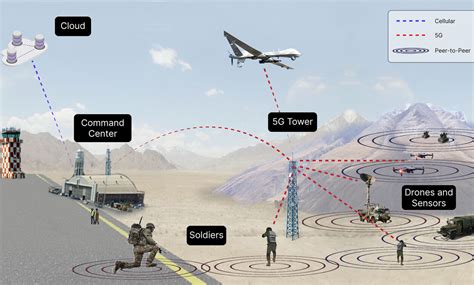
This architecture ensures that data from satellites, drones, ground units, and other aircraft can be fused into a single, coherent picture—regardless of source or format.
The result is not just better awareness, but faster, smarter decision-making under pressure.
From Fragmentation to Dominance: Strategic Implications of OMEN
The implications of OMEN extend far beyond individual missions. At a strategic level, it represents a shift toward network-centric warfare, where information superiority becomes the decisive factor.
By enabling real-time collaboration across platforms, OMEN allows commanders to:
- Rapidly retask assets based on evolving threats
- Minimize risks associated with misidentification
- Enhance coordination in complex, multi-domain operations
- Sustain operational tempo in contested environments
This is particularly critical as adversaries develop advanced anti-access/area denial (A2/AD) capabilities, designed to disrupt traditional communication and navigation systems.
In such scenarios, the side that maintains situational clarity gains a decisive edge.
Reducing Losses and Restoring Confidence in Air Power
At its heart, the push for OMEN is about one thing: reducing preventable losses.
The Iran conflict demonstrated that even highly trained crews and advanced aircraft are vulnerable when operating without a unified operational picture. Friendly fire incidents, mid-air collisions, and mission failures are not just tactical setbacks—they erode confidence in the entire system.
By providing accurate, real-time, and actionable information, OMEN has the potential to dramatically improve:
- Aircrew survivability
- Mission success rates
- Operational efficiency
Perhaps most importantly, it restores a critical advantage that has quietly eroded: clarity in chaos.
A New Era of Air Combat Awareness
The lessons of the Iran war are unlikely to be forgotten anytime soon. They have forced a reassessment of long-held assumptions about air superiority and exposed vulnerabilities that can no longer be ignored. OMEN represents a decisive response—one that acknowledges a simple but powerful truth: in modern warfare, information is not just support—it is survival.
As the U.S. Air Force moves forward with this initiative, the goal is clear: to ensure that every pilot, in every aircraft, operates with a complete, real-time understanding of the battlespace. Because in the skies of tomorrow, the difference between mission success and catastrophic loss may come down to a single factor— who sees the full picture first.