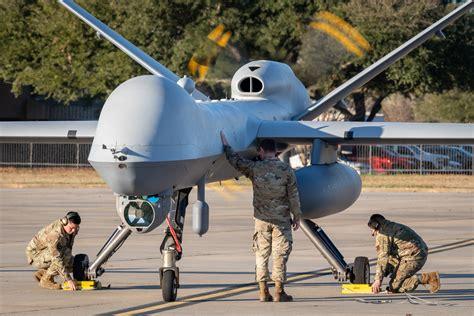
The sudden loss of 11 advanced American drones in less than two weeks over Iran has stunned military analysts and defense planners alike. The aircraft in question—the MQ-9 Reaper, a cornerstone of modern U.S. drone warfare—has spent nearly two decades operating with remarkable success across battlefields from Afghanistan to Libya. Yet during the opening phase of Operation Epic Fury, the conflict’s skies have turned hostile for this once-dominant unmanned aircraft.
Officials from the United States Air Force and United States Central Command acknowledge privately that Iranian air defenses have managed to neutralize a significant number of Reapers in a remarkably short period. Each loss represents not just a financial hit—estimated between $16 million and $30 million per aircraft—but a strategic signal that modern integrated air defense networks can threaten even the most sophisticated drones.
The numbers tell the story starkly. By March 9, U.S. officials confirmed that 11 MQ-9 drones had been destroyed since the start of the campaign. While the United States has not publicly detailed the circumstances behind every shootdown, the pattern emerging across the conflict suggests a systematic vulnerability in the Reaper’s operational model when facing a technologically capable adversary.
USAF MQ-9 Reaper loitering at medium altitude over Fars Province, Iran, carrying a heavy load of air to ground weapons. pic.twitter.com/F5XM1fTtaB
— OSINTtechnical (@Osinttechnical) March 2, 2026
The Reaper’s Central Role in Operation Epic Fury
At the heart of the current conflict lies the extensive use of the MQ-9 Reaper as an ISR and strike platform. ISR—short for Intelligence, Surveillance, and Reconnaissance—is the digital nervous system of modern warfare. The Reaper excels at this mission, providing commanders with persistent surveillance and precision targeting capabilities.
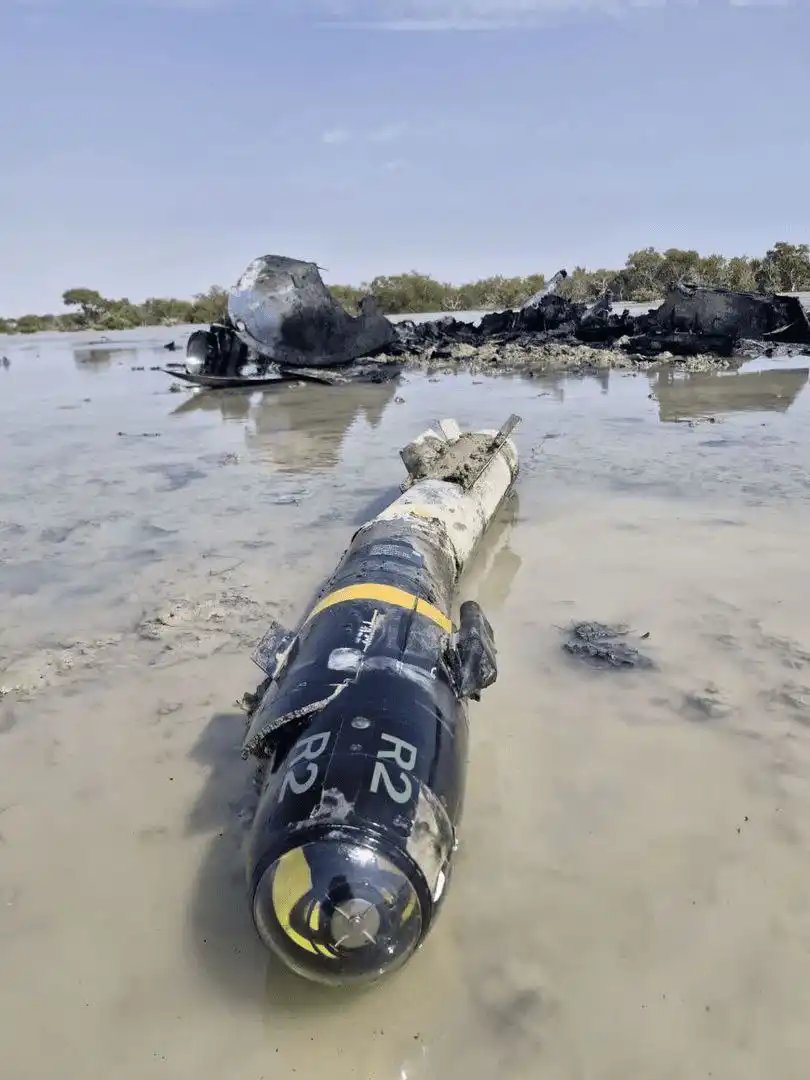
During Operation Epic Fury, these drones have been used to monitor Iranian missile launch sites, track mobile military units, and guide precision strikes conducted by American and Israeli aircraft. Several widely circulated videos show Reapers launching AGM-114 Hellfire missiles at Iranian ballistic missile launchers, including one dramatic strike near the southern city of Shiraz moments before a missile launch.
These drones also perform another crucial task: laser designation. Fighters dropping laser-guided bombs rely on the Reaper’s targeting sensors to illuminate targets from long distances, dramatically improving strike accuracy. In effect, the Reaper functions as a floating command node, orchestrating attacks across the battlefield.
Without such platforms, manned aircraft would face greater exposure to hostile air defenses while conducting the same missions. For this reason, despite mounting losses, Reapers remain heavily deployed across the theater.
Iran’s Air Defense Network: A Layered Shield
The reason behind the sudden spike in shootdowns becomes clearer when examining Iran’s integrated air defense architecture. Unlike insurgent groups or lightly equipped militias, Iran possesses a layered network of radar, missiles, and electronic warfare systems designed specifically to counter aerial threats.
Central to this network are systems such as the Bavar‑373, an Iranian long-range surface-to-air missile platform often compared to Russia’s S‑300 system. These missile batteries can track and engage targets dozens of miles away, forming the outer layer of the defensive umbrella.
Below that layer operate mobile air defense units, including radar-guided short- and medium-range missiles that can rapidly reposition after firing. This mobility presents a nightmare scenario for attacking forces. Even if fixed installations are destroyed early in a conflict, mobile launchers can relocate, hide, and strike again.
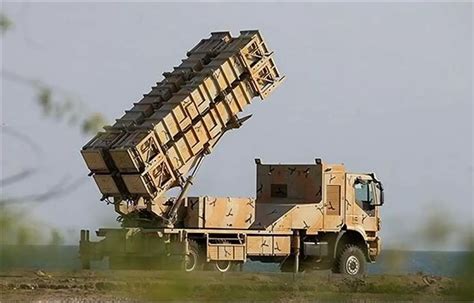
For drones like the Reaper—aircraft that rely heavily on predictable flight patterns and extended loiter times—such defenses create a dangerous environment. Unlike stealth aircraft designed to evade radar, the MQ-9 possesses a relatively large radar cross-section, making it easier for advanced sensors to detect and track.
Why the MQ-9 Reaper Is Suddenly Vulnerable
The Reaper was engineered for a specific style of warfare: counterterrorism operations in permissive environments. For nearly twenty years, it operated primarily over regions where adversaries lacked sophisticated radar or missile systems.
Against insurgent groups in Afghanistan or ISIS fighters in Iraq and Syria, the Reaper was nearly untouchable. It could loiter at high altitude for hours while collecting intelligence and launching precision strikes.
However, modern state adversaries introduce several challenges:
Slow speed:
The MQ-9 cruises at roughly 200 knots, dramatically slower than fighter jets. This makes it vulnerable to radar-guided missiles once detected.
Large radar signature:
Without stealth shaping or coatings, the aircraft is comparatively easy for modern radar to track.
Dependence on satellite communication:
The drone relies on beyond-line-of-sight data links, meaning operators control it via satellite from thousands of miles away. Disrupting this link can render the aircraft effectively blind or uncontrollable.
In other words, the Reaper is extraordinarily capable—but it was never designed to penetrate heavily defended airspace.
Electronic Warfare and the Battle for the Signal
One of the most intriguing aspects of the recent shootdowns involves reports of electronic warfare interference. Some unverified claims suggest that Iranian units managed to trigger a “total link failure” in at least one MQ-9.
Electronic warfare units can deploy high-power GPS jamming or spoofing systems, which interfere with navigation signals or satellite communications. If the control link between drone and operator is severed, the aircraft may enter an automated safety mode—or become vulnerable to interception.
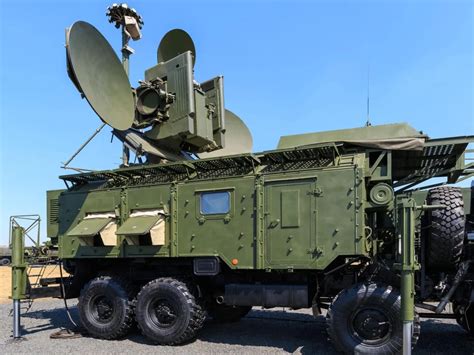
Iran has invested heavily in this field over the past decade. Its military doctrine emphasizes asymmetric methods of countering technologically superior forces, and electronic warfare fits perfectly into that strategy.
Even temporary disruptions could create opportunities for surface-to-air missile systems to engage the drone while it struggles to maintain stable control.
The Mysterious “358” Missile Threat
Another emerging theory circulating among defense analysts involves a little-known weapon often referred to as the “358 missile.”
Unlike traditional surface-to-air missiles that rely on radar guidance, this weapon reportedly operates as a loitering interceptor. After launch, it can patrol an area and autonomously target airborne threats such as drones.
Although details remain limited and official confirmation is lacking, such a system would be particularly effective against slow, high-endurance aircraft like the MQ-9. A loitering interceptor could simply wait in the airspace until a drone appears, eliminating the need for complex radar tracking.
If these reports prove accurate, the implication is significant: air defense technology is evolving specifically to counter unmanned systems.
A Combat Veteran of the War on Terror
The irony of the Reaper’s current struggles lies in its extraordinary combat history. Since entering service in 2007, the drone has become one of the most recognizable symbols of modern aerial warfare.
Throughout the War on Terror, MQ-9s conducted thousands of sorties across multiple continents, supporting operations in Afghanistan, Iraq, Syria, and Libya. During the 2016 Battle of Sirte, Reapers delivered nearly 500 close air support strikes against ISIS positions, often operating in dense urban environments.
The aircraft’s design makes it a remarkable battlefield asset:
- Endurance: Up to 27 hours in the air
- Operational range: Around 1,000 miles
- Payload capacity: Approximately 3,850 pounds of weapons
This allows the drone to carry combinations of Hellfire missiles, Paveway laser-guided bombs, and JDAM precision munitions.
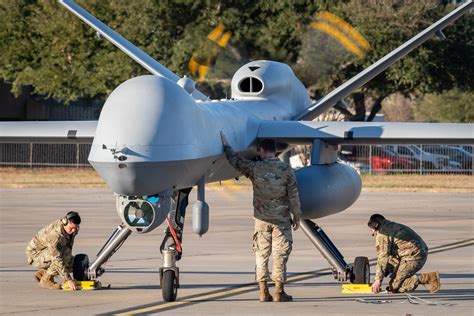
Equipped with the Multi-Spectral Targeting System (MTS-B)—a powerful sensor package combining infrared cameras, electro-optical imaging, laser rangefinders, and designators—the drone can identify and track targets miles away. These sensors provide the “eyes in the sky” that enable coordinated strikes by aircraft and ground forces.
The Strategic Value of Losing Drones Instead of Pilots
Despite the apparent setback, there is an important strategic dimension to these losses. In modern warfare, drones like the MQ-9 serve a crucial function: absorbing risk that would otherwise fall on human pilots.
When an unmanned aircraft is destroyed, the loss is financial and tactical—but no pilot is captured or killed. This makes commanders far more willing to deploy drones into dangerous airspace to gather intelligence or provoke enemy defenses.
Military planners often accept that drones may be expendable reconnaissance assets. If a Reaper forces an air defense radar to activate or reveals the location of a missile battery before being shot down, it may still contribute valuable intelligence.
In this sense, the drone acts almost like a high-tech scout, probing the enemy’s defensive network.
Iran’s Message: Air Superiority Is Not Absolute
Perhaps the most important lesson from the recent losses is geopolitical rather than technical. The downing of multiple MQ-9 drones demonstrates that complete air superiority remains difficult to achieve against well-prepared defenses.
Iran’s military leadership, including the Islamic Revolutionary Guard Corps, has publicly claimed the destruction of more than 100 drones of various types, including Israeli platforms such as Hermes and Heron systems. While these numbers remain difficult to verify, they underline Tehran’s narrative: its defensive network can challenge Western aerial dominance.
Whether exaggerated or not, the claim carries symbolic weight. For decades, American airpower has operated with near-total freedom over most battlefields. The skies above Iran, however, appear to be far more contested.
ANOTHER US MQ‑9 DRONE WORTH OVER $30+ MILLION SHOT DOWN BY IRAN — Tasnim pic.twitter.com/gDihzqVcaX
— RT (@RT_com) March 10, 2026
The Future of Drone Warfare
The losses suffered by the MQ-9 Reaper do not signal the end of drone warfare. Instead, they highlight the next evolutionary phase of unmanned combat aviation.
Future drones are increasingly expected to incorporate stealth shaping, higher speeds, autonomous navigation, and improved electronic warfare resistance. Programs like next-generation loyal wingman drones and stealth UAVs aim to operate safely in environments where the Reaper struggles.
The battlefield is adapting. Air defenses are becoming smarter, electronic warfare is intensifying, and autonomous weapons are emerging. The Reaper’s experience over Iran reveals a simple but profound truth about technological competition in warfare:
Every breakthrough invites a countermeasure.
For nearly two decades, the MQ-9 dominated the skies of asymmetric conflicts. Over Iran, it has encountered an adversary capable of pushing back—and in doing so, it has exposed the shifting balance of power in the age of advanced air defense systems.