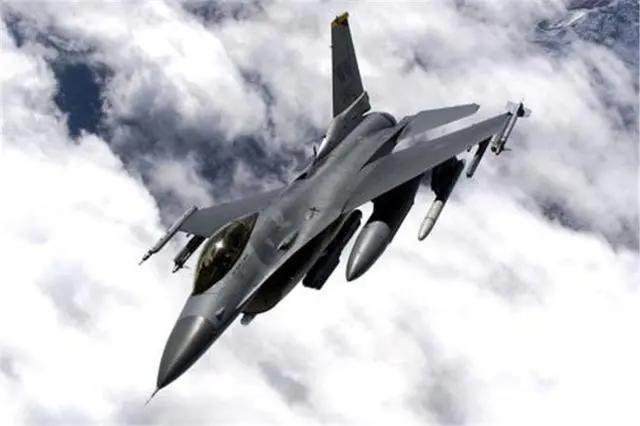
The General Dynamics F-16 Fighting Falcon is one of the most versatile and widely used fighter aircraft in the world. First introduced in the 1970s, this multi-role fighter has participated in numerous conflicts, excelling in both air-to-air and air-to-ground missions. Despite its reputation for survivability, several F-16s have been lost in combat due to surface-to-air missiles (SAMs), air-to-air engagements, and mechanical failures. This article provides a detailed examination of significant instances where the F-16 was shot down.
1995: U.S. F-16C Shot Down in Bosnia
Incident Overview
During the Bosnian War, a U.S. F-16C conducting a reconnaissance mission over Bosnia was hit by a Serbian SA-6 surface-to-air missile (SAM). The aircraft, part of NATO’s No-Fly Zone enforcement, was targeted as hostilities escalated between Western forces and Serbian air defenses.
Pilot’s Escape and Survival
The pilot, Captain Scott O’Grady, managed to eject successfully and evaded capture for six days. Utilizing survival training techniques, he avoided Serbian patrols and was ultimately rescued by a U.S. Marine Corps CH-53 helicopter in a high-risk extraction mission.
Strategic Impact
This marked the first U.S. F-16 combat loss since the Gulf War, reinforcing the effectiveness of Serbian air defenses. NATO subsequently intensified airstrikes on Serbian positions, leading to a shift in military strategy.
1996: Greek-Turkish Air Clash Over the Aegean
Aerial Engagement
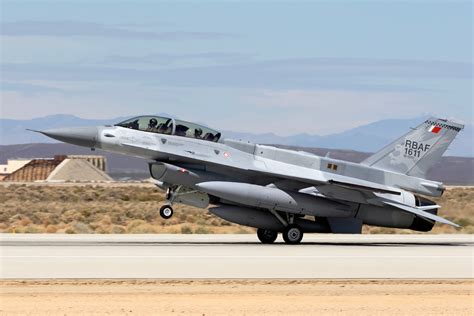
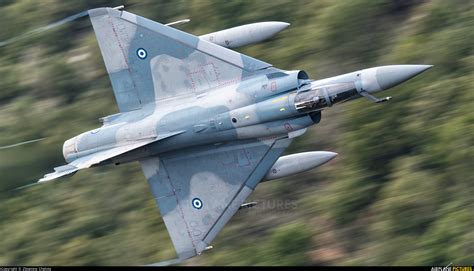
In 1996, an escalating territorial dispute between Greece and Turkey resulted in the only confirmed air-to-air kill of an F-16. A Turkish F-16D was engaged by a Greek Mirage 2000EG during a dogfight over the Aegean Sea. The Greek pilot fired a Magic II missile, hitting the Turkish aircraft.
Aftermath
One of the Turkish pilots, Nail Erdogan, perished, while the other was rescued. Both governments initially downplayed the incident, citing mechanical failure. However, years later, Greek officials acknowledged the engagement.
Geopolitical Implications
This encounter exacerbated tensions between NATO allies, fueling continued military build-ups in the region. The incident remains a reference point for modern air combat strategies and rules of engagement.
2018: Israeli F-16 Downed by Syrian Air Defenses
Conflict Escalation
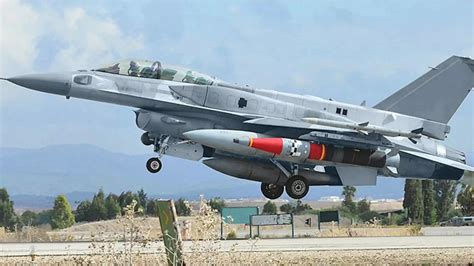
During Israeli airstrikes on Iranian military positions in Syria, an Israeli F-16I Sufa was struck by Syrian anti-aircraft missiles. Syrian forces launched a barrage of Soviet-era SA-5 and SA-17 missiles, one of which hit the F-16.
Pilot Response and Ejection
The pilots ejected safely over northern Israel, sustaining injuries. The aircraft crash-landed in Israeli territory.
Retaliatory Strikes
In response, Israel launched an extensive counterattack, destroying Syrian SAM sites and Iranian installations. This marked the most significant aerial engagement between Israel and Syria since the 1982 Lebanon War.
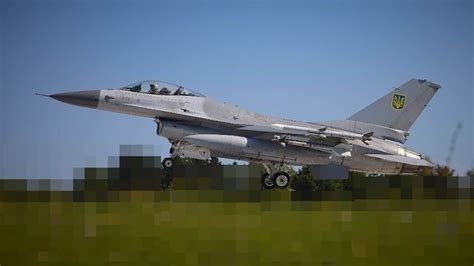
2024: Ukrainian F-16s in the Russo-Ukrainian War
Russian Claims of F-16 Kills
By late 2024, Russia claimed to have shot down more than 30 Ukrainian F-16s, targeting aircraft provided by NATO allies. Russian S-400 missile systems and fighter aircraft reportedly intercepted Ukrainian F-16s conducting strikes in Zaporizhzhia and eastern Ukraine.
Disputed Air-to-Air Kill
Ukraine allegedly downed a Russian Su-34 fighter-bomber using an F-16, but analysts questioned the feasibility of this claim due to the F-16’s limited missile range and Ukrainian pilot inexperience.
Strategic Consequences
These aerial losses underscored the high-risk operational environment over contested territories, emphasizing the need for advanced electronic warfare capabilities and pilot training.
Training and Accidental Losses
U.S. F-16 Crash in Texas (2025)
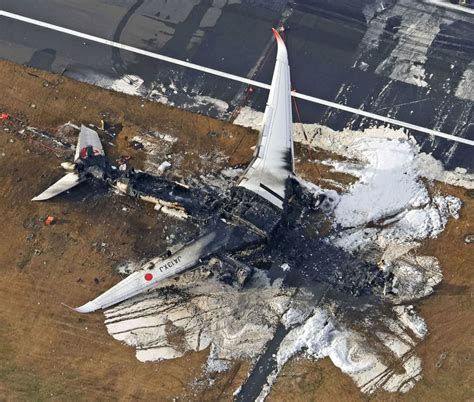
Not all F-16 losses occur in combat. In early 2025, a U.S. Air Force F-16 crashed in Texas due to mechanical failure, leading to a review of aging aircraft maintenance procedures.
South Korean F-16 Training Mishap
A South Korean F-16 pilot accidentally released a bomb over a civilian area during training exercises. While there were no casualties, the incident raised questions about safety protocols in peacetime operations.
Conclusion
While the F-16 remains one of the most capable and widely used fighter jets, its combat record includes several notable losses. Most F-16 shootdowns have resulted from surface-to-air missile engagements, with air-to-air losses being rare. These incidents underscore the importance of electronic warfare, air superiority, and pilot training in modern conflicts.
Frequently Asked Questions (FAQ)
1. What is the most common cause of F-16 losses in combat?
The majority of F-16 combat losses result from surface-to-air missile (SAM) systems, particularly in environments where enemy air defenses are advanced and well-coordinated.
2. Has an F-16 ever been shot down in a dogfight?
Yes, the only confirmed air-to-air kill of an F-16 occurred in 1996 when a Greek Mirage 2000 shot down a Turkish F-16D over the Aegean Sea.
3. How does the F-16 compare to modern fighter jets in survivability?
The F-16 remains highly effective, but newer aircraft like the F-35 and F-22 offer superior stealth, avionics, and electronic warfare capabilities, making them less vulnerable in contested airspace.
This analysis highlights the enduring legacy and evolving challenges of the F-16 in modern aerial warfare.