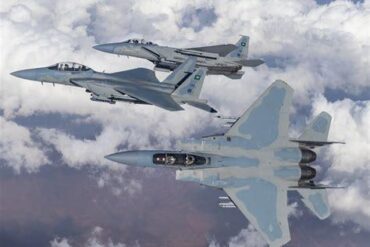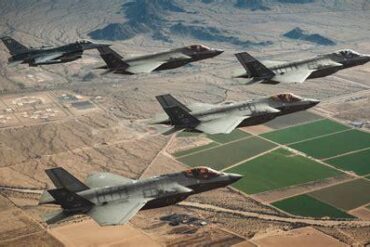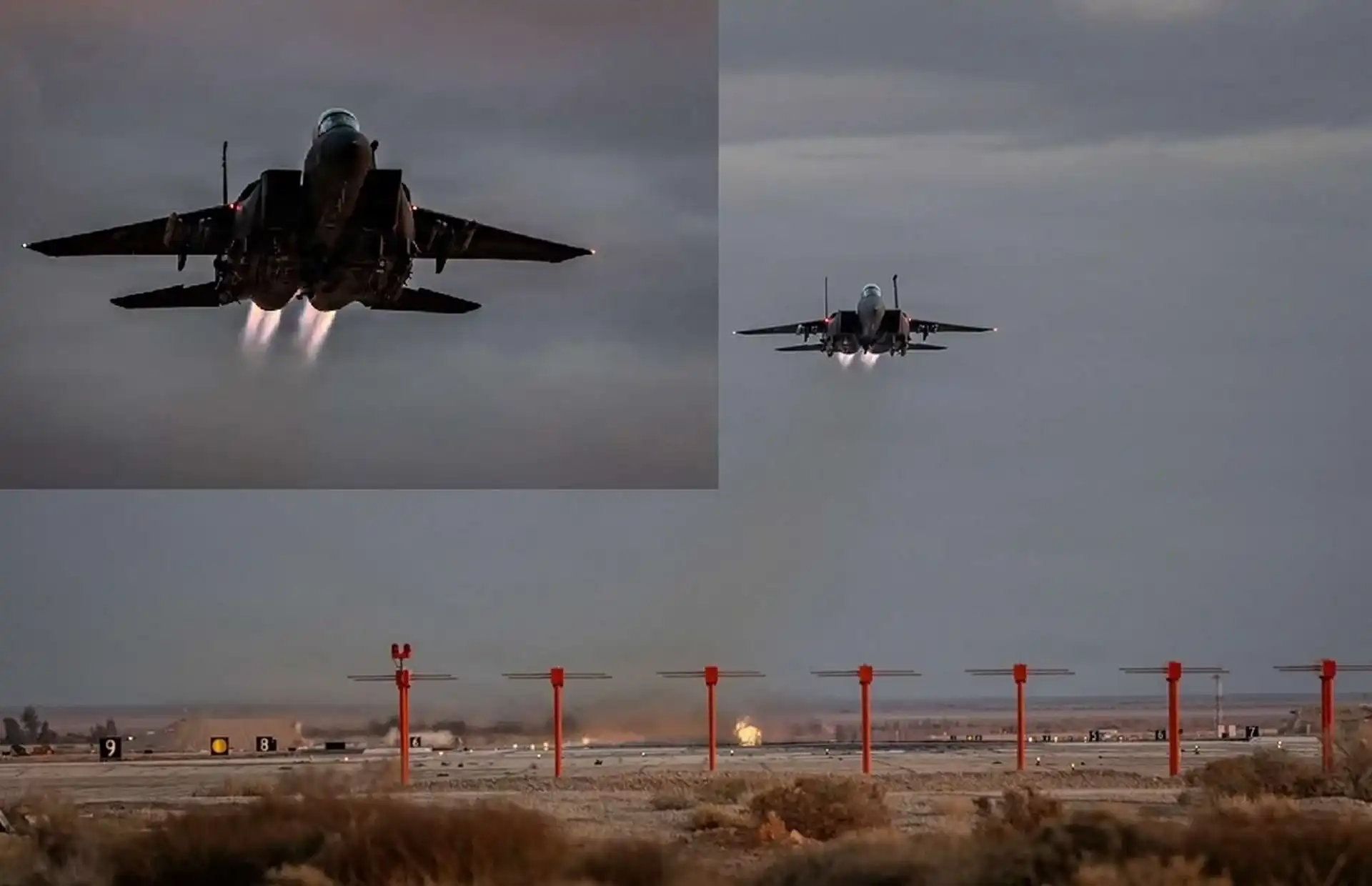
The United States has deployed F-15E Strike Eagles to an undisclosed American base in the Middle East, reinforcing its airpower posture amid renewed ISIS activity and rising tensions with Iran-backed militias. Confirmed by U.S. Central Command through official imagery and statements, the move underscores Washington’s effort to strengthen rapid-response strike capabilities while maintaining operational security around the aircraft’s precise location.
The deployment reflects a calculated adjustment rather than a dramatic escalation. Regional instability has intensified in recent months, driven by persistent ISIS insurgent networks, drone and rocket attacks attributed to militia groups, and increasingly assertive Iranian signaling. By positioning advanced multirole fighters forward, the United States enhances both deterrence and operational flexibility without announcing a large-scale force buildup.
The aircraft are drawn from the 494th Expeditionary Fighter Squadron, forward-based at RAF Lakenheath in the United Kingdom. Open-source flight tracking and logistical patterns indicate a package consistent with a 12-aircraft expeditionary squadron supported by KC-135 Stratotanker aerial refueling assets. That detail is strategically significant: it demonstrates the Air Force’s ability to surge combat-coded fighters from Europe into the U.S. Central Command theater quickly, integrate them into established tanker and intelligence networks, and do so without publicly telegraphing every operational step.
F-15E Strike Eagle Capabilities Strengthen Regional Airpower
The F-15E Strike Eagle remains one of the most versatile heavy fighters in the U.S. inventory. Designed as a long-range, twin-engine multirole aircraft, it combines high-speed performance with significant payload capacity and advanced avionics. Powered by two Pratt & Whitney afterburning turbofan engines, the aircraft can approach speeds of Mach 2.5 and sustain demanding maneuver profiles. Its maximum takeoff weight of approximately 81,000 pounds enables it to carry a substantial mix of air-to-air missiles, precision-guided bombs, and electronic warfare systems.
Conformal fuel tanks mounted along the fuselage extend operational range without occupying external hardpoints. This design allows the Strike Eagle to travel long distances while preserving weapon-carrying capacity, a critical advantage in the expansive airspace of the Middle East. When paired with aerial refueling, the aircraft’s endurance supports extended patrols, rapid-response strikes, and defensive counter-air missions.
The F-15E’s two-person cockpit enhances mission effectiveness. The pilot concentrates on flight operations, navigation, and defensive maneuvering, while the weapons systems officer manages radar, targeting pods, electronic warfare systems, and datalink connectivity. In dynamic operational environments, that division of labor reduces cognitive load and improves tactical responsiveness.
Precision Strike and Counterterror Operations Against ISIS
One core mission set tied to the deployment is continued pressure on ISIS networks in Syria and surrounding areas. Under ongoing counterterror operations, U.S. forces have conducted precision strikes against logistics hubs, weapons storage facilities, and leadership elements linked to the group. Although ISIS no longer controls large swaths of territory as it did during its peak, its decentralized cells remain capable of attacks against local partners and coalition forces.
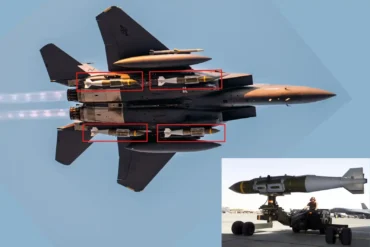
The F-15E is particularly well-suited for these operations. Equipped with advanced targeting pods such as the Sniper Advanced Targeting Pod or Litening systems, the aircraft can identify and track targets with high-resolution infrared and laser designation capabilities. It can deliver Joint Direct Attack Munitions (JDAMs), laser-guided bombs, and Small Diameter Bombs designed to minimize collateral damage in densely populated or complex terrain.
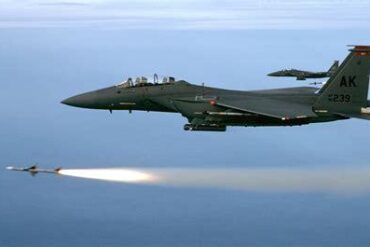
In addition to precision strike capabilities, the aircraft carries AIM-120 AMRAAM and AIM-9 Sidewinder missiles for air-to-air engagements, ensuring defensive coverage in contested airspace. The internal 20mm M61 Vulcan cannon provides an additional option for close-in engagements when required by mission parameters.
This blend of air-to-ground precision and air-to-air defense makes the Strike Eagle a flexible tool in environments where threats can shift rapidly from insurgent targets to unmanned aerial systems or hostile aircraft incursions.
Advanced Electronic Warfare and Survivability in High-Threat Environments
Survivability remains central to the F-15E’s operational value. Modernized variants are equipped with the APG-82(V)1 Active Electronically Scanned Array (AESA) radar, offering improved target detection, tracking accuracy, and resistance to electronic countermeasures. AESA radar technology allows simultaneous air-to-air and air-to-ground operations, increasing tactical efficiency.
Equally significant is the Eagle Passive/Active Warning and Survivability System (EPAWSS). This advanced electronic warfare suite autonomously detects, identifies, and geolocates radar threats, then applies jamming or countermeasures to degrade hostile tracking systems. In a theater where adversaries employ layered surface-to-air missile systems and one-way attack drones, electronic resilience is critical.
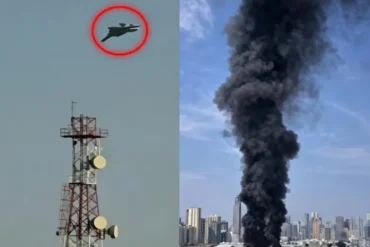
Drone warfare has become a defining feature of recent Middle East conflicts. Militia groups and state-backed actors increasingly use unmanned systems for surveillance, decoy operations, and direct attack missions against military installations. A forward-deployed fighter force capable of intercepting such threats strengthens base defense and regional airspace security.
Strategic Deterrence Toward Iran and Proxy Forces
Beyond counterterrorism, the deployment carries a broader strategic message directed at Iran and affiliated militias. Tensions have risen amid reported threats to U.S. bases, commercial shipping lanes, and regional allies. Forward-based F-15Es provide the United States with credible retaliatory options, ranging from targeted strikes on launch sites and command centers to sustained defensive patrols over critical infrastructure.
Deterrence operates on perception as much as hardware. The visible presence of advanced strike aircraft signals that any escalation could be met swiftly and with precision. Unlike larger force buildups that may provoke political backlash, the deployment of a fighter squadron represents a scalable and reversible measure. It allows U.S. planners to adjust posture rapidly in response to intelligence assessments or shifting threat conditions.
At the same time, the choice of the F-15E reflects pragmatism. While fifth-generation platforms such as the F-35 offer stealth advantages, the Strike Eagle’s heavy payload, range, and proven reliability make it well-suited for sustained operations in environments where air superiority is already largely established but unpredictable threats persist.
Operational Flexibility in a Volatile Security Environment
The Middle East remains a complex operating environment shaped by overlapping conflicts, proxy rivalries, and non-state actors. Maintaining freedom of action requires not only advanced aircraft but also integrated command-and-control networks, intelligence-sharing mechanisms, and logistical depth. The rapid deployment of F-15Es from Europe into the CENTCOM area illustrates the Air Force’s ability to leverage global basing structures and mobility assets in support of regional objectives.
By reinforcing airpower at an undisclosed base, the United States strengthens its capacity to conduct precision strikes against ISIS, defend against unmanned aerial threats, and deter state or proxy aggression. The move represents a calibrated response to evolving security challenges rather than a wholesale strategic shift.
As regional risks fluctuate, flexible air assets such as the F-15E Strike Eagle provide policymakers with a spectrum of options short of large-scale force deployments. In the current security climate, the aircraft serves simultaneously as a shield against immediate threats and a sword capable of projecting decisive force when required.