Drone Dominance Strategy Accelerates U.S. Military Transformation
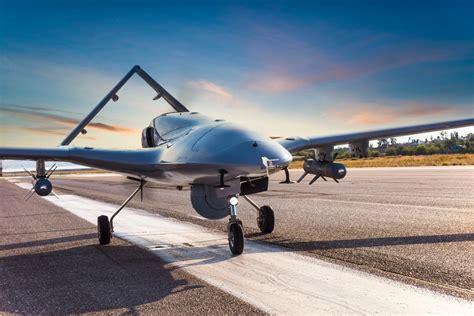
The Pentagon’s decision to procure 30,000 new drones marks a defining shift in modern warfare, where agility, autonomy, and scalability outweigh traditional force structures. What began decades ago with the transformation of the RQ-1 Predator into the armed MQ-1 has evolved into a sweeping doctrine: unmanned systems are no longer support tools—they are frontline assets shaping strategic outcomes. The newly announced winners of the Gauntlet I exercise demonstrate how rapidly innovation is converging with battlefield necessity.
At the heart of this initiative lies the Department of Defense’s broader “Drone Dominance” program, an ambitious effort to flood operational theaters with low-cost, high-impact unmanned systems. Unlike legacy procurement cycles that span years, this approach prioritizes rapid testing, immediate deployment, and continuous iteration. The Gauntlet I trials, held at Fort Benning, Georgia, were not theoretical showcases but demanding operational stress tests designed to reveal which platforms could perform under pressure with minimal training.
The stakes were deliberately high. Operators were given only two hours of training per drone system, simulating real-world constraints where adaptability can mean survival. Targets placed over 6.2 miles away forced drones to demonstrate not just range but precision, resilience, and autonomy. Out of 25 competing companies, only three emerged as clear leaders: Skycutter, Neros, and Nepatree, each bringing a distinct technological edge to the battlefield.
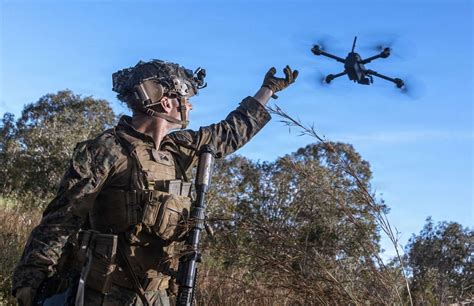
Skycutter, Neros, Nepatree: The New Titans of Tactical UAVs
The success of Skycutter underscores the growing importance of modular, rapidly manufactured drone systems. Its use of 3D printing technology enables the production of highly customizable UAVs, from heavy-lift logistics platforms to compact ISR units that fit inside a soldier’s backpack. This flexibility is more than convenience—it is a logistical revolution, allowing forces to adapt hardware to mission requirements in near real time.
Meanwhile, Neros has carved out a niche in kinetic-strike drones, delivering compact yet lethal platforms designed for precision attacks. These drones prioritize speed, maneuverability, and destructive capability, aligning closely with the Pentagon’s interest in one-way attack systems. Their versatility allows them to operate across varied terrains and mission profiles, making them particularly valuable in unpredictable combat environments.
Nepatree, already recognized for its Bumblebee and Hornet drones, demonstrated consistent performance across multiple test scenarios. Its systems have gained traction with the Washington National Guard, signaling readiness not just for experimentation but for immediate integration into operational units. Reliability, rather than novelty, appears to be Nepatree’s defining strength—a trait the military values highly when scaling deployments.
Gauntlet I: A Blueprint for Rapid Drone Procurement
Unlike traditional defense acquisition programs, Gauntlet I compressed evaluation, selection, and deployment into a matter of weeks. The selected companies are expected to deliver the full batch of 30,000 drones within five months, an astonishing pace by Pentagon standards. This reflects a deliberate pivot toward mass procurement of affordable systems, with an initial target cost of $5,000 per unit, potentially decreasing to $2,000 as production scales.
This cost-conscious strategy is not merely economic—it is tactical. By deploying large numbers of expendable drones, the U.S. military can overwhelm adversaries, saturate defenses, and maintain operational tempo without risking high-value assets. The concept mirrors lessons learned from recent conflicts, where quantity, adaptability, and persistence have proven decisive.
Lessons from Modern Conflict: Why One-Way Drones Matter
The emphasis on one-way attack drones reflects hard-earned insights from conflicts such as the Russo-Ukrainian War and escalating tensions involving Iran. Systems like the Iranian Shahed drones have demonstrated how relatively inexpensive UAVs can disrupt advanced military infrastructure, challenge air defenses, and reshape battlefield dynamics.
For the Pentagon, matching and surpassing these capabilities is no longer optional. The integration of similar systems into U.S. arsenals ensures parity—and potentially superiority—in an era where asymmetric warfare increasingly favors unmanned solutions. Programs like the “Game of Drones” at Edwards Air Force Base further reinforce this trajectory, creating a pipeline of continuous innovation and competitive development.
The Future of Air Dominance Is Unmanned and Unrelenting
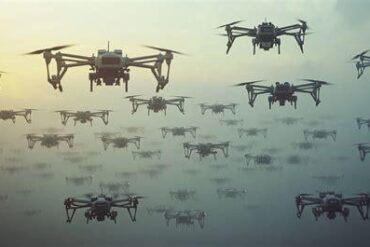
The deployment of 30,000 drones is not just a procurement milestone; it is a declaration of intent. Air dominance is being redefined—not by faster jets or stealthier bombers, but by swarms of intelligent, expendable machines capable of operating where humans cannot. As the Drone Dominance program evolves, the battlefield will become increasingly saturated with autonomous systems that are cheaper, faster to produce, and harder to counter.
In this emerging landscape, the winners of Gauntlet I are not just contractors—they are architects of a new military paradigm.