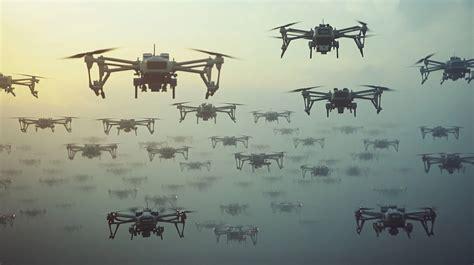
China’s rapid evolution in unmanned warfare has taken a striking leap forward with the unveiling of Atlas, a drone swarm control system that allegedly coordinates over 90 aircraft in real time. Once confined to reconnaissance roles, drones have now become central to modern battlefield strategy, and the concept of swarm warfare is pushing that transformation even further. Instead of treating drones as isolated units, Atlas integrates them into a cohesive, intelligent network capable of executing complex missions with minimal human input.
Recent footage aired by CCTV showcased a highly orchestrated demonstration of this system in action. What sets Atlas apart is not just the number of drones it can control, but the degree of autonomy embedded within each unit. The demonstration suggested a future where warfare is no longer dictated by individual commands, but by coordinated machine intelligence operating at scale.
Atlas System Demonstration: Autonomous Target Identification and Strike Execution
In the broadcast, three visually similar targets were placed within a designated strike zone, creating a scenario designed to test autonomous decision-making under ambiguity. Atlas reportedly managed the entire operational chain without manual intervention. The system identified the correct target—allegedly a command vehicle—then deployed drones that adjusted their trajectory mid-flight and executed a precise strike.
This level of autonomy reflects a shift from remote-controlled drones to self-directed combat systems. Instead of waiting for instructions, each drone appears capable of analyzing data, prioritizing objectives, and adapting to evolving battlefield conditions. The implications are profound: response times shrink dramatically, while operational complexity increases exponentially.
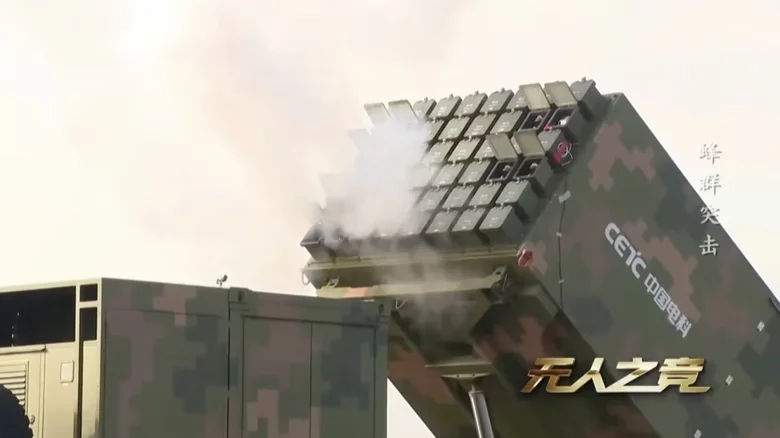
Swarm-2 Launch Platform: The Backbone of High-Density Drone Deployment
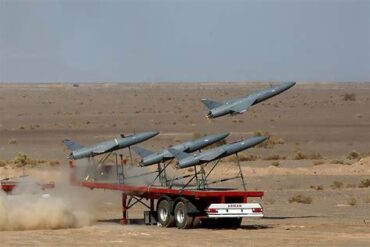
The physical infrastructure supporting Atlas is just as critical as its software. At the center of the system is the Swarm-2 ground combat vehicle, first introduced at Airshow China 2024 in Zhuhai. Each unit is capable of launching up to 48 fixed-wing drones, effectively acting as a mobile deployment hub.
When paired with a dedicated command vehicle, the system scales significantly. Reports suggest that a single command unit can coordinate up to 96 drones simultaneously, effectively merging two launch platforms into one unified swarm. A support vehicle completes the ecosystem, ensuring logistics, maintenance, and sustained operations during extended missions.
The presence of China Electronics Technology Group Corp (CETC) branding on the platform further underscores the industrial backing behind Atlas. As one of China’s largest defense contractors, CETC’s involvement signals that this system is not merely experimental—it is part of a broader push toward AI-integrated military infrastructure.
AI Swarm Algorithms: The Core of Real-Time Coordination
At the heart of Atlas lies a sophisticated swarm-control algorithm designed to synchronize dozens of independent units into a single operational entity. Each drone within the swarm acts as a node in a distributed intelligence network, sharing data continuously and adjusting its behavior in response to both allies and environmental variables.
This algorithm reportedly enables drones to maintain tight formations at high speeds, compensate for wind disturbances, and dynamically reassign roles during missions. The result is a system that behaves less like a collection of machines and more like a coordinated organism, capable of fluid adaptation without centralized micromanagement.

Battlefield Applications: Saturation Attacks and Persistent Surveillance
The modular design of Atlas opens the door to a wide range of battlefield applications, with saturation attacks being one of the most notable. By launching waves of drones from multiple directions, the system can overwhelm enemy air defenses, forcing them into a reactive posture that quickly becomes unsustainable.
Equally significant is the system’s ability to conduct loitering surveillance. Drones can remain airborne over a target area for extended periods, gathering intelligence and waiting for the optimal moment to strike. This capability enhances precision while reducing the risk of collateral damage.
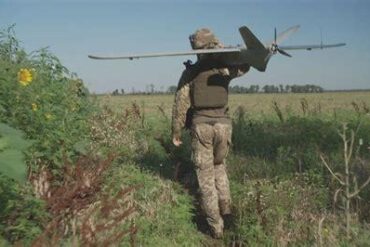
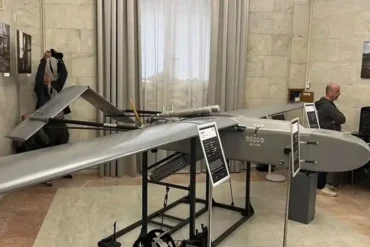
For long-range missions, certain drones are reportedly capable of traveling thousands of kilometers, flying at low altitudes and reduced speeds to evade early detection. This combination of endurance and stealth introduces new challenges for conventional defense systems, which are typically optimized for faster, more predictable threats.
Countermeasures and Global Competition in Swarm Warfare
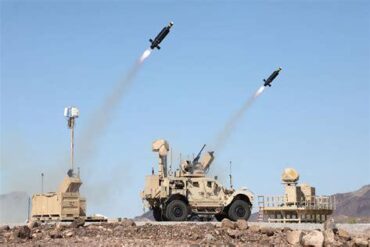
The rise of drone swarms has inevitably triggered the development of countermeasures. China itself is reportedly advancing systems like the Hurricane 3000 microwave weapon, designed to neutralize large numbers of drones simultaneously by disrupting their electronics.
At the same time, other global powers are not standing still. The United States, for instance, has been actively exploring swarm integration using battlefield data from Ukrainian UAV operations, indicating a broader international race to dominate this emerging domain.
This competitive landscape suggests that swarm warfare will not remain a niche capability for long. Instead, it is rapidly becoming a central pillar of next-generation military doctrine, where speed, scale, and autonomy redefine the rules of engagement.
Verification Challenges and Strategic Implications
Despite the impressive claims surrounding Atlas, it is essential to approach the system with a degree of caution. All available information originates from Chinese state media and affiliated experts, with no independent verification of its full capabilities. Demonstrations, while compelling, may not fully reflect real-world performance under contested conditions.
Still, even the possibility of such a system functioning as described signals a dramatic shift in military technology. If validated, Atlas would represent a turning point in autonomous warfare, where a single operator could effectively command an aerial force once requiring an entire squadron.
The broader implication is clear: the future battlefield is not just automated—it is intelligently networked, and systems like Atlas are shaping what that future will look like.