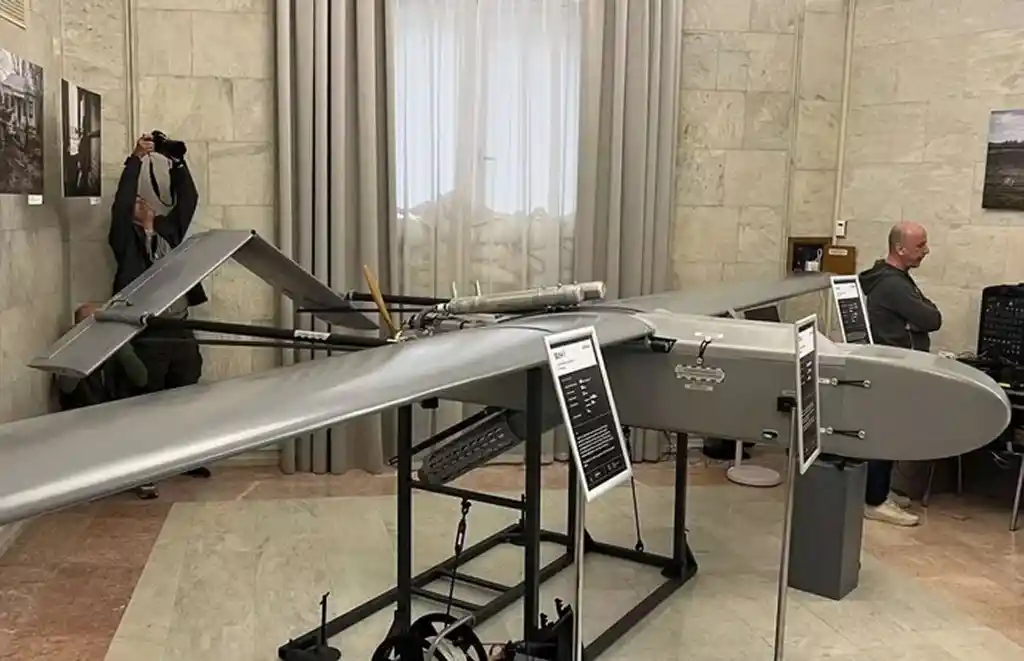
Ukraine’s war effort has entered a new industrialized phase, where scale, speed, and survivability define success. At the heart of this evolution is Fire Point, a rapidly expanding domestic manufacturer now producing up to 200 strike drones daily and supplying approximately 60% of the Ukrainian Defense Forces’ unmanned aerial strikes. This massive capacity is not merely a feat of engineering—it is the strategic pivot enabling Ukraine to wage a sustained, high-tempo war against Russian targets deep beyond the frontlines.
Drone Factories as Frontline Fortresses
Recent reporting from the BBC and Ukrainian defense outlet Militarnyi unveiled rare glimpses into Fire Point’s secretive operations. Journalists were taken, blindfolded, to a secured drone factory—an indication of how these sites now bear strategic value equal to military bases. Guarded intensively, these production hubs have become frequent targets for Russian strikes aiming to break Ukraine’s logistical backbone. Yet, Fire Point’s output continues undeterred, showing that industrial resilience now rivals battlefield resilience.
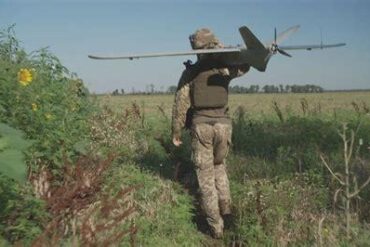
Ukraine’s transformation from improvised drone tinkering in 2022 to full-spectrum industrial production by 2025 is staggering. Where once troops repurposed commercial quadcopters for reconnaissance and kamikaze missions, today there stands a vertically integrated, state-backed drone ecosystem with dedicated lines for reconnaissance drones, FPVs, loitering munitions, and long-range strike UAVs. Fire Point’s rise represents the pinnacle of this ecosystem’s maturation.
The FP-Series: A Full-Spectrum Strike Arsenal
Fire Point’s portfolio includes several strike drone families, each tailored for different tactical and strategic use cases. The FP-1 serves as a deep-strike one-way attack drone with an astounding range of up to 1,600 km and warhead capacity of 120 kg, making it capable of reaching strategic Russian targets far beyond the frontlines. This class of drone is central to Ukraine’s campaign against fuel depots, rail nodes, and command centers well within Russia’s rear.
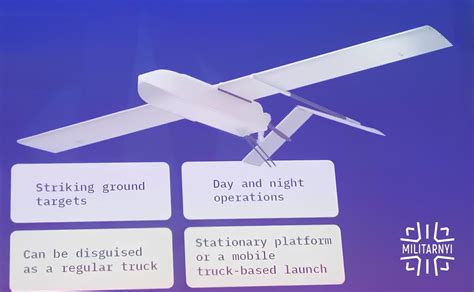
For medium-range operations, the FP-2 fills the gap. With a 200 km range and a 105 kg warhead, it is engineered for operational flexibility. It can autonomously strike stationary targets or be manually guided via radio against mobile ones, operating both day and night. Launch solutions include fixed positions and mobile launchers disguised as civilian trucks, enhancing survivability by evading predictable targeting.
Even more ambitious is the FP-5 “Flamingo”, a ground-launched cruise missile-class UAV with a range of approximately 3,000 km. Designed for strategic deep strikes, the Flamingo boasts a 1,150 kg warhead, Ivchenko AI 25TL turbofan engine, and combined inertial-GPS navigation systems, flying at speeds nearing 950 km/h and altitudes of 5,000 m. Measuring 14 meters in length and 6 meters in wingspan, it resembles a small aircraft more than a traditional drone—a potent alternative to Western-supplied systems Ukraine has yet to receive.
From Hobbyists to High-Tech Assembly Lines
The trajectory of Ukraine’s drone industry parallels its broader wartime mobilization. What began with improvised adaptations of off-the-shelf electronics in 2022 turned into a mass-scale industrial program by late 2024. Volunteer engineers, field soldiers, and state defense planners formed an evolving feedback loop, turning battlefield lessons into manufacturing specs.
Ukraine’s drone output has scaled exponentially. From producing a few thousand units per month in early 2023, the country now reportedly produces over 200,000 drones monthly—a feat made possible through streamlined assembly processes, modular component designs, and investments in contested navigation survivability, including anti-jamming systems and terrain-following capabilities.
Fire Point stands as a centerpiece in this output surge. At full capacity, it is reportedly manufacturing thousands of FP-1 drones per month, aided by automation, workforce training, and logistical efficiency. The company has focused on cost-effective production that accepts drone attrition as a structural part of modern warfare.
Attrition as Doctrine: The Drone as a Consumable
A defining feature of Ukraine’s drone strategy is its embrace of attrition. Unlike manned aircraft, drones are inherently expendable assets, with losses expected from electronic warfare, air defenses, environmental hazards, and mechanical breakdowns. This view has led to a doctrinal shift: drones are not premium tools but ammunition—disposable, replaceable, and constantly in flux.
They are now embedded across all tactical echelons:
- Strategic targeting via FP-1 and FP-5 systems
- Operational harassment and bridge interdiction with FP-2
- Tactical front-line strikes with FPV drones at squad level
- Battlefield intelligence through recon drones feeding artillery
Commander-in-chief reports affirm that drones account for over 60% of Ukrainian strikes, fundamentally reshaping the country’s force posture. Ukrainian forces now conduct precision kinetic effects and targeting support using unmanned platforms, bridging a capability gap where crewed aircraft or long-range missiles are either limited or denied.
Russia’s Drone Barrage and the Imperative of Scale
Ukraine’s push for mass production is also reactive. Russian forces reportedly launch up to 200 Shahed-type drones per day, often in waves designed to overwhelm air defenses or create false targets. Ukraine’s response, averaging half that number daily, must cover both offensive operations and homeland defense.
This dynamic makes industrial capacity itself a weapon. The faster Ukraine can replenish drone losses, the more sustainable its strike tempo becomes. Even the most capable drone becomes irrelevant if it’s too slow to build, too expensive to deploy, or too rare to risk.
Fire Point’s strategy reflects this truth: rapid assembly lines, standardization of parts, low-cost electronics hardened against jamming, and modular airframes that can be upgraded with newer payloads as tech evolves. In this war, the winner may be the side that can build more, faster, not just better.
Implications for NATO and the Global Defense Landscape
Ukraine’s drone industry is fast becoming a case study in asymmetric industrial warfare. As NATO members examine lessons from the Russia-Ukraine conflict, Fire Point’s success poses key questions:
- Can Western defense industries, often reliant on high-cost, low-quantity production models, adapt to a war of attrition?
- Are mass-produced drones the future of force projection and strike deterrence?
- Should Western nations decentralize drone manufacturing and integrate battlefield feedback cycles like Ukraine has?
With no clear end in sight to the war, Fire Point’s role is likely to grow further. Its output is already central to Ukraine’s operational planning, and its expansion could redefine how nations prepare for prolonged high-tech conflict in the future.
Conclusion: When Industry Becomes Strategy
Ukraine’s embrace of industrialized drone warfare, exemplified by Fire Point, is no longer a novelty—it is doctrine. As conventional armies struggle with the cost, time, and vulnerability of traditional platforms, the unmanned revolution underway in Ukraine provides a model that blends strategic depth with tactical utility, scale with survivability, and innovation with affordability.
In the face of Russia’s numerical advantage, Fire Point’s 200 drones a day are not just machines—they are Ukraine’s response to a war of endurance, fought in the skies with silicon, GPS, and resolve. The battlefield has changed, and Ukraine’s drones are redrawing the map one strike at a time.