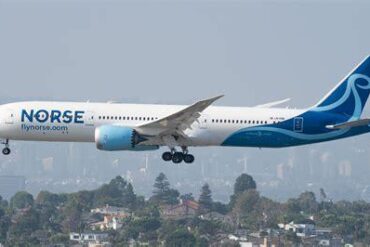
The transatlantic aviation market is usually associated with massive airports, long-haul widebody aircraft, and famous routes connecting global economic centers. Flights between cities such as Paris, New York, London, and Los Angeles dominate public attention, but the North Atlantic also hides some of the most unusual operations in commercial aviation. Among them is a rare 6-hour nonstop transatlantic flight that links France with one of the world’s least-known destinations.
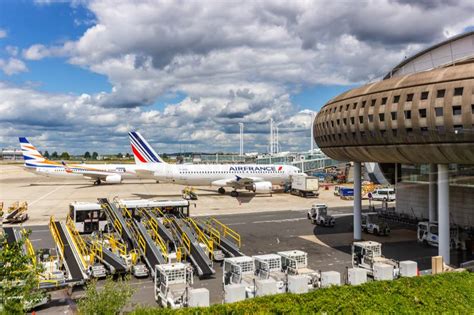
The journey begins at Paris Charles de Gaulle Airport (CDG), one of Europe’s busiest international gateways. While flights from Paris to North America are common, the destination connected to this route is anything but ordinary. Instead of heading to a major Canadian or American city, the aircraft travels to Saint-Pierre-et-Miquelon, a small French overseas collectivity located just off the coast of Newfoundland, Canada.
Saint-Pierre-et-Miquelon is a unique piece of France in North America, maintaining French culture, language, and political ties despite being thousands of kilometers away from mainland Europe. Because of its remote location, air connections are limited, making the direct service from Paris one of the most unusual routes operating over the Atlantic Ocean.
Air Saint-Pierre’s Rare Paris To Saint-Pierre Transatlantic Service
The route is operated by Air Saint-Pierre, the local airline serving the island territory. According to aviation scheduling data, the airline operates seasonal nonstop services between Paris Charles de Gaulle Airport and Saint-Pierre Pointe-Blanche Airport (FSP) during the summer period. These flights began in 2018 and remain one of the few direct links between a small North American territory and mainland Europe.
The westbound flight operates as Air Saint-Pierre PJ637, departing Paris on a weekly basis during the summer schedule. The aircraft leaves Charles de Gaulle in the afternoon and arrives at Saint-Pierre after approximately six hours and 30 minutes of flying time. After landing, the aircraft remains overnight before returning eastbound the following day.
The return flight, numbered PJ638, is even faster. Departing Saint-Pierre in the morning, the aircraft reaches Paris in roughly five hours and 35 minutes according to scheduled timings. Depending on weather conditions and Atlantic winds, actual flight times can be shorter, with some eastbound journeys taking less than five hours in the air.
This unusual route demonstrates that transatlantic aviation is not only about high-capacity aircraft connecting major cities. It also serves smaller communities that depend on specialized air links for tourism, business, and connections with their home country.
A Boeing 737-700 Operating A Challenging Atlantic Crossing
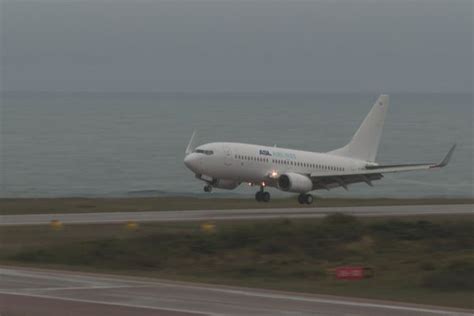
Although Air Saint-Pierre normally operates regional aircraft such as the ATR 42 turboprop, those aircraft are not suitable for a fully loaded nonstop crossing of the North Atlantic. As a result, the Paris service is operated on behalf of Air Saint-Pierre by ASL Airlines France using a Boeing 737-700.
The aircraft assigned to the route, registered as F-GZTP, has an interesting history. The narrowbody jet first entered service in 2006 and was originally delivered to China Southern Airlines, where it operated for approximately a decade. After leaving the Chinese carrier’s fleet, it eventually joined ASL Airlines France in 2017.
The Boeing 737-700 features 148 economy seats, but Air Saint-Pierre does not sell the entire cabin capacity on these flights. Only around 122 seats are available for passengers, limiting the maximum load factor. This restriction is linked to the airport infrastructure at Saint-Pierre, particularly the relatively short runway measuring approximately 1,800 meters (5,906 feet).
The runway limitation creates operational challenges because aircraft departing from Saint-Pierre must carefully manage weight, fuel, and payload. A full passenger load combined with maximum fuel requirements would not always be practical, especially for a long ocean crossing.
Why This Route Matters For Saint-Pierre-et-Miquelon
Without the direct Paris service, passengers traveling between Saint-Pierre and France would normally need to connect through Canada. Air Saint-Pierre’s regular network focuses primarily on nearby destinations such as Halifax, Montreal, and St. John’s, which provide essential regional connections.
The Halifax route is particularly important, with frequent ATR-operated services linking Saint-Pierre to Nova Scotia. Montreal also offers a connection to a major Canadian city, while St. John’s provides a shorter regional link. However, none of these options offers the convenience of a nonstop flight directly to France.

The Paris route therefore serves more than just travelers. It strengthens the connection between the territory and France, supports tourism, and provides residents with easier access to Europe. For a small island community surrounded by the vast Atlantic Ocean, a seasonal nonstop flight represents a significant transportation achievement.
A Hidden Gem Of Transatlantic Aviation
The Paris to Saint-Pierre flight is a reminder that aviation networks are shaped not only by commercial demand but also by geography, history, and national connections. While the route may never compete with the busiest transatlantic corridors, its uniqueness makes it one of the most fascinating flights in the world.
A small French territory near Canada, a regional airline, and a Boeing 737 crossing the Atlantic create a combination rarely seen in modern aviation. The service proves that even in an era dominated by mega hubs and giant aircraft, there are still remarkable routes operating quietly beyond the attention of most travelers.
For aviation enthusiasts, the 6-hour nonstop journey from Paris to Saint-Pierre-et-Miquelon is more than a flight. It is a glimpse into how airlines continue to connect distant communities across oceans in unexpected and extraordinary ways.