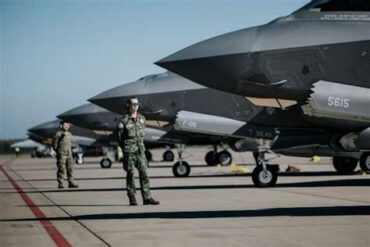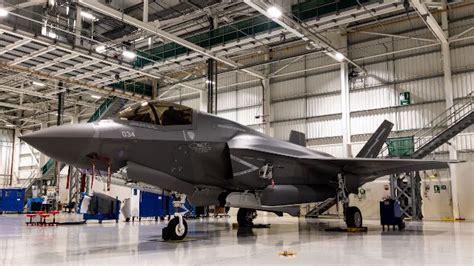
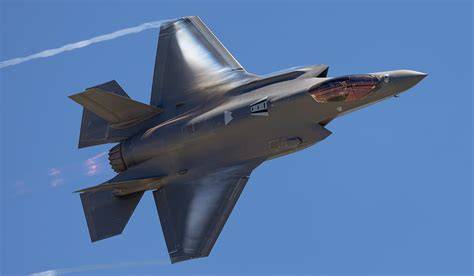
The Lockheed Martin F-35 Lightning II is widely recognized as the most advanced multirole fighter jet currently in large-scale production. Designed as a fifth-generation stealth aircraft, the F-35 integrates cutting-edge sensors, data fusion technology, stealth shaping, and network-centric warfare capabilities into a single platform. Yet despite its technological dominance, the aircraft has long been associated with a persistent criticism: high operational costs.
Interestingly, the purchase price of the F-35A variant has dropped dramatically, reaching roughly $82 million per aircraft in recent production lots. That figure places it below several modern fourth-generation fighters, including the Boeing F-15EX, Dassault Rafale, and Eurofighter Typhoon. However, procurement cost tells only a small part of the story. The real financial challenge emerges once the aircraft enters service.
Operating a modern stealth fighter requires specialized infrastructure, highly trained personnel, complex logistics networks, advanced weapons integration, and constant technological upgrades. Each of these elements contributes to the F-35’s long-term sustainment costs, which are significantly higher than many legacy fighter aircraft.
At first glance, comparisons between the F-35 and aircraft like the Saab Gripen E or upgraded F-16 Block 70 might appear logical. In reality, these comparisons often overlook the enormous capability gap between aircraft generations. The F-35 is designed to penetrate heavily defended airspace, share battlefield intelligence across multiple platforms, and coordinate complex multi-domain operations. Those abilities demand an ecosystem far more sophisticated than that required for earlier fighter jets.
Understanding why the F-35 costs so much to operate requires examining the entire system behind the aircraft. The Lightning II is not simply a jet—it is an integrated combat network platform, and sustaining that network carries substantial expense.
1. Unique Capabilities That Redefine Fighter Operations
One of the most significant reasons the F-35 operating cost per flight hour is high lies in the aircraft’s extraordinary capabilities. The Lightning II was built to perform missions that no fourth-generation fighter can accomplish independently.
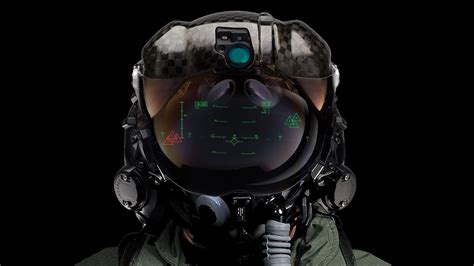
Unlike traditional fighters that rely heavily on external support assets, the F-35 integrates sensor fusion, combining data from radar, infrared sensors, electronic warfare systems, and external platforms into a single operational picture. Pilots receive a real-time battlefield overview through the aircraft’s helmet-mounted display and onboard computers.
This capability fundamentally transforms how air combat missions are conducted. Instead of acting as individual aircraft flying separate roles, F-35s operate as information hubs, distributing targeting data to allied aircraft, surface forces, and command networks.
For example, the F-35 can detect enemy radar installations, share their locations with allied aircraft such as Eurofighter Typhoons or F-16s, and coordinate strikes without exposing those aircraft to danger. In many cases, the Lightning II functions as a battlefield intelligence node, dramatically expanding the effectiveness of surrounding forces.
This networking capability creates significant operational efficiencies. According to analysis from the Swiss government, F-35 missions may require around 50% fewer takeoffs and landings compared to legacy aircraft performing similar tasks. Fewer sorties can achieve the same operational effect because each F-35 gathers and shares far more information than traditional fighters.
However, these capabilities come with substantial costs. The aircraft relies on highly sophisticated sensors, encrypted communications systems, and complex onboard computers, all of which require continuous maintenance, calibration, and software updates.
In other words, the F-35’s expensive operations are not simply the result of inefficiency. They are largely the price of maintaining the most technologically advanced combat aircraft ever deployed in large numbers.
2. Specialized Infrastructure and Support Ecosystems
Operating an F-35 requires far more than a runway and a maintenance hangar. Nations that purchase the aircraft must also invest in a large and highly specialized support ecosystem.
Legacy fighter jets like the F-16 Fighting Falcon or F/A-18 Hornet were designed during an era when aircraft often operated from austere bases with minimal support infrastructure. The F-35, by contrast, was designed to operate within a secure digital logistics network and advanced maintenance environment.
One of the most notable requirements involves climate-controlled hangars. The F-35’s stealth capabilities depend on radar-absorbent materials (RAM) applied to its exterior surfaces. These coatings require precise environmental conditions for maintenance and repair. Without controlled temperature and humidity levels, stealth coatings can degrade or become difficult to repair properly.
Air forces must therefore construct specialized maintenance facilities, equipped with advanced diagnostic equipment and precision tools designed specifically for the F-35 program.
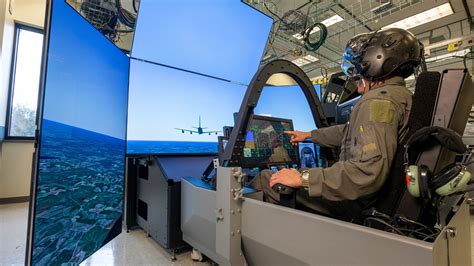
Another major infrastructure investment involves Full Mission Simulators. These training systems replicate the aircraft’s complex sensors and combat environment with extraordinary realism. A single F-35 simulator can cost between $10 million and $15 million, yet they are essential for pilot training because many of the aircraft’s capabilities cannot be safely practiced during live flight.
Security requirements also add expense. Because the F-35 contains highly classified software and mission data, operating bases must maintain secure data vaults and cyber-protected networks. These facilities store mission planning files and threat databases used by the aircraft during operations.
Naval variants create additional challenges. The F-35B and F-35C produce hotter exhaust and require modifications to aircraft carriers and amphibious assault ships. Deck surfaces, maintenance spaces, and hangar layouts must be adjusted to accommodate the aircraft’s size and thermal characteristics.
All of these infrastructure upgrades represent long-term investments that significantly increase the total cost of operating the Lightning II.
3. Extremely Specialized Pilot and Maintainer Training
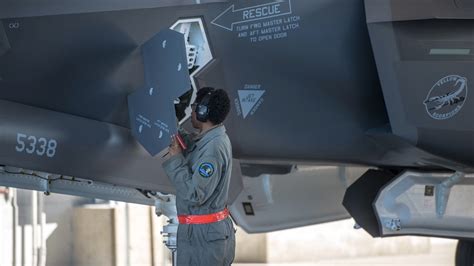
Training the personnel who operate the F-35 represents another major expense. Unlike earlier fighters, the Lightning II requires pilots and maintainers to master complex digital systems, advanced sensors, and integrated combat networks.
Traditional fighter pilot training focused heavily on aerodynamic performance, maneuvering, and weapons employment. While those skills remain important, the F-35 shifts much of the pilot’s workload toward information management and tactical coordination.
Pilots must learn how to interpret massive streams of sensor data, prioritize threats, and coordinate with allied forces in real time. The aircraft’s cockpit displays integrate radar, electronic warfare sensors, infrared imagery, and targeting data into a single interface.
Mastering these systems requires extensive simulator training and advanced tactical instruction. Estimates suggest that training a basic F-35A pilot can cost roughly $15.7 million, making it one of the most expensive pilot training pipelines in the U.S. Air Force.
Maintainers face an equally steep learning curve. Servicing the F-35 involves working with stealth materials, sophisticated avionics, advanced propulsion systems, and highly specialized diagnostic software.
Maintenance teams must undergo extensive instruction on stealth repair techniques, software troubleshooting, and advanced aircraft systems integration. Unlike older aircraft that could sometimes be repaired using simpler mechanical procedures, the F-35 often requires computer-assisted diagnostics and specialized replacement components.
Because the aircraft relies heavily on software, maintenance training is not a one-time event. Technicians must continually update their knowledge as new software patches, hardware upgrades, and system modifications are introduced.
The result is a highly skilled workforce capable of maintaining an extremely advanced aircraft—but at a significant cost.
4. Advanced Weapons Integration Requirements
The F-35’s stealth design imposes strict limitations on the weapons it can carry, which creates another source of operational expense.
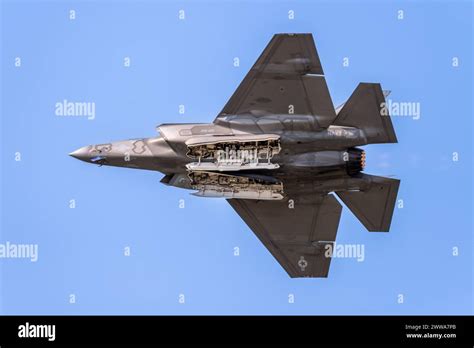
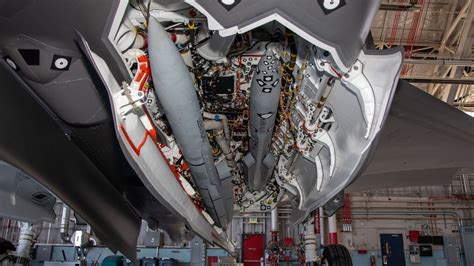
To preserve low observability, the aircraft stores most of its weapons inside internal weapons bays. These compartments limit the size and shape of compatible munitions. Many legacy weapons used by earlier aircraft simply do not fit within the F-35’s internal configuration.
As a result, air forces adopting the Lightning II often need to acquire new generations of precision weapons specifically integrated with the aircraft’s software systems.
Examples include:
- AIM-120 AMRAAM beyond-visual-range air-to-air missile
- AIM-9X Sidewinder short-range missile
- GBU-53/B StormBreaker precision glide bomb
Each of these weapons represents highly advanced technology with significant procurement costs. For instance, an AIM-120 AMRAAM missile can cost between $1.37 million and $2.4 million per unit, depending on configuration.
Integrating new weapons into the F-35 requires extensive software certification and flight testing, further increasing costs. Because the aircraft’s mission systems are tightly controlled by the United States, partner nations cannot easily modify the software themselves.
This contrasts sharply with some legacy aircraft, where operators occasionally adapted aircraft to carry new weapons with minimal modifications. Such improvisation is nearly impossible with the F-35’s highly integrated architecture.
Although some foreign weapons—such as the MBDA Meteor missile—are gradually being integrated into the platform, the process remains complex and expensive.
5. A Much Longer Planned Operational Life
Another factor that inflates the perceived cost of the F-35 program is its extraordinarily long service timeline.
Originally, U.S. planners expected the aircraft to remain operational until around 2077. However, more recent defense planning extended this timeline to approximately 2088, adding another 11 years of sustainment costs.
When lifecycle cost estimates are calculated across such a long period, the total program cost naturally grows. Headlines often highlight these rising figures without explaining that the increase reflects additional years of operation rather than higher annual expenses.
The extended service life also reflects the aircraft’s strategic importance. The F-35 is expected to remain a central component of Western airpower throughout much of the 21st century.
Production numbers demonstrate the aircraft’s scale. More than 1,300 F-35s have already been produced, and annual deliveries regularly exceed 150 aircraft per year. Few modern fighter programs have achieved such production volumes.
This large global fleet creates logistical complexity but also ensures that the F-35 becomes one of the most widely used advanced fighter aircraft in history.
Meanwhile, future sixth-generation fighters such as the U.S. Air Force’s Next Generation Air Dominance (NGAD) aircraft are expected to be far more expensive and produced in much smaller numbers.
In this context, the F-35 serves as the primary backbone of allied tactical aviation, making long-term sustainment inevitable.
6. Continuous Upgrades and Technological Evolution
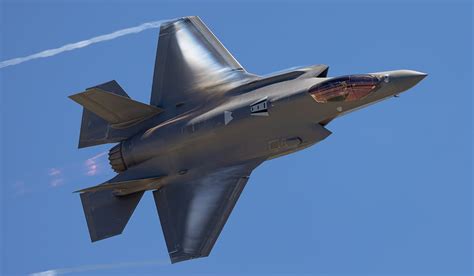
Unlike many earlier fighter jets, the F-35 was designed as a continuously evolving platform. Rather than freezing the aircraft’s design after initial production, engineers planned for regular upgrades that would expand its capabilities over time.
One of the most significant modernization programs currently underway is the Block 4 upgrade package. This initiative will introduce new sensors, expanded weapons compatibility, improved electronic warfare capabilities, and enhanced computing power.
Supporting these upgrades required the development of Technology Refresh 3 (TR-3), a major hardware update that improves processing speed and memory capacity within the aircraft’s mission systems.
However, developing and integrating these improvements has proven complex. Software delays and integration challenges temporarily slowed aircraft deliveries in recent years while engineers resolved technical issues.
Although these modernization programs increase operating costs, they also ensure that the F-35 remains at the cutting edge of combat aviation technology.
In contrast, some legacy aircraft were upgraded only occasionally, resulting in designs that eventually became technologically outdated. The Lightning II avoids that fate by adopting a continuous improvement model similar to modern software platforms.
The strategy ensures that the aircraft can adapt to emerging threats, integrate new weapons, and maintain superiority against future adversaries. Yet maintaining that technological edge inevitably requires significant financial investment.
Conclusion: The Price of Technological Dominance
The high operational cost of the F-35 reflects the reality of modern air combat. Maintaining stealth coatings, supporting advanced sensors, training highly specialized personnel, integrating next-generation weapons, and continuously upgrading software all require substantial resources.
However, these costs must be viewed alongside the aircraft’s extraordinary capabilities. The F-35 is not merely a replacement for older fighters—it is a transformational combat system designed for network-centric warfare and multi-domain operations.
Its ability to gather intelligence, share information across allied forces, and operate inside heavily defended airspace fundamentally reshapes how modern militaries conduct air campaigns.
In many scenarios, a smaller number of F-35s can achieve the same operational results as a much larger fleet of legacy aircraft. That efficiency helps offset some of the aircraft’s sustainment costs over time.
As global air forces continue transitioning toward fifth-generation capabilities, the F-35 will remain a central pillar of Western military aviation. Its operational costs are significant, but they represent the investment required to maintain air superiority in an increasingly complex technological battlefield.