The United States has approved a major $800 million Foreign Military Sale designed not to expand Kuwait’s air defense arsenal, but to ensure that what already exists remains fully combat-ready in one of the world’s most volatile regions. The decision underscores a strategic reality in modern warfare: air and missile defense credibility is defined by reliability, not acquisition headlines. For Kuwait, sustaining the Patriot system is a national security imperative tied directly to deterrence, infrastructure protection, and coalition interoperability.
Announced by the U.S. Defense Security Cooperation Agency (DSCA) in mid-January 2026, the approval authorizes comprehensive Patriot program sustainment and follow-on technical support. While officially categorized as maintenance, the scope of the package reflects an operational mindset focused on readiness under real-world threat conditions. In the northern Gulf, where ballistic missiles, cruise missiles, and unmanned aerial systems continue to proliferate, downtime is not an option.
At its core, the agreement ensures that Kuwait’s Patriot batteries remain available, predictable, and lethal when required. Air defense systems do not fail dramatically; they fail quietly through degraded sensors, uncertified interceptors, and broken logistics chains. This sustainment effort is designed to prevent exactly that scenario.
Strategic Sustainment, Not Symbolic Support
The DSCA notification outlines an extensive package that goes far beyond spare parts. Kuwait will receive repair and replacement components, storage and aging mitigation services, surveillance firing programs, and stockpile reliability work. These measures are essential for missile systems operating in harsh desert environments, where heat, sand, and humidity accelerate material degradation.
Crucially, the deal connects Kuwait to the Patriot PAC-3 Missile Support Center, granting access to shared and nation-specific engineering services. This integration keeps missile software baselines current, ensures configuration control, and allows continuous certification of interceptors. Operator and maintainer assistance, specialized test equipment, technical documentation, training, transportation, and on-site U.S. government and contractor support complete the package.
RTX, Lockheed Martin, Leidos, and KBR have been identified as prime contractors, reflecting the industrial depth behind the Patriot enterprise. U.S. and contractor personnel will deploy to Kuwait to provide hands-on technical assistance and system familiarization, reinforcing long-term operational continuity rather than short-term fixes.
Why Patriot Readiness Defines Gulf Air Defense
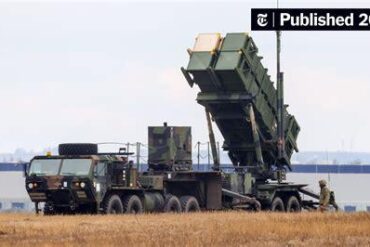
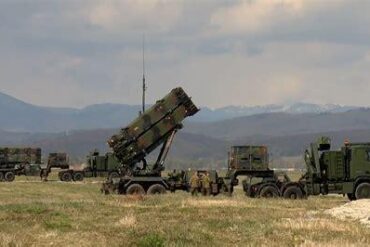
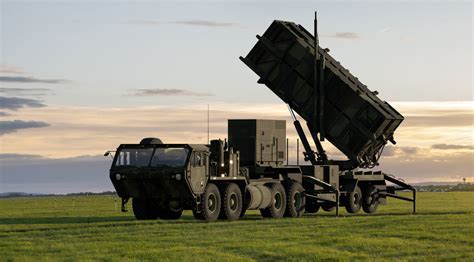
Patriot is not a single weapon but an integrated system of systems. Its combat effectiveness depends on seamless interaction between the AN/MPQ-65 phased-array radar, engagement control station, launchers, and interceptors, all synchronized through sophisticated software. The radar performs surveillance, tracking, and engagement functions simultaneously, but its sector-based coverage requires precise orientation toward expected threat axes.
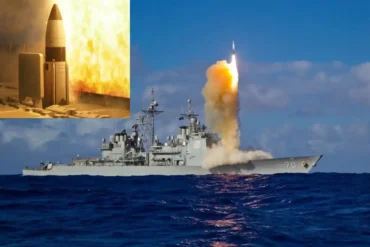
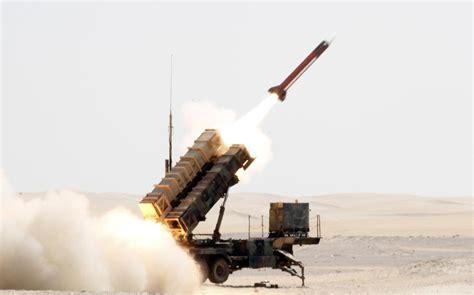
Kuwait’s Patriot batteries can be configured with multiple interceptor types. The PAC-2 GEM-T missile remains optimized for aircraft, cruise missiles, and tactical ballistic missiles, featuring improved fuzing and enhanced seeker sensitivity in cluttered environments. For terminal ballistic missile defense, the PAC-3 family employs hit-to-kill technology, relying on kinetic energy rather than explosives. The PAC-3 MSE variant extends engagement range and improves maneuverability, while allowing a single launcher to carry up to 16 interceptors, dramatically increasing defended battlespace density.
This layered capability only matters if interceptors perform exactly as designed. Surveillance firing, aging analysis, and reliability assessments ensure missiles respond predictably under combat conditions, a requirement that cannot be improvised during a crisis.
Defending Assets That Anchor Regional Stability
Patriot does not shield an entire nation; it protects strategic assets that anchor military and economic stability. In Kuwait, batteries are positioned to defend air bases, command centers, ports, and energy infrastructure, forming a terminal defense layer against ballistic missiles while countering aircraft and cruise missile threats.
The system excels when operated within a disciplined engagement cycle: continuous radar tracking, automated fire control solutions, and controlled ripple firing to defeat mass raids. However, even the most advanced doctrine collapses without sustained logistics and trained crews. The approved sustainment package reinforces this battle rhythm, ensuring that Kuwait’s air defense units remain proficient and fully supported.
Kuwait’s Geostrategic Exposure and U.S. Partnership
Geography places Kuwait on the frontline of Gulf security. Bordered by Iraq and Saudi Arabia and situated directly across from Iran, the country occupies a strategic crossroads shaped by decades of regional tension. The memory of the 1990 invasion remains deeply embedded in Kuwait’s defense planning, reinforcing the importance of credible deterrence.
Kuwait also hosts critical U.S. military infrastructure, including logistics hubs and air bases that enable American operations across the Middle East. Since the 1991 liberation, defense cooperation has evolved into a dense network of bilateral agreements, culminating in Kuwait’s designation as a major non-NATO ally. Patriot sustainment through U.S. channels strengthens this relationship at the operational level, binding both countries through shared technical standards and daily military cooperation.
Readiness as the New Measure of Deterrence
In today’s Middle Eastern threat environment, air defense is judged less by procurement announcements and more by sustained availability under pressure. Regional missile arsenals continue to grow in range, accuracy, and salvo size, compressing decision timelines and stressing defensive networks. Under these conditions, interoperability with U.S. forces, assured logistics, and certified interceptors become decisive advantages.
The $800 million Patriot sustainment approval should be understood as strategic insurance. It signals enduring U.S. commitment, embeds Kuwait more deeply into the American air and missile defense ecosystem, and reinforces a fundamental military truth: owning advanced systems deters on paper, but keeping them ready deters in reality.