The United States has approved a substantial $3 billion Foreign Military Sale (FMS) package designed to sustain and enhance the operational readiness of the Royal Saudi Air Force’s F-15 fighter jet fleet, underscoring Washington’s continued commitment to Gulf security cooperation. Rather than introducing new aircraft, the program concentrates on long-term sustainment—ensuring that one of the Middle East’s most capable combat air fleets remains fully mission-ready amid evolving regional threats.
Announced by the U.S. State Department and formally notified through the Defense Security Cooperation Agency (DSCA), the proposed sale has entered the congressional review phase. The package focuses on logistics, maintenance infrastructure, technical services, and training systems that collectively determine how effectively frontline aircraft can be deployed. In modern air warfare, sustainment is often as decisive as procurement; a fighter grounded for lack of parts or software updates is strategically irrelevant regardless of its theoretical capabilities.
The timing of the approval reflects heightened geopolitical friction across the Gulf and Arabian Sea, where drone activity, missile proliferation, and maritime tensions increasingly intersect. By reinforcing Saudi Arabia’s aerial readiness, the United States is bolstering a regional partner whose airpower contributes to deterrence, infrastructure defense, and coalition operations.
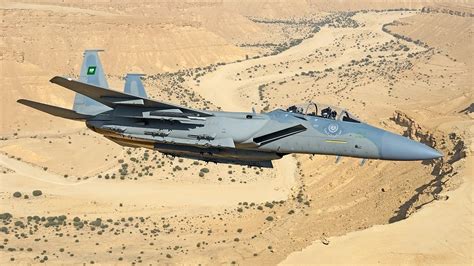
Strategic Scope of the Sustainment Package
According to the DSCA notification, the agreement encompasses a wide spectrum of non-major defense equipment and support services tailored to the sustainment lifecycle of advanced fighter aircraft. The package includes spare and repair parts, consumables, ground handling equipment, and specialized tooling required for routine and heavy maintenance cycles.
Equally critical is the repair-and-return framework, enabling complex components—ranging from avionics modules to radar assemblies—to be refurbished and reintroduced into operational inventory. This system minimizes downtime while preserving cost efficiency across the fleet’s service life.
Software sustainment forms another pillar of the agreement. Modern fighters rely on continuously updated mission data files, threat libraries, radar processing algorithms, and electronic warfare suites. Without iterative software evolution, even technologically advanced jets risk obsolescence against adaptive adversaries.
Training and technical assistance are embedded throughout the program. U.S. government specialists and defense contractors will provide engineering expertise, logistics advisory services, and maintenance instruction, ensuring Saudi personnel can independently operate and sustain increasingly sophisticated systems.
The Backbone of Saudi Airpower
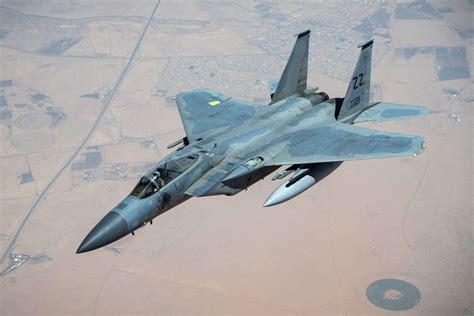
Saudi Arabia operates one of the world’s largest Eagle fleets, with approximately 210 F-15 aircraft spanning multiple variants. This makes the Kingdom the second-largest operator of the platform after the United States itself.
The fleet includes:
- F-15C/D air superiority fighters dedicated primarily to air defense
- F-15S multirole strike aircraft
- F-15SA (Saudi Advanced) fighters representing the most modern configuration
The sustainment package applies across this mixed inventory, preserving operational cohesion while extending service life.
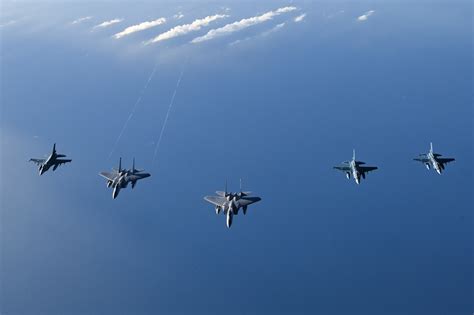
Legacy of the F-15SA Modernization Program
The sustainment effort builds upon a landmark modernization agreement concluded between 2010 and 2011, when Saudi Arabia ordered 84 new-build F-15SA fighters and upgrade kits for roughly 70 F-15S aircraft. Valued at $29.4 billion, that deal represented one of the largest fighter procurement programs in U.S. defense export history.
Deliveries of the F-15SA concluded around 2020, transforming the Royal Saudi Air Force into one of the most technologically equipped air arms in the region. The aircraft introduced structural, avionics, and digital warfare upgrades that dramatically expanded combat capability.
Advanced Systems That Demand Advanced Sustainment
The F-15SA is not merely an incremental upgrade—it is a generational leap built upon the proven Eagle airframe. At its core lies a powerful twin-engine design optimized for payload, range, and high-altitude performance. Yet its true edge comes from integrated digital systems.
Key technological features include:
- Fly-by-wire flight controls, replacing traditional mechanical linkages with digital precision
- Active Electronically Scanned Array (AESA) radar, capable of tracking multiple airborne targets at extended range
- Digital electronic warfare suites for threat detection and countermeasures
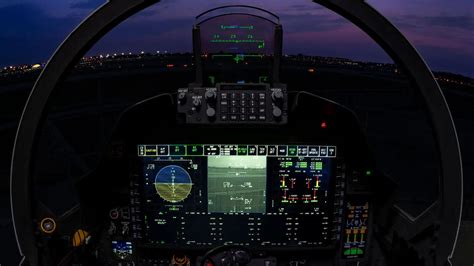
- Glass cockpit architecture with large-area displays and sensor fusion
Such systems require continuous calibration, software patching, and hardware servicing. Sustainment funding ensures radar modules remain aligned, electronic warfare libraries stay current, and cockpit processing systems maintain real-time reliability.
Operational Roles Across Air and Maritime Domains
Saudi F-15s serve as the Kingdom’s primary air sovereignty and rapid-response platform. Their mission set spans defensive counter-air patrols, offensive strike operations, maritime overwatch, and coalition expeditionary deployments.
They protect critical national infrastructure—including oil production complexes, desalination plants, export terminals, and major urban centers—against aerial or missile threats. Given Saudi Arabia’s vast geography, long-range fighter endurance is indispensable.
The aircraft also patrol key maritime corridors such as the Red Sea and Arabian Gulf, where shipping lanes underpin global energy markets. Integrated with airborne early warning aircraft and aerial refueling tankers, F-15 patrols create layered surveillance and interception coverage.
Combat Experience and Coalition Integration
Saudi F-15s have accumulated extensive operational experience over decades. They participated in coalition air campaigns during the 1991 Gulf War and later supported multinational operations across the Middle East.
More recently, F-15 variants have been deployed in missions linked to the Yemen conflict, conducting air interdiction, close air support, and strategic strike sorties. These deployments stress both airframes and maintenance ecosystems, reinforcing the necessity of structured sustainment funding.
Interoperability with U.S. and allied forces remains central. Shared datalinks, standardized maintenance doctrine, and joint training exercises ensure Saudi F-15s can integrate seamlessly into combined air tasking orders.
Readiness as a Strategic Multiplier
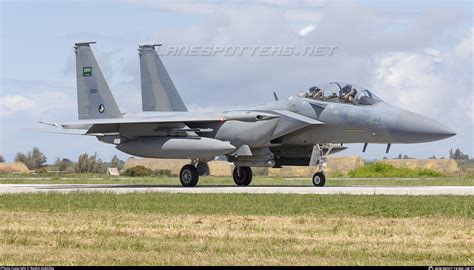
From a doctrinal perspective, the sustainment package is less about expanding Saudi Arabia’s arsenal and more about maximizing fleet availability rates. A fighter force’s deterrent value is measured not by total inventory but by how many aircraft can launch at short notice.
Sustainment funding enables:
- Higher mission-capable rates
- Reduced maintenance turnaround times
- Reliable spare-parts pipelines
- Continuous pilot and ground-crew proficiency
This translates into persistent patrol coverage, rapid interception capability, and credible defensive depth against drones, cruise missiles, or hostile aircraft.
U.S. Foreign Policy and Security Architecture
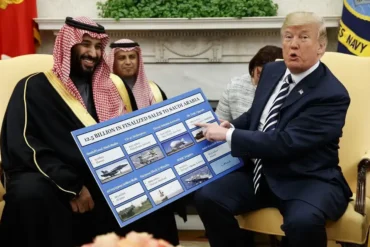
Washington frames the sale within its broader objective of reinforcing the defense capacity of a Major Non-NATO Ally. Saudi Arabia plays a central role in Gulf security frameworks, energy stability, and maritime domain protection.
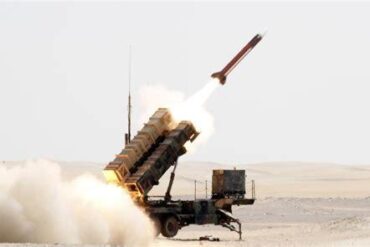
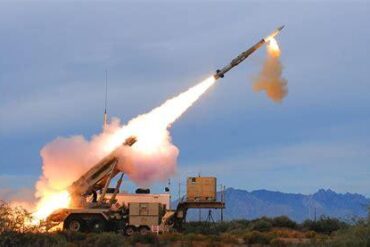
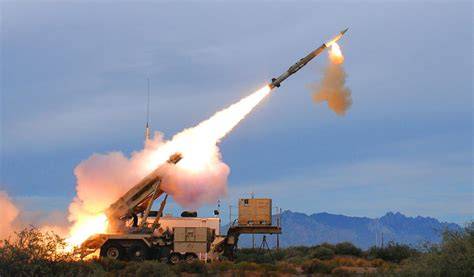
The sustainment approval follows closely behind another major defense notification: a $9 billion sale of 730 Patriot PAC-3 MSE interceptors to Riyadh. Together with parallel arms packages for Israel, recent U.S. approvals in the region approach $16 billion in combined value.
This layered approach—fighters, missile defense, radar, and sustainment—reflects a systems-level strategy rather than isolated procurement deals.
Regional Tensions Shaping the Timing
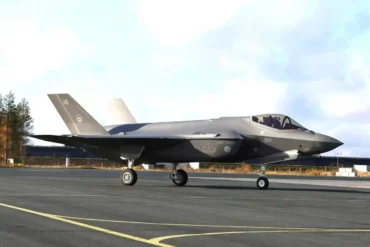
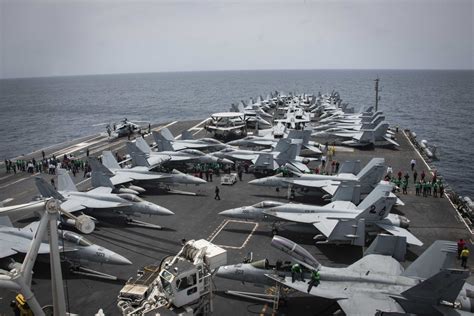
The announcement coincided with a series of security incidents underscoring regional volatility. On the same day the DSCA notification became public, a U.S. Navy F-35C operating near the aircraft carrier USS Abraham Lincoln intercepted and destroyed an Iranian Shahed-series drone in the Arabian Sea after it approached with what officials described as aggressive intent.
Hours later, Iranian Revolutionary Guard elements reportedly harassed a U.S.-flagged commercial tanker transiting the Strait of Hormuz, prompting intervention by an American warship.
These episodes highlight how unmanned systems, maritime coercion, and aerial surveillance now intersect in Gulf security dynamics. Fighter aircraft—particularly long-range interceptors like the F-15—remain essential for monitoring and countering such threats.
Deterrence Through Sustainment, Not Expansion
Notably, U.S. officials emphasize that the sustainment package does not alter the regional military balance. Because the deal funds maintenance and support rather than new weapons platforms, it reinforces existing capabilities instead of introducing escalatory force structure changes.
This distinction is politically significant. Sustainment agreements tend to face less congressional resistance than new arms transfers because they preserve stability rather than shift it.
For Saudi planners, however, sustainment may be even more valuable than procurement. Extending the operational life of proven aircraft allows force planners to delay costly replacement programs while maintaining credible deterrence.
Industrial and Logistical Dimensions
Beyond combat readiness, the agreement carries industrial implications. Sustainment contracts generate long-term workload for U.S. aerospace firms, logistics providers, and defense technicians. Engineering support, software development, and component repair chains create sustained bilateral defense-industrial interdependence.
Saudi Arabia, meanwhile, continues investing in domestic maintenance capacity under its broader defense localization initiatives. Collaborative sustainment programs often include technology transfer, training pipelines, and infrastructure development that gradually expand in-country capabilities.
Future Outlook for the Saudi Eagle Fleet
As aerial warfare evolves toward networked sensors, unmanned teaming, and long-range precision engagement, legacy platforms must adapt or risk irrelevance. The F-15’s large payload capacity, power generation margin, and upgrade flexibility make it uniquely suited for modernization.
Sustainment funding ensures the aircraft can integrate future weapons, datalinks, and electronic warfare updates well into the coming decades. Rather than phasing out the platform, Saudi Arabia is positioning it as a durable pillar of its airpower architecture.
Enduring Partnership, Persistent Readiness
The $3 billion sustainment proposal ultimately reflects continuity—of alliance structures, defense planning assumptions, and platform relevance. By prioritizing logistics, software, and training, the United States is reinforcing not just aircraft availability but operational trust between two long-standing security partners.
For Saudi Arabia, maintaining a high-readiness F-15 fleet preserves rapid-response capability across air and maritime theaters. For Washington, it ensures that a key regional ally remains interoperable, equipped, and strategically aligned in an environment shaped by drones, missiles, and contested sea lanes.
Airpower deterrence is not forged solely in acquisition contracts or rollout ceremonies. It lives in spare-parts warehouses, software labs, maintenance hangars, and pilot simulators—the quiet infrastructure that keeps fighters airborne when crises ignite.