The United States is making a decisive long-term investment in its ballistic missile defense architecture, scaling sustainment support for the Standard Missile-3 (SM-3) interceptor family to a total ceiling of $11.74 billion. This substantial expansion, driven by an $8.41 billion contract increase awarded to Raytheon, signals a strategic shift: missile defense is no longer just about procurement—it is about maintaining a persistent, combat-ready shield across multiple theaters.
At the center of this effort lies the Aegis Ballistic Missile Defense (BMD) ecosystem, a network that spans U.S. Navy destroyers, allied fleets, and Aegis Ashore installations in Europe. As deployments intensify and threat environments evolve, the demand for reliable, continuously upgraded interceptors has surged. The contract extension through October 2029 ensures that the SM-3 family remains operationally viable in an era where missile threats are not only increasing in number but also in sophistication.
Unlike traditional weapons procurement, this contract does not focus on acquiring new missiles. Instead, it underwrites the less visible—but far more decisive—elements of engineering support, lifecycle maintenance, software upgrades, and logistics infrastructure. In modern warfare, these are the factors that determine whether a missile system performs flawlessly under pressure or fails at the worst possible moment.
Why the SM-3 Remains Central to U.S. Missile Defense Strategy
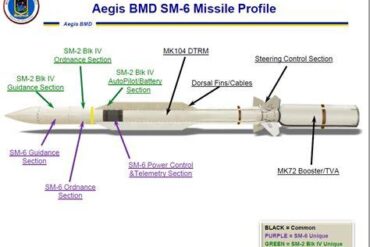
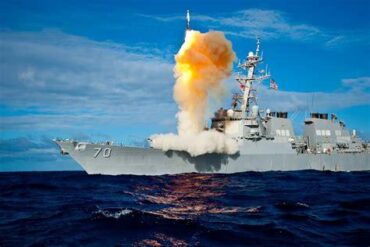
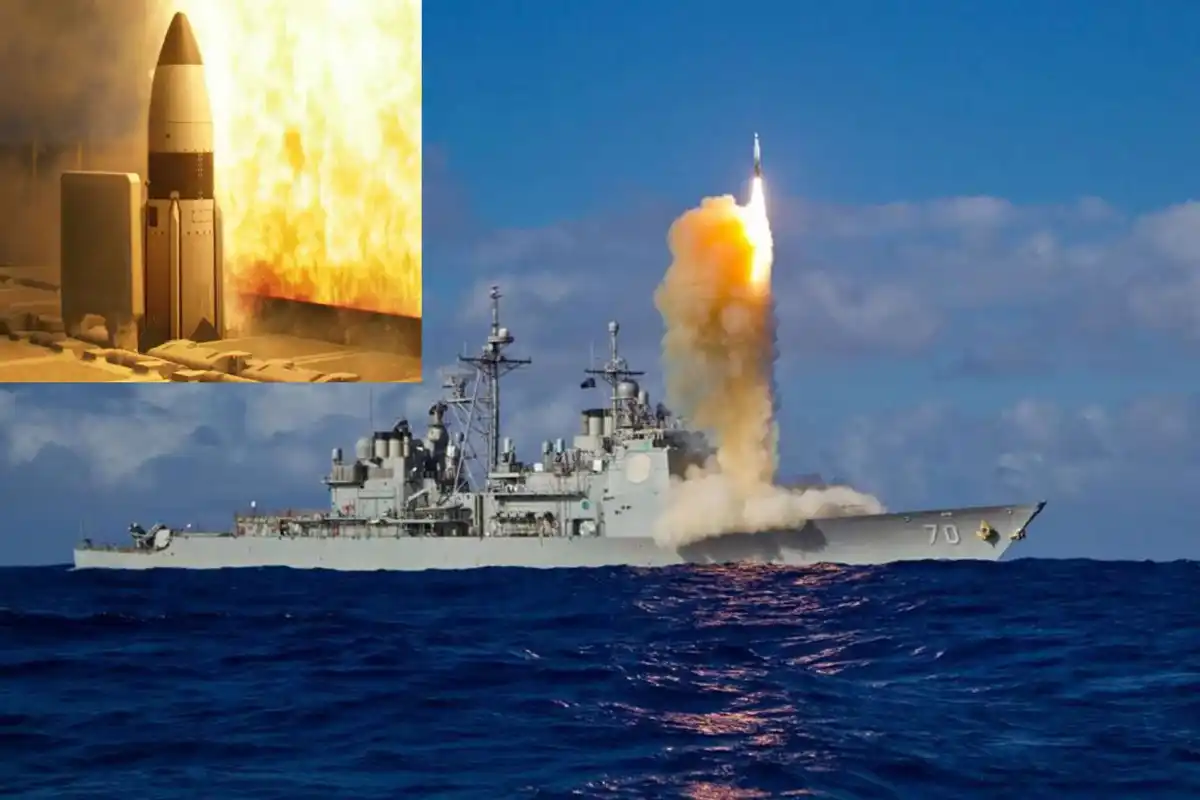
The SM-3 interceptor is fundamentally different from conventional air defense missiles. Rather than detonating near its target, it employs a hit-to-kill mechanism, relying on kinetic energy to destroy incoming ballistic threats in space. Launched from the Mk 41 Vertical Launch System, the missile uses a three-stage rocket booster to propel a kill vehicle beyond the atmosphere, where it tracks and collides with its target during the midcourse phase of flight.
This design offers a crucial advantage: intercepting threats before reentry, when the defended area is still broad and decision-makers retain flexibility. In practical terms, it gives commanders more time, more options, and a significantly larger engagement envelope compared to terminal-phase systems.
The strategic value of this capability becomes even clearer when viewed against the backdrop of rising global missile inventories. Adversaries are fielding longer-range, more maneuverable, and increasingly complex ballistic missiles, often equipped with countermeasures designed to confuse traditional الدفاع systems. The SM-3’s exo-atmospheric engagement profile directly counters these trends, making it a cornerstone of layered missile defense.
Block IB Enhancements: Precision in a Complex Threat Environment
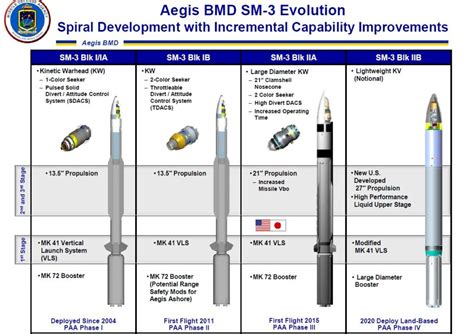
The evolution of the SM-3 has been marked by steady technological refinement, particularly in the Block IB variant. This version introduced a two-color infrared seeker, enabling better discrimination between actual warheads and decoys—a critical capability as adversaries adopt more sophisticated penetration aids.
Equally important is the upgraded signal processing system, which enhances the missile’s ability to interpret complex target data in real time. Combined with an improved divert and attitude control system, the Block IB demonstrates significantly greater maneuverability during the final engagement phase.
These enhancements are not theoretical. The missile’s first confirmed combat use in April 2024, when it intercepted Iranian ballistic threats aimed at Israel, provided real-world validation of its effectiveness. That moment marked a turning point, transforming the SM-3 from a largely deterrent capability into a proven operational asset.
Block IIA: Expanding the Battlespace and Strategic Reach
If the Block IB refined the SM-3 concept, the Block IIA variant represents a leap forward. Co-developed with Japan, this interceptor features a larger 21-inch airframe, more powerful rocket motors, and a significantly upgraded kill vehicle.
The improvements are not incremental—they are transformative. The Block IIA boasts more than double the seeker sensitivity and over three times the divert capability of its predecessor. This translates into the ability to engage longer-range ballistic missiles, including targets approaching intercontinental ballistic missile (ICBM) class.
In testing, the system demonstrated its potential by successfully intercepting an ICBM-class target using engage-on-remote data via the Command and Control, Battle Management, and Communications (C2BMC) network. This capability allows sensors and shooters to be geographically separated, dramatically expanding the defended area.
The implications are profound. With Block IIA, Aegis-equipped platforms can provide wide-area defense not just for forward-deployed forces, but also for allied territories and even portions of the U.S. homeland. It is this scalability that makes the missile indispensable to NATO’s European Phased Adaptive Approach (EPAA), including sites in Romania and Poland.
Aegis Integration: A Networked Shield Across Sea and Land
The effectiveness of the SM-3 is inseparable from the Aegis combat system, which integrates radar, fire control, and data-sharing capabilities into a unified network. This system enables remote cueing, allowing one platform to detect and track a threat while another launches the interceptor.
This level of integration transforms missile defense from a localized capability into a distributed, network-centric shield. A single destroyer on station can help defend ports, airbases, logistics hubs, and command centers hundreds of kilometers away. Meanwhile, Aegis Ashore installations provide persistent coverage in strategically critical regions.
For military planners, this means greater flexibility in force deployment. Instead of concentrating assets for protection, forces can operate more freely, knowing that a layered defense architecture is in place.
The Hidden Backbone: Sustainment as Strategic Capability
The most revealing aspect of the $11.74 billion contract is what it prioritizes: sustainment over acquisition. This includes a wide spectrum of activities such as:
- Missile recertification and repair
- Software and hardware updates
- Modeling and simulation
- Logistics and transportation
- Obsolescence management
- Depot-level maintenance
These functions may lack the visibility of missile launches, but they are what ensure that every interceptor is ready, reliable, and fully compatible with evolving system baselines.
As missile inventories grow and deployments increase, the sustainment burden rises exponentially. Each interceptor must be periodically inspected, upgraded, and certified. Without this continuous investment, even the most advanced systems risk becoming obsolete or unreliable.
Industrial Scale and Strategic Messaging
The growth of this contract—from $722.4 million in 2020 to $11.74 billion in 2026—is not just a budgetary detail; it is a strategic signal. It reflects a recognition that missile defense is a long-cycle industrial challenge, requiring sustained investment in production capacity, supply chains, and technical expertise.
Raytheon’s role in this ecosystem extends beyond manufacturing. The company provides the engineering depth necessary to integrate updates, manage system complexity, and ensure interoperability across U.S. and allied platforms. This partnership underscores the importance of defense-industrial resilience in an era of persistent competition.
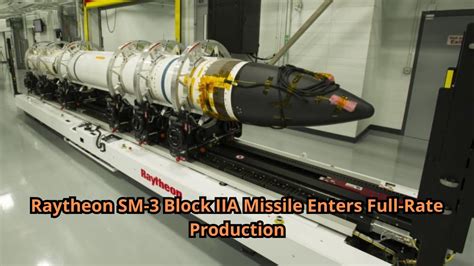
At the same time, production and sustainment are increasingly intertwined. Recent contracts for additional SM-3 Block IB missiles and efforts to accelerate Block IIA output indicate that the United States is expanding both the quantity and readiness of its interceptor inventory.
Operational Impact: Readiness Over Numbers
For combatant commanders, the significance of this investment is immediate and practical. The number of missiles in inventory matters far less than how many are certified, updated, and available for immediate deployment.
In a prolonged crisis, the ability to sustain operations—keeping interceptors functional, replacing components, updating software—becomes the decisive factor. This is where the current contract delivers its greatest value: ensuring that missile defense systems are not just present, but persistently credible.
The broader message is clear. As ballistic missile threats continue to expand—both in scale and complexity—the United States is aligning its strategy accordingly. By prioritizing sustainment, integration, and technological evolution, it is building a defense architecture designed not just to respond to today’s threats, but to adapt continuously to tomorrow’s challenges.
In that context, the $11.74 billion investment is not merely a contract. It is a commitment to maintaining a reliable exo-atmospheric shield, one that extends across oceans, alliances, and operational domains—ready to perform when it matters most.