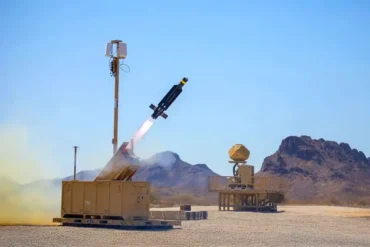
The arrival of a U.S. Navy guided-missile destroyer in Israel’s Red Sea port of Eilat signals a sharpened phase in Washington’s effort to shield key maritime corridors from escalating missile and drone threats. In a region where shipping routes are now strategic battlegrounds and deterrence is measured in radar coverage arcs and interceptor ranges, the deployment underscores how naval power projection has become a moving air-defense network rather than just a visible symbol of presence.
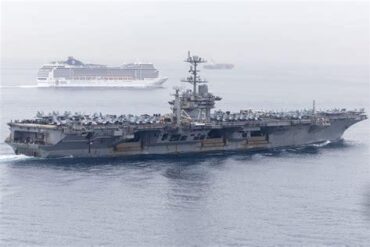
The Arleigh Burke-class destroyer USS Delbert D. Black (DDG-119) entered Eilat on January 30, 2026, during a period of heightened tension tied to Iran and its regional partners. The port visit, described by Israeli sources as pre-planned, unfolded amid a broader U.S. naval surge that includes multiple destroyers, an aircraft carrier, and littoral combat ships operating across the Red Sea and surrounding waters. In geopolitical terms, this convergence turns the narrow maritime corridor into a theater where sensors, missiles, and messaging converge.
Aegis Destroyer as a Mobile Missile Defense Shield
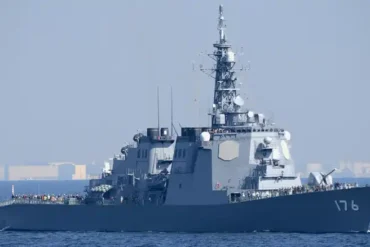
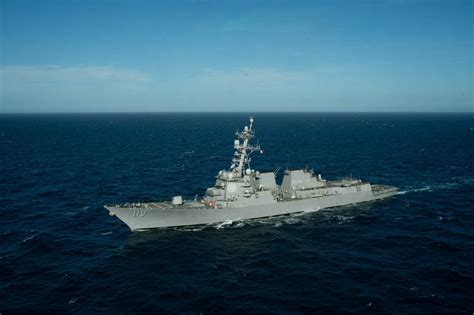
USS Delbert D. Black is not a ceremonial visitor. It is a fully networked combat node, capable of detecting, tracking, and engaging aerial and ballistic threats across a wide battlespace. As a Flight IIA Arleigh Burke-class destroyer, the ship combines high-speed maneuverability with a layered defense architecture built around the Aegis combat system. Powered by gas turbines generating around 100,000 shaft horsepower, the vessel can sprint at speeds exceeding 30 knots, allowing commanders to reposition radar coverage and interceptor envelopes in response to shifting threats.
At approximately 509 feet long and with a displacement approaching 9,700 tons depending on loadout, the destroyer is designed for sustained high-tempo operations. Its crew of roughly 329 personnel supports continuous watch rotations, aviation operations, and combat system management—essential in environments where missile launches and drone incursions can unfold with little warning.
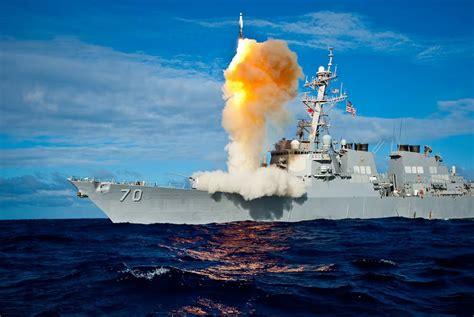
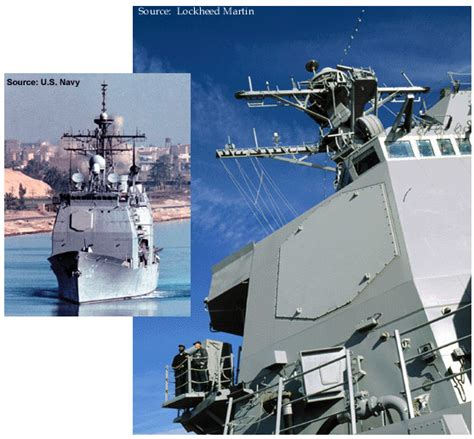
The heart of its capability lies in the Aegis weapon system, which integrates the SPY-1 radar, Mk 99 fire control system, and a 96-cell Mk 41 vertical launching system (VLS). This architecture enables the ship to track hundreds of air and surface targets simultaneously, assign engagement priorities, and coordinate missile intercepts with other platforms in the battlespace. In practical terms, Delbert D. Black functions as a floating air-defense sector, extending protective coverage over allied infrastructure and commercial shipping routes.
Versatile Missile Magazine for Multi-Domain Threats
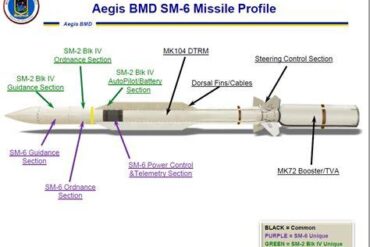
The destroyer’s VLS is designed for flexibility, allowing it to carry a mix of Standard Missiles for air and missile defense, Tomahawk cruise missiles for long-range land strike, Evolved Sea Sparrow Missiles for point defense, and vertical launch anti-submarine rockets. This modular loadout reflects the modern naval reality: threats range from ballistic missiles and cruise missiles to drones, submarines, and fast attack craft.
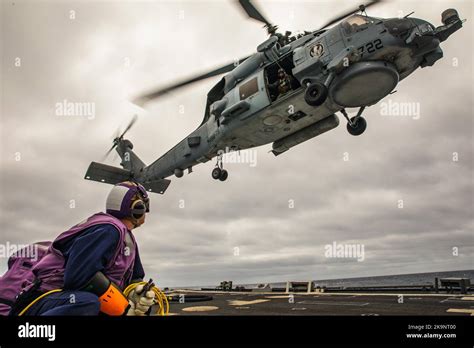
Anti-submarine warfare remains a core mission, supported by the AN/SQQ-89 sonar suite and dual MH-60R Seahawk helicopters. These helicopters extend the ship’s reach far beyond the radar horizon, deploying sonobuoys, dipping sonar, and torpedoes to counter submerged threats. In contested maritime zones where submarines and unmanned systems increasingly operate in gray zones, this layered capability is critical.
Why Eilat Matters in the Red Sea Crisis
Eilat is more than a picturesque port at the tip of Israel’s southern border; it is a strategic chokepoint linking Israel to the Red Sea and global shipping routes. Situated near the borders with Egypt and Jordan, the port sits at the junction of regional trade, military maneuvering, and geopolitical signaling. Recent months have seen commercial traffic decline sharply due to persistent attacks on shipping in the Red Sea, disrupting supply chains and inflating global shipping costs.
By docking an Aegis-equipped destroyer in Eilat, the United States sends a message that the Gulf of Aqaba and adjacent sea lanes are not peripheral theaters but integral to global maritime stability. The presence of a high-end air and missile defense platform reassures Israel and regional partners while signaling to adversaries that hostile actions will be tracked and potentially intercepted in real time.
Integrated Air and Missile Defense in a Compressed Battlespace
The Red Sea and Gulf of Aqaba present a uniquely compressed operational environment. Narrow waterways, rugged terrain, and dense shipping traffic reduce reaction times and complicate radar coverage. In such conditions, integrated air and missile defense becomes not just a technical capability but a strategic necessity.
Aegis Baseline 9, integrated with networked engagement concepts like Naval Integrated Fire Control–Counter Air (NIFC-CA), allows destroyers to share targeting data across platforms. A ship can contribute sensor data to an engagement even if another platform fires the interceptor, creating a distributed kill chain. This network-centric approach is particularly valuable in regions where multiple allies operate overlapping systems and where threats can emerge from multiple directions simultaneously.
Forward Naval Power as Strategic Messaging
The deployment of USS Delbert D. Black is part of a broader U.S. force posture designed to shape adversary decision-making. Forward-deployed naval assets compress the escalation ladder by placing credible defensive and offensive capabilities close to potential flashpoints. This proximity complicates planning for adversaries, who must assume that missile launches or drone operations could be detected and intercepted almost immediately.
Iran and aligned groups have demonstrated the ability to launch ballistic and cruise missiles, as well as one-way attack drones, at regional targets and shipping. In response, the United States has increasingly relied on mobile naval platforms to provide air and missile defense coverage where fixed installations would be vulnerable or politically sensitive. A destroyer can reposition, adapt its loadout, and integrate with allied forces in ways that static defenses cannot.
Economic and Maritime Implications of the Deployment
Beyond military signaling, the destroyer’s presence has economic implications. The Red Sea shipping crisis has already caused significant disruptions to global trade, forcing vessels to reroute around the Cape of Good Hope and adding weeks to transit times. Insurance premiums have surged, and some shipping companies have suspended operations in high-risk zones.
By reinforcing missile defense coverage near Eilat, the United States aims to stabilize at least part of the maritime corridor. Even limited improvements in security can restore confidence among shipping operators, reduce insurance costs, and mitigate supply chain disruptions. In this sense, the deployment is both a military action and an economic stabilization measure.
Operational Flexibility in a Hybrid Threat Environment
Modern naval operations increasingly involve hybrid threats that blend conventional military capabilities with irregular tactics. Small-boat swarms, unmanned surface and aerial systems, cyber operations, and information warfare all intersect in contested maritime zones. The Arleigh Burke-class destroyer is designed to operate across this spectrum, providing surface warfare, anti-submarine warfare, strike, and integrated air defense in a single platform.
The inclusion of MH-60R helicopters enhances situational awareness and response options, allowing the ship to extend its sensor reach, interdict surface threats, and conduct search-and-rescue operations. This multi-mission flexibility is essential in regions where threats evolve rapidly and unpredictably.
Strategic Significance for U.S.–Israel Defense Cooperation
The port visit also highlights the depth of U.S.–Israel maritime and defense cooperation. Joint exercises, intelligence sharing, and coordinated defense planning have long underpinned the bilateral relationship, but the current deployment adds a tangible layer of integrated missile defense to that partnership.
Senior U.S. commanders reportedly visited Israel during the same period to deepen strategic ties and coordinate defense planning. The presence of an Aegis destroyer in Eilat demonstrates a willingness to integrate U.S. naval capabilities into Israel’s regional defense architecture, particularly as missile and drone threats proliferate.
The Destroyer as Sensor, Shooter, and Signal
Naval power in the 21st century is as much about information dominance as it is about firepower. USS Delbert D. Black embodies this shift, functioning simultaneously as a sensor platform, a missile shooter, and a geopolitical signal. Its radar systems feed into a broader network of sensors across air, sea, and space domains, creating a shared operational picture for allied forces.
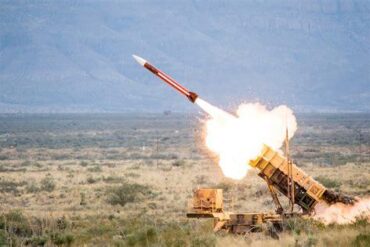
As a shooter, the destroyer can engage threats ranging from low-flying drones to ballistic missiles, contributing to layered defense architectures that include land-based systems and allied naval assets. As a signal, its presence communicates intent, capability, and commitment—elements that shape adversary calculations and allied confidence alike.
Implications for Regional Stability and Future Deployments
The deployment of an Aegis destroyer to Israel’s Red Sea port reflects a broader trend toward forward-deployed missile defense in contested regions. As missile and drone technologies proliferate, mobile naval platforms offer a flexible and resilient means of protecting critical infrastructure and shipping lanes.
Future deployments are likely to build on this model, integrating additional sensors, interceptors, and unmanned systems into distributed maritime defense networks. The Red Sea, with its narrow chokepoints and strategic significance, is becoming a laboratory for these concepts, where naval forces test the integration of sensors, shooters, and networks under real-world pressure.
In this evolving landscape, USS Delbert D. Black represents more than a single ship in a single port. It is a node in a global web of maritime security, a floating extension of missile defense architecture, and a tangible manifestation of strategic deterrence in an era where the line between peace and conflict is increasingly measured in radar tracks and interceptor trajectories.