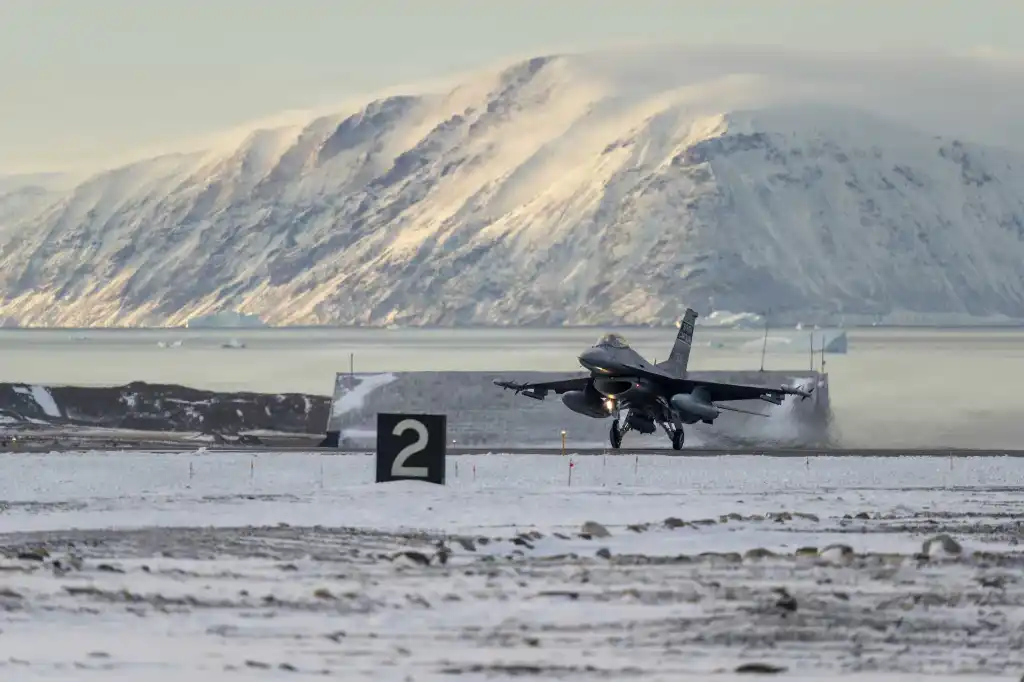
The North American Aerospace Defense Command (NORAD) has confirmed the deployment of military aircraft to Pituffik Space Base in Greenland, a move that underscores the growing strategic weight of the Arctic as geopolitical tensions surrounding sovereignty, security, and access intensify. Announced on January 19, 2026, the deployment is framed by NORAD as part of a pre-planned operational cycle, coordinated in advance with the United States, Canada, Denmark, and Greenlandic authorities, and not as a sudden shift in military posture.
While officially described as routine, the timing of the deployment places it squarely within a period of heightened political sensitivity surrounding Greenland’s status and the broader Arctic security environment. As polar regions become increasingly accessible due to climate change, the Arctic has emerged as a critical arena for missile warning, air defense, and great-power competition, making even long-scheduled military movements subject to intense scrutiny.
The confirmation by NORAD emphasizes continuity rather than escalation. The command stated clearly that the aircraft movements are conducted under existing defense agreements with the Kingdom of Denmark, and that the Government of Greenland was notified in advance, reinforcing the legality and transparency of the operation. Nevertheless, the arrival of combat-ready aircraft at Greenland’s only U.S. military base sends a message about preparedness, deterrence, and the enduring importance of Arctic defense.
The deployment highlights how North American security is increasingly shaped by the High North, where geography compresses warning times for missile threats and offers strategic avenues for both conventional and unconventional challenges. In this environment, Pituffik Space Base occupies a position of exceptional importance.
Pituffik Space Base and Its Strategic Role in Arctic Defense

Pituffik Space Base, formerly known as Thule Air Base, is located in northwestern Greenland, well above the Arctic Circle. It is the only permanent U.S. military installation on the island and has served as a cornerstone of North American defense architecture since the Cold War. Operated by the United States Space Force since 2020, the base plays a central role in missile warning, space surveillance, and early detection of potential threats approaching North America via polar routes.
The base’s long runway, capable of supporting a wide range of military aircraft, makes it uniquely suited for Arctic operations, where alternative airfields are sparse and weather conditions are extreme. Approximately 150 U.S. and allied personnel are stationed at Pituffik, maintaining radar systems and infrastructure that feed directly into NORAD’s integrated command and control network.
Recent infrastructure investments underscore the base’s enduring relevance. Plans allocating up to $25 million for modernization, including critical runway repairs, reflect recognition that Arctic installations must remain operational despite harsh environmental stresses. These upgrades ensure that Pituffik can continue to host aircraft deployments and support sustained operations well into the future.
NORAD’s Mission and the Logic Behind the Deployment
Established in 1957, NORAD is a bi-national command jointly led by the United States and Canada, responsible for aerospace warning, aerospace control, and maritime warning across North America. Headquartered at Peterson Space Force Base in Colorado Springs, NORAD integrates assets from the U.S. Air Force, U.S. Air National Guard, and the Royal Canadian Air Force to detect, track, and respond to potential threats.
As of January 2026, NORAD is commanded by General Gregory M. Guillot, with Lieutenant General Iain S. Huddleston serving as Deputy Commander. The command operates across three regions—Alaska, Canada, and the continental United States—allowing it to manage vast air approaches while maintaining centralized coordination.
The aircraft deployed to Pituffik are part of NORAD’s model of sustained and dispersed operations, a doctrine designed to maintain constant vigilance across multiple geographic areas. Rather than concentrating forces in a single location, NORAD routinely rotates and distributes assets to ensure flexibility, redundancy, and rapid response capability.
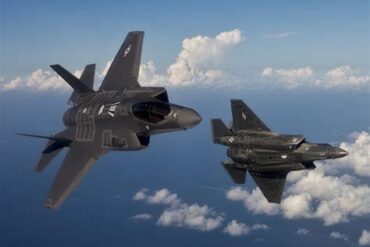
Although NORAD did not disclose specific aircraft types involved in this deployment, its air defense mission typically relies on F-15 Eagle, F-16 Fighting Falcon, F-22 Raptor, and F-35 Lightning II fighter jets, alongside Canadian CF-18 Hornets. These aircraft are maintained on quick reaction alert, ready to intercept unidentified or hostile aircraft approaching North American airspace.
Arctic Geography and the Compression of Warning Time
The Arctic’s strategic importance is rooted in geography. Polar routes represent the shortest path between major military powers, significantly reducing warning times for ballistic missiles or long-range bombers. Greenland’s position places it directly along these trajectories, making installations like Pituffik indispensable for early warning and tracking.
As climate change reduces ice coverage, the Arctic is also becoming more accessible for maritime traffic and military activity, further complicating the security environment. This accessibility increases the likelihood of airspace incursions, surveillance flights, and strategic signaling, all of which fall squarely within NORAD’s mandate.
In this context, deploying aircraft to Pituffik enhances situational awareness and response speed, reinforcing a layered defense posture that integrates space-based sensors, ground-based radar, and airborne interceptors.
Political Sensitivities Surrounding Greenland’s Sovereignty
Military activity in Greenland has carried heightened political significance since late 2024. Following the U.S. presidential election victory of Donald Trump on November 5, 2024, renewed statements emerged asserting that U.S. ownership or control of Greenland was a national security necessity. These remarks revived earlier controversies and placed Greenland at the center of international attention.
Greenland is a self-governing territory within the Kingdom of Denmark, and both Copenhagen and Nuuk have firmly rejected any proposal to alter sovereignty. Danish and Greenlandic leaders have repeatedly reaffirmed that Greenland’s status is not negotiable, even as they acknowledge the island’s strategic value.
Against this backdrop, NORAD’s careful language matters. By stressing that the deployment is long-planned, coordinated, and conducted under existing agreements, the command has sought to clearly separate routine defense operations from political rhetoric. The explicit mention of prior notification to Greenland authorities serves to reinforce respect for established governance structures.
Routine Operations, Strategic Messaging
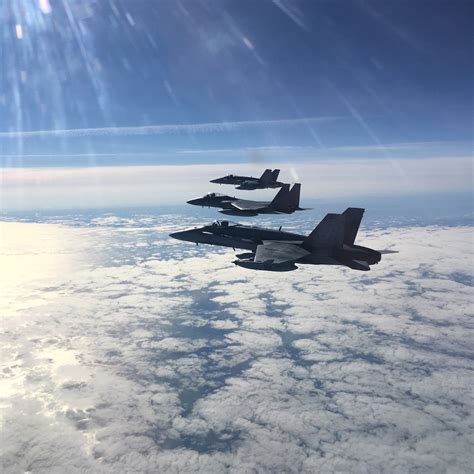
While NORAD insists the deployment does not signal a change in U.S. regional posture, the presence of air defense aircraft at Pituffik inevitably carries strategic messaging value. In an era of renewed great-power competition, even routine movements can function as signals of capability, readiness, and resolve.
For allies, the deployment reinforces the credibility of North American collective defense and the enduring commitment of the United States and Canada to Arctic security. For potential adversaries, it highlights that polar approaches are monitored, defended, and integrated into a broader defense network.
The absence of disclosed aircraft types or arrival timelines further supports the interpretation that this is not an emergency surge, but rather a measured component of ongoing defense cycles. This deliberate opacity is consistent with NORAD’s long-standing practice of emphasizing mission continuity over spectacle.
Greenland, NORAD, and the Future of Arctic Defense
The arrival of NORAD aircraft at Pituffik Space Base illustrates how Greenland has become central to 21st-century defense planning, not because of territorial ambition, but because of its irreplaceable geographic position. As missile technologies evolve and Arctic access expands, early warning and air defense systems based in Greenland will only grow in importance.
For NORAD, the challenge lies in balancing operational necessity with political sensitivity. Maintaining robust defense capabilities while respecting Greenland’s self-governing status and Denmark’s sovereignty requires constant coordination and transparency. The January 2026 deployment reflects this balance, presenting Arctic defense as a shared responsibility rather than a unilateral assertion.
Ultimately, the deployment underscores a broader reality: the Arctic is no longer a remote frontier, but a frontline of modern security strategy. In that environment, Pituffik Space Base stands as a quiet but decisive node in the defense of North America, and NORAD’s aircraft presence there signals vigilance in a region where distance, ice, and silence once provided strategic insulation.