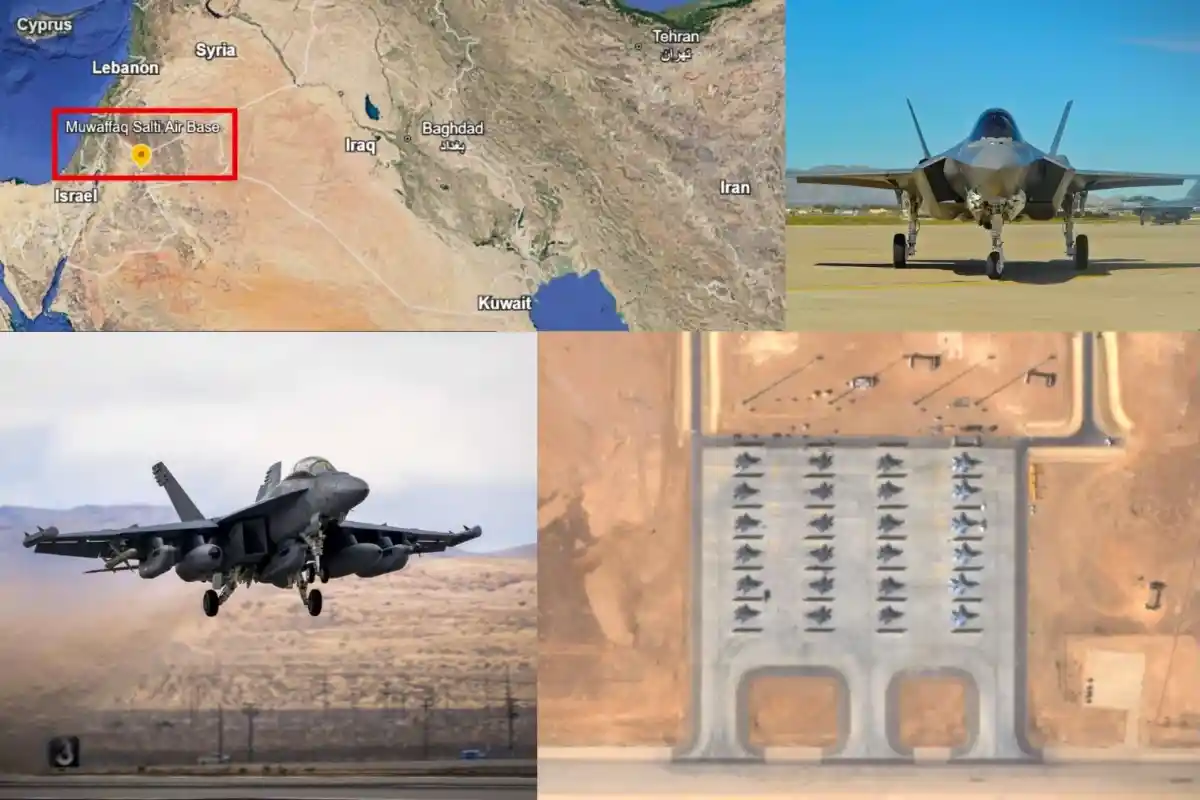
The United States has significantly expanded its air combat presence at Muwaffaq Salti Air Base in eastern Jordan, positioning a formidable mix of advanced fighter aircraft, electronic warfare platforms, drones, helicopters, and layered missile defense systems within operational reach of both Israel and western Iran. Commercial satellite imagery and flight tracking data confirm a rapid and deliberate force surge, underscoring Washington’s heightened readiness posture amid escalating tensions with Tehran.
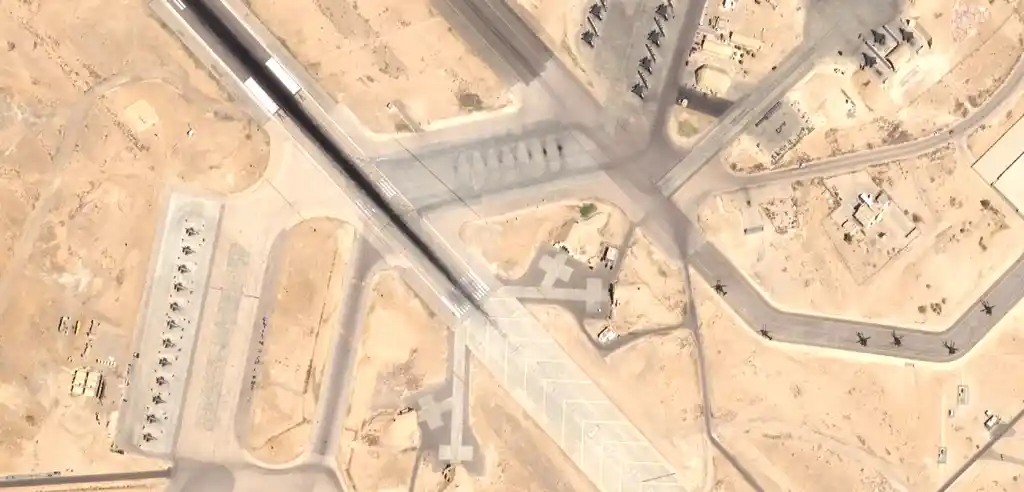
Recent imagery captured by Airbus commercial satellites reveals at least 60 U.S. combat aircraft parked across the base’s aprons and taxiways. Rows of fighters, support aircraft, and unmanned systems are clearly visible, marking one of the most substantial U.S. air power concentrations in Jordan in recent years. Flight tracking data indicates that numerous cargo aircraft arrived within a compressed timeframe, delivering personnel, munitions, maintenance equipment, and logistical support packages. The speed and scale of this deployment signal strategic intent rather than routine rotation.
Muwaffaq Salti has long functioned as a coalition hub supporting operations in Syria and Iraq. Today, it appears configured for high-tempo strike operations and enhanced defensive coverage, with infrastructure and aircraft disposition optimized for sustained combat sorties rather than limited expeditionary activity.
Fifth-Generation Edge: F-35A Lightning II Forward Presence
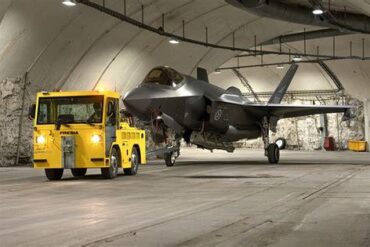
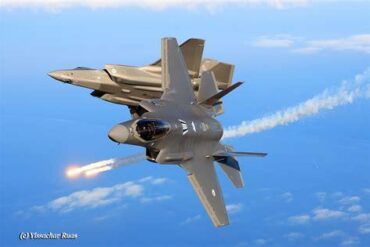
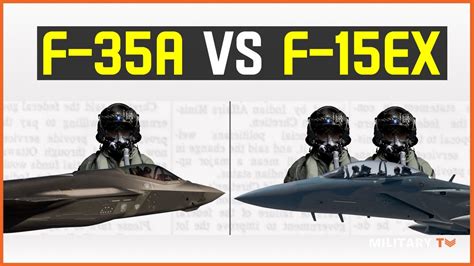
At the core of the deployment are F-35A Lightning II stealth fighters, assessed with moderate to high confidence based on aircraft silhouettes and configuration patterns visible in commercial imagery. The F-35A’s low observable design reduces radar detection, while its advanced sensor fusion integrates radar, infrared, electronic surveillance, and datalink inputs into a single coherent battlefield picture for pilots and networked forces.
In a contingency involving Iran, forward-based F-35As could conduct suppression and destruction of enemy air defenses (SEAD/DEAD) missions, targeting long-range radar installations, surface-to-air missile batteries, and command-and-control nodes. Their ability to penetrate defended airspace while sharing real-time targeting data across secure networks significantly enhances coalition lethality and survivability.
Positioned in eastern Jordan, these aircraft can reach strategic nodes across the Levant and into western Iran with relatively short transit times, reducing reliance on aircraft carriers or distant Gulf bases. The forward posture provides both speed and strategic ambiguity, complicating adversary planning cycles.
Electronic Dominance: EA-18G Growler and the Electromagnetic Battlespace
Complementing stealth capabilities is the likely presence of EA-18G Growler electronic warfare aircraft, distinguishable from F/A-18E/F Super Hornets only through specialized equipment. The Growler carries advanced jamming pods capable of degrading radar systems, disrupting communications, and neutralizing integrated air defense networks.
Electronic warfare has become central to modern high-end conflict. Radar, communications, missile guidance systems, and datalinks all operate within the electromagnetic spectrum. By targeting that spectrum, EA-18Gs can effectively blind or confuse adversary defenses before kinetic strikes begin. In combination with F-35A penetration operations, Growlers create corridors of relative safety through contested airspace.
This pairing represents a classic first-wave configuration: stealth platforms locate and designate targets while electronic attack aircraft suppress or disorient defensive systems. The synergy multiplies operational effectiveness while minimizing exposure.
Fourth-Generation Firepower: F-15E, F-16, and A-10C Reinforcements
Beyond the fifth-generation nucleus, satellite imagery indicates the presence of F-15E Strike Eagles, F-16 multirole fighters, and A-10C Thunderbolt II aircraft. This diversified mix enhances mission flexibility and sustainability.
The F-15E Strike Eagle, with its twin-engine performance and substantial payload capacity, excels in deep precision strike, maritime interdiction, and time-sensitive targeting. Its range allows operations extending well beyond Jordan’s borders, potentially covering strategic infrastructure or missile sites.
The F-16 remains one of the most versatile multirole platforms in the U.S. inventory. It can pivot between defensive counter-air patrols and precision ground attack missions with minimal reconfiguration. In a regional escalation scenario, F-16s could maintain protective air patrols over Jordanian or Iraqi airspace while supporting targeted strike operations elsewhere.
The A-10C Thunderbolt II, often underestimated in high-end scenarios, provides unmatched close air support and battlefield persistence. Its durability and loiter time make it particularly relevant for base defense contingencies or support of ground forces operating near contested areas.
Layered Shield: THAAD and Patriot Missile Defense Systems
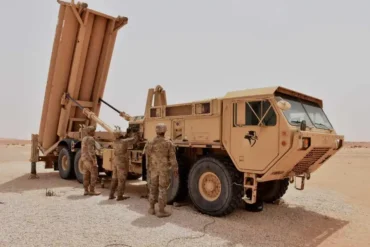
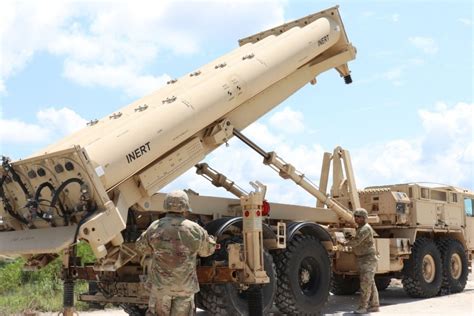
A surge of air assets without defensive cover would be strategically vulnerable. Satellite analysis indicates that a Terminal High Altitude Area Defense (THAAD) battery has likely been deployed to Jordan, supplemented by MIM-104 Patriot missile systems.
THAAD intercepts ballistic missiles during their terminal phase at high altitude, targeting medium- and intermediate-range threats. Patriot systems provide coverage against shorter-range ballistic missiles and cruise missiles, creating a layered architecture that addresses multiple threat profiles.
Iran maintains a substantial ballistic missile arsenal, and regional proxy groups possess rockets and drones capable of striking fixed installations. Concentrating high-value aircraft at a single base necessitates robust protective measures. The integration of THAAD and Patriot systems suggests a deliberate strategy to ensure operational continuity even under missile attack conditions.
This defensive umbrella protects not only aircraft but also personnel, command infrastructure, and logistical assets essential for sustained air operations.
Strategic Geography: Why Muwaffaq Salti Matters
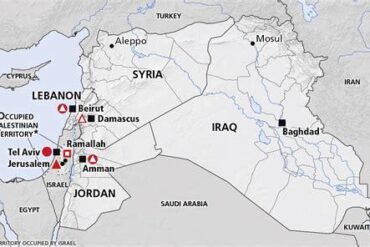
Muwaffaq Salti Air Base occupies a position of strategic leverage. Located in eastern Jordan, it sits within operational reach of western Iran, Iraq, Syria, and Israel, while remaining geographically buffered from immediate frontline exposure.
From this vantage point, U.S. aircraft can operate across multiple theaters with reduced transit time. The base’s depth behind Jordanian territory complicates targeting calculations for adversaries, particularly when shielded by layered missile defenses.
The deployment also reduces overreliance on maritime strike groups operating in constrained waters. While U.S. naval forces continue to operate in the Mediterranean and Persian Gulf, land-based aircraft offer redundancy and diversification of strike vectors. Multiple axes of potential air power projection increase deterrence credibility.
Proximity to Israel: Integrated Deterrence in Practice
The base’s proximity to Israel adds strategic weight. Within a short flight distance, U.S. and Israeli aircraft can coordinate operations, share data, and synchronize air defense coverage. Israel operates its own fleet of F-35I aircraft, creating opportunities for network-enabled collaboration in a high-end contingency.
Electronic warfare assets stationed in Jordan could augment Israeli strike packages or bolster defensive efforts against missile or drone attacks. The combined presence of U.S. stealth fighters, electronic attack aircraft, and layered missile defenses reinforces a posture of integrated deterrence.
This alignment sends a dual message: operational readiness for joint defense and a clear signal that regional escalation would encounter coordinated resistance.
Logistics Surge: Cargo Flights and Sustainment Infrastructure
Flight tracking data reveals dozens of cargo aircraft arriving at Muwaffaq Salti within days, transporting munitions, spare parts, support vehicles, and personnel. Rapid sustainment is essential for high-tempo air operations. Combat aircraft require continuous maintenance cycles, precision-guided munitions resupply, and secure communications infrastructure.
The visible expansion of support equipment on the ground indicates preparation for sustained operations rather than symbolic presence. Hardened shelters, fuel storage facilities, and maintenance hangars appear actively utilized. This logistics backbone transforms aircraft concentration into operational capacity.
Calibrated Signaling to Tehran and the Region
The composition of the force package reflects careful calibration. Rather than deploying large-scale ground formations, Washington has emphasized precision strike capability, electronic warfare dominance, and missile defense resilience. This posture supports deterrence while maintaining escalation control.
For Tehran, the message is clear: ballistic missile launches or proxy attacks risk immediate response from advanced air platforms operating under protective cover. For regional partners, the buildup reassures that U.S. commitments remain tangible and responsive.
Deterrence operates not through rhetoric but through visible capability. Satellite imagery provides public confirmation of readiness without requiring official declarations.
Jordan’s Role: Strategic Host and Stabilizing Partner
Jordan’s cooperation underpins the deployment. Operating within a bilateral defense framework, Amman balances national security interests with regional diplomacy. Hosting advanced U.S. systems enhances deterrence against missile threats while reinforcing Jordan’s status as a key security partner.
The emphasis on air and missile defense aligns with Jordan’s interest in protecting its territory from spillover effects. By facilitating a defensive yet potent posture, Jordan contributes to regional stability without overtly escalating tensions.
Operational Implications and Regional Balance
With approximately 60 to 70 U.S. aircraft now positioned at Muwaffaq Salti, the base has evolved into a central node within the broader eastern Mediterranean and Middle Eastern defense architecture. The combination of F-35A stealth fighters, EA-18G electronic warfare aircraft, F-15E strike platforms, F-16 multirole jets, A-10 close air support aircraft, and layered THAAD and Patriot defenses creates a multidimensional capability set.
This posture enhances flexibility across a spectrum of contingencies, from limited defensive patrols to high-end precision strike campaigns. The visible surge underscores how modern military power projection relies on integration: stealth, electronic warfare, missile defense, logistics, and allied coordination functioning as a coherent system.
As tensions with Iran continue to shape regional security dynamics, Muwaffaq Salti Air Base stands as a forward-operating anchor for U.S. air power—geographically strategic, technologically advanced, and structured to deter escalation while preserving rapid response capacity.