The debate over Canada’s fighter jet future is not really about aircraft. It is about control, trust, technology, and the architecture of continental defense. When discussions surface about Canada potentially building Sweden’s Saab JAS 39 Gripen domestically or reducing its planned purchase of 88 F-35A Lightning II fighters, Washington pays attention. Not because of lost sales revenue, but because of what those choices signal about North American security integration.
At the heart of this tension lies a structural truth: Canada’s airspace is inseparable from that of the United States. The Arctic is not just a frozen expanse of snow and silence; it is a strategic corridor. Russian long-range aviation regularly probes its edges. Emerging missile technologies compress warning times. In that environment, fighter jets are not standalone machines. They are flying nodes in a vast, classified, real-time data ecosystem known as NORAD—the North American Aerospace Defense Command.
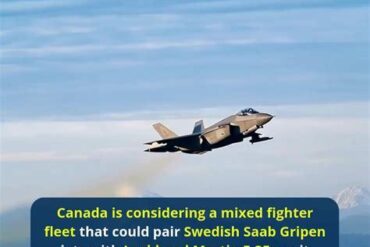
This is where the controversy sharpens. Canada selected the F-35A as its future fighter and signed a program of record for 88 aircraft in 2023. Sixteen are already under contract. The first deliveries are expected in 2026. The conversation today is not about canceling those 16 jets. It is about whether Canada should reduce the total number and operate a mixed fleet, potentially including the Gripen E. That shift would carry implications far beyond procurement spreadsheets.
Canada’s Aging CF-18 Fleet and the Long Road to Replacement
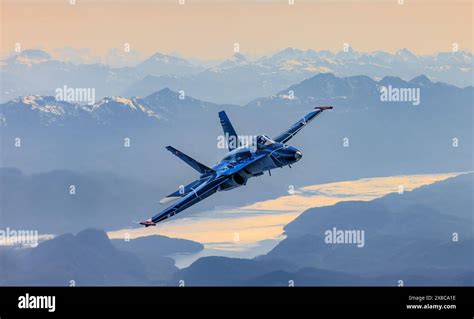
Canada’s current fighter force centers on roughly 95 CF-18 Hornets, aircraft derived from the US Navy’s F/A-18. These jets entered service in the 1980s. They have been upgraded repeatedly, but time is undefeated. Airframes fatigue. Avionics age. Maintenance costs climb. Australia retired its classic Hornets years ago. The US Marine Corps has done the same. Canada even purchased retired Australian Hornets to keep its fleet viable—an aviation equivalent of organ transplantation.
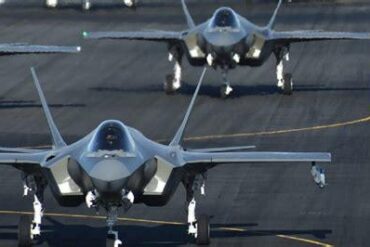
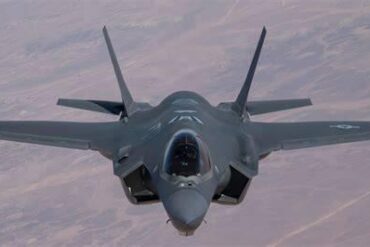
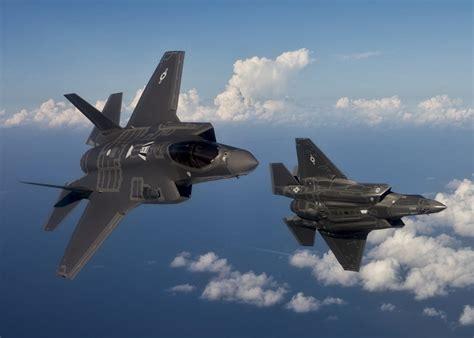
Replacing them should have happened earlier. Political shifts, budget debates, and industrial considerations slowed the process. Eventually, after a prolonged competition, Ottawa selected the F-35A, the conventional takeoff and landing variant of the Joint Strike Fighter. The aircraft’s stealth, sensor fusion, and integration within NATO and US systems gave it a decisive edge in capability assessments.
According to leaked Canadian defense scoring reported by Radio Canada, the F-35 achieved 57.1 out of 60 points in military capability evaluations—around 95 percent. The Gripen E scored 19.8 out of 60, roughly 33 percent. That gap is not marginal. It is categorical.
Why NORAD Is the Real Center of Gravity
Public discussions often drift toward cost per jet, runway flexibility, or industrial offsets. These are visible and politically convenient topics. The strategic core, however, is NORAD interoperability.
NORAD is not NATO. It is a binational command structure integrating US and Canadian forces in aerospace warning, aerospace control, and maritime warning. Its architecture relies on US-controlled systems: IFF Mode 5 identification, classified missile defense data links, early warning sensor fusion, and secure command-and-control networks. These are not optional accessories. They are foundational.
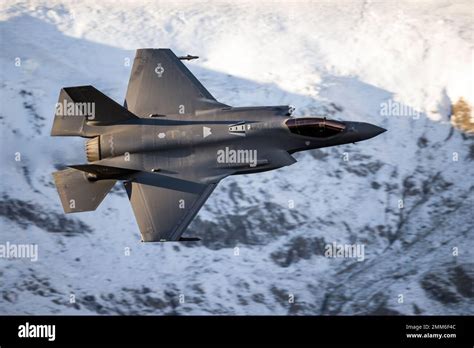
The F-35 was designed from inception to operate inside this digital architecture. Its software, mission systems, and secure data links are aligned with US-controlled infrastructure. The aircraft does not merely plug into NORAD; it was engineered within the same ecosystem.
The Gripen, by contrast, is NATO-compatible. It operates with Link 16, carries Western weapons, and integrates modern sensors. But NATO compatibility is not NORAD certification. Saab has stated it can make the Gripen NORAD-compliant. The decisive variable, however, is American approval. Access to US-controlled secure systems is not automatically granted.
From Washington’s perspective, the concern is not that the Gripen is incapable of flying intercept missions. The concern is that a partially integrated fleet may not achieve the seamless interchangeability required in a crisis where seconds matter.
Sovereignty Versus Integration: Canada’s Strategic Dilemma
Canada’s hesitation is not rooted in technical ignorance. It reflects sovereignty anxiety.
Modern fighter jets are geopolitical commitments. Buying the F-35 is not just acquiring an aircraft; it is entering a deeply embedded logistics, software, and sustainment network largely controlled by the United States. Software updates, spare parts pipelines, classified system access—these are channels of leverage.
Some Canadian voices express fear of a hypothetical “kill switch,” a scenario in which US control over systems could constrain Canada’s independent use. Whether such fears are realistic is almost secondary. Perception shapes policy. As relations between Ottawa and Washington experience strain in other domains, dependence can feel risky.
Here lies the paradox: the F-35 is arguably the most capable aircraft available. It offers unmatched sensor fusion, stealth characteristics, and integration. Yet the very depth of its integration generates discomfort about autonomy.
This tension is not unique to Canada. Fighter sales have always been strategic marriages. Colombia’s recent selection of the Gripen over the F-16 reflected domestic political currents. Peru’s procurement debate has similarly oscillated between platforms, influenced by alignment preferences. Defense acquisitions are rarely just about metal and engines. They are about alliances.
The Gripen’s Arctic Narrative—and Its Limits
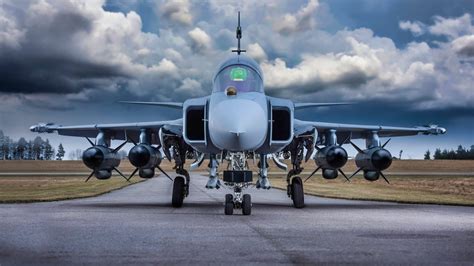
The Gripen E is frequently praised for its ability to operate from dispersed, semi-prepared runways. Sweden designed it for resilience against airfield strikes. Its relatively small size and robust design allow operations from road bases.
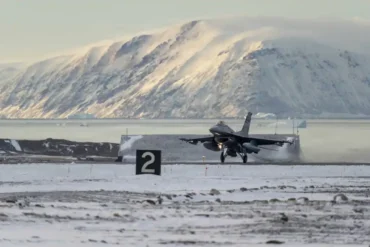
Yet this advantage can be overstated. Finland, which practices a dispersed doctrine similar to Sweden’s, evaluated both aircraft and selected the F-35A in 2021. The F-35 operates in Alaska and Norway, enduring Arctic conditions regularly. Cold weather does not belong to one airframe.
Canada’s geography also differs from Sweden’s. The vastness of the Canadian north elevates range and endurance as primary requirements. The F-35A carries significantly more internal fuel than the Gripen E. On short, unprepared strips, the Gripen cannot operate fully fueled and loaded with external tanks simultaneously. In long-range sovereignty patrols, that limitation matters.
The strategic mission is not defending a dense European airspace network. It is policing enormous Arctic approaches. In that context, range and sensor reach dominate runway theatrics.
Cost Comparisons and the Mirage of Simplicity
Cost debates often generate more heat than clarity. Flyaway price comparisons between the Gripen and the F-35 can mislead when sustainment, upgrades, and lifecycle expenses are excluded. The F-35 program experienced well-publicized overruns during development. The Gripen E has also faced delays and budget inflation. Brazil’s deliveries are years behind schedule, and reports indicate cost overruns equivalent to the price of multiple aircraft.
More importantly, the Gripen E competes globally not against the F-35 but against platforms like the F-16 Block 70/72. The F-35 occupies a category of its own in the export market. Countries that choose the Gripen typically do so because the F-35 is either unavailable or politically unattainable.
Thailand reportedly sought the F-35 and was denied. Ukraine’s discussions revolve around F-16s. Peru’s procurement appears to be shifting toward the F-16. The Gripen is a highly capable lightweight fighter. It is not a stealth fifth-generation aircraft. That distinction is fundamental.
Why the US Is Concerned About Reducing the F-35 Order
The United States is not primarily alarmed by Canada acquiring a supplementary fleet of Gripens. It is concerned about Canada significantly reducing the 88-aircraft F-35 program of record.
From Washington’s perspective, Canada must field enough F-35s to meet NORAD obligations with confidence. A reduced fleet could strain readiness, limit surge capacity, and complicate interoperability during high-intensity contingencies.
American officials have characterized the Gripen as less interchangeable within NORAD systems. That language reflects operational doctrine. In integrated air defense, seamless data sharing and command alignment are force multipliers. Heterogeneity can introduce friction.
If Canada maintains the full F-35 purchase and supplements with another platform, the United States can tolerate the diversity. If the F-35 fleet shrinks dramatically, the reliability of the northern shield becomes a strategic question.
The Rafale and Eurofighter Episode
Interestingly, Canada’s competition once included the Dassault Rafale and the Eurofighter Typhoon. Both aircraft offer advanced capabilities and are largely free from US export controls. For a country concerned about sovereignty, that independence might appear attractive.
Yet both manufacturers withdrew from the competition. The reported reason was the depth of integration required for NORAD missions. Achieving compliance with US-controlled secure systems would impose costs and complexities deemed prohibitive.
This outcome underscores the structural reality: the NORAD requirement effectively narrows Canada’s options. Aircraft not deeply embedded within US defense networks face steep barriers.
Ironically, the Gripen is not entirely free of US entanglement either. It uses a GE Aerospace engine, subjecting it to American export controls. Absolute sovereignty in modern aerospace is elusive.
The Geopolitical Backdrop
The strategic environment is deteriorating. Russia’s Arctic military modernization, China’s long-term polar interests, and evolving missile threats all elevate the importance of North American aerospace defense. Early warning timelines are shrinking. Hypersonic glide vehicles complicate detection. In this environment, integration is not bureaucratic excess; it is survival logic.
For the United States, Canada’s airspace is the northern approach to the homeland. Any perceived weakening of its policing capacity triggers concern. For Canada, overdependence on US systems raises fears of constrained autonomy.
These are not trivial anxieties. They are expressions of two rational security perspectives colliding.
The Core Reality Behind the Debate
Strip away procurement politics and industrial lobbying, and a stark conclusion emerges. The F-35A offers capabilities and integration that align almost perfectly with NORAD’s architecture. The Gripen E, while capable and modern, belongs to a different class of aircraft and would require substantial political and technical negotiation to achieve equivalent integration.
The United States is not trembling at the prospect of Sweden exporting jets to Canada. It is focused on maintaining a seamless continental defense network. Canada is not rejecting capability out of ignorance. It is wrestling with the trade-offs between technological superiority and sovereign flexibility.
Aircraft manufacturing talks between Canada and European partners symbolize something larger: a reassessment of alliance dynamics in a shifting geopolitical era. Defense procurement becomes a referendum on trust.
In the end, fighter jets are not just machines that fly. They are embodiments of strategic alignment. The debate unfolding between Ottawa, Washington, and European manufacturers is less about thrust-to-weight ratios and more about the architecture of North American security for the next half-century.
That is why the United States is watching closely. Not because it fears competition, but because it understands that in aerospace defense, integration is power—and fragmentation carries consequences that echo far beyond a runway in the Arctic.