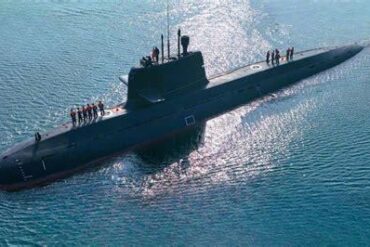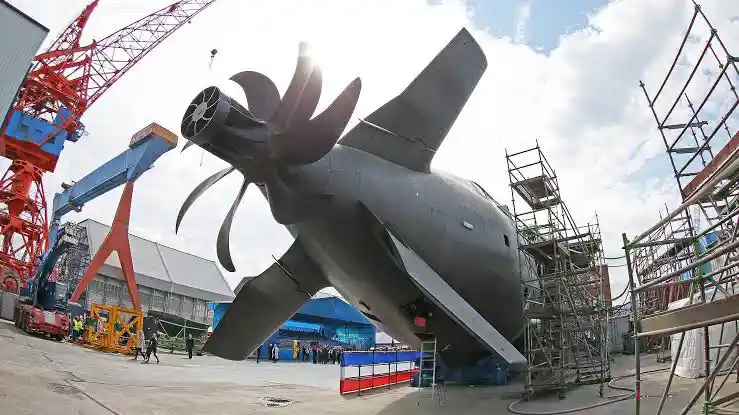
Modern submarines are engineered to disappear into the ocean, not through invisibility, but through silence. Acoustic stealth has become the defining characteristic of undersea warfare, allowing submarines to gather intelligence, shadow enemy fleets, and launch strategic weapons without revealing their presence. While governments frequently release images of submarines entering ports or participating in naval exercises, one feature is routinely concealed: the propeller. Official photographs often crop the stern, keep it submerged, or digitally blur the propulsion system because even a single clear image could provide valuable intelligence to rival nations.
The secrecy surrounding submarine propellers has existed for decades and continues despite advances in satellite imagery and surveillance technology. Unlike visible weapons or radar systems, the propeller directly influences how much noise a submarine generates underwater. Every improvement in reducing that noise increases survivability, making the propulsion system one of the vessel’s most strategically important components. For this reason, navies invest enormous resources in protecting details that might appear insignificant to the casual observer but carry immense military value.
The competition beneath the world’s oceans is largely an acoustic contest. Detecting an opponent first often determines tactical superiority, especially during intelligence gathering or strategic deterrence patrols. As submarines become quieter through vibration isolation, advanced machinery, specialized hull coatings, and increasingly sophisticated propulsion systems, propeller technology remains a critical element of that silent advantage.
Why Submarine Propeller Geometry Is Critical to Underwater Stealth
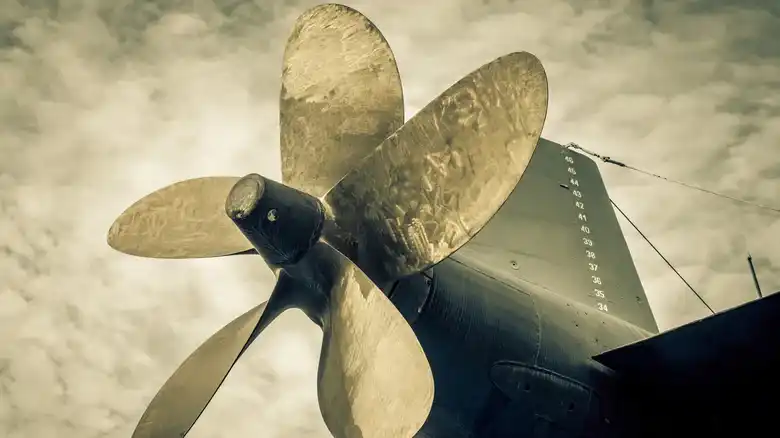
A submarine propeller is far more sophisticated than the propellers found on commercial vessels. Every blade is carefully engineered to reduce cavitation, the formation and violent collapse of microscopic vapor bubbles caused when local water pressure drops below its vapor pressure. These collapsing bubbles create distinctive underwater noise that sophisticated sonar systems can detect over considerable distances. Eliminating or minimizing cavitation dramatically improves a submarine’s ability to remain hidden.
Engineers carefully optimize the number of blades, blade curvature, skew angle, thickness, pitch, diameter, and manufacturing precision to produce the quietest possible operation across varying speeds and ocean conditions. Even tiny adjustments influence water flow and vibration patterns, affecting the vessel’s acoustic signature. Modern naval designers often sacrifice maximum propulsion efficiency in favor of reduced noise because stealth consistently outweighs raw speed during military operations.
How Propeller Designs Reveal Valuable Intelligence
A detailed photograph of a submarine’s propeller offers far more information than most people realize. Intelligence analysts can estimate blade count, geometry, manufacturing techniques, and even infer likely operating characteristics. Combined with sonar recordings collected over years of surveillance, these observations help analysts identify specific submarine classes and evaluate technological progress within foreign navies.
Because every submarine produces a unique acoustic fingerprint, intelligence agencies maintain extensive databases of underwater signatures gathered through passive and active sonar networks. Understanding how a particular propulsion system generates sound helps naval commanders recognize vessels operating thousands of miles from home waters. Preventing adversaries from improving these databases explains why propeller designs remain among the most closely guarded secrets in modern naval engineering.
The Future of Silent Naval Propulsion
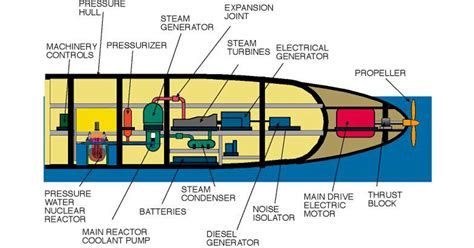
Many of the world’s newest submarines increasingly employ pump-jet propulsion, which encloses rotating blades within a duct to reduce turbulence and noise compared with conventional propellers. Although this technology offers significant acoustic advantages, its exact engineering remains equally classified. Whether using traditional skewed propellers or advanced pump-jets, the objective remains unchanged: creating submarines that adversaries cannot hear.
As underwater surveillance systems become increasingly capable, the battle between detection and concealment continues to intensify. Protecting propulsion technology ensures that submarines retain their greatest advantage—the ability to operate silently beneath the surface, unseen and unheard, in one of the world’s most challenging military environments.