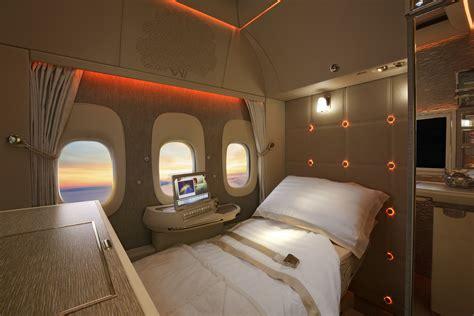
The modern aircraft cabin is no longer just a functional space designed to move passengers efficiently from one continent to another. It has evolved into a carefully engineered environment where comfort, privacy, technology, and human-centric design converge to redefine the very meaning of long-haul travel. Across flagship aircraft entering service in 2026, airlines are competing not merely on routes or pricing, but on how intelligently they shape the onboard experience.
What makes this transformation remarkable is its depth. The shift is not limited to lie-flat seats or upgraded materials; it extends into behavioral science, circadian rhythm management, spatial psychology, and digital personalization. Cabins are now designed to respond dynamically to passenger needs, offering a level of adaptability that was once unimaginable in commercial aviation.
This new era is being led by a handful of standout aircraft and cabin concepts that challenge conventional layouts and expectations. From social lounges in the sky to private suites that rival boutique hotels, these innovations are setting new benchmarks—and quietly making older designs feel obsolete.
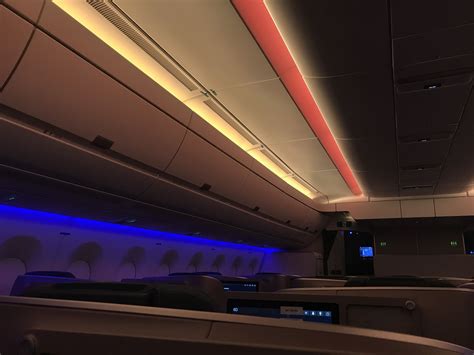
Qantas Airbus A350-1000: The Wellbeing Zone That Redefines Ultra-Long-Haul Travel
Ultra-long-haul flights—stretching close to 20 hours—present a unique challenge: even the most comfortable seat cannot compensate for prolonged immobility. Qantas approached this problem not by refining seats further, but by questioning the assumption that passengers should remain seated at all.
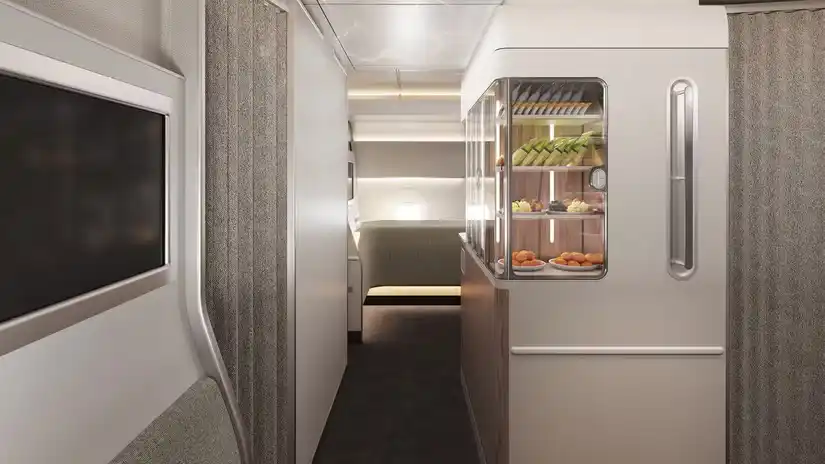
The result is the Wellbeing Zone, a dedicated space integrated into the Airbus A350-1000 under Project Sunrise. Positioned between premium economy and economy cabins, this zone introduces a radical concept: movement as a core component of cabin design. Instead of maximizing seat density, Qantas sacrifices space to create an area where passengers can stand, stretch, and reset their bodies mid-flight.
The design is deliberately functional yet inviting. Sculpted wall panels incorporate stretch handles and guided exercise points, subtly encouraging passengers to engage in light physical activity. Hydration stations and curated refreshments reinforce the idea that maintaining energy and circulation is essential on ultra-long journeys.
What elevates this concept beyond a simple stretch area is its scientific foundation. The lighting system within the cabin is calibrated to support circadian rhythm alignment, using carefully timed shifts in color temperature and brightness to simulate natural daylight cycles. This approach helps reduce jet lag by gradually acclimating passengers to their destination time zone before landing.
The Wellbeing Zone represents a philosophical shift: the aircraft cabin is no longer passive. It actively participates in maintaining passenger health, transforming the experience from endurance to managed wellbeing. In doing so, Qantas has effectively redefined what it means to travel long distances.
Emirates Airbus A380: The Evolution of the Iconic Upper Deck Lounge
Few features in commercial aviation are as instantly recognizable as the Emirates A380 upper deck lounge. It is not just a design element; it is a statement that flying can be social, immersive, and even indulgent.
Unlike traditional cabins that emphasize personal space, the lounge introduces a shared environment where passengers can move freely, converse, and enjoy a sense of community at 40,000 feet. The upcoming redesign refines this already distinctive concept with a stronger focus on atmosphere and spatial intimacy.
Curved seating replaces rigid arrangements, creating a more fluid and organic layout. Materials inspired by luxury automotive interiors and private yachts elevate the tactile experience, while softer, layered lighting enhances the ambiance. The result is a space that feels less like an aircraft cabin and more like an exclusive private club.
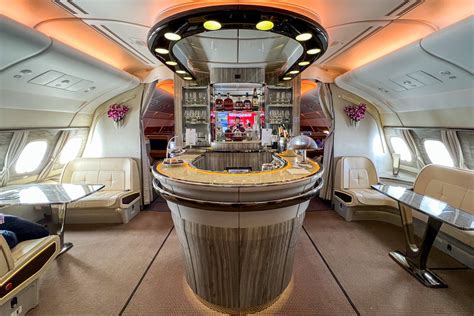
Despite accommodating up to 26 passengers, the redesigned lounge achieves a sense of exclusivity through clever spatial planning. The seating clusters create micro-environments, allowing for both social interaction and semi-private relaxation within the same space.
Beyond aesthetics, the lounge integrates seamlessly with broader cabin upgrades, including high-speed connectivity and enhanced charging capabilities. Yet technology remains secondary to the core experience: this is a place designed for human interaction, a rarity in an increasingly individualized travel landscape.
Emirates understands something fundamental—luxury is not always about isolation. Sometimes, it is about offering passengers the freedom to choose between privacy and connection, and executing both exceptionally well.
Cathay Pacific Boeing 777-300ER: Aria Suite and the Power of Subtle Design
While some airlines pursue innovation through bold features and dramatic layouts, Cathay Pacific takes a more restrained approach with its Aria Suite. Here, innovation lies not in what is added, but in what is deliberately left out.
The Aria Suite is an exercise in interior architecture and emotional design. Every detail—from the muted color palette to the precise geometry of surfaces—is curated to create a sense of calm. Instead of overwhelming passengers with visual complexity, the cabin embraces minimalism and balance, allowing space itself to become a defining feature.
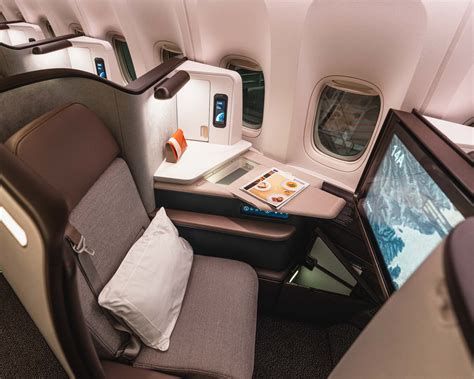
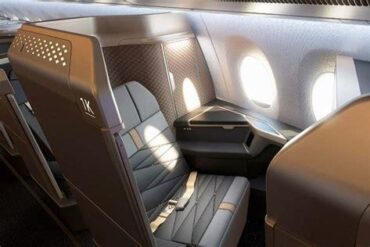
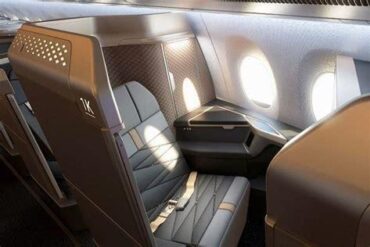
Privacy is seamlessly integrated through sliding doors and carefully positioned partitions, but these elements avoid the heavy, enclosed feeling seen in some competing designs. The clever use of negative space ensures that even fully enclosed suites feel open and breathable.
Technology is present, but never intrusive. Ultra-high-definition displays, intuitive controls, and responsive lighting systems are embedded into the environment rather than showcased. This creates a cabin that adapts quietly to the passenger’s needs, enhancing comfort without demanding attention.
What makes the Aria Suite particularly compelling is its ability to influence mood. The cabin feels serene, composed, and almost meditative, transforming the flight into a restorative experience rather than a transactional one. It is a reminder that innovation does not always need to be loud to be transformative.
All Nippon Airways Boeing 777-300ER & 787-9: “The Room” and Spatial Freedom
All Nippon Airways took a bold risk with “The Room,” rejecting the industry’s trend toward compact, forward-facing pods. Instead, it reimagined business class as a space defined by width, openness, and architectural presence.
On the Boeing 777-300ER, the seats are extraordinarily wide—so much so that they challenge traditional expectations of what a business class seat should be. Passengers are not confined within narrow shells; they are placed within a space that feels closer to a private lounge or micro-suite.
The layout plays a crucial role in this experience. Alternating forward- and rear-facing seats create a dynamic visual rhythm while maximizing spatial efficiency. This configuration enhances privacy organically, reducing the need for excessive barriers.
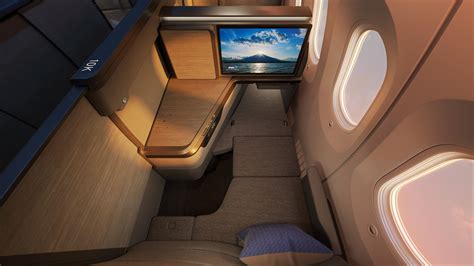
Surfaces are expansive and thoughtfully arranged, offering practical usability without clutter. Sliding doors provide privacy when needed, but the overall design maintains a sense of openness that is rare in premium cabins.
Translating this concept to the narrower Boeing 787-9 required significant innovation, resulting in “The Room FX.” Despite spatial constraints, the design retains its core philosophy, integrating 4K displays and Bluetooth connectivity to modernize the experience.
What ANA demonstrates is that true innovation often comes from rethinking proportions rather than adding features. By prioritizing space as a primary luxury, “The Room” delivers an experience that feels fundamentally different from anything else in the sky.
Qatar Airways Airbus A350-1000: Qsuite Next Gen and Adaptive Luxury
When Qatar Airways introduced Qsuite in 2017, it fundamentally altered the trajectory of business class design. The Next Gen iteration builds on that legacy with a sharper focus on precision, automation, and adaptability.
At its core, Qsuite remains defined by its fully enclosed private suites, complete with sliding doors and configurable layouts. However, the latest version enhances these elements with taller, motorized dividers that create an even stronger sense of personal space.
The cabin is designed to respond intuitively to passenger needs. Digital interfaces allow for seamless control over lighting, seating positions, and entertainment, while features like the “Make My Bed” function streamline the transition from seating to rest.
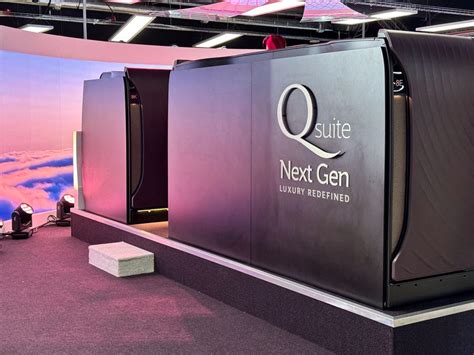
What truly sets Qsuite apart is its unmatched flexibility. Passengers can transform their space into:
- A fully private suite for solo travel
- A double bed configuration for couples
- A four-person “quad” arrangement for groups or families
This adaptability introduces a dynamic quality rarely seen in commercial aviation. The cabin is not fixed; it evolves based on how passengers choose to use it.
The shift of Qsuite Next Gen to the Airbus A350-1000 ensures that Qatar Airways continues to lead in premium cabin innovation, even as aircraft delivery timelines change. More importantly, it reinforces a broader trend: the future of air travel lies in personalization and control, where passengers shape their environment rather than adapt to it.
The Future of Cabin Design: Personalization, Wellness, and Experience
Across these five aircraft, a clear pattern emerges. Innovation is no longer about isolated features—it is about creating a holistic ecosystem where space, technology, and human factors work together seamlessly.
Cabins are becoming:
- More personal, with adjustable environments tailored to individual preferences
- More dynamic, offering flexible layouts that adapt to different travel scenarios
- More health-focused, integrating movement, lighting, and design to support wellbeing
- More experiential, emphasizing how passengers feel rather than just what they receive
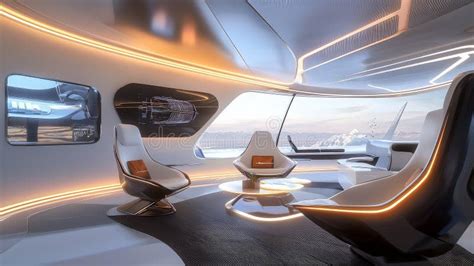
This evolution reflects a deeper shift in passenger expectations. Travelers are no longer satisfied with incremental upgrades; they are seeking experiences that feel intuitive, restorative, and memorable.
Airlines that understand this are investing heavily in design thinking, recognizing that the cabin is not just a product—it is a competitive advantage. As these innovations continue to expand across fleets, they will redefine industry standards, making today’s breakthroughs tomorrow’s baseline.
The aircraft highlighted here do more than showcase cutting-edge design. They signal a transformation in how air travel is conceived, engineered, and experienced. And if this trajectory continues, the journey itself may soon become just as compelling as the destination.