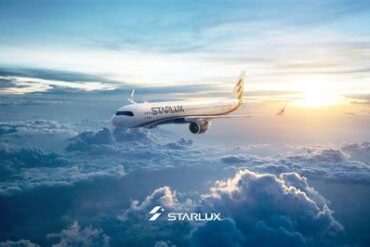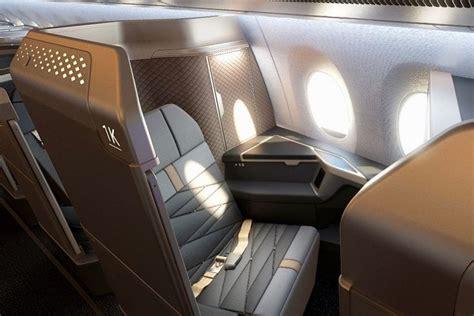
In an era where premium air travel risks becoming predictable, one airline has decisively broken away from the formula. STARLUX Airlines, a relatively young but fiercely ambitious Taiwanese carrier, has introduced what is arguably the most innovative business class seat in 2026—and it’s doing far more than simply adding doors and bigger screens. It is reshaping how passengers experience long-haul flight, blending design, ergonomics, and brand storytelling into a single, cohesive product.
What makes this launch compelling is not just the hardware, but the philosophy behind it. While many airlines iterate cautiously, STARLUX is aggressively redefining expectations, particularly aboard its new Airbus A350-1000 flagship. The result is a business class cabin that feels less like incremental progress and more like a deliberate leap forward.
STARLUX Airlines: A Boutique Luxury Challenger With Global Ambition
Founded by former EVA Air chairman Chang Kuo-wei, STARLUX Airlines entered the market in 2020 with a clear intention: to build a premium-first airline that prioritizes experience over scale. Based at Taipei Taoyuan International Airport (TPE), the airline has quickly cultivated a reputation for refined aesthetics, meticulous service, and high-end cabin design.
Unlike legacy carriers that balance multiple market segments, STARLUX has positioned itself as a boutique luxury brand in aviation. Its strategy is not about competing on the lowest fares or the largest network, but on delivering a cohesive, aspirational travel experience that begins long before takeoff and lingers well after landing.
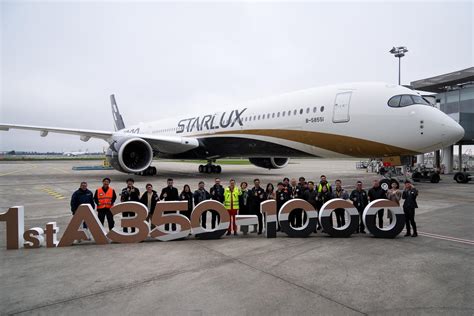
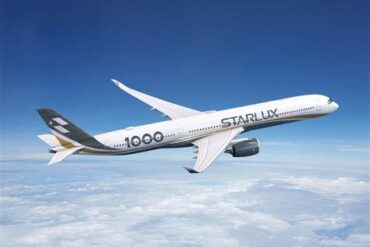
This philosophy is evident in its all-Airbus fleet, which includes the A321neo, A330-900neo, A350-900, and now the A350-1000. Each aircraft type is selected not just for efficiency, but for its ability to support a consistent premium cabin vision. The A350-1000, however, stands apart as the airline’s most ambitious expression yet.
A350-1000 Business Class: Scaling Luxury Without Compromise
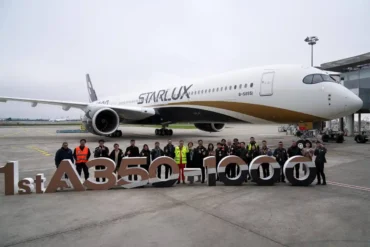
The introduction of the Airbus A350-1000 marks a pivotal moment for STARLUX. With 40 business class seats, up from 26 on the A350-900, the airline has increased capacity by over 50%—yet remarkably, it has preserved a sense of exclusivity and spaciousness.
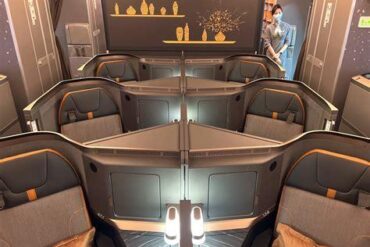
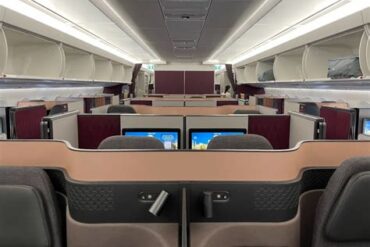
This is where many airlines falter. Increasing seat count often leads to a diluted experience, but STARLUX has managed to maintain a premium density without visual or physical crowding. The cabin employs a 1-2-1 reverse herringbone layout, ensuring direct aisle access for every passenger, a non-negotiable standard in modern business class.
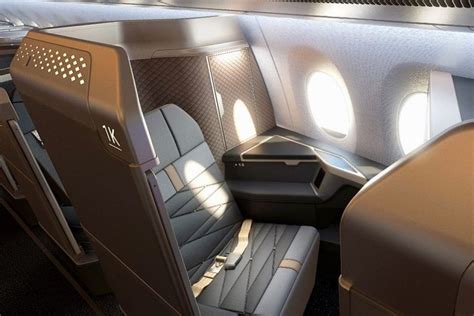
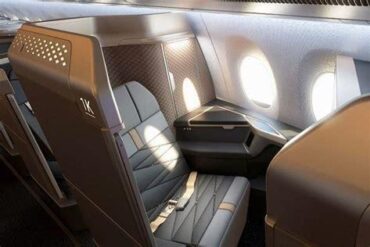
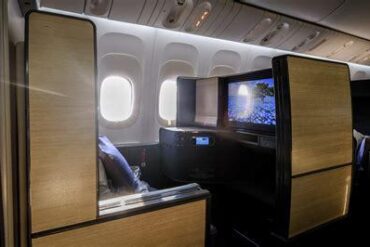
The seats themselves are based on the Collins Aerospace Elements platform, a proven foundation that STARLUX has elevated through custom finishes, enhanced privacy features, and a distinctly modern design language. The inclusion of sliding privacy doors, expansive storage, and ultra-large entertainment screens transforms each seat into a self-contained suite.
But what truly distinguishes this cabin is not just what you see—it’s how it makes you feel.
Beyond Comfort: The “Zero G” Seat Revolution
Most business class seats promise comfort. STARLUX goes further by redefining it through biomechanics and wellness.
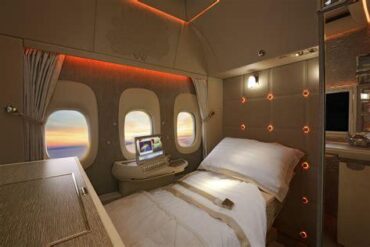
At the heart of the experience is the “Zero G” seating mode, inspired by NASA research. This position elevates the passenger’s legs and supports the body in a natural “W” shape, significantly reducing spinal pressure and improving blood circulation during long-haul flights.
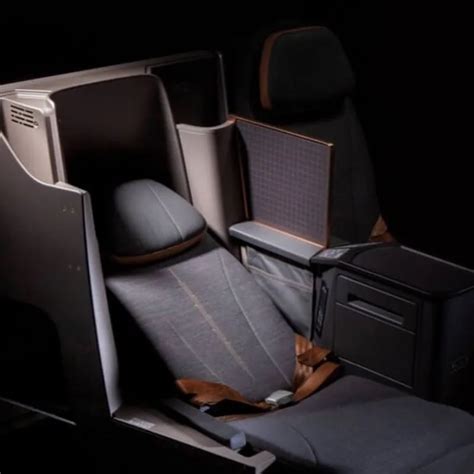
This innovation addresses a critical but often overlooked reality: long flights are physically demanding. While traditional lie-flat seats provide rest, they don’t always optimize posture or circulation. STARLUX’s approach reframes the seat as a wellness tool, not just a luxury feature.
The implications are substantial. Passengers arrive feeling less fatigued, less stiff, and more refreshed, which directly enhances the overall value of the journey. In a competitive landscape where many products look similar, this functional differentiation gives STARLUX a powerful edge.
Design That Markets Itself
Step into the cabin, and it becomes immediately clear that STARLUX understands something fundamental: the seat is the brand.
Every detail—from the lighting tones to the materials and textures—is curated to create a calm, futuristic atmosphere. The design avoids clutter, favoring clean lines and understated elegance that feel more akin to a luxury hotel than an aircraft cabin.
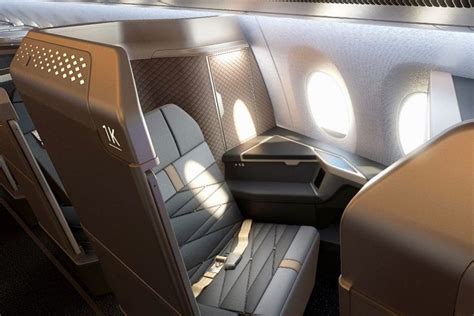
This is not accidental. In today’s travel ecosystem, where social media plays a major role in shaping perception, a visually striking cabin becomes a marketing asset. Passengers don’t just fly—they share, post, and amplify the experience.
STARLUX’s business class is engineered to photograph beautifully and feel even better in person, creating a feedback loop of organic promotion that money can’t easily buy.
A Strategic Bet on Premium Transpacific Travel
The A350-1000 is more than just a new aircraft—it’s a strategic weapon. STARLUX is using it to expand aggressively into long-haul transpacific routes, where demand for premium cabins remains strong.
What makes this strategy particularly compelling is the airline’s pricing approach. Reports indicate round-trip business class fares around $2,600 on certain U.S.–Taipei routes, positioning STARLUX as a high-value alternative to legacy carriers.
This creates a fascinating dynamic: passengers can access a next-generation business class product at a price point that undercuts many competitors offering older cabins. It’s a deliberate move to capture market share without diluting brand prestige.
How STARLUX Compares to Regional and Global Competitors
Within Taiwan, STARLUX’s advantage is immediately apparent. EVA Air’s Royal Laurel Class remains elegant but relies on older design conventions, while China Airlines’ A350 product is solid yet conventional. Neither matches the holistic innovation seen in STARLUX’s new suite.
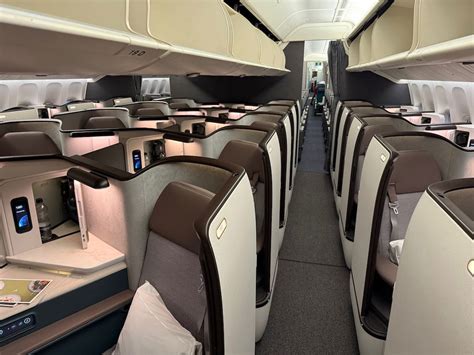
On a broader Asian scale, the competition intensifies. Airlines like ANA, Japan Airlines (JAL), and Cathay Pacific have introduced advanced business class suites featuring privacy doors, large screens, and refined finishes. JAL, in particular, has pushed boundaries with near room-like configurations.
Yet STARLUX holds its own by combining top-tier hardware with a boutique identity. Where larger airlines may feel standardized due to scale, STARLUX offers something more curated—an experience that feels intentional, cohesive, and personal.
The Psychology of Space, Privacy, and Control
One of the most underrated aspects of STARLUX’s business class is how it handles psychological comfort.
Privacy doors are now industry standard, but STARLUX integrates them in a way that enhances—not isolates—the experience. The suite feels secure without being claustrophobic, striking a delicate balance that many competitors struggle to achieve.
Control is another key theme. Passengers can adjust lighting, seating positions, and entertainment with intuitive precision, creating a sense of ownership over their environment. This level of personalization transforms the journey from passive to actively enjoyable.
Why This Seat Represents the Future of Business Class
The broader significance of STARLUX’s innovation lies in what it signals for the industry. Business class is no longer just about flat beds and fine dining—those are baseline expectations. The next frontier is holistic well-being, intelligent design, and emotional resonance.
STARLUX’s A350-1000 business class encapsulates this shift. It demonstrates that true innovation comes from integrating multiple disciplines: aerospace engineering, interior design, ergonomics, and branding.
The “Zero G” seat alone hints at a future where airlines compete on how passengers feel after the flight, not just during it. That’s a subtle but profound evolution—and one that other carriers will likely scramble to emulate.
A Premium Experience With a Purpose
What ultimately sets STARLUX apart is its clarity of purpose. Every element of the business class experience—from seat design to pricing strategy—aligns with a single goal: to create a distinctive, premium identity that resonates with modern travelers.
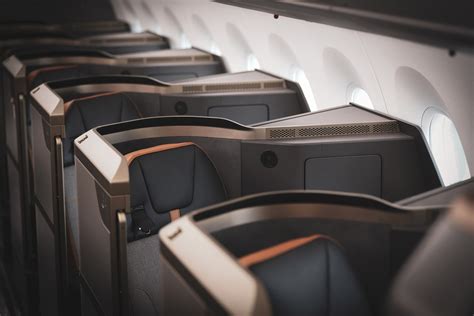
There’s no sense of compromise or hesitation. The airline is not testing the waters—it is committing fully to a vision of what premium travel can be. That confidence is rare, especially for a relatively young carrier.
Final Thoughts: Innovation That Feels Tangible
The phrase “innovative business class” is often overused, but in this case, it feels entirely justified. STARLUX Airlines has delivered a product that is not only visually impressive, but also functionally meaningful.
By combining ergonomic intelligence, aesthetic precision, and strategic pricing, the airline has created a business class seat that genuinely stands out in a crowded market. It’s not just about flying in comfort—it’s about arriving better than you left.
And that, ultimately, is the kind of innovation that passengers remember long after the seatbelt sign switches off.