A Supersonic Dream Balancing Between Vision and Reality
The idea of supersonic passenger travel has always lived in a strange space between technological triumph and commercial caution. With Boom Supersonic’s Overture, that tension is sharper than ever. United Airlines CEO Scott Kirby recently distilled the entire debate into a single, striking estimate: a 50-50 chance that the aircraft will ever enter service. That statement did not emerge from skepticism alone—it reflects a deep understanding of how fragile ambitious aerospace programs can be.
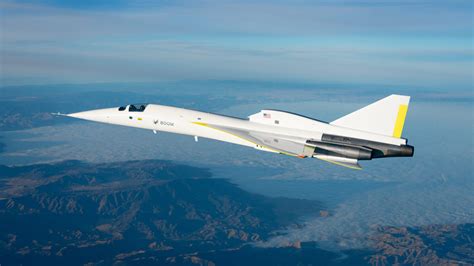
Boom’s journey has already crossed a meaningful threshold. In 2025, its XB-1 demonstrator broke the sound barrier, a symbolic and technical milestone that moved the project out of pure theory. Supersonic flight is no longer the question. The real challenge is far more complex: turning that capability into a certified, economically viable commercial airliner.
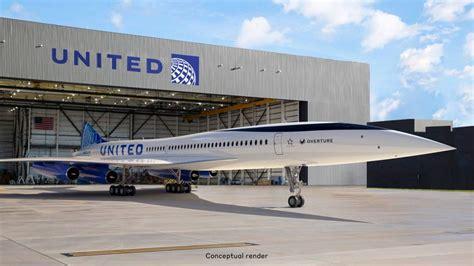
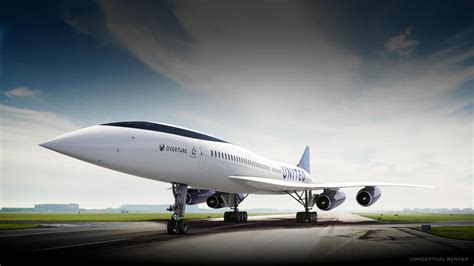
Kirby’s remark matters precisely because United is not a distant observer. The airline has placed a conditional order for 15 Overture jets, with options for 35 more. This makes United both a supporter and a skeptic—a dual role that mirrors the broader aviation industry’s cautious curiosity.
Scott Kirby’s 50-50 Statement Carries Strategic Weight
Kirby’s comment, delivered at a Harvard University event, was not offhand speculation. It was a carefully balanced signal. On one side, it acknowledges the extraordinary execution risk involved in building a next-generation supersonic aircraft. On the other, it keeps the door open to a transformative success.
This duality is critical. Aviation history is littered with promising programs that failed not because they couldn’t fly, but because they couldn’t scale economically or meet regulatory demands. Kirby’s estimate captures that uncomfortable truth: engineering success does not guarantee commercial success.
At the same time, he pointed toward a subtle but intriguing possibility. Advances in engine technology, particularly those driven by high-performance computing and AI data centers, could mature outside aviation before being adapted for flight. This cross-industry innovation pathway could quietly improve Boom’s odds, shifting the equation from speculative to plausible.
Why Boom Overture Is More Than Just Another Aircraft
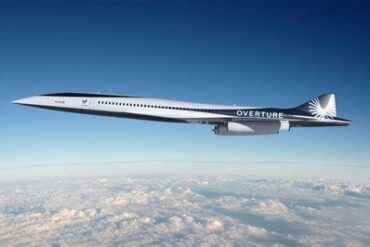
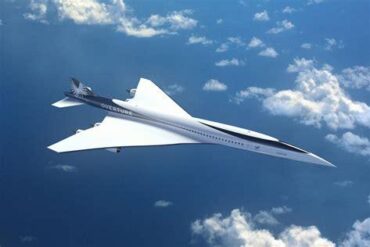
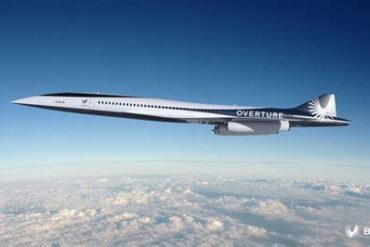
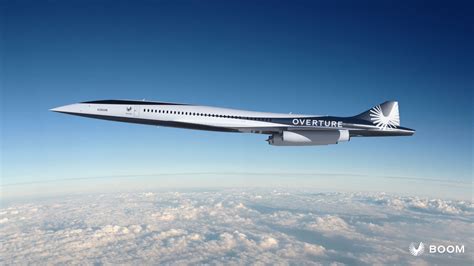
The Boom Overture program is not simply about building a faster plane. It is an attempt to redefine long-haul travel economics and passenger expectations. Designed to cruise at Mach 1.7 and carry 60 to 80 passengers, the aircraft targets premium travelers willing to pay for dramatically reduced travel times.
The concept is seductive. Imagine cutting transatlantic flight times nearly in half while maintaining modern standards of comfort and sustainability. Boom claims the aircraft will run on 100% sustainable aviation fuel (SAF), aligning with the industry’s decarbonization goals.
Yet ambition scales risk. Every promise—speed, efficiency, sustainability—adds layers of engineering and certification complexity. Supersonic travel also faces regulatory hurdles, particularly around sonic booms over land, which historically limited Concorde’s operational flexibility.
From XB-1 to Overture: Progress That Still Needs Proof
The successful flights of the XB-1 demonstrator provided a crucial proof point. It showed that Boom can design and operate a supersonic aircraft, even if at a smaller scale. But moving from a demonstrator to a commercial airliner is like going from building a race car to launching a global taxi network—technically related, but operationally worlds apart.
Boom is now advancing its Symphony engine development, one of the most critical components of the program. Engines are the beating heart of any aircraft, and in this case, they must deliver efficiency, reliability, and environmental compliance simultaneously. That combination has historically been difficult to achieve even in subsonic aviation.
Certification remains another formidable barrier. Regulators will demand exhaustive proof that Overture meets safety, noise, and emissions standards. Each requirement adds time, cost, and uncertainty, stretching the program’s timeline and testing investor patience.
Interpreting the 50-50 Odds: Caution or Confidence?
Kirby’s estimate can be read in two radically different ways, and both interpretations hold merit.
A pessimistic reading suggests that even a major airline backer sees the project as a coin toss, implying significant doubts about financial viability and execution. For analysts hoping for a near-term supersonic revival, this is a sobering signal.
A more optimistic interpretation flips the narrative. Given the sheer difficulty of the task, a 50% probability of success could be viewed as remarkably high. Building a commercially viable supersonic jet is one of the most complex challenges in modern aerospace. In that context, even even odds represent a meaningful vote of confidence.
This ambiguity is not a flaw—it is a reflection of reality. The future of Overture is not predetermined. It will be decided by engineering breakthroughs, regulatory navigation, and the unforgiving logic of airline economics.
The Commercial Aviation Stakes Behind Supersonic Flight
If Boom succeeds, the implications extend far beyond one aircraft program. A viable supersonic business model could reshape premium travel, redraw global route networks, and force competitors to rethink long-haul strategy.
Airlines like United are positioning themselves carefully. By placing conditional orders, they secure early access to a potentially transformative product without overcommitting to its risks. It is a classic aviation strategy: hedge the future while preserving flexibility.
Failure, however, would reinforce a long-standing industry lesson—that speed alone does not guarantee profitability. Concorde remains a powerful reminder that technological brilliance can still fall short of commercial sustainability.
A High-Stakes Bet on the Future of Speed
The story of Boom Overture sits at the intersection of optimism and realism. It is no longer science fiction, but it is not yet an operational reality. Scott Kirby’s 50-50 assessment captures that liminal state with unusual clarity.
What unfolds next will depend on whether Boom can transform bold promises into certified performance, and whether the economics of supersonic travel finally align with the demands of modern aviation. The outcome is uncertain, but the attempt itself is reshaping how the industry thinks about speed, sustainability, and the boundaries of what is possible.