The commercial supersonic age did not end because people stopped valuing speed. It ended because speed became economically isolated, environmentally indefensible by modern standards, and technologically frozen in time. For more than two decades after Concorde’s retirement, supersonic passenger travel lived in museums, documentaries, and nostalgia-fueled conversations among aviation enthusiasts. Yet the fundamental desire that powered Concorde never vanished. Time remains the rarest commodity in global business, diplomacy, and premium travel. What changed was the ecosystem surrounding aviation itself.
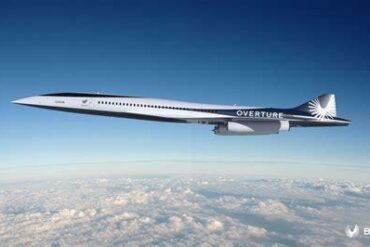
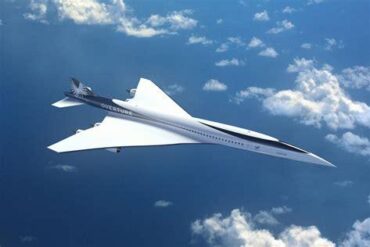
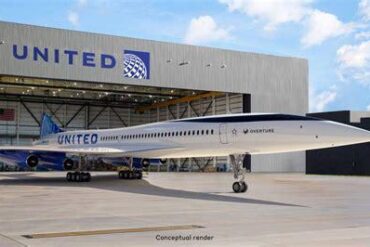
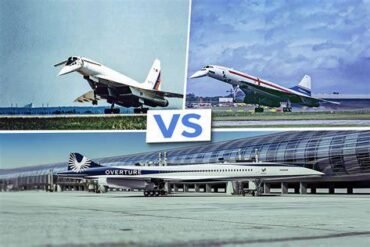
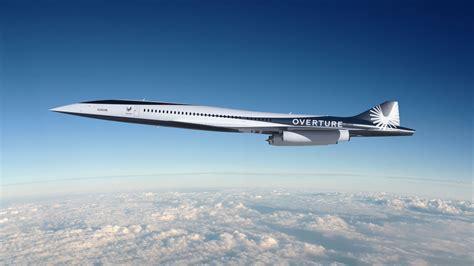
Boom Supersonic’s Overture enters a radically different world from the one Concorde knew. Today’s aviation market is larger, more data-driven, more premium-oriented, and far more sensitive to cost efficiency and sustainability. These shifts matter because affordability in aviation is not defined by cheap tickets alone, but by whether airlines can operate an aircraft profitably at fares customers are already willing to pay. The Overture is not trying to recreate Concorde’s exclusivity. It is attempting something more ambitious and more disruptive: making supersonic flight economically routine within the premium travel segment.
Concorde’s Cost Problem Was Structural, Not Philosophical
Concorde’s reputation as an extravagance often obscures a crucial truth. The aircraft was not inherently unprofitable. British Airways proved as much by the early 1980s, when Concorde began generating meaningful annual profits despite its limited fleet size and operational constraints. The problem was that Concorde’s economics depended on a narrow slice of global demand operating in a far smaller aviation market.
In the mid-1990s, a round-trip Concorde ticket between London and New York averaged around $8,000, translating to nearly $17,000 in today’s dollars. This was not simply a reflection of speed; it was the cumulative result of high fuel burn, maintenance-intensive engines, limited route flexibility, government-influenced fleet decisions, and an era when premium air travel itself was rare. Concorde flew full cabins, but those cabins were capped at roughly 100 seats, all configured for an elite clientele in a market that had not yet globalized premium demand.
Modern aviation has inverted this equation. Premium cabins now represent a core revenue pillar rather than a niche indulgence. Business class is no longer aspirational; it is operationally essential for long-haul airlines. This shift is foundational to understanding why Overture’s affordability argument is credible.
Premium Travel Has Quietly Become the New Mass Market
One of the most underestimated changes since Concorde’s era is how normalized premium flying has become. Corporate travel budgets, loyalty ecosystems, credit card partnerships, and post-pandemic spending behavior have all expanded the pool of passengers willing to pay for time, comfort, and flexibility. A business-class round trip between London and New York today commonly ranges from $2,700 to $9,000 depending on airline and cabin tier, figures dramatically lower than inflation-adjusted Concorde fares.
This matters because Boom Overture is not trying to undercut economy class. It is targeting passengers who already pay for premium cabins on subsonic jets. For these travelers, shaving three to four hours off an intercontinental flight is not a luxury; it is a productivity multiplier. When time saved translates directly into meetings attended, deals closed, or rest preserved, the perceived value of speed rises sharply.
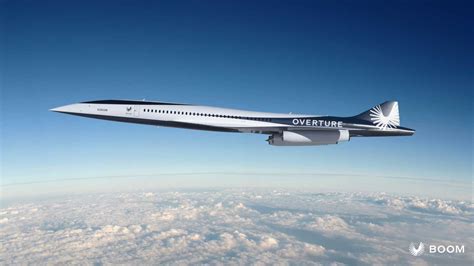
Overture’s affordability emerges from this alignment. It does not require a new type of customer. It leverages an existing one who has already demonstrated willingness to pay for efficiency.
Modern Engineering Changes the Supersonic Cost Equation
Concorde was designed in the 1960s, built in the 1970s, and operated with technologies that, while revolutionary for their time, are fundamentally incompatible with today’s efficiency standards. Boom Overture benefits from five decades of advancements in aerodynamics, materials science, digital design, and propulsion optimization.
The aircraft is engineered with advanced composites that significantly reduce structural weight while maintaining strength at sustained high-altitude, high-speed flight. Lighter airframes directly translate into lower fuel burn, reduced stress on components, and longer maintenance intervals. These are not marginal gains; they are compounding efficiencies that reshape operating economics over thousands of flight hours.
Engine design represents another decisive break from the past. Concorde’s engines were marvels of brute-force engineering, optimized for speed but costly to operate. Overture’s propulsion system is being developed with modern efficiency targets, quieter operation, and compatibility with 100% Sustainable Aviation Fuel (SAF) from day one. This is not a retrofit solution but a foundational design choice that positions the aircraft within evolving regulatory and environmental frameworks.
Sustainability as a Cost-Control Strategy
Sustainability is often framed as an ethical or regulatory obligation, but in aviation it increasingly functions as a financial one. Fuel efficiency, emissions compliance, and access to sustainable fuel supplies directly influence operating costs. Overture’s commitment to full SAF compatibility is not merely symbolic. It future-proofs the aircraft against carbon pricing mechanisms, regulatory penalties, and fuel volatility.
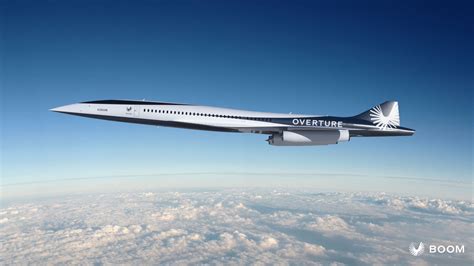
By designing around sustainability rather than adapting to it, Boom reduces long-term cost uncertainty for airlines. Concorde operated in an era where environmental externalities were largely ignored until they became political liabilities. Overture enters service in a market where sustainability is embedded in fleet planning decisions. This alignment improves airline confidence and lowers the risk premium traditionally associated with radical aircraft types.
Route Flexibility Expands Revenue Potential
One of Concorde’s most severe limitations was its narrow route viability. Sonic boom restrictions, fuel range constraints, and limited market density confined it to a handful of transoceanic routes. Overture is designed to break this bottleneck.
With a cruise speed of approximately Mach 1.7 and a range of about 4,250 nautical miles, Overture can operate profitably on more than 600 routes, according to Boom Supersonic. Its ability to perform boomless cruise over land opens high-speed corridors that were completely inaccessible to Concorde. This dramatically expands scheduling flexibility and fleet utilization, two critical drivers of affordability.
Higher utilization means airlines can spread fixed costs across more flights, reducing per-seat expenses. Concorde often sat idle due to route limitations. Overture is being designed to stay in the air, generating revenue.
Smaller Cabin, Smarter Economics
Overture will carry between 60 and 80 passengers, fewer than Concorde but optimized for today’s premium demand patterns. This is not a downgrade; it is a calibration. Modern premium cabins emphasize space efficiency, modular layouts, and higher yield per seat. Fewer passengers also reduce boarding complexity, turnaround times, and service costs.
The goal is not to recreate Concorde’s grandeur but to integrate supersonic travel seamlessly into airline premium offerings. By aligning cabin size with realistic demand and operational efficiency, Boom avoids the trap of overcapacity that plagued many legacy aircraft programs.
Airline Commitments Signal Market Confidence
Skepticism is natural when discussing supersonic revival, but market signals matter more than speculation. Boom Overture has secured options and pre-orders for approximately 130 aircraft from major carriers including United Airlines, American Airlines, and Japan Airlines. These are not experimental boutique operators; they are global network airlines with rigorous fleet evaluation standards.
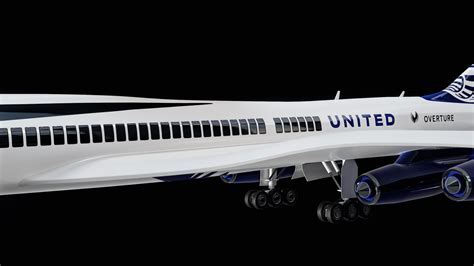
Airlines do not commit capital to aircraft that cannot integrate economically into their networks. These early commitments suggest that Overture’s projected cost structure aligns with real-world airline business models. While not all options will necessarily convert into deliveries, the scale of interest already exceeds what Concorde achieved commercially.
Time Savings as a Revenue Multiplier
Speed itself does not generate profit; what passengers do with saved time does. Overture’s value proposition rests on reducing travel time by up to 50% compared to modern subsonic jets. On long-haul routes, this transforms same-day intercontinental travel from an endurance test into a viable business tool.
For corporate travelers, this means fewer overnight stays, faster deal cycles, and improved work-life balance. For airlines, it means premium fares justified not by luxury alone but by measurable productivity gains. This reframing of value is central to affordability. When passengers perceive tangible returns, price resistance weakens.
Why Overture Can Succeed Where Concorde Could Not
Concorde proved that people would pay for speed. Overture is proving that airlines can afford to provide it. The difference lies in timing, technology, and market maturity. Today’s aviation ecosystem is better equipped to absorb innovation, manage operational complexity, and monetize premium experiences at scale.
Boom Supersonic is not attempting to resurrect the past. It is applying modern engineering discipline to an old ambition, stripping away inefficiencies while preserving what mattered most: speed with purpose. If certification and testing proceed as planned, Overture’s entry into service later this decade could redefine what “affordable” means in the context of supersonic flight.
Affordability does not mean everyone flies supersonic. It means that supersonic flight no longer requires a Concorde-sized leap of faith from airlines or passengers. In that sense, Boom Overture is not just faster than sound. It is faster than history.