The idea that a jet aircraft conceived during the early years of the Cold War could remain operational for nearly a century would once have seemed implausible. Jet aviation, particularly in the military domain, has historically been defined by rapid cycles of technological obsolescence, where airframes are replaced not because they can no longer fly, but because they can no longer compete. Yet one aircraft stands apart from this pattern. The Boeing B-52 Stratofortress has defied generational turnover, doctrinal shifts, and repeated predictions of retirement, continuing to evolve while remaining structurally rooted in a design first flown in 1952. We now stand at a moment where the prospect of this bomber reaching one hundred years of continuous flying service is no longer speculative, but increasingly plausible.
This extraordinary longevity is not the result of nostalgia or institutional inertia. It is the product of deliberate engineering conservatism, strategic foresight, and a sustained commitment to modernization that few other aircraft programs have ever enjoyed. While newer bombers have come and gone, and others operate alongside it, the B-52 has remained indispensable precisely because it was never locked into a single era’s assumptions about warfare. Its story is not merely about endurance, but about adaptability as a core design principle.
To understand why the B-52 is uniquely positioned to become the first jet aircraft to achieve a century of continuous flight, we must examine its origins, its structural philosophy, its operational record, and the sweeping modernization efforts that are redefining its role well into the mid-21st century.
From Cold War Imperative to Strategic Foundation
The B-52 Stratofortress emerged from a period of acute geopolitical anxiety. In the immediate aftermath of the Second World War, the United States faced a transformed strategic environment. The emergence of the Soviet Union as a nuclear-armed rival demanded an ability to project decisive force across intercontinental distances. At the time, ballistic missile technology was immature, and forward basing options were politically and militarily uncertain. A long-range bomber capable of delivering heavy payloads directly from the continental United States was not merely desirable; it was essential.
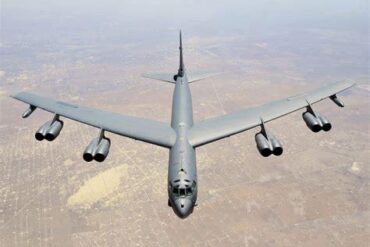
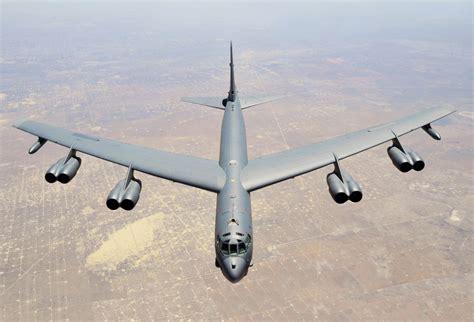
Boeing’s response to this requirement was ambitious and, in retrospect, remarkably prudent. Early design iterations explored turboprop propulsion, but the rapid maturation of jet engines pushed the program toward an all-jet configuration. By the time the prototype flew in 1952, the aircraft featured eight turbojet engines mounted in paired pods beneath swept wings, optimizing lift and range rather than raw speed. This configuration allowed the B-52 to carry enormous payloads over vast distances while maintaining stable, predictable flight characteristics.
Crucially, Boeing did not pursue extreme performance margins. Engineers built the airframe with substantial structural reserves, accepting additional weight in exchange for durability and growth potential. At the time, they could not foresee the avionics, sensors, or weapons that would emerge decades later, but they understood that flexibility would be the key to relevance. This conservative philosophy laid the groundwork for an aircraft capable of absorbing continuous technological change without structural reinvention.
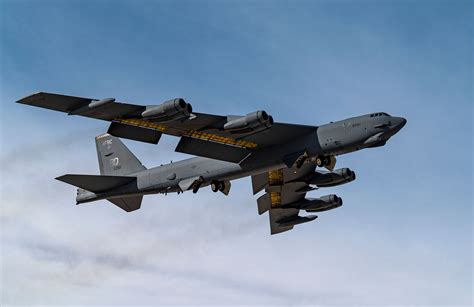
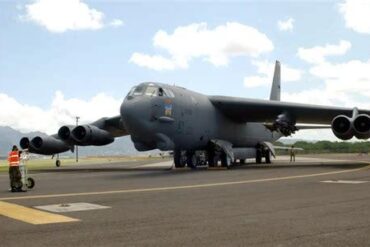
When the B-52 entered operational service in 1955, it became the backbone of the Strategic Air Command. It offered something unprecedented: true global reach combined with a credible nuclear deterrent. In an era before intercontinental ballistic missiles dominated strategic planning, the Stratofortress was the physical embodiment of deterrence, capable of remaining airborne for extended periods and striking targets across the globe.
A Combat Record Defined by Reinvention
Unlike many strategic bombers whose primary role remained theoretical deterrence, the B-52 accumulated an extensive combat record that continuously reshaped its mission profile. Its first major operational test came during the Vietnam War, where it was employed in large-scale conventional bombing campaigns. Operation Arc Light demonstrated the bomber’s ability to deliver overwhelming firepower, with sorties that tested not only crew endurance but the aircraft’s structural resilience under sustained operational stress.
These missions revealed both vulnerabilities and strengths. While the B-52 suffered losses to surface-to-air missiles and anti-aircraft fire, its capacity to absorb damage and continue flying reinforced confidence in its rugged design. More importantly, the aircraft proved capable of sustained high-tempo operations over long periods, an attribute that would become increasingly valuable in later conflicts.
As warfare evolved, so too did the Stratofortress. During the Gulf War, B-52s flew some of the longest combat sorties in history, launching from distant bases to strike targets deep within Iraq. They delivered a significant portion of coalition ordnance, often from standoff ranges that reduced exposure to enemy defenses. The aircraft’s ability to loiter, retask, and deliver large payloads made it a force multiplier in a rapidly changing battlespace.
In Afghanistan and Iraq, the bomber underwent another transformation. No longer primarily a tool of mass bombardment, it became a precision strike platform, employing GPS-guided munitions and real-time targeting data provided by ground forces. This shift from area bombing to close air support underscored a central truth about the B-52: its relevance was not tied to a single doctrine, but to its capacity to integrate new methods of warfare.

Structural Philosophy as the Foundation of Longevity
At the heart of the B-52’s endurance lies its structural design. Unlike high-performance fighters optimized for agility or stealth aircraft built around low observability constraints, the Stratofortress was designed for stability, payload, and ease of maintenance. Its massive wings distribute aerodynamic loads efficiently, resulting in lower stress accumulation over time than many smaller, more agile aircraft.
This structural robustness has allowed the airframe to accrue flight hours at a relatively modest rate of fatigue. Regular depot-level maintenance, combined with rigorous inspection regimes, has made it possible to extend service life far beyond original projections. In several cases, structural analyses have indicated that key components possess remaining life margins well in excess of current operational requirements.
Equally important is the separation between the aircraft’s physical structure and its mission systems. From the outset, avionics, sensors, and weapons interfaces were not permanently fused into the airframe. As technology advanced, these systems could be replaced wholesale without compromising structural integrity. The B-52 thus became less a fixed weapons platform and more a durable aerial chassis, capable of hosting successive generations of technology.
This modularity stands in stark contrast to many modern aircraft whose tightly integrated systems make deep modernization prohibitively complex or expensive. For the Stratofortress, change has been a constant rather than an exception.
Engine Modernization and the Economics of Sustainability
While structural durability explains how the B-52 can keep flying, modernization explains why it should. Among the most consequential upgrades in its history is the ongoing re-engining program that will define the B-52J variant. The original Pratt & Whitney TF33 engines, though reliable, reflect a bygone era of propulsion efficiency and maintenance economics. As support costs rose and parts availability declined, replacing them became a strategic necessity.
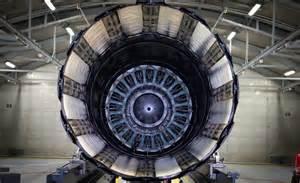
The introduction of the Rolls-Royce F130 turbofan under the Commercial Engine Replacement Program represents a transformational shift. These modern engines offer dramatically improved fuel efficiency, greater reliability, and substantially lower maintenance requirements. The operational implications are profound. Increased range and loiter time enhance mission flexibility, while reduced fuel consumption lowers the logistical burden associated with sustained global operations.
Beyond propulsion, the new engines generate greater electrical power, enabling the integration of advanced sensors, communications systems, and electronic warfare suites. This surplus capacity ensures that future upgrades will not be constrained by power limitations, a common challenge for aging airframes.
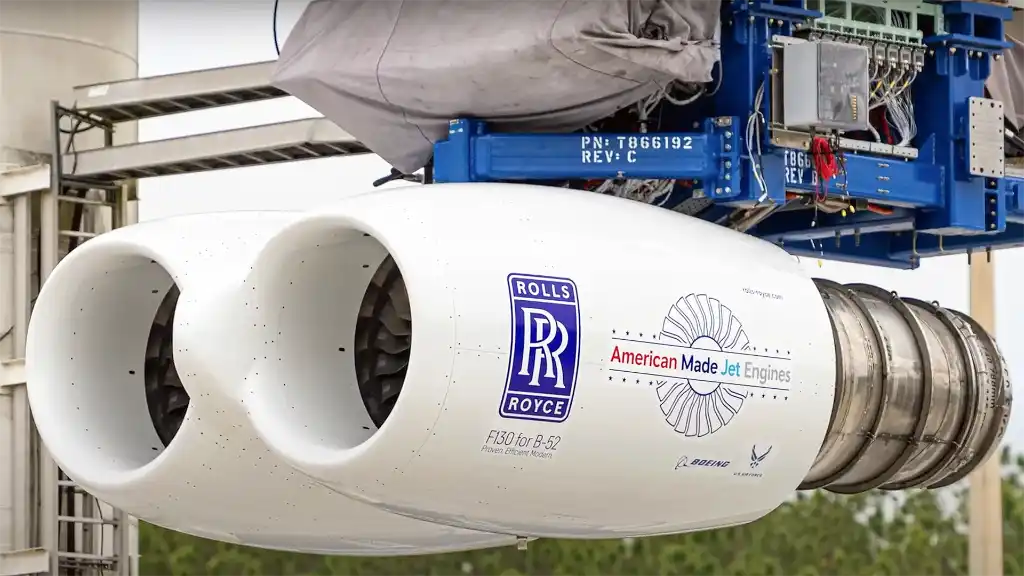
Extensive testing has validated the integration of these engines with the B-52’s distinctive wing and nacelle configuration. Concerns about airflow and performance across different flight regimes have been addressed through wind tunnel testing and computational analysis, clearing a major hurdle on the path to fleet-wide implementation. With re-engining complete, the bomber’s economic viability extends well into the 2050s.
Sensors, Avionics, and the Digital Battlespace
Propulsion keeps the aircraft airborne, but sensors define its relevance in modern warfare. The B-52’s transition into the digital battlespace is being driven by the integration of a new Active Electronically Scanned Array radar, a system that brings fighter-class capabilities to a heavy bomber. This radar offers high-resolution ground mapping, improved target detection, and enhanced resistance to electronic interference.
The implications extend beyond traditional bombing missions. With advanced situational awareness, the Stratofortress can function as a command-and-control node, a weapons truck for standoff munitions, and a sensor platform supporting joint and allied forces. Its large payload capacity allows it to carry emerging weapons systems, including hypersonic missiles, without sacrificing endurance.
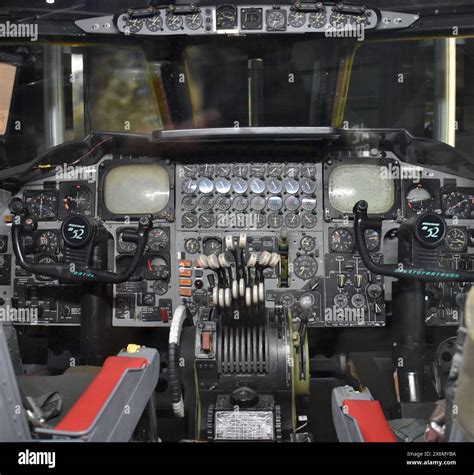
Parallel to radar upgrades, the planned introduction of a fully digital glass cockpit reflects a broader effort to align the aircraft with contemporary operational standards. Modern displays, improved human-machine interfaces, and updated flight management systems reduce crew workload and enhance mission effectiveness. These changes are not cosmetic; they are essential for integrating the B-52 into network-centric warfare architectures.
Why No Other Jet Aircraft Is Likely to Match This Record
The question naturally arises as to whether any other jet aircraft might rival the B-52’s longevity. In active military service, the answer is almost certainly no. Commercial airliners are typically retired after three or four decades, constrained by economic factors and evolving regulatory standards. Military jets face even harsher realities, as performance requirements and survivability demands outpace the ability to modernize legacy designs.
The only aircraft that approaches the B-52’s record is the Soviet-designed Tupolev Tu-95 Bear. First flown in the same era, it remains operational today, thanks in part to its turboprop propulsion and continued production into the early 1990s. However, most Tu-95 airframes currently flying are significantly younger than the oldest Stratofortresses, and their modernization path is more limited.
Other bombers, including stealth platforms, face structural and programmatic constraints that will likely limit their service lives. High costs, complex maintenance requirements, and tightly integrated systems reduce the feasibility of century-long operation. The B-52’s blend of structural resilience, modularity, and sustained investment sets it apart as an anomaly in jet aviation history.
A Living Legacy with a Century in Sight
As the B-52 Stratofortress moves deeper into its eighth decade of service, it stands as a singular achievement in aerospace engineering and strategic planning. Its continued operation is not an accident, nor is it the result of reluctance to embrace new technology. Rather, it reflects a consistent recognition that adaptability, when embedded in design and supported by policy, can outlast even the most dramatic shifts in warfare.
With modern engines, advanced sensors, digital avionics, and the capacity to integrate future weapons, the B-52 is no longer a relic of the Cold War. It is a contemporary combat platform with a defined role in future conflicts. If modernization efforts continue and strategic priorities remain aligned, it is entirely plausible that airframes built in the early 1960s will still be flying operational missions in the 2050s and beyond.
Such an achievement would redefine expectations for jet aircraft longevity. More than that, it would affirm a central lesson of military aviation: that enduring relevance is not achieved through constant replacement alone, but through the thoughtful evolution of platforms designed, from the beginning, to grow.