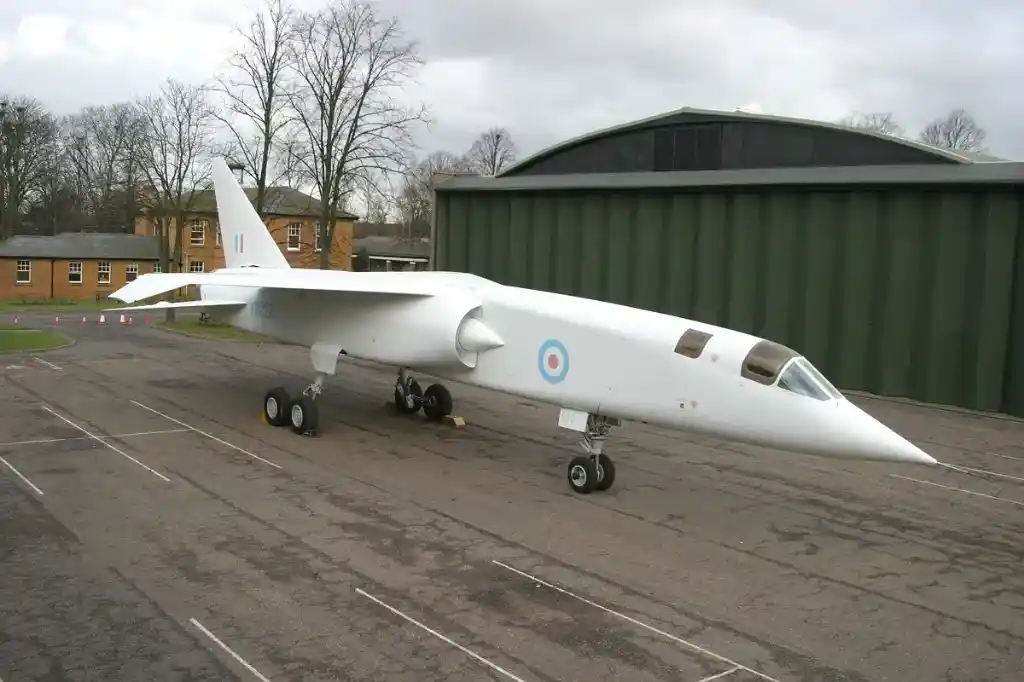
The BAC TSR.2 is often remembered as Britain’s greatest aviation “what if.” Yet reducing it to a failed Cold War project overlooks just how ambitious its design truly was. Decades before stealth fighters and sensor-fusion aircraft became the standard for penetrating heavily defended airspace, British engineers envisioned an aircraft capable of striking deep behind enemy lines at extraordinary speed while hugging the terrain with remarkable precision. Although the aircraft flew only a handful of times before politics and economics ended the program, many of its core operational concepts remain central to modern air combat.
Rather than simply being an advanced aircraft that arrived too early, the TSR.2 represented an entirely different philosophy of warfare. It was designed around surviving one of the most dangerous missions imaginable: flying into the Soviet Union at extremely low altitude, delivering either conventional or nuclear weapons with pinpoint accuracy, and escaping before enemy fighters and surface-to-air missile systems could react. More than sixty years later, aircraft like the Lockheed Martin F-35 Lightning II and the multinational Global Combat Air Programme (GCAP) continue pursuing remarkably similar objectives, albeit through technologies unavailable in the 1960s.
The aircraft’s legacy demonstrates how revolutionary engineering sometimes outpaces political willingness to support it. The TSR.2 never entered operational service, but its influence continues to echo throughout the world’s most advanced combat aircraft.
The Cold War Challenge That Created the BAC TSR.2
During the early 1960s, NATO planners faced an increasingly dangerous strategic environment. Soviet radar networks, interceptor aircraft, and sophisticated surface-to-air missile batteries had dramatically reduced the survivability of traditional high-altitude bombers. Aircraft that had once depended upon altitude for protection suddenly found themselves vulnerable.
British defense planners recognized that future strike aircraft would need an entirely different approach.
Instead of flying above enemy defenses, they envisioned an aircraft capable of flying beneath radar coverage, following valleys, rivers, forests, and hills at tremendous speed. Terrain itself would become the aircraft’s shield, allowing it to penetrate hostile territory while minimizing detection.
The British Aircraft Corporation answered this requirement with the Tactical Strike and Reconnaissance 2—better known simply as the TSR.2.
Unlike previous bombers, this aircraft was expected to perform numerous demanding missions simultaneously. It would serve as a tactical strike platform, strategic nuclear delivery aircraft, reconnaissance platform, and all-weather penetration bomber capable of operating day or night.
These requirements pushed engineers into largely unexplored technological territory.
Engineering Decades Ahead of Its Time
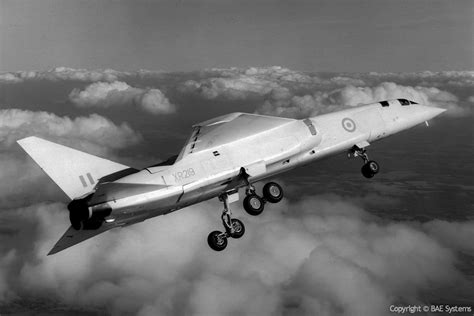
The TSR.2’s appearance immediately distinguished it from earlier British military aircraft. It featured a sleek fuselage, high-mounted swept wings, large engine intakes, and an unusually clean aerodynamic profile that reflected its emphasis on high-speed, low-level flight.
Power came from two Bristol-Siddeley Olympus turbojet engines, the same engine family that would later power Concorde in significantly developed form. Together, these engines gave the TSR.2 exceptional performance.
Its projected maximum speed reached approximately Mach 2.35, allowing it to exceed 1,550 mph (2,500 km/h) at altitude. Even more impressive was its intended performance near ground level, where the aircraft could maintain speeds approaching the speed of sound while weaving through terrain.
Flying this quickly only a few hundred feet above the ground demanded extraordinary structural strength. Every hill, atmospheric disturbance, and rapid maneuver imposed tremendous loads on the airframe.
British engineers therefore designed an exceptionally robust structure capable of surviving prolonged high-speed operations at extremely low altitude.
The aircraft measured nearly 89 feet (27.1 meters) in length while carrying up to 10,000 pounds of weapons, including approximately 6,000 pounds inside an internal weapons bay that maintained aerodynamic efficiency throughout high-speed flight.
Revolutionary Avionics That Predicted Modern Combat Systems
Perhaps the TSR.2’s most remarkable achievement was not its speed but its avionics.
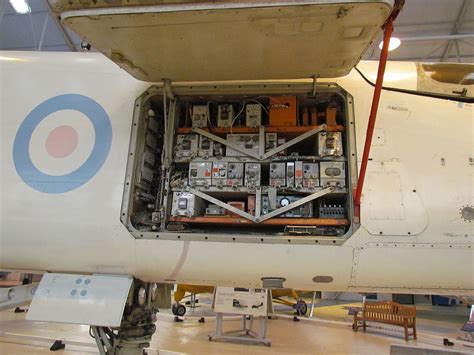
Many aircraft of the early 1960s still relied heavily on pilot skill and relatively simple navigation equipment. The TSR.2 instead incorporated one of the most sophisticated integrated mission systems ever attempted.
Its navigation suite combined inertial navigation, Doppler radar, and air-data computers into a single coordinated system capable of continuously calculating precise aircraft position without depending upon external navigation aids.
This significantly improved operational flexibility in hostile environments where radio navigation stations might be destroyed or deliberately jammed.
The aircraft also featured side-looking radar capable of updating terrain maps during flight, improving navigational accuracy over long-range missions.
Perhaps most revolutionary was its terrain-following radar.
Rather than requiring pilots to manually react to hills and valleys while traveling at enormous speed, the radar continuously scanned terrain ahead and worked alongside an automated flight control system capable of maintaining extremely low altitude.
Today such automation seems almost routine. In 1964, it represented one of the world’s most ambitious aerospace technologies.
Pilots also benefited from advanced cockpit displays including moving-map navigation systems, radar presentation screens, and a head-up display providing essential flight information without forcing pilots to look away from the outside world.
Many of these concepts later became standard throughout fourth- and fifth-generation combat aircraft.
Speed Was Its Stealth
Unlike today’s stealth aircraft, the TSR.2 was never designed around radar invisibility.
Instead, British engineers relied upon an entirely different survival philosophy.
The aircraft would remain extraordinarily difficult to engage by combining very low altitude, extremely high speed, precise navigation, electronic countermeasures, and intelligent mission planning.
Flying only hundreds of feet above terrain dramatically reduced enemy radar detection distances.
Mountains, forests, and valleys interrupted radar coverage, forcing Soviet air-defense operators to search through countless blind spots.
Even if detected, the aircraft’s speed left defenders very little time to respond.
Its internal weapons bay also contributed to survivability.
Carrying weapons inside the fuselage preserved smooth aerodynamic lines while avoiding the substantial radar reflections generated by externally mounted bombs and missiles.
Although the aircraft would not have possessed true stealth characteristics comparable to modern fifth-generation fighters, every design decision worked toward reducing vulnerability during deep-penetration missions.
Why the TSR.2 Program Ended So Suddenly
Despite impressive technical achievements, the program encountered growing political and financial pressure.
Development costs rose significantly as engineers attempted to integrate technologies well beyond the state of the art. Governments also changed priorities as economic pressures mounted throughout Britain.
Everything came to a dramatic conclusion on April 6, 1965.
Chancellor James Callaghan announced the immediate cancellation of the TSR.2 program on the very day preparations were underway for its second scheduled flight.
According to numerous accounts, test pilots reportedly learned of the cancellation while eating lunch at a nearby pub before rushing back to the airfield in hopes of conducting one final demonstration flight.
Permission was denied.
The aircraft never flew again.
Its last flight had actually taken place only days earlier, on March 31, 1965.
Many aviation historians continue debating whether cost alone justified cancellation.
Another factor frequently cited involves Britain’s proposed purchase of up to 110 General Dynamics F-111 aircraft from the United States.
Ironically, the F-111 itself experienced substantial delays, redesigns, and escalating costs. Eventually, Britain abandoned the purchase altogether, leaving the Royal Air Force without either aircraft.
The Destruction of Britain’s Most Ambitious Military Aircraft
Most canceled military programs leave behind prototypes, engineering tools, production equipment, and historical archives.
The TSR.2 suffered a far harsher fate.
Following cancellation, the British government ordered the destruction of nearly everything connected with the project.
Production jigs disappeared.
Manufacturing tooling was dismantled.
Prototype airframes were cut apart.
Years of engineering work worth roughly £200 million were ultimately reduced to scrap valued at only a tiny fraction of their original investment.
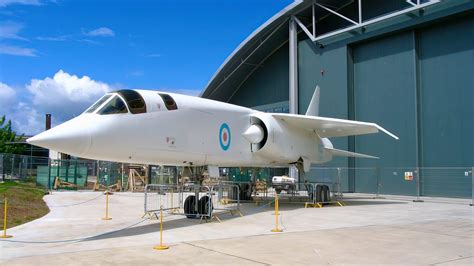
Only a handful of aircraft survived destruction, preserving a small physical reminder of what Britain once hoped would become one of the world’s most advanced strike aircraft.
This deliberate dismantling has contributed significantly to the TSR.2’s almost mythical status among aviation enthusiasts.
How the F-35 Pursues the Same Mission Using Different Technology
At first glance, the TSR.2 and the F-35 Lightning II appear to belong to entirely different generations.
One relied upon brute speed and terrain masking.
The other depends upon stealth shaping, sensor fusion, electronic warfare, and advanced computing.
Yet both aircraft ultimately pursue remarkably similar operational objectives.
Each is intended to penetrate heavily defended airspace.
Each seeks to locate valuable targets independently.
Each emphasizes precision strike capability while minimizing exposure to enemy defenses.
The difference lies in the methods.
Instead of depending primarily upon speed, the F-35 attempts to avoid detection altogether.
Its low-observable design reduces radar reflections, while sophisticated coatings further minimize signatures across multiple detection systems.
Its AN/APG-81 Active Electronically Scanned Array radar can detect numerous airborne threats simultaneously while supporting long-range engagement.
Meanwhile, the aircraft’s Electro-Optical Distributed Aperture System provides complete spherical situational awareness around the aircraft, dramatically improving pilot awareness during complex combat operations.
The Electro-Optical Targeting System enables long-range identification and precision engagement of ground targets while also assisting air-to-air operations.
Where the TSR.2 integrated groundbreaking analog systems, the F-35 fuses enormous quantities of digital sensor information into a unified tactical picture.
The operational philosophy, however, remains strikingly familiar.
GCAP May Finally Complete Britain’s Original Vision
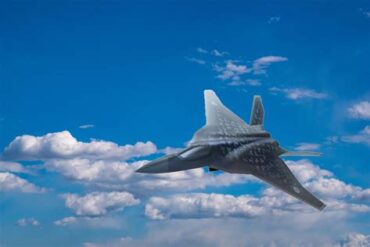
The multinational Global Combat Air Programme may represent the closest spiritual successor to the TSR.2.
Led jointly by the United Kingdom, Italy, and Japan through BAE Systems, Leonardo, and Mitsubishi Heavy Industries, GCAP seeks to produce a sixth-generation combat aircraft capable of operating well into the second half of the twenty-first century.
Unlike previous fighters, GCAP is expected to function not only as an aircraft but also as an airborne command center.
Artificial intelligence will assist pilots by processing enormous amounts of battlefield information, reducing workload while improving decision-making speed.
The aircraft is also expected to coordinate unmanned combat drones, manage distributed sensor networks, conduct advanced electronic warfare, and penetrate sophisticated integrated air-defense systems using next-generation stealth technologies.
In many respects, Britain is once again pursuing the same strategic vision first imagined during the TSR.2 program.
Only the tools have evolved.
The TSR.2’s Enduring Legacy in Military Aviation
The TSR.2 occupies a unique place in aviation history because its significance extends far beyond its brief flight-testing career.
It demonstrated that future combat aircraft would require more than raw speed or bomb-carrying capacity. Success increasingly depended upon integrating navigation, sensors, automation, electronic warfare, precision strike capability, and survivability into a single highly coordinated system.
Those ideas define modern combat aviation.
Today’s fifth-generation fighters achieve them through digital computing, stealth engineering, and networked warfare.
Tomorrow’s sixth-generation aircraft will extend those concepts further through artificial intelligence, autonomous teammates, and increasingly sophisticated electronic attack capabilities.
The technologies have changed dramatically since 1964, but the operational challenge remains remarkably similar: penetrate defended airspace, strike critical targets with precision, survive the mission, and return safely.
Why the BAC TSR.2 Still Fascinates Aviation Historians
Few military aircraft have inspired as much enduring fascination as the BAC TSR.2. Its story combines extraordinary engineering ambition, political controversy, technological innovation, and unrealized potential into one compelling narrative. Unlike many experimental aircraft that simply explored new aerodynamic concepts, the TSR.2 sought to redefine the entire philosophy of tactical strike warfare.
Although only prototypes ever flew, many of the concepts pioneered by British engineers eventually became standard features of modern combat aircraft. Automated terrain following, integrated navigation systems, advanced mission computers, internal weapon carriage, and highly coordinated avionics all became defining characteristics of later generations.
In that sense, the TSR.2 did not truly disappear when the program was canceled.
Its ideas survived.
Every time an F-35 silently enters contested airspace using sensor fusion instead of raw speed, or a future GCAP aircraft coordinates autonomous drones deep behind enemy lines, echoes of Britain’s remarkable Mach 2 strike aircraft can still be found. The TSR.2 may never have entered squadron service, but its vision continues to shape the future of air warfare more than six decades after its first—and ultimately final—flight.