The Beechcraft Starship remains one of the most ambitious, misunderstood, and ultimately ill-fated aircraft in the history of modern aviation. Conceived as a radical successor to the successful King Air line, it was envisioned to revolutionize the business turboprop market. Yet, despite its cutting-edge design, technical breakthroughs, and potential to redefine industry norms, the Starship failed spectacularly in commercial terms. This article explores its groundbreaking engineering, commercial downfall, and the legacy that endures.
A Radical Leap Forward in Aircraft Design
In the early 1980s, Beech Aircraft Corporation, seeking to replace its aging King Air 200, set out to develop a next-generation executive turboprop. To accomplish this, they brought in Burt Rutan, the legendary innovator behind Scaled Composites, known for pushing the boundaries of aerospace design. Rutan and his team envisioned an aircraft that was not merely evolutionary but revolutionary.
The resulting aircraft — the Beechcraft Starship — was a striking departure from traditional aircraft design, a symbol of futuristic aviation thinking that boldly challenged engineering orthodoxy.
Composite Construction: A First in Business Aviation
One of the Starship’s most significant innovations was its all-composite airframe, making it the first business aircraft ever FAA-certified with such construction. Utilizing advanced materials like carbon graphite, Kevlar, and E-glass, the design allowed for a lighter and more corrosion-resistant structure compared to conventional aluminum.
This composite structure offered multiple advantages:
-
Reduced weight, improving fuel efficiency.
-
Enhanced durability, eliminating corrosion risks in coastal or high-moisture environments.
-
Superior acoustic insulation, providing passengers with a quieter cabin experience.
Turboprop Pusher Configuration
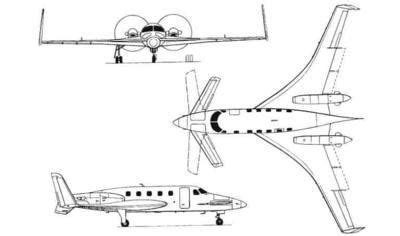
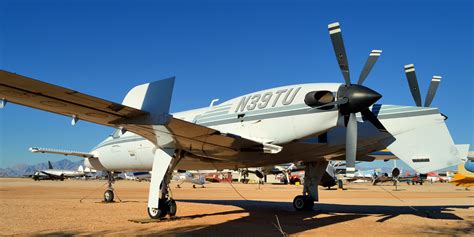
The Starship featured a rear-mounted turboprop pusher configuration, a design rarely seen in civilian aircraft. Its twin Pratt & Whitney PT6A-67A engines, paired with McCauley 5-blade propellers, created a quieter, vibration-dampened cabin environment. This reversed arrangement also eliminated propeller turbulence across the fuselage, reducing interior noise and enhancing aerodynamic efficiency.
Canard Wing Configuration
Perhaps the most visually distinctive feature of the Starship was its canard wing design. In contrast to conventional aircraft, the canard acts as a forward stabilizer, with the main wing positioned aft. This configuration made the Starship nearly stall-proof, as the forward canard would stall before the main wing, naturally lowering the nose and regaining lift.
This trait alone made it one of the safest aircraft in terms of stall resistance.
All-Glass Cockpit: A Digital Pioneer
The Beechcraft Starship introduced an entirely digital cockpit, eliminating all analog gauges. This pioneering glass cockpit made the Starship one of the first aircraft designed entirely in the computer age — a bold statement in the mid-1980s, far ahead of most contemporaries still reliant on analog systems.
Performance and Specifications
Despite its radical design, the Starship’s performance was impressive:
-
Max Speed: 385 mph (335 knots)
-
Cruising Speed: 373 mph (324 knots)
-
Service Ceiling: 35,000 ft (two engines)
-
Range: Between 1,148 and 1,514 nautical miles
-
Rate of Climb: 2,748 ft/min (two engines)
-
Passenger Capacity: 6
However, regulatory decisions would soon undermine the aircraft’s potential.
Why the Starship Failed Commercially
Although technologically brilliant, the Starship’s commercial failure stemmed from a constellation of missteps, bad timing, and structural challenges. Only 53 aircraft were built between 1983 and 1995 before Beechcraft pulled the plug.
Market Reluctance Toward Innovation
The aviation market, historically conservative, resisted the Starship’s radical innovation. Buyers were hesitant to be early adopters of an unproven aircraft. Despite its advanced features, potential customers feared the risks associated with its unique configuration and materials.
FAA Certification Challenges
The Federal Aviation Administration (FAA), cautious about certifying an all-composite aircraft, required substantial design modifications. These mandates forced Beechcraft to reinforce the airframe, pushing the maximum takeoff weight above 12,500 pounds — a critical limit that triggered mandatory type ratings for pilots. Many pilots, preferring aircraft operable with only a twin-engine rating, looked elsewhere.
Certification also required double the standard flight testing hours, delaying rollout and diminishing market momentum.
Economic Recession and Poor Timing
The Starship launched into a declining aviation market amid the 1989 recession. Even established aircraft like the King Air faced dwindling sales. Introducing an unconventional, expensive aircraft during this period further narrowed its appeal.
Ironically, by the time the aviation market recovered in the mid-1990s — when composite construction and digital cockpits were gaining acceptance — Raytheon had already decided to cancel the Starship program.
Sticker Shock Pricing
The original Starship 2000 model carried a price tag of $3.9 million, with the updated 2000A version costing $4.7 million — significantly more than its King Air predecessor and closer in price to light jets. This made it financially unappealing to prospective buyers comparing it against faster jet alternatives.
PR and Maintenance Missteps
Raytheon’s strategy to offer free maintenance inadvertently backfired. Though intended to boost buyer confidence, it led to:
-
Excessive, unnecessary maintenance costs.
-
A perception of mechanical unreliability, scaring away potential customers.
What Became of the Starships?
Of the 53 Beechcraft Starships produced, a majority have been dismantled or destroyed. Only 5 remain actively flying, with others housed in museums or private storage.
Robert Scherer and NC-51
Robert Scherer, owner of NC-51, is perhaps the most passionate custodian of the Starship legacy. He:
-
Purchased Raytheon’s entire Starship parts inventory.
-
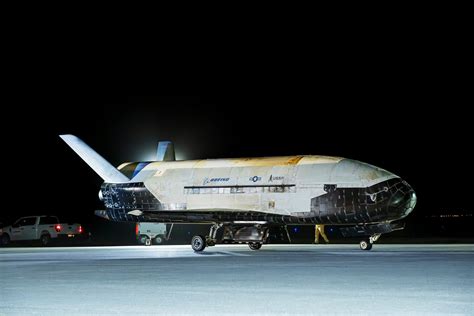
Uses NC-51 in support roles for cutting-edge projects like SpaceShipOne, X-37, and White Knight 2.
-
Has logged over 3,000 hours in NC-51.
Other Surviving Starships
Two other Starships, NC-50 and NC-33, remain active and are flown by Raj and Suresh Narayanan out of Texas. Others have ended up in museums or have been repurposed for composite material testing.
The Starship’s Enduring Legacy
Despite its commercial collapse, the Beechcraft Starship’s legacy is that of a visionary aircraft ahead of its time. Its influence is seen in the widespread use of composite materials and glass cockpits in today’s aviation landscape.

The Starship proves that innovation is often accompanied by risk. It showed what aviation could become, even if the world wasn’t ready. The tragic irony is that had the aircraft debuted a decade later, its advanced design might have made it a market leader.
FAQ: Beechcraft Starship
How many Beechcraft Starships are still flying?
As of the latest data, five Starships remain in active service. They are privately owned and fly primarily in the United States and Germany. Several others are stored, displayed in museums, or have been scrapped.
Why didn’t the Beechcraft Starship succeed?
The Starship failed due to a mix of factors: economic recession, conservative market, FAA-imposed design changes, high production costs, and poor marketing timing. Its innovation outpaced the industry’s readiness.
What made the Beechcraft Starship special?
The Starship was the first FAA-certified all-composite business aircraft with a rear-engine turboprop pusher layout, canard wing configuration, and all-glass cockpit. Its design remains one of the most innovative ever produced for civilian aviation.