China’s next-generation stealth fighter, the Shenyang J-35, is now believed to have entered low-rate initial production (LRIP) and may already be operating with the People’s Liberation Army Navy (PLAN). This development marks a significant leap in the modernization of China’s naval aviation capabilities and signals the maturation of a project that has long been shrouded in secrecy and speculation.
Emergence from the Shadows: The J-35’s Operational Debut
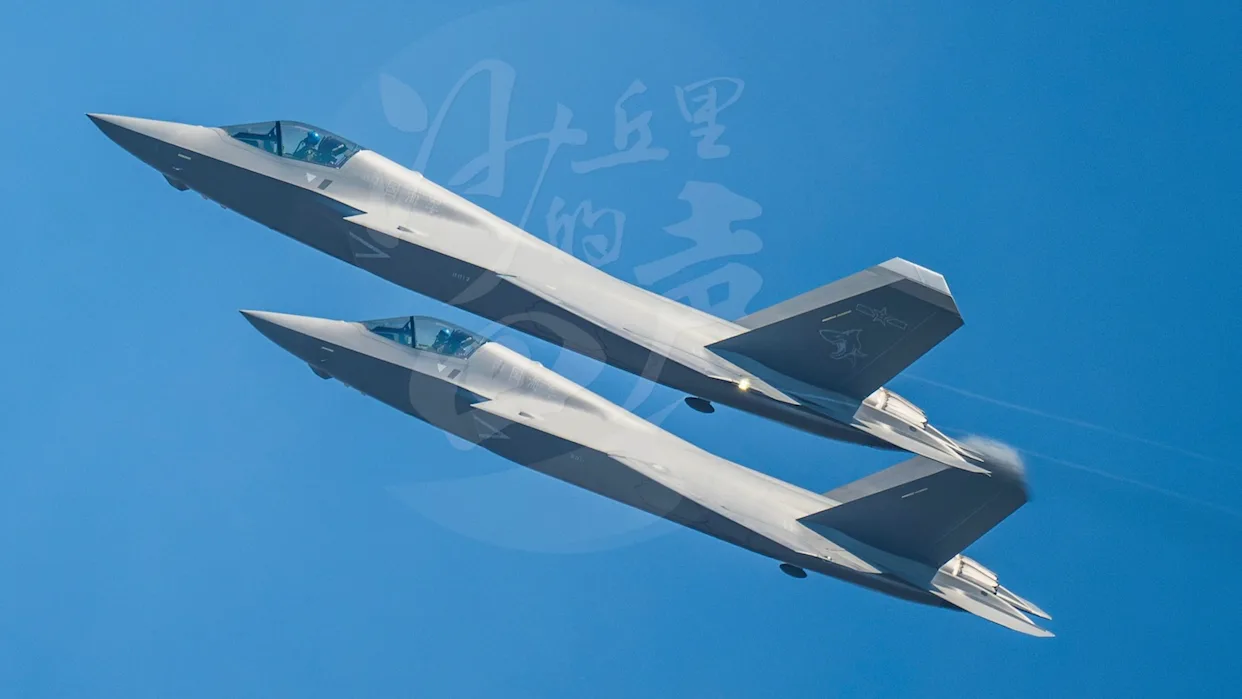
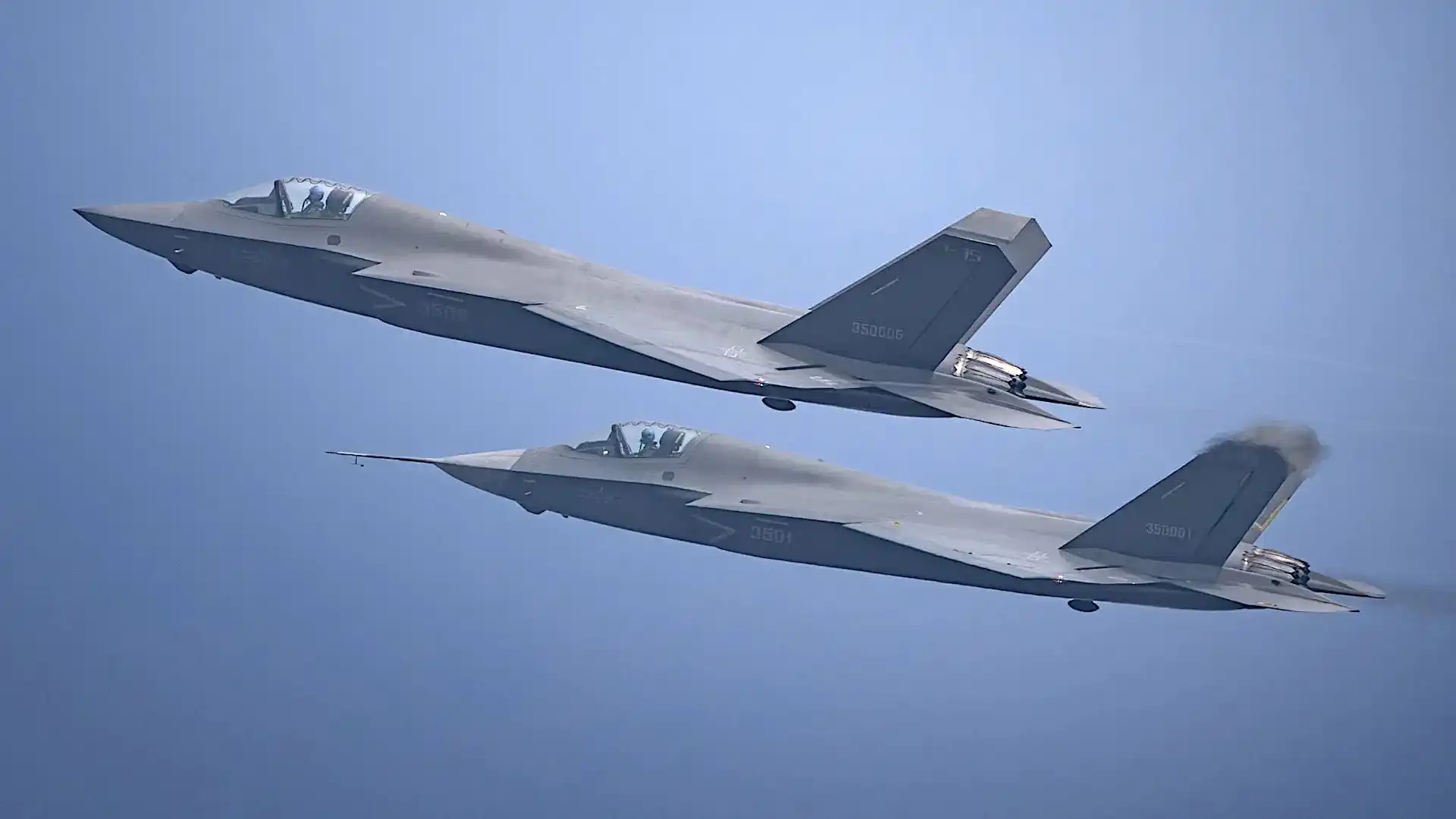
The latest photographic evidence, shared widely across Chinese and Western defense analysis circles, shows two J-35 aircraft flying in close formation, bearing the construction numbers 0011 and 0012. These identifiers strongly suggest that the aircraft belong to a limited-production batch, distinct from the earlier prototype units. The imagery, believed to be officially released by PLAN sources, indicates a new stage of visibility and possibly confidence in the program’s progress.
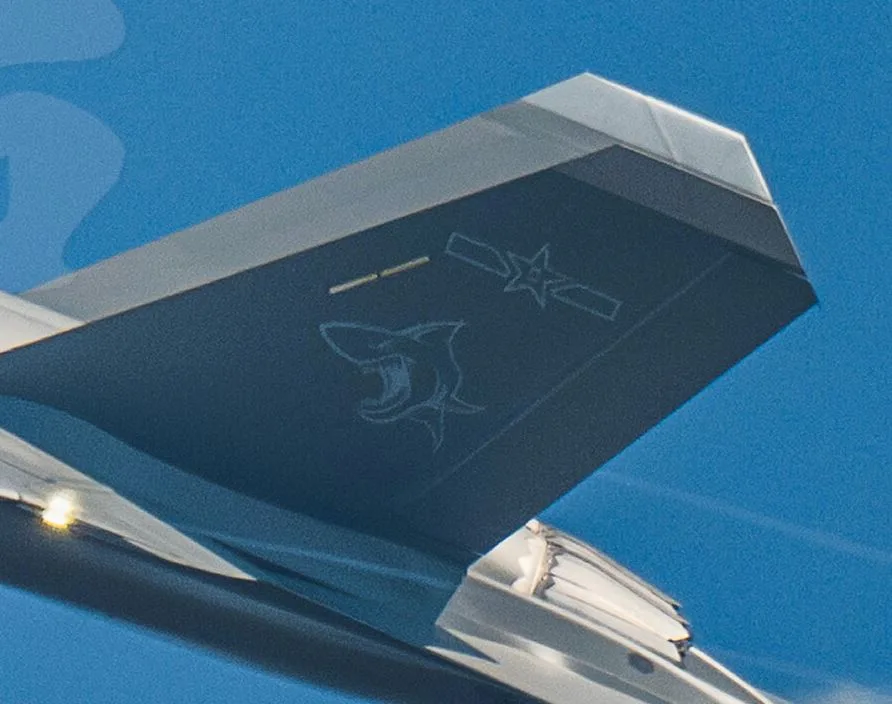
What sets these aircraft apart visually is the presence of PLAN insignia, including distinctive shark fin markings on the vertical stabilizers—motifs also seen on China’s operational J-15 naval fighters. This aesthetic continuity appears to signal not only PLAN ownership but also a growing tradition and identity within China’s carrier aviation force.
Additionally, the pilots are observed wearing bright blue flight helmets, a visual cue long associated with naval aviators aboard platforms such as the Liaoning and Shandong aircraft carriers. These helmets further reinforce the aircraft’s association with PLAN frontline units and not merely as flight test articles.
From FC-31 to Carrier-Borne J-35: Evolution of a Stealth Fighter
The J-35 represents a navalized evolution of the FC-31, a twin-engine stealth fighter originally developed for export and land-based use. The first J-35 prototype reportedly flew in October 2021, with subsequent sightings in July 2022 and September 2023, each demonstrating a progression toward production-standard features such as radar housing in the radome and the use of tactical gray paint schemes.
Notably, the current examples show more refined details, including smaller rudders shared between both naval and land-based variants, and different exhaust nozzles, hinting at variations in powerplant configurations.
Powerplant Mysteries: WS-19 or WS-21?
A lingering question surrounding the J-35 pertains to its engine configuration. Speculation remains about whether the PLAN’s version of the fighter uses the WS-21, an upgraded derivative of the WS-13, or whether it has adopted the more advanced WS-19, which is believed to power the land-based J-35A used by the People’s Liberation Army Air Force (PLAAF).
Visual cues from recent imagery suggest lighter-colored exhaust nozzles on the PLAN J-35s, possibly indicative of the WS-21 engine, while the J-35A shows darker nozzles associated with the WS-19. This distinction may point to different development paths for the aircraft depending on their service branch, with eventual standardization likely once engine reliability and performance are fully verified.
Stealth Meets the Sea: Design and Signature Management
Both aircraft in the latest photos are fitted with Luneburg lenses, the radar-reflecting domes often seen on stealth aircraft when operating in environments where their full stealth profile is not required. This bolt-on configuration—distinct from the extendible version observed on the J-35A—further confirms their operational purpose and aligns with PLAN’s routine training practices.
From an aerodynamic and stealth profile standpoint, the J-35 is visibly optimized for carrier operations. Its folding wingtips, reinforced landing gear, and larger tailplanes are indicative of its carrier compatibility, likely tailored for catapult-assisted takeoff but arrested recovery (CATOBAR) systems, such as those expected aboard China’s Type 003 Fujian-class carrier.
Carrier Trials and Deployment Expectations
Although no photographic evidence has yet confirmed that the J-35 has conducted takeoffs or landings from the Fujian, there are mounting rumors that carrier trials may already be underway. Given China’s use of sophisticated land-based mock carrier test sites, it is plausible that the J-35 has undergone extensive simulated launch and recovery cycles prior to any actual sea trials.
The decision to conduct trials on the Type 003 with a relatively unproven airframe such as the J-35—if confirmed—would mark a significant gamble for the PLAN. However, considering the modular and incremental development approach adopted with the J-15B, which also appeared in service suddenly with minimal fanfare, a similar trajectory for the J-35 cannot be ruled out.
Tactical Role and Strategic Implications
As a fifth-generation, carrier-based stealth fighter, the J-35 fills a critical capability gap in the PLAN’s ambitions to project naval air power. When paired with assets such as the KJ-600 AEW&C aircraft and potentially stealthy combat drones, the J-35 is positioned to enhance China’s ability to dominate airspace far beyond its coastline.
Unlike the bulkier and non-stealthy J-15, the J-35 provides low-observable performance, internal weapon bays, and likely supports advanced avionics and networking features akin to those seen on the J-20, China’s flagship stealth fighter. This integration points to a broader strategic intent: establishing a carrier strike group with true fifth-generation capabilities, comparable in concept—if not yet in maturity—to U.S. Navy platforms such as the F-35C Lightning II.
Comparison with U.S. and Allied Naval Fighters
The emergence of the J-35 invites comparison with its American counterpart, the F-35C. While the U.S. version benefits from over a decade of operational deployment, combat validation, and network integration, China’s J-35 is still in the early phases of introduction.
However, certain aerodynamic features and platform characteristics show conceptual similarities:
- Stealth shaping and internal bays support reduced radar signature
- Twin-engine layout offers redundancy and power at sea
- Carrier-tailored structure supports catapult launches and arrested recoveries
- Multirole capability expected across air superiority, strike, and ISR missions
Where China lags behind is in carrier operations infrastructure, combat doctrine, and joint-force integration. Nonetheless, the pace at which the J-35 has evolved from concept to apparent service suggests that these gaps may close faster than anticipated, particularly if future variants receive improved engines, radar, and software.
Public Reveal and Strategic Signaling
Speculation is mounting that the J-35 may make its public debut in September 2025, during an event marking the 80th anniversary of Japan’s defeat in World War II. Such a reveal would serve both a domestic propaganda and strategic deterrence purpose—demonstrating to regional rivals and global powers alike that China is on the cusp of fielding a new generation of naval aviation.
Even if operational capability remains months—or years—away, the mere presence of the J-35 in PLAN service sends a powerful message: China is entering the elite tier of naval aviation powers. This positions the country for enhanced blue-water operations, greater influence in contested maritime regions, and a broader power projection footprint in the Indo-Pacific.
Conclusion: A Watershed Moment in China’s Carrier Air Wing
With the appearance of what seem to be LRIP J-35s, China is no longer merely experimenting with stealth carrier aviation—it is actively fielding it. Although much remains unknown about the fighter’s systems, weapons, and performance, what is clear is that the PLAN is aggressively pursuing fifth-generation capability to match its rapidly expanding fleet of aircraft carriers.
As more J-35s take flight, the world’s attention will increasingly turn to China’s carrier air wing transformation. In the years ahead, the combination of stealth fighters, airborne early warning platforms, and next-generation drones may fundamentally alter the balance of naval air power in the Pacific.