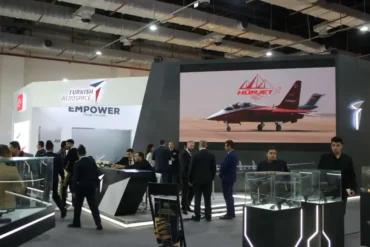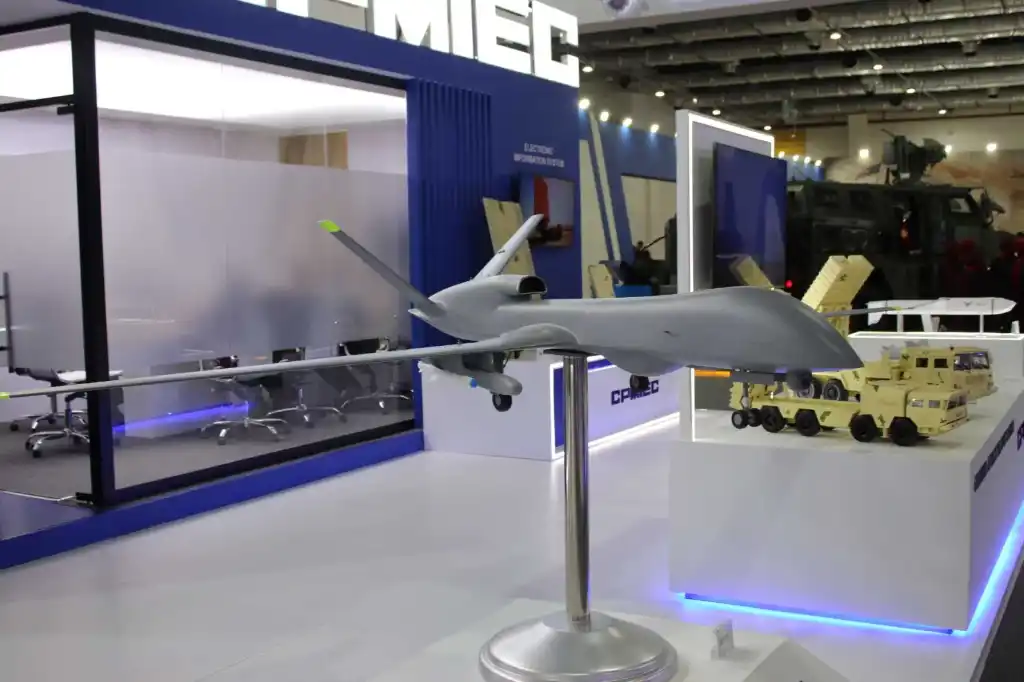
China’s WJ-700 Falcon UCAV drew intense attention at EDEX 2025 in Cairo, where the platform was showcased amid growing speculation that Egypt may have evaluated the system or considered a limited acquisition. No official statements have validated these claims, yet the consistent swirl of industry rumors reflects Cairo’s well-documented push to strengthen its long-range surveillance network and diversify its unmanned platforms. Egypt currently fields around 484 drones, including reconnaissance, attack, and surveillance models from China, the U.S., and domestic sources, creating a crowded ecosystem that increasingly favors platforms with higher endurance and deep-strike flexibility.
The potential arrival of the WJ-700 would place it alongside other Chinese systems already in Egyptian service, such as the ASN-209, CH-5, Wing Loong, and Wing Loong II, all of which have played key roles in border monitoring, counterterrorism missions, and maritime reconnaissance. The Falcon, however, offers a different level of capability, bridging the gap between tactical drones and HALE-class surveillance aircraft.
Budget Realities and Political Pressure Shift Cairo’s Focus toward UAVs
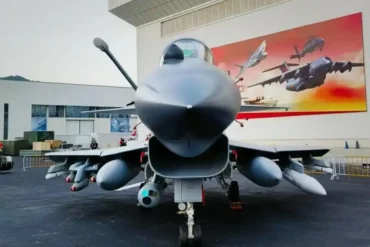
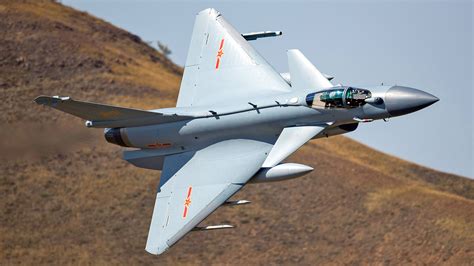
Unverified reports from Chinese defense outlets, including Sohu Military, point to an intriguing narrative: Egypt’s interest in the WJ-700 may have emerged after reconsidering a more ambitious pursuit—the J-10C fighter jet. During Egypt’s 2023 delegation visit to China, the J-10C reportedly impressed Egyptian officers with its maneuverability, radar capabilities, and relatively attractive cost of USD 40–50 million per aircraft. Yet analysts believe the full package—approximately forty fighters, PL-15 long-range missiles, AEW aircraft, and associated air-defense integrations—could have escalated the program to USD 8 billion, overshooting Egypt’s defense budget envelope, which ranged between USD 3.1–4.7 billion from 2023 to 2025.
These constraints were compounded by logistical fatigue. Adding a fourth fighter type to a fleet already operating F-16s, Rafales, and MiG-29Ms would introduce major sustainment risks. Memories of the cancelled Su-35 deal in 2019, terminated under U.S. pressure, reinforced Cairo’s caution toward future manned-fighter procurements involving politically sensitive suppliers.
Why UAVs Fit Egypt’s Strategic and Political Calculus
The rumor that Egypt ultimately shifted toward unmanned systems aligns with a broader regional trend. Countries such as Turkey, the UAE, Israel, and Iran aggressively expanded their drone industries throughout the 2020s, driving a competitive environment in which Egypt, situated along the Red Sea, Mediterranean, and Libya border zones, requires persistent ISR (intelligence, surveillance, and reconnaissance) coverage.
Speculative reports suggest a June 2025 decision in Cairo to pursue a USD 400 million package for ten WJ-700 units, placing unit cost at around USD 40 million—far higher than typical MALE drones but dramatically lower than modern fighter jets. UCAVs such as the WJ-700 do not attract the same geopolitical spotlight as manned aircraft acquisitions, making them less vulnerable to sanctions or political leverage. This insulation may appeal to Egyptian defense planners who remain wary of repeating setbacks like the blocked Su-35 program.
Inside the WJ-700 Falcon: A High-Altitude, Long-Endurance Strike and Reconnaissance UCAV
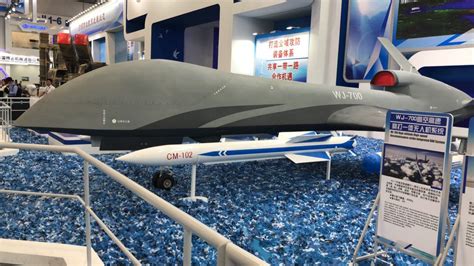
The WJ-700 belongs to CASIC’s Hiwing UAV family, which includes the WJ-010, WJ-100 Blade, WJ-500, WJ-600, and WJ-600A/D. Development began around 2012 within CASIC’s 31st department, with design completion recorded in 2016. Engineers incorporated a V-shaped tail, carbon-fiber composites, and an upper-mounted air inlet to reduce radar cross-section—valuable for standoff surveillance and electronic-intelligence missions.
A scale model appeared in 2018, the first full prototype debuted at Zhuhai Airshow 2018, and the maiden flight reportedly took place on January 11, 2021, shortly after the Nagorno-Karabakh conflict spurred global interest in unmanned strike systems.
Performance Profile: Designed for Strategic Reach
The WJ-700 is marketed as a high-altitude, high-speed, long-endurance UCAV suitable for diverse mission sets, including anti-ship warfare, anti-radiation strike, long-range reconnaissance, and standoff ground attacks. Technical characteristics attributed to the platform include:
- Maximum takeoff weight: ~3.8 tonnes
- Payload capacity: ~840 kg
- Maximum speed: ~700 km/h
- Cruise speed: ~600 km/h for ~20 hours endurance
- Economical speed: ~400 km/h for up to ~26 hours endurance
- Operational ceiling: 12,000–15,000 meters
These figures place the WJ-700 closer to the American MQ-9 Reaper class than to traditional MALE drones like the CH-4 or Wing Loong II. CASIC also emphasized AI-assisted functions: one-button takeoff, autonomous self-diagnostics, automated landing, and simplified operator workload.
A Broad Weapons Portfolio Tailored for Regional Threat Profiles
The WJ-700’s armament suite strengthens its appeal to countries requiring multi-domain strike flexibility. China markets an extensive list of compatible munitions:
- C-701 anti-ship missile: suitable for small vessels up to ~180 tonnes.
- C-705 anti-ship missile: turbofan-powered, range up to ~170 km; millimeter-wave terminal radar seeker optimized for ships between 1,500 and 3,000 tonnes.
- C-705KD variant: adapted for ground-attack roles.
- SM-102 anti-radiation missile: designed for SEAD/DEAD missions.
- CM-502KG precision missile: range ~25 km, Mach 1.1, 11-kg tandem warhead, with electro-optical, radar, or IR guidance.
- 50–100 kg glide bombs for low-collateral standoff strikes.
Chinese media have also mentioned CM-102 anti-radiation compatibility and a 50–80 km standoff engagement envelope for certain munitions. These weapons, paired with long-endurance surveillance profiles, could offer Egypt enhanced control over maritime corridors, critical energy routes, and smuggling lines.
Implications for Egypt’s Defense Landscape
If Egypt were to operate the WJ-700 alongside existing CH-5 and Wing Loong II platforms, its UAV network would shift decisively toward medium-to-high altitude persistent coverage, allowing Cairo to perform continuous ISR missions over maritime chokepoints like the Bab el-Mandeb Strait and eastern Mediterranean lanes. These drones could also support counter-insurgency operations in the Sinai, surveillance over Libya’s border regions, and participation in Red Sea coalition patrol frameworks.
The platform’s appeal is grounded in its balance of cost, endurance, altitude, and strike flexibility, making it a viable midpoint between tactical UAVs and prohibitively expensive manned aircraft. Although all reports of an Egyptian order remain unconfirmed, the strategic logic behind such an acquisition is compelling, particularly within Egypt’s evolving doctrine that increasingly values unmanned systems for cost-efficient reach.
Outlook: A Drone for Egypt’s Next Strategic Phase?
For now, the evidence remains circumstantial, built from industry leaks, Chinese media speculation, and defense-expo observations. Yet the WJ-700’s appearance at EDEX 2025 was more than a static display—it was a signal of China’s intent to court major Middle Eastern clients and of Egypt’s determination to keep options open in an increasingly multipolar defense market.
If Cairo ultimately chooses the WJ-700, the decision will reflect a broader shift toward strategic autonomy through unmanned endurance, rather than dependence on politically sensitive manned aircraft. Whether or not the rumored 2025 deal materializes, the WJ-700 has already positioned itself as a prominent candidate in Egypt’s next phase of long-range surveillance modernization.