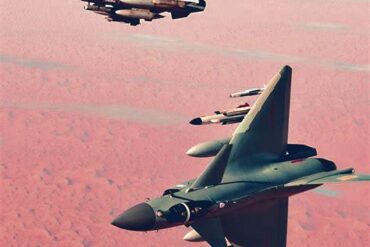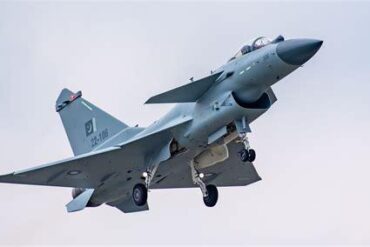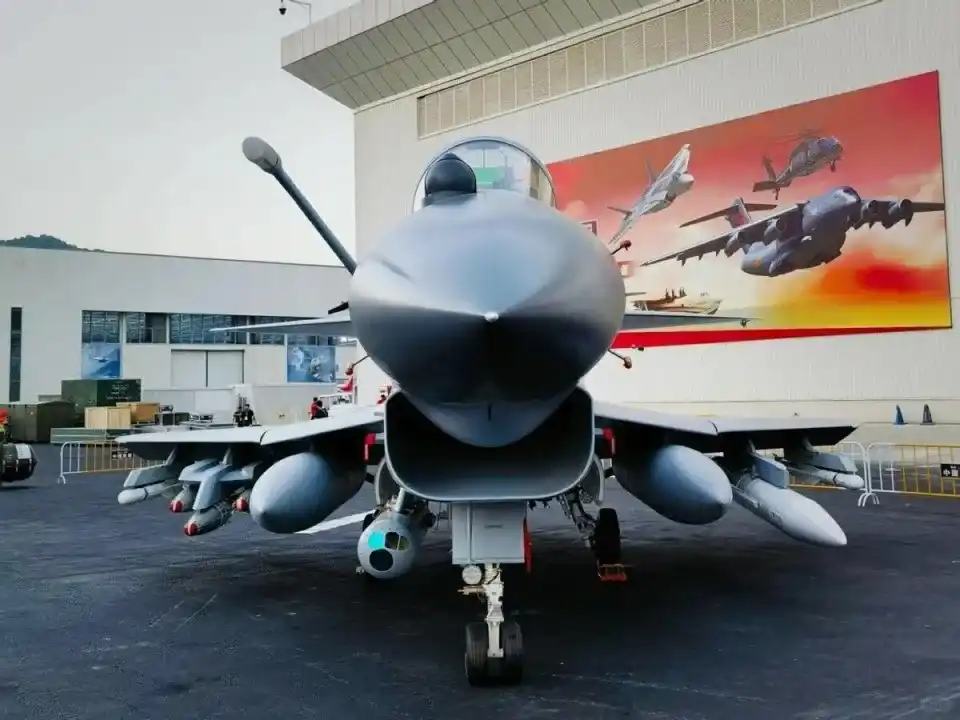
In February 2025, a major shift in Egypt’s military procurement strategy reverberated across the global defense community. The Egyptian Air Force officially received its first batch of Chinese J-10CE fighter jets, equipped with the PL-15E long-range air-to-air missiles. This news, published on the front page of Egypt’s Daily News, marked a significant milestone in the Middle East’s geopolitical and military landscape.
This development not only made Egypt the first Arab country to field the J-10CE but also underscored a deeper, more complex shift in Egypt’s defense posture. The choice to embrace China’s advanced fighter jets has broad implications, especially when placed against the backdrop of Egypt’s long-standing history with American and European weaponry. But what exactly led Egypt to this pivotal decision? Why, after decades of being a key partner in the US-led defense bloc, did Egypt choose China over its traditional suppliers? To understand this, we need to explore the nuances of Egypt’s military history and its evolving relationship with global powers.

Egypt’s Military Legacy: A Long Struggle for Autonomy
The F-16 Era: A Symbol of American Control
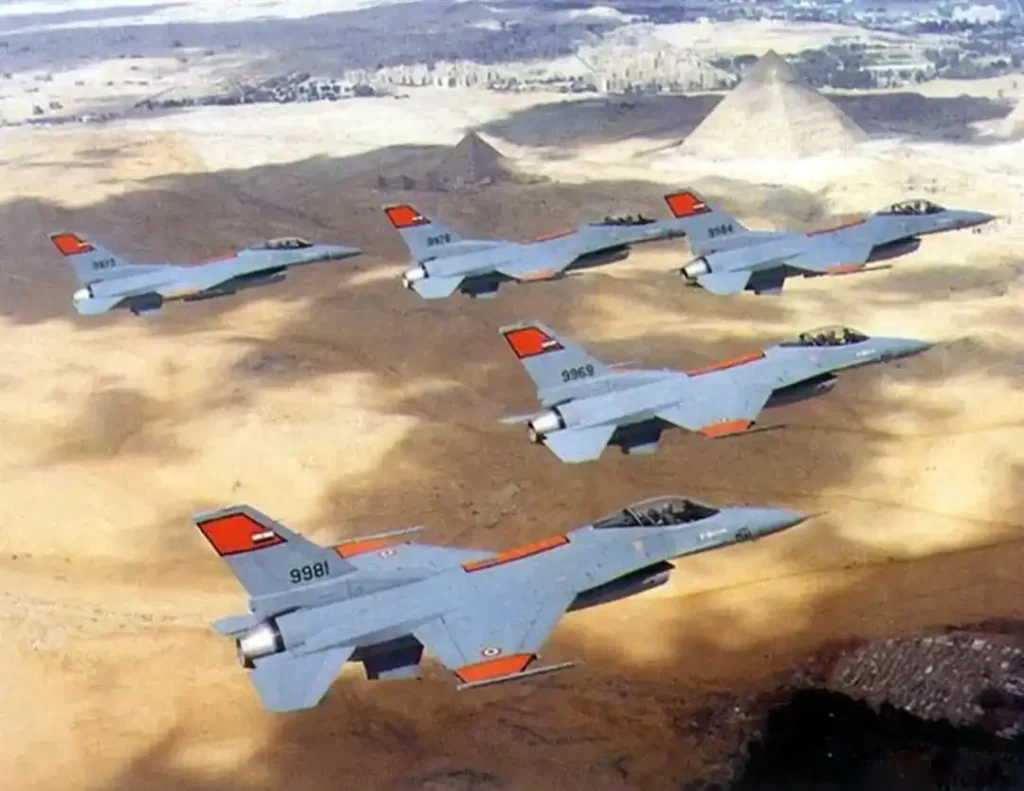
Egypt’s relationship with the United States in the realm of military procurement has always been tightly bound by political and strategic considerations. As one of the first Middle Eastern nations to receive American F-16 fighter jets, Egypt’s Air Force was once among the most formidable in the region. With more than 200 F-16s in its arsenal, Egypt’s fleet was larger than Israel’s in terms of sheer numbers, but it suffered from a critical limitation: Egypt’s F-16s were severely restricted in their operational capabilities.
The United States, keen to maintain Israel’s qualitative military edge in the region, imposed strict controls on the equipment and armament Egypt could use. For example, Egypt was denied the right to equip its F-16s with the advanced AIM-120 AMRAAM missiles, which could strike targets beyond visual range. Instead, Egypt was restricted to using the AIM-7 Sparrow, a much older and less capable missile with a range of only 45 kilometers. This technological handicapping kept Egypt’s air force from achieving parity with Israel’s more advanced aircraft, such as the F-35, which has far superior capabilities in terms of stealth and weaponry.
The Mirage and MiG Dilemma
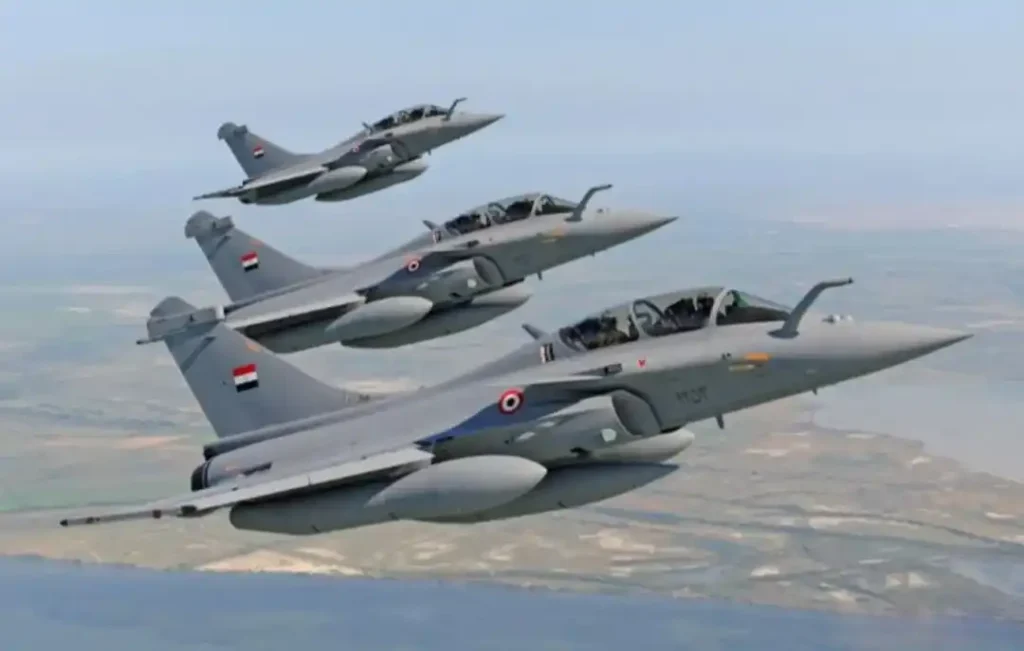
In its pursuit of greater autonomy, Egypt sought alternative suppliers. French Dassault Mirage 2000-5s and Russian MiG-29M2s were integrated into Egypt’s arsenal, but these systems came with their own set of issues. For instance, Egypt purchased 54 Mirage 2000-5 fighters from France at a hefty price tag of $1.5 billion each, only to find that they were equipped with MICA missiles that had a range of just 50 kilometers—barely an improvement over the outdated AIM-7.
Meanwhile, Egypt’s acquisition of 46 MiG-29M2s from Russia turned out to be problematic as well. Despite initially promising capabilities, the MiG-29s encountered issues such as poor integration and maintenance difficulties. In some extreme cases, these aircraft were even captured by Sudanese rebel forces, exposing the vulnerabilities in Egypt’s defense infrastructure.
The Curse of Geopolitical Leverage
Egypt’s experience with these major powers highlighted a painful reality: its military procurements were often viewed through the lens of geopolitical leverage rather than genuine partnership. Whether it was the United States limiting Egypt’s access to high-end technologies or Russia and France imposing restrictive clauses on the use of certain weapons, Egypt found itself in a position where its air force, despite possessing a significant number of advanced aircraft, lacked the capability to challenge its regional adversaries, particularly Israel.
This reality became painfully apparent during the 2024 Gaza conflict, where Egypt’s F-16s were rendered ineffective in the face of Israel’s F-35s, which dominated the skies without any real challenge from Egypt’s aircraft. The Egyptian Air Force, despite its numbers, found itself at a distinct disadvantage, unable to conduct operations with the same level of technical superiority as its Israeli counterparts.
The Game-Changer: J-10CE and PL-15E
The J-10CE: China’s Cutting-Edge Fighter Jet
Against this backdrop of technological limitations and geopolitical frustration, Egypt’s decision to turn to China for its next-generation fighter jet was a watershed moment. The J-10CE, a variant of the J-10 fighter developed by China’s Chengdu Aerospace Corporation, is a 4.5-generation aircraft that boasts advanced features such as an active electronically scanned array (AESA) radar and superior weapon systems.

One of the standout features of the J-10CE is its PL-15E long-range air-to-air missile, which can lock onto and engage targets at a distance of up to 145 kilometers. This missile’s range significantly outperforms Egypt’s existing missile systems and even exceeds the range of the AIM-120D used by Israel. The ability to strike targets beyond visual range is a crucial capability that Egypt had long been denied by its Western suppliers.
China’s military technology is not hampered by the same political restrictions that plague US and European exports. Unlike the F-16s or Mirage 2000s, which were deliberately limited in their operational capacity, the J-10CE and its associated missile systems come without such restrictions. For Egypt, this translates into a significant leap forward in terms of combat capability and strategic autonomy.
The Strategic Implications: Power Balance in the Middle East
The arrival of the J-10CE has not just impacted Egypt’s military capabilities; it has also sent ripples through the broader Middle Eastern power dynamics. According to Israeli media, the J-10CE marks the first time Egypt’s Air Force is on a technological level playing field with Israel. While the F-35 still holds a stealth advantage, the combination of the J-10CE and PL-15E missile means that Egypt can now engage Israeli aircraft at ranges that were previously unattainable.
This technological parity is particularly significant as it forces Israel to reconsider its military doctrine. The previous reliance on out-of-visual-range missile engagements may no longer be as effective when Egypt’s J-10CEs can counter Israel’s aircraft at similar or even longer distances. The balance of power in the region is beginning to shift, and Egypt’s military is becoming a far more formidable force.
Egypt’s Path Forward: The Challenges and Opportunities
Managing a Multi-Supplier Military
However, Egypt’s transition to a more diversified set of suppliers is not without challenges. One of the most significant obstacles is the need to integrate multiple systems from different countries into a cohesive military framework. Egypt’s Air Force now operates a combination of American, French, Russian, and Chinese equipment, each of which has its own unique operational requirements and maintenance protocols. The complexity of managing these diverse systems is akin to trying to get different software operating systems—such as Android, iOS, and HarmonyOS—to work seamlessly together.
One of the major hurdles will be navigational and communication compatibility. Egypt must ensure that its jets, regardless of origin, can work together smoothly, sharing data and coordinating missions in real time. This will require substantial investment in training and system integration.
Countermeasures from the West
While Egypt may have gained greater military autonomy by turning to China, the United States is unlikely to stand idly by. The potential geopolitical ramifications of Egypt’s pivot toward China are considerable, and Washington is already considering ways to counteract Egypt’s growing reliance on Chinese weaponry. This could include reducing military aid to Egypt, ramping up economic pressure, or even attempting to influence Egypt’s other regional allies, such as Saudi Arabia and the United Arab Emirates, to follow suit and embrace Western military hardware instead of Chinese alternatives.
A New Era of Military Diplomacy
The shift to Chinese-made weaponry also signals a broader trend in Middle Eastern geopolitics. China has adopted a non-interference policy in its international dealings, offering military technologies without the political strings attached that often accompany Western arms sales. This pragmatic approach has gained traction among nations like Egypt, which seek to maintain their sovereignty without being caught in the crossfire of superpower rivalry.
For China, military exports are not just about economic gains; they also serve as a diplomatic tool to strengthen ties in critical regions. The Suez Canal, located in Egypt, is a vital maritime artery that links the Mediterranean Sea with the Red Sea, and by cementing its military relationship with Egypt, China has secured an important foothold in North Africa. This strategic alliance mirrors China’s broader efforts to expand its influence across the Global South, positioning itself as a viable alternative to Western powers.
Conclusion: Egypt’s Bold Gamble
In the end, Egypt’s decision to purchase the J-10CE represents a bold, strategic shift in its defense policy. By turning to China, Egypt has gained access to cutting-edge technology without the political baggage that often accompanies military hardware from the West. The J-10CE, with its advanced capabilities, not only enhances Egypt’s military standing but also forces regional powers to recalibrate their strategies.
As Egypt continues to modernize its armed forces with the J-10CE, PL-15E missiles, and possibly even more advanced Chinese equipment in the future, the balance of power in the Middle East is undoubtedly shifting. The United States and its allies may no longer have the same monopoly on Egypt’s military needs, and the rise of China as a key defense partner could have far-reaching consequences for the region’s geopolitical landscape.
This moment is a testament to Egypt’s resolve to chart its own course—no longer merely a pawn in superpower rivalries but a resilient, autonomous actor shaping its own future.