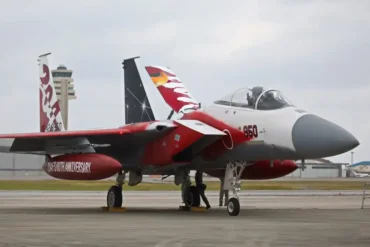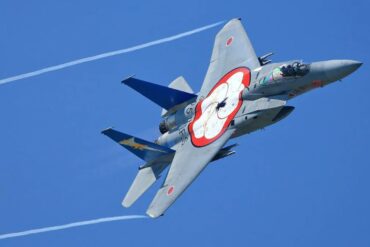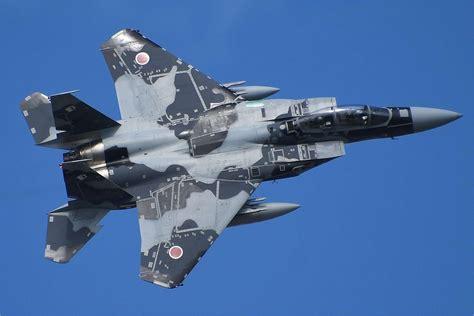
The F-15 Eagle, boasting an impeccable 104-0 air-to-air combat record, has long been seen as the gold standard of aerial dominance. Yet, a recent encounter in the East China Sea has forced military strategists and observers to question whether this legacy aircraft may be inching toward strategic obsolescence—at least in specific high-tension engagements. On December 6, 2025, the Japanese F-15J, a highly upgraded variant of this iconic jet, was locked onto by a Chinese J-15 fighter, sparking debate over tactical advantages, radar supremacy, and geopolitical signaling in the Indo-Pacific.
The Radar Lock That Shook Assumptions
The confrontation occurred when Japan Air Self-Defense Force (JASDF) F-15Js were scrambled to shadow flight operations from the Chinese aircraft carrier Liaoning, operating within Japan’s Air Defense Identification Zone (ADIZ) southeast of Okinawa. During two distinct timeframes—between 4:32 and 4:35 p.m. and again from 6:37 to 7:08 p.m.—the Chinese J-15 intermittently engaged fire-control radar locks on the F-15Js. For Japan, this wasn’t a routine intercept. It was a tactical escalation.
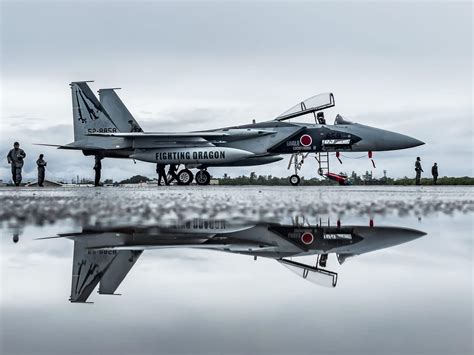
While no weapons were fired, the fire-control lock—the final step before missile engagement—signaled a chilling threat. Unlike general radar search modes that briefly scan vast airspace, fire-control radars deliver focused, continuous tracking to guide precision weapon systems. The message was clear: “You’re being targeted.”
This marks a rare public disclosure of a Chinese fire-control lock on a Japanese fighter, introducing a new threshold of tactical brinkmanship in East Asian airspace.
Technological Supremacy or Strategic Bluff?
China’s J-15, particularly the upgraded J-15B variant, is speculated to be the model involved in the lock-on. This newer version integrates 4.5-generation combat features, including Active Electronically Scanned Array (AESA) radar, a modernized cockpit, and enhanced situational awareness systems. AESA radars are not only harder to detect due to Low Probability of Intercept (LPI) techniques, but they can also simultaneously perform surveillance and target engagement with minimal electromagnetic footprint.
Even if the carrier-based J-15s aboard Liaoning are still based on older STOBAR configurations without AESA, their growing sophistication cannot be overlooked. AESA radars enable:
- Highly directional beams that minimize detectability.
- Rapid frequency hopping that avoids conventional jamming.
- Simultaneous multi-target engagement, improving lethality.
The possibility that the Japanese radar warning receivers (RWRs) mistook routine AESA scans for lock-ons has been floated by some analysts, yet the extended duration and precise timing of the incidents suggest intentional radar targeting.
Japan’s Response and the Super Interceptor Program
Japan did not take the incident lightly. It labeled the radar lock a “dangerous act” beyond accepted flight safety protocols. In response, it emphasized its commitment to air superiority modernization, notably through the Japan Super Interceptor (JSI) program—a sweeping upgrade for 68 F-15J fighters.
Under this program, the F-15J gains:
- AN/APG-63(V)1 AESA radar systems.
- Enhanced electronic warfare suites.
- Advanced fly-by-wire flight controls.
- Helmet-mounted displays and IRST pods.
- Integration of standoff long-range weapons.
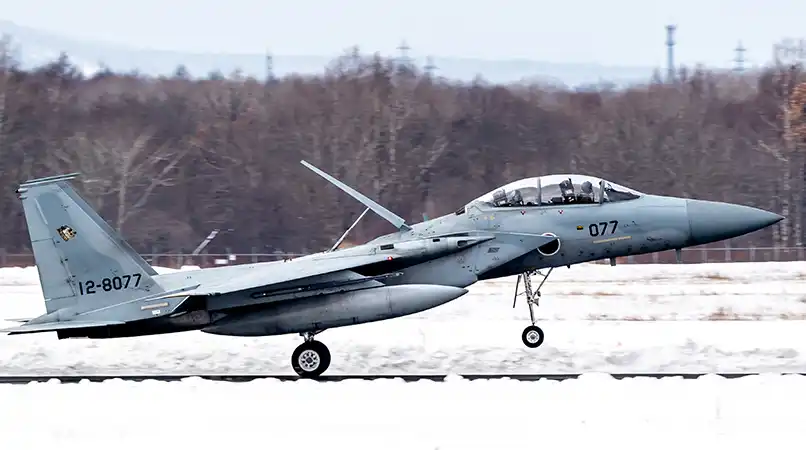
The F-15J, a licensed version of the U.S.-made F-15C/D, entered JASDF service in the 1980s to replace aging F-104Js. Japan’s Mitsubishi Heavy Industries assembled over 200 units under license, customizing the aircraft to include domestic subsystems like the J/APR-4 RWR, following U.S. restrictions on exporting sensitive electronic warfare tech.
Despite the platform’s age, Japan has consistently kept the F-15J technologically relevant. But the new wave of Chinese radar capabilities and electronic warfare tactics may now be testing those limits.
Expert View: Does a Radar Lock Define Superiority?
Group Captain Johnson Chacko, a retired Indian Air Force veteran, offered perspective in an interview with EurAsian Times. He dismissed claims of J-15 superiority based solely on the lock-on event, clarifying that:
“A radar lock is just one step away from missile firing. However, modern aircraft like the F-15J are equipped with Electronic Counter Measures (ECM) that could potentially neutralize such threats.”
He emphasized that no shots were fired, and the act, while aggressive, was more psychological warfare than a tactical edge. In his view, China was sending a political message: “Enter this space again, and we might engage.”
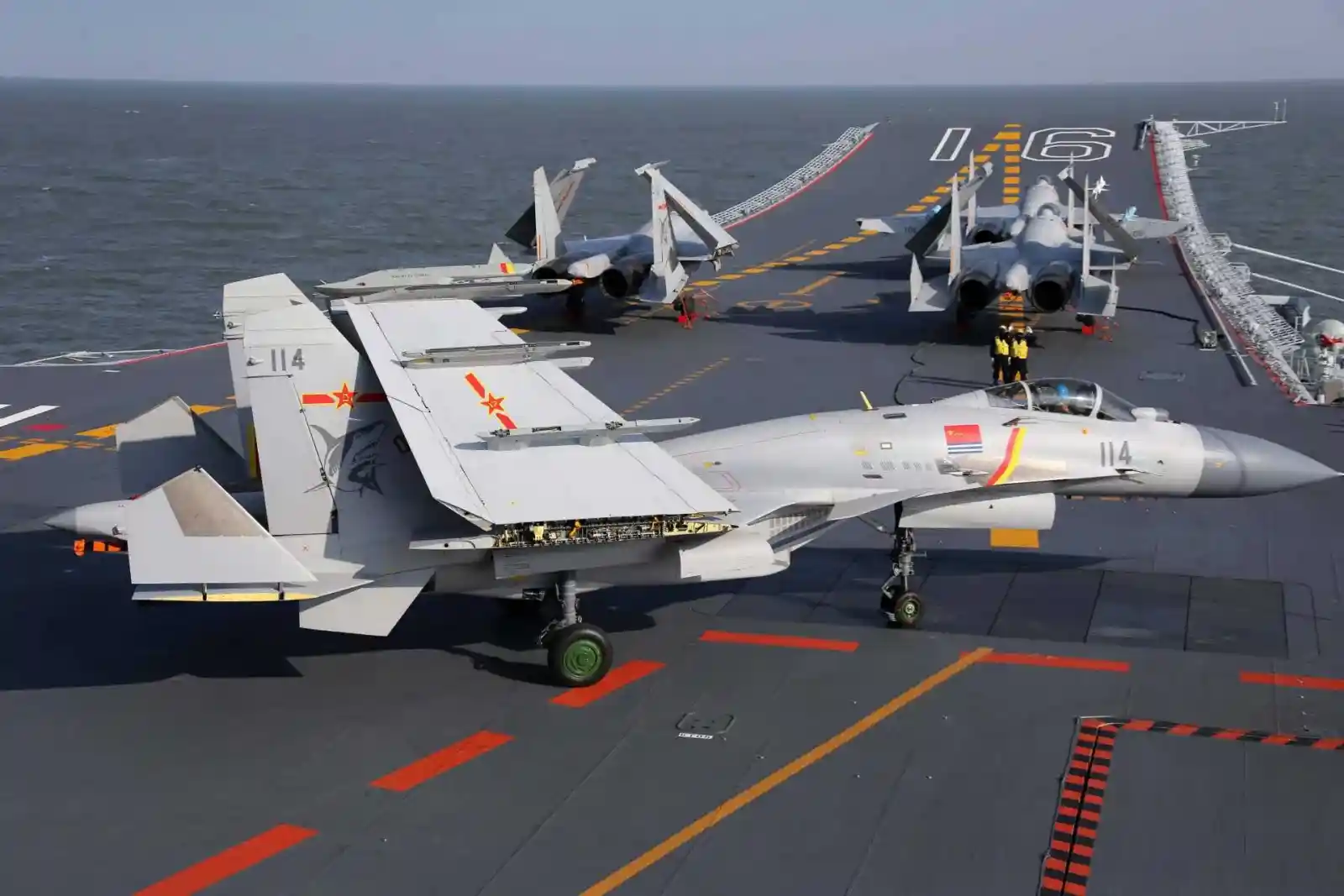
Indeed, this style of engagement aligns with China’s broader gray zone tactics—testing adversaries’ limits without crossing into open conflict. A fire-control radar lock pushes boundaries while maintaining plausible deniability, ideal for strategic posturing.
F-15’s Enduring Legacy and the Next Generation
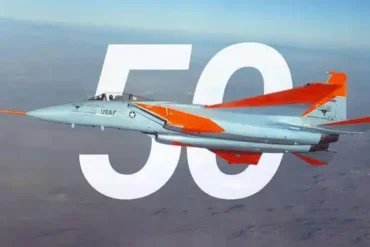
Originally developed by McDonnell Douglas in the 1970s, the F-15 remains a force multiplier. Its unmatched 104-0 kill ratio is a result of long-range radar-guided missiles, high thrust-to-weight ratio, and superior situational awareness. It was engineered to outperform Soviet MiG fighters during the Cold War and continues to be upgraded for 21st-century multi-role missions.
The newer F-15EX Eagle II is now Boeing’s crown jewel, featuring:
- Digital fly-by-wire controls.
- Open Mission Systems (OMS) for future integrations.
- Increased payload capacity (up to 22 air-to-air missiles).
- Robust defensive avionics and sensors.
Yet, in the stealth era dominated by platforms like the F-35 and China’s J-20, even the most modernized Eagles lack low-observable signatures, making them more visible in contested airspaces.
Shifting Sands: East Asia’s New Aerial Dynamic
This radar lock event cannot be seen in isolation. It is part of a broader regional recalibration, where Japan is increasingly aligning with U.S. Indo-Pacific strategy, while China is asserting its maritime and aerial claims more aggressively.
Japan’s F-15J fleet will soon work in tandem with F-35 stealth fighters and potentially sixth-generation aircraft, currently under joint development with the U.K. and Italy under the Global Combat Air Programme (GCAP).
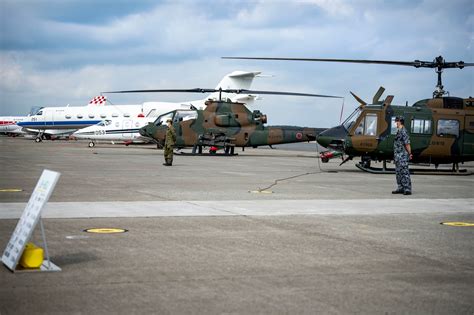
These multi-platform synergies aim to offset China’s numerical and tactical gains, particularly as the People’s Liberation Army Navy (PLAN) continues expanding its carrier fleet and onboard air power.
Moreover, with Taiwan contingencies, disputed island chains, and deepening Japan-U.S. defense integration, encounters like the December 6 radar lock will likely become more frequent, complex, and consequential.
Conclusion: Tactical Provocation or Strategic Advantage?
The radar lock by the Chinese J-15 on the Japanese F-15J was not just a momentary tactical episode—it was a chess move on the Indo-Pacific board. Whether or not the J-15 holds a sensor advantage, the event shows that China is willing to escalate signal-based hostilities in contested airspace.
Japan, while not outgunned, must accelerate its modernization pace, expand network-centric capabilities, and deepen coalition interoperability, especially with the U.S. and regional allies.
As advanced radars, long-range weapons, and stealth platforms redefine the rules of aerial engagement, what happened over the East China Sea might just be a preview of tomorrow’s invisible wars—fought not with bullets first, but beams.