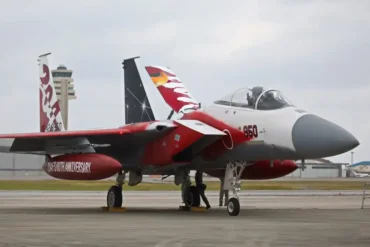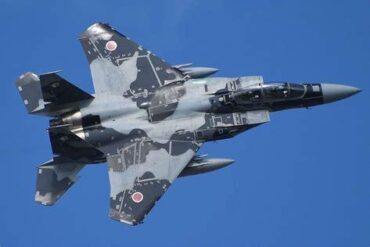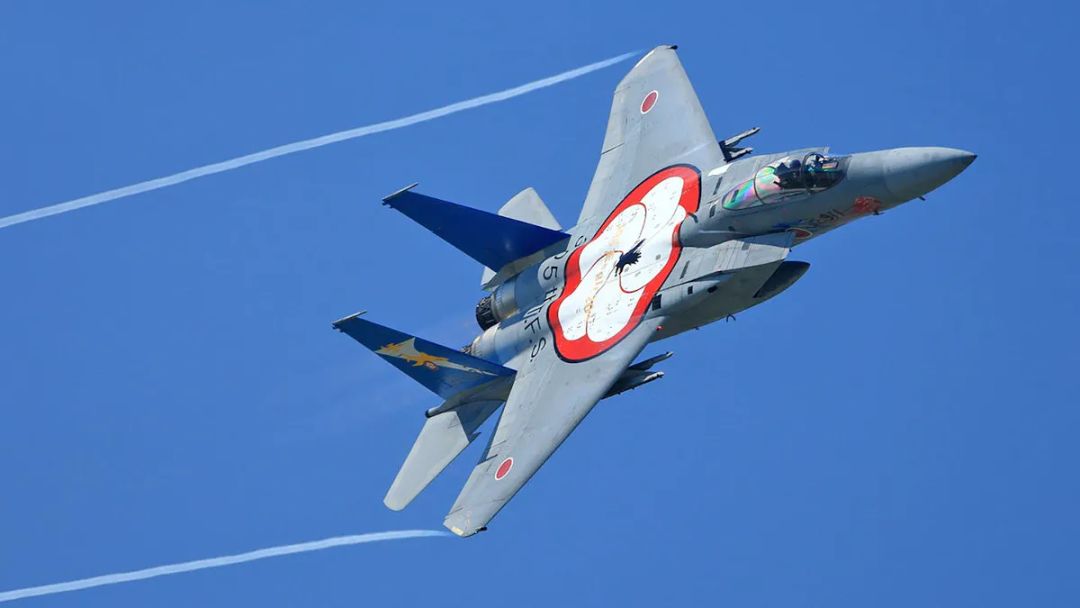
The F-15J is an important component of Japan’s Air Self-Defense Force (JASDF), playing a vital role in air defense since its introduction in the 1980s. As one of the most capable fighters in Japan’s arsenal, the F-15J has undergone numerous upgrades to maintain its relevance and operational effectiveness, especially in the face of evolving threats. This article delves into the F-15J’s operational history, its upgrades, and its role within the broader context of Japan’s military strategy.
Overview and Background of the Japanese F-15J
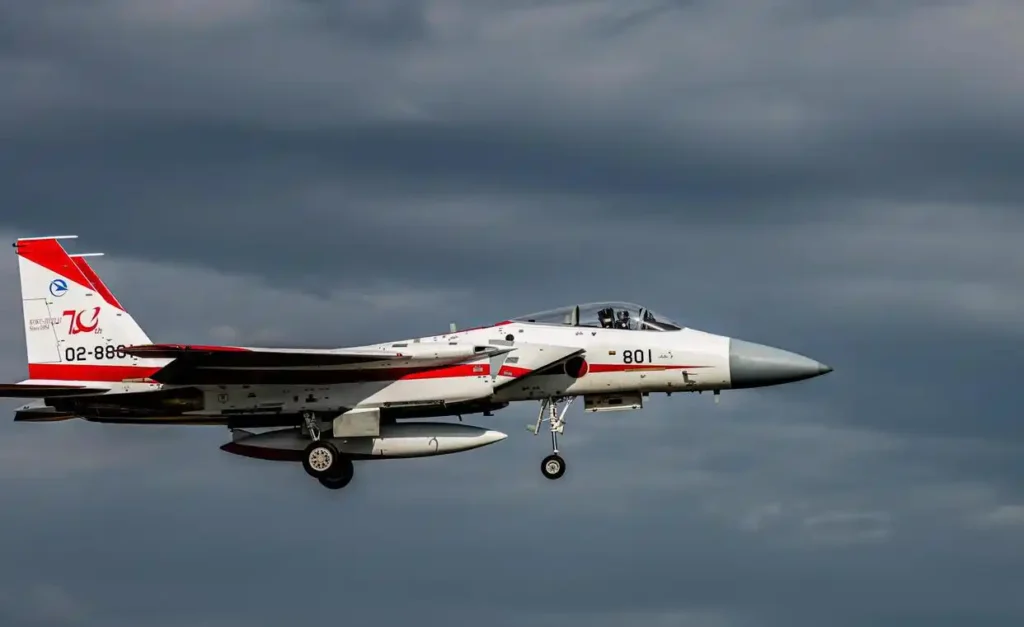
The F-15J is a localized version of the U.S.-made F-15C/D, developed for the JASDF. The aircraft has been in service since the early 1980s, with around 200 units currently in operation, including 155 single-seat F-15J and 45 two-seat F-15DJ variants. These fighters have long been the backbone of Japan’s air defense, frequently tasked with interception missions to counter potential threats in Japanese airspace.
Early Deployment and Role in Japan’s Defense Strategy
Since its induction, the F-15J has primarily been used for air superiority and air defense duties. One of its key responsibilities is intercepting foreign aircraft that violate Japan’s airspace, including those from neighboring countries such as China and Russia. In 2016, for example, the F-15J was called to scramble 1,168 times in response to various airspace violations.
However, despite its success, the aircraft began facing challenges related to aging airframes and outdated systems, especially after decades of service. As Japan’s air defense needs evolved, so too did the requirements for the F-15J to keep up with modern threats.
The F-15JSI Upgrade Program: Enhancing Capability for the Modern Era
Recognizing the need to modernize its aging fleet, Japan initiated the F-15JSI (Japan Super Interceptor) upgrade program in 2020, a significant initiative aimed at revitalizing the F-15J and extending its service life until at least 2040. This upgrade program, with an investment of approximately $4.5 billion, focuses on a range of critical improvements to enhance the F-15JSI’s performance and effectiveness.
Key Upgrades in the F-15JSI Program
The F-15JSI upgrades include a variety of advanced systems and modifications:
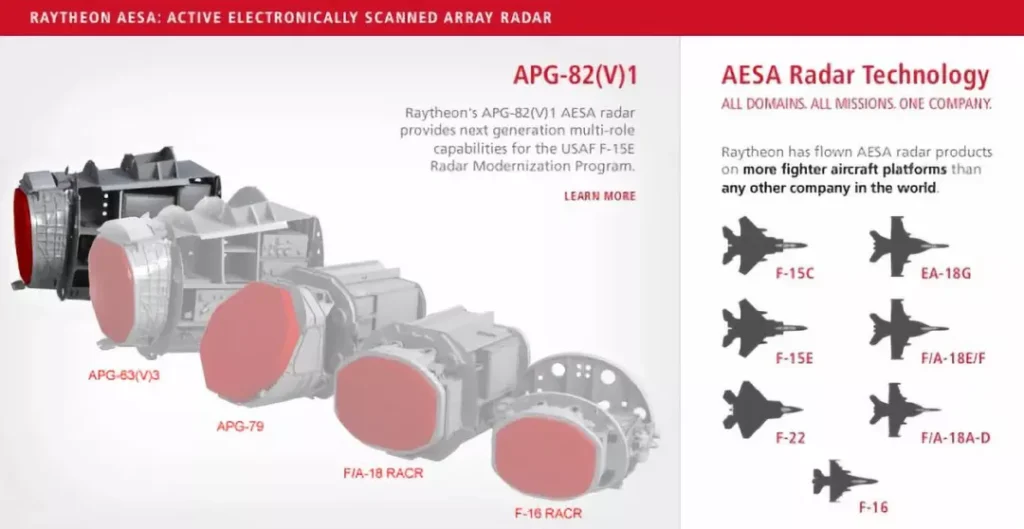
- AN/APG-82(V)1 AESA Radar
The introduction of the AN/APG-82(V)1 Active Electronically Scanned Array (AESA) radar marks a significant leap in the F-15JSI’s capabilities. This radar enhances the aircraft’s target detection range and multi-target tracking abilities, allowing the F-15JSI to engage multiple targets simultaneously at greater distances. - ALQ-239 Electronic Warfare System
The F-15JSI now incorporates the ALQ-239 electronic warfare (EW) system, which greatly improves the aircraft’s ability to jam and deceive enemy radar and communications systems. This system enhances the fighter’s survivability in contested environments. - New Missile Capabilities
The upgraded F-15JSI can now launch advanced missiles, such as the AGM-158B JASSM-ER long-range stealth cruise missile (with a range of 1,000 km) and the LRASM anti-ship missile. These additions significantly enhance the fighter’s ability to strike targets at long ranges, especially in anti-surface warfare and strike missions. - Wing Box and Structural Improvements
To address the aging airframe, Japan has made significant modifications to the central wing box structure, effectively extending the service life of the aircraft until 2040. This upgrade ensures that the F-15JSI remains operational and structurally sound for the foreseeable future.
Limitations of the F-15JSI Upgrade
While the F-15JSI upgrade brings substantial improvements, there are still several limitations to consider:
- Engine Limitations: The F-15JSI continues to rely on the F100-PW-100 engines, which are older than those used in U.S. models. As a result, the thrust-to-weight ratio is lower compared to the latest U.S. versions, affecting overall performance.
- Partial Fleet Coverage: Despite the significant investment in upgrading the fleet, only 98 F-15Js are being upgraded under the JSI program, leaving a portion of the fleet still reliant on outdated systems. This limits the overall effectiveness of the upgrade across the entire JASDF.
- High Upgrade Costs: The cost per upgraded unit is estimated at around $50 million, making the JSI program an expensive endeavor for Japan. This places a significant economic burden on the country’s defense budget, considering the scale of the upgrade effort.
Operational History and Key Engagements
Japan’s Growing Tensions with Russia: A Milestone in F-15J Operations
The F-15J was thrust into the spotlight during the tense military exchanges between Japan and Russia. In September 2024, a Japanese F-15J launched flare countermeasures at a Russian Il-38 maritime patrol aircraft over the Sea of Japan. This event marked the first time Japan had taken such aggressive action against a Russian aircraft, signaling an escalation in tensions between the two nations.
This incident highlighted the F-15J’s ongoing role in active defense and its effectiveness in countering foreign incursions into Japanese airspace.
Accident Record and Safety Concerns
While the F-15J has been a stalwart in Japan’s defense, it has not been immune to accidents. In January 2022, a F-15DJ (the two-seat variant) tragically crashed into the sea, resulting in the loss of both pilots. This incident, along with previous structural issues, has occasionally raised concerns about the long-term reliability of the F-15 fleet, particularly given its aging airframes and the intense operational demands placed on the aircraft.
Comparisons: F-15J vs. Other Aircraft
F-15J vs. Chinese J-16 Fighter
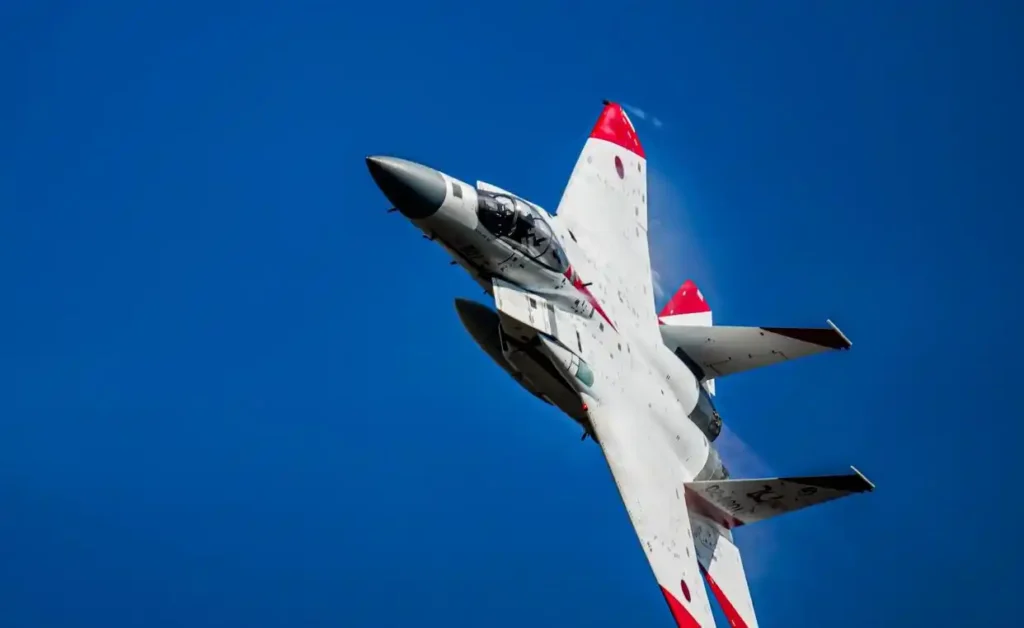
In terms of performance, the F-15J has often been compared to other advanced fighters, such as China’s J-16. While some U.S. media outlets have claimed that the F-15J could potentially outperform the J-16 in certain engagements, a direct comparison reveals that the F-15J lags behind in key areas, including radar performance, engine power, and electronic warfare systems. Furthermore, China’s J-16 fleet is far larger, with over 400 units in service, compared to Japan’s upgraded F-15JSI fleet, which numbers only 98 aircraft.
F-15J and F-35 Collaboration: High-Low Mix Strategy
Japan’s military strategy aims to integrate F-35 stealth fighters with the F-15JSI fleet, creating a high-low mix that balances the advanced capabilities of the F-35 with the greater payload capacity of the F-15JSI. This synergy is intended to offset the F-35’s limited weapons loadout and provide a more versatile air defense solution. However, delays in the F-35 delivery program have posed challenges to this transition.
The Future of the F-15J: Replacement and Strategic Considerations
The Future of the F-15J in Japan’s Air Defense
Looking toward the future, Japan is working on the Global Combat Air Program (GCAP) in collaboration with the United Kingdom and Italy to develop a next-generation sixth-generation fighter. This next-gen fighter is expected to replace older aircraft such as the F-15J and augment Japan’s defense capabilities in the 2030s.
Additionally, Japan is continuing to procure F-35s, with a target of 147 aircraft. These stealth fighters will play a critical role in Japan’s evolving air defense strategy, especially as the threat environment becomes more complex.
Strategic Shift: From Defensive to Offensive
A notable shift in Japan’s defense posture is its increasing emphasis on offensive capabilities. Recent moves, such as the lifting of restrictions on the export of long-range missiles like the JASSM-ER, suggest that Japan’s military strategy is evolving from a purely defensive stance to one focused on preemptive action and force projection. The F-15JSI, with its enhanced missile capabilities and strike capabilities, is well-positioned to play a crucial role in this new strategy.
Conclusion
The F-15J remains an indispensable asset to Japan’s Air Self-Defense Force, despite challenges related to aging airframes and high upgrade costs. Through the F-15JSI upgrade program, Japan has significantly enhanced the fighter’s radar systems, electronic warfare capabilities, and missile range, ensuring that it remains a formidable force in air defense. However, its limitations in terms of engine performance and fleet coverage underscore the need for ongoing modernization efforts.
Looking to the future, Japan’s high-low mix strategy, which pairs the F-15JSI with F-35s, and its development of a sixth-generation fighter, will shape the future of its air defense capabilities. While the F-15J may eventually be replaced by newer aircraft, it will continue to play a pivotal role in Japan’s military strategy for the foreseeable future.