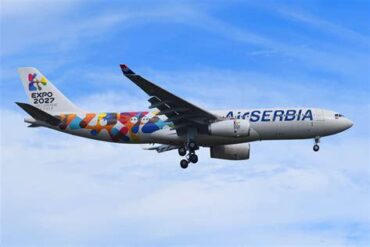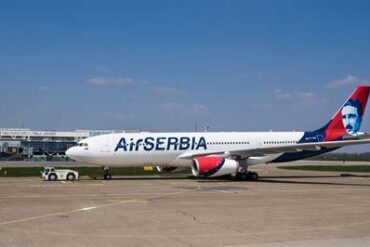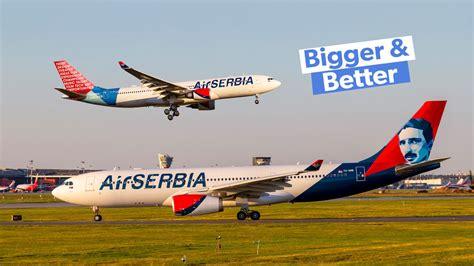
Air Serbia is reshaping the regional aviation landscape in 2025 with a bold expansion of its international routes. In a significant step toward solidifying its position as a regional leader, the airline has extended its connectivity to Greece, Turkey, Egypt, Tunisia, China, and beyond, responding to soaring passenger demand and increased strategic alignment with growing tourism and business sectors. This aggressive expansion has positioned Air Serbia as a central player in southeastern Europe’s air travel ecosystem.
In June 2025 alone, the airline recorded an 8.5% year-over-year increase in passenger numbers, carrying more than 37,000 additional travelers compared to the same month in 2024. The airline’s dynamic approach, combining seasonal charters and regular international routes, is proving to be an effective strategy in attracting both leisure and business travelers.
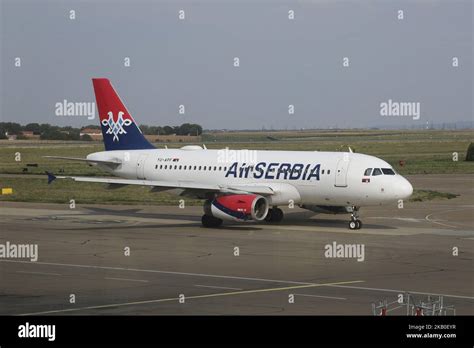
Air Serbia’s Strategic Route Expansion
Air Serbia’s summer 2025 route expansion showcases a calculated strategy to meet diverse travel needs. The airline launched seasonal charter flights to picturesque Greek destinations including Kavala, Skiathos, and Zakynthos, popular with holidaymakers seeking sun-drenched getaways. In Turkey, services to Antalya and Dalaman have been reinforced, while Egypt’s Hurghada and Tunisia’s Monastir round out the North African offerings. These routes cater primarily to vacation traffic, tapping into Europe’s continued demand for Mediterranean resorts.
Simultaneously, Air Serbia has expanded its presence in key business travel corridors, reinforcing connections to China, Switzerland, and Italy. This dual-focus model—balancing leisure and corporate markets—has significantly contributed to its passenger surge. By mid-2025, the airline surpassed 2 million passengers, a 7% increase over the same period in 2024, and is on track to exceed historical annual records.
Belgrade Nikola Tesla Airport: Serbia’s Aviation Powerhouse
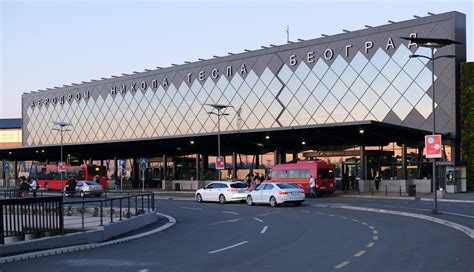
Central to this success is Belgrade Nikola Tesla Airport, the airline’s operational heart. Managed by VINCI Airports, the airport saw passenger traffic rise by 5.3% in 2024, handling over 8.3 million travelers. Its importance extends beyond numbers—it’s the hub where infrastructure upgrades directly enable operational scaling for Air Serbia.
The most notable upgrade is the launch of Pier C, adding 13,600 square meters of terminal space and four new aircraft stands. This expanded capacity is vital for accommodating larger aircraft and handling increased international traffic. As more airlines and passengers converge in Belgrade, Serbia’s capital is rapidly becoming a strategic nexus in Balkan air travel.
Impact on Serbia’s Tourism Boom
The airline’s growth is not occurring in isolation—it’s catalyzing Serbia’s tourism industry, which has emerged as a powerful economic driver. In 2024, foreign tourist arrivals rose by 12%, totaling 2.38 million visitors, while overnight stays jumped by 9.2%. This growth is intrinsically tied to the accessibility provided by Air Serbia’s expanding network.
Tourism accounted for 2.2% of Serbia’s GDP in 2024 and supported over 120,000 jobs, establishing it as a critical pillar of national development. By improving direct air access to and from key source markets, Air Serbia not only fuels inbound tourism but also encourages outbound leisure travel among Serbian citizens, balancing both sides of the passenger flow.
Competitive Landscape: Challenging Regional Rivals
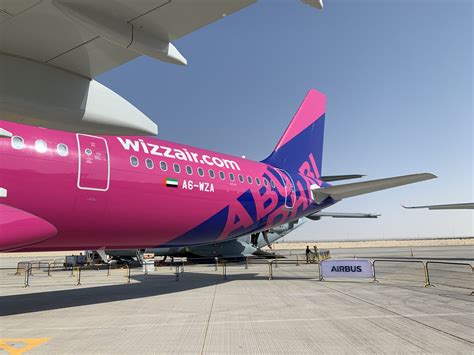
Air Serbia’s performance has stirred activity across the regional aviation market. Air Montenegro has increased its flight frequencies to destinations like Belgrade, aiming to capitalize on rising demand. Meanwhile, low-cost carriers such as Wizz Air and Ryanair are aggressively growing their route networks and seat capacities to maintain relevance and market share.
This dynamic competition benefits consumers. Increased supply of routes and seats translates into competitive pricing, better flight availability, and improved service standards. However, Air Serbia holds a key strategic advantage: its ability to mix charter flexibility with scheduled consistency, appealing to both structured business travelers and spontaneous vacationers.
Looking Ahead: New Routes and Fleet Expansion
In preparation for the autumn and winter travel seasons, Air Serbia has unveiled a new wave of route launches and resumptions. These include:
- Shanghai, marking a deeper re-engagement with the Chinese market,
- Mykonos and Alghero, extending its Mediterranean footprint,
- Tbilisi, strengthening ties with the Caucasus,
- Florence and Geneva, enhancing links to key European cultural and financial centers.
These additions reflect the airline’s broader vision of connectivity, targeting both tourism hotspots and business destinations.
Supporting this growth is the planned expansion of Air Serbia’s fleet, including new Airbus A320s and Embraer jets. These aircraft offer flexibility across various route lengths and demand profiles, allowing Air Serbia to maintain high load factors while adapting to seasonal trends. The fleet modernization strategy not only ensures operational efficiency but also improves environmental performance, an increasingly important factor for travelers and regulators alike.
Reshaping Regional Aviation Dynamics
Air Serbia’s success represents more than individual corporate growth—it symbolizes the reshaping of air connectivity in Southeast Europe. Serbia’s geography, positioned between Western Europe and Asia, gives Air Serbia an inherent strategic advantage. With a solid operational base in Belgrade, a diversified route network, and a robust fleet, the airline is emerging as a gateway between East and West.
The expansion also has diplomatic and economic implications. Enhanced connectivity to China and the Middle East, for instance, strengthens Serbia’s geopolitical positioning, encouraging business ties, investment, and cultural exchange. Meanwhile, increasing European coverage aligns Serbia more closely with EU markets, reinforcing trade and tourism links.
Conclusion: A Blueprint for Regional Leadership
Air Serbia’s 2025 performance is not merely a statistical success story—it is a masterclass in how national carriers can reclaim and redefine their roles in an increasingly competitive global market. Through strategic route planning, infrastructure alignment, and fleet modernization, the airline has positioned itself as a regional leader with global aspirations.
Its expansion into Greece, Turkey, Egypt, Tunisia, and China is not just about tapping new markets; it’s about connecting Serbia to the world with reliability, agility, and intent. The broader implications are clear: as Air Serbia grows, so too does Serbia’s profile as a vital hub in Eurasian travel. With ambitious plans and proven execution, the airline is poised to shape the next era of Balkan aviation.
As the aviation industry continues its post-pandemic transformation, Air Serbia’s trajectory offers an inspiring case of how smart strategy, national ambition, and operational excellence can converge into sustained growth and leadership.