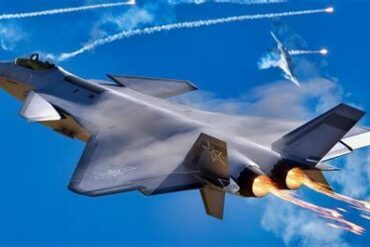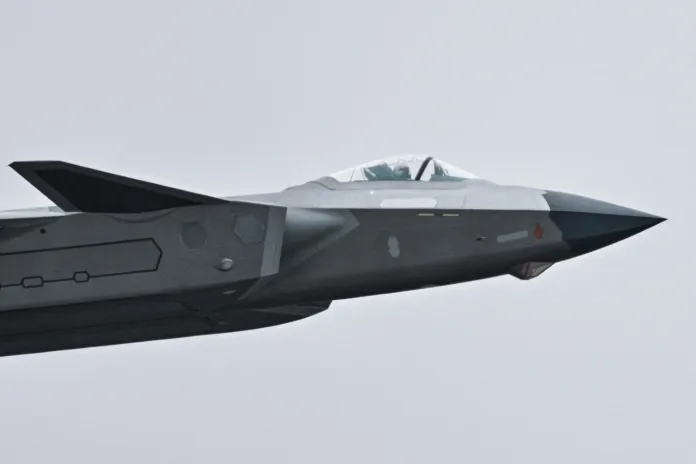
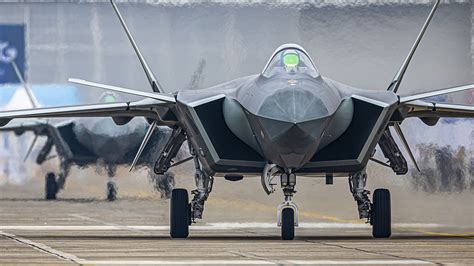
Among escalating tensions in the Taiwan Strait, China’s J-20 stealth fighter has once again taken center stage in what Beijing touts as a demonstration of air superiority. The People’s Liberation Army Air Force (PLAAF) claims that its most advanced fifth-generation warplane flew undetected near Taiwan during the “Justice Mission 2025” military drills. If accurate, this maneuver represents a significant leap in stealth warfare capability, but critics argue it may be a cog in China’s growing information warfare machinery.
The J-20’s Mysterious Flyby: Fact or Fiction?
The PLAAF released video footage during its large-scale exercises encircling Taiwan, prominently featuring the Chengdu J-20 Mighty Dragon flying over terrain allegedly near Taiwan’s Pingtung region. Pro-China commentators were quick to disseminate the footage across social media, pointing out the resemblance of the landscape to Taiwan’s southernmost military hub.
Yet, Taiwanese officials remain unconvinced. Former navy lieutenant commander Lu Li-shih suggested a resemblance between the terrain shown and Pingtung but stopped short of confirming the location. Taiwan’s Ministry of National Defence (MND) has not issued any alerts or confirmations regarding the J-20’s proximity, adding fuel to the speculation that Beijing may be exaggerating its claims.
Strategic Importance of Pingtung
Why Pingtung? The region hosts several critical military facilities, including:
- Pingtung Air Base, the largest in Taiwan by area.
- Jiupeng missile testing base, the island’s epicenter for rocket and missile R&D.
- Dahanshan radar station, a cornerstone of Taiwan’s early warning infrastructure.
Infiltration near this cluster of strategic assets would indeed be provocative, signaling that China could disable key military installations in a real conflict scenario. But the absence of detection alerts raises the question—was the jet really there, or is this a psychological ploy?
Stealth or Storytelling? The Unverifiable Claims
This is not the first time China has suggested that the J-20 flew over or near Taiwan without detection. In early 2023, PLAAF Captain Yang Juncheng claimed to have observed “the entire island” from his cockpit during a mission over the Bashi Channel. More recently, the PLAAF stated that it flew J-20s through the heavily surveilled Tsushima Strait, and neither Japanese nor Taiwanese radars raised alarms.
Taiwanese lawmaker Wang Ting-yu dismissed these claims, alleging that the video was filmed over Guangdong province, whose landscape closely resembles Pingtung’s. This is echoed by skeptics who point to the strategic futility of revealing stealth capabilities during peacetime.
The Stealth Technology Divide
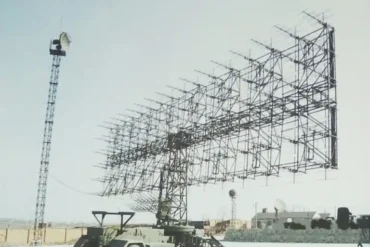
Despite its sophisticated air defenses, Taiwan lacks quantum radar—the next-gen detection system capable of countering stealth aircraft. Instead, its arsenal largely relies on Doppler-based phased array radars such as those in Patriot and Sky Bow systems. These radars are optimized for conventional threats, not low-observable fifth-gen fighters.
Former Taiwanese Air Force Lieutenant General Chang Yen-ting candidly acknowledged that Taiwan’s radar tech is simply not advanced enough to consistently track the J-20. He also warned that even U.S. presence in Taiwan may not be able to completely track the aircraft’s spectral footprint.
The PLAAF’s Tactical Edge
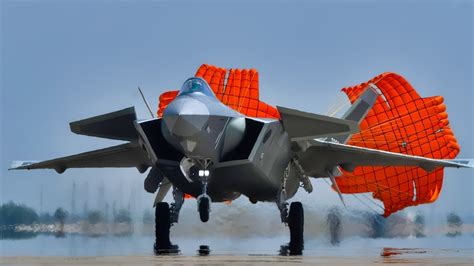
Should the J-20 indeed be capable of penetrating Taiwanese airspace undetected, the implications are stark. The aircraft is outfitted with advanced sensor fusion and data link systems, allowing it to operate as a central node within a broader combat network. This capability, combined with long-range PL-15 missiles, provides the J-20 with the means to:
- Engage beyond visual range (BVR) targets before being seen.
- Suppress enemy air defenses (SEAD) by striking radar and missile installations.
- Neutralize airborne early warning and refueling assets, effectively crippling Taiwan’s defensive posture.
Taiwan’s Tracking Capabilities Are Not Defunct
Taiwanese forces, however, are not entirely in the dark. A Republic of China Air Force (RoCAF) F-16 Viper recently tracked a J-16 fighter jet using the AN/AAQ-33 “Sniper Advanced Calibration Pod.” While this is not equivalent to detecting a J-20, it signals Taiwan’s ability to monitor fourth-generation threats with precision.
Moreover, Taiwan’s strategic alliance with the U.S. ensures a steady pipeline of radar upgrades, EW (Electronic Warfare) capabilities, and possible access to passive radar systems, which may eventually counter stealth aircraft.
Propaganda As Strategy: Beijing’s Psychological Warfare
Military experts interpret Beijing’s J-20 campaign as a classic example of information warfare designed to induce psychological pressure. By amplifying the narrative that Taiwan’s skies are vulnerable, China seeks to:
- Undermine public confidence in Taiwan’s air defense capabilities.
- Influence political discourse ahead of crucial elections.
- Send a deterrent signal to foreign backers, particularly the U.S. and Japan.
The messaging has been particularly amplified on platforms like X (formerly Twitter), where pro-Beijing influencers depict Taiwan as “blind” to the J-20’s movements. This concerted effort underscores China’s sophisticated integration of military operations and cognitive warfare.
Risks of Revealing the Dragon
Despite the claims, some within the PLA caution against exposing the J-20’s capabilities. Former PLA instructor Song Zhongping noted that real stealth operations wouldn’t be publicly flaunted. Revealing flight patterns or electromagnetic signatures could enable adversaries to develop countermeasures faster.
“The J-20 shouldn’t go too close to Taiwan unless truly necessary,” Song stated. “China wants to maintain an edge in electronic warfare secrecy.” This aligns with standard doctrine across stealth-capable militaries, which guard radar signatures as closely held secrets.
Aerial Chess: Future Implications for Air Superiority
The J-20’s potential role in a future conflict cannot be underestimated. With increasing patrols across strategic corridors like the Miyako Strait and Bashi Channel, the jet is likely being field-tested for high-value missions, including:
- Opening salvos in a Taiwan invasion scenario.
- Coordinated attacks on airfields, command centers, and missile batteries.
- Serving as a force multiplier in joint air-sea campaigns involving drones and EW units.
China is also exploring swarming capabilities, wherein the J-20 could operate in tandem with loyal wingman drones and reconnaissance satellites, forming a networked offensive force that exceeds the sum of its parts.
Conclusion: Stealth or Signal?
Whether or not the J-20 actually flew within 10 kilometers of Taiwan without detection remains unconfirmed. However, what’s evident is that Beijing is capitalizing on ambiguity. In modern conflict, perception can be as powerful as reality. By seeding doubt in Taiwan’s ability to maintain aerial sovereignty, China gains a psychological edge—even without firing a single missile.
In the absence of quantum radar or fifth-gen interceptors, Taiwan must urgently upgrade its detection infrastructure and integrate multilayered air defense solutions. The battle for air superiority is no longer confined to the skies—it now stretches across cyber, cognitive, and information domains, where silence can be louder than sound, and invisibility more threatening than presence.
Only time and future confrontations will reveal whether the J-20 is a ghost in the radar or a shadow in Beijing’s information warplaybook.