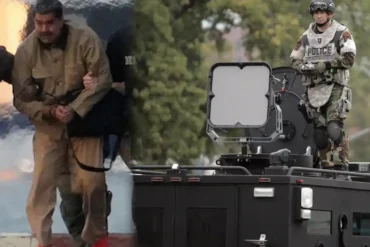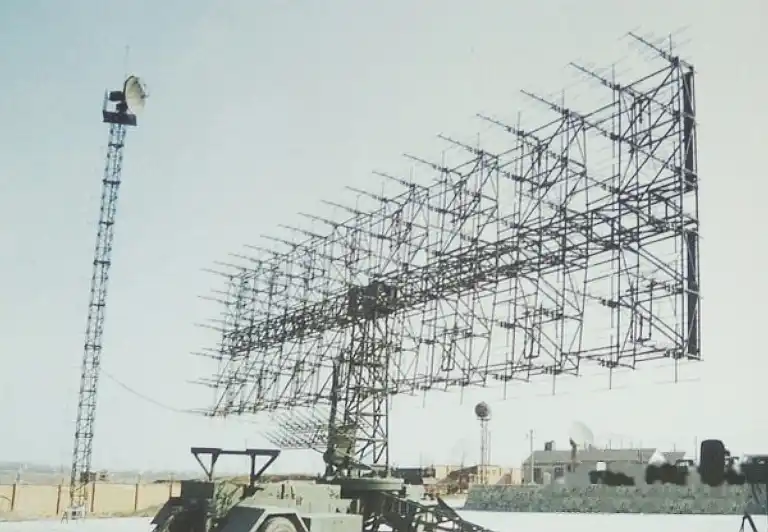
The high-profile capture of Venezuelan President Nicolás Maduro by U.S. forces has raised grave questions about the credibility of China’s touted anti-stealth radar system, the JY-27. In the wake of Operation Absolute Resolve, military analysts and observers are picking apart the events that unfolded over Caracas, where stealth aircraft reportedly operated unimpeded, bypassing what was once considered a formidable integrated air defense system.
The Fall of Caracas: A Systemic Radar Collapse
On January 3, 2026, U.S. forces launched a rapid, coordinated assault that led to the seizure of President Maduro and his inner circle. Despite Venezuela’s investment in multi-layered air defense, including Russian S-300VM systems and Chinese JY-27 radars, the operation unfolded with surgical precision and virtually no resistance.
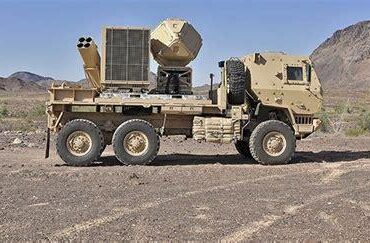
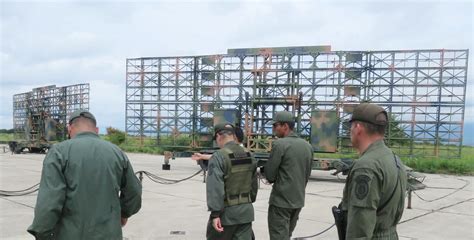
The failure was staggering. Nine units of JY-27 radar systems, designed to expose low-observable aircraft like the F-22 Raptor and F-35 Lightning II, failed to register even a blip. Military analysts immediately noted the radar’s absence from battle, prompting harsh criticism across defense forums and social media.
Understanding the JY-27: Theoretical Power, Practical Shortfalls
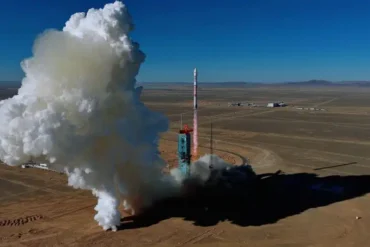
Developed by the China Electronics Technology Group Corporation (CETC), the JY-27 operates in the VHF band, a frequency known for its theoretical capability to detect stealth aircraft. The idea is simple: longer wavelengths interfere with an aircraft’s radar-absorbing design, allowing some resonance that makes detection possible.
China claimed as early as 2016 that its JY-27A variant could detect F-22s at distances beyond 250 kilometers. These bold assertions gave rise to the narrative of a cost-effective stealth deterrent. However, Venezuela’s purchase of these systems—and their subsequent failure—may now shift global perception of Chinese defense exports.
What Went Wrong: EW, Obsolescence & Disconnected Systems
Experts point to electronic warfare (EW) supremacy as a leading reason behind the JY-27’s failure. The U.S. has invested decades into spectrum dominance, and with aircraft like the EA-18G Growler, F-35, and ISR drones, America’s strike capability now includes jamming, spoofing, and cyber-electromagnetic attacks.
One noted PLA analyst, Rick Joe, explained on X:
“The JY-27 imported by Venezuela is a PRC mid-2000s vintage… I’d certainly hope U.S. SEAD/EW of early 2026 would easily outmatch them.”
The radar’s limited angular resolution, combined with a lack of modern AI-enhanced signal fusion and integration into a broader multi-domain IADS (Integrated Air Defense System), rendered it nearly useless in a fast-paced, high-intensity electronic battlespace.
The Growlers and Ghosts: U.S. Stealth Strategy in Action
In the weeks leading to the raid, EA-18G Growlers and F/A-18 Super Hornets were observed conducting probing missions near Venezuelan airspace. These sorties aimed to bait radar systems into action, enabling U.S. forces to build an Electronic Order of Battle by logging emissions and determining vulnerabilities.
Come January 3, Growlers led the jamming assault, suppressing Venezuelan radar arrays while stealth fighters slipped into sovereign airspace unnoticed. These tactics mirror the successful SEAD missions carried out by F-35s during ‘Operation Midnight Hammer’ in Iran just months prior.

Maduro’s Capture: A Masterclass in Covert Planning
The seeds of Operation Absolute Resolve were sown as early as August 2025, when CIA operatives entered Venezuela for covert reconnaissance. These efforts yielded valuable insights into Maduro’s movements, his personal life, and critical military infrastructure.
By October, the U.S. had formed Joint Task Force Southern Spear, focusing on the logistical and tactical elements of the raid. A substantial military build-up in the Caribbean, involving the USS Gerald R. Ford, F-35 squadrons, ISR assets, and drone fleets, followed. Simultaneously, the U.S. engaged in a hybrid pressure campaign: naval blockades, oil tanker seizures, and targeted strikes on alleged drug-trafficking vessels, collectively tightening the noose.
The Illusion of Anti-Stealth: Radar Marketing vs. Battlefield Reality
The JY-27’s abysmal showing in this high-profile mission has dented Beijing’s narrative of technological parity with the West. The system was often marketed as a low-cost answer to U.S. stealth technology. Yet, as seen in Venezuela, the lack of integration, aging hardware, and susceptibility to jamming neutralized its utility.
To contextualize the limitations:
- VHF radars can detect stealth aircraft under ideal conditions but struggle with targeting accuracy.
- Without robust networking, such radars cannot cue surface-to-air missiles fast enough.
- Advanced jamming, like that from Growlers, can blind even modern radars.
- The system’s age (early 2000s design) means it lacks key software-based EW countermeasures.
These shortcomings don’t render the JY-27 entirely useless, but they highlight that anti-stealth radar alone is insufficient without modern battle management systems, encrypted comms, multi-spectrum data fusion, and real-time AI-assisted tracking.
Lessons from Venezuela: A Wake-Up Call for Chinese Export Clients
The failure of the JY-27 in a real-world operation should serve as a cautionary tale for nations investing in standalone radar solutions. China’s defense export strategy often appeals to countries under Western sanctions or those seeking budget-friendly alternatives to NATO equipment. However, this event could spark reevaluations.
Nations like Iran, Pakistan, and Algeria, which also maintain Chinese radars in their IADS, will likely audit the role and integration of such systems. Without modernization and real-time operational drills involving simulated EW attacks, the promise of counter-stealth capability may remain largely theoretical.
The Electronic Future of Warfare: Integration Over Isolation
Modern air warfare no longer hinges on raw firepower or radar range. Success lies in the marriage of stealth, jamming, cyber ops, and signal warfare. This makes any radar, no matter how advanced, vulnerable unless it exists within a broader, dynamic, and AI-supported kill chain.
The U.S. operation showcased just how obsolete legacy platforms become in the face of coordinated, multi-domain strikes. The radar did not fail solely because of its Chinese origin—but because it was poorly maintained, poorly integrated, and up against the world’s best EW ecosystem.

Final Thoughts: Propaganda vs. Performance
The raid on Caracas will likely be remembered as a watershed moment in the evolution of air defense perception. For the U.S., it was a demonstration of electronic superiority and special forces precision. For China, it is an embarrassing spotlight on the performance gap between advertised capabilities and operational realities.
What was sold as a “stealth hunter” radar failed not because stealth was invisible, but because stealth was smarter, faster, and better supported. In the electronic battlefield of 2026, resilience and real-time adaptation now define effectiveness—not brochures or range charts.
If China’s military export ambitions are to survive the fallout of Venezuela’s radar debacle, a fundamental shift toward integration, modernization, and transparency must follow.