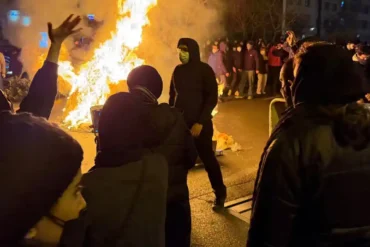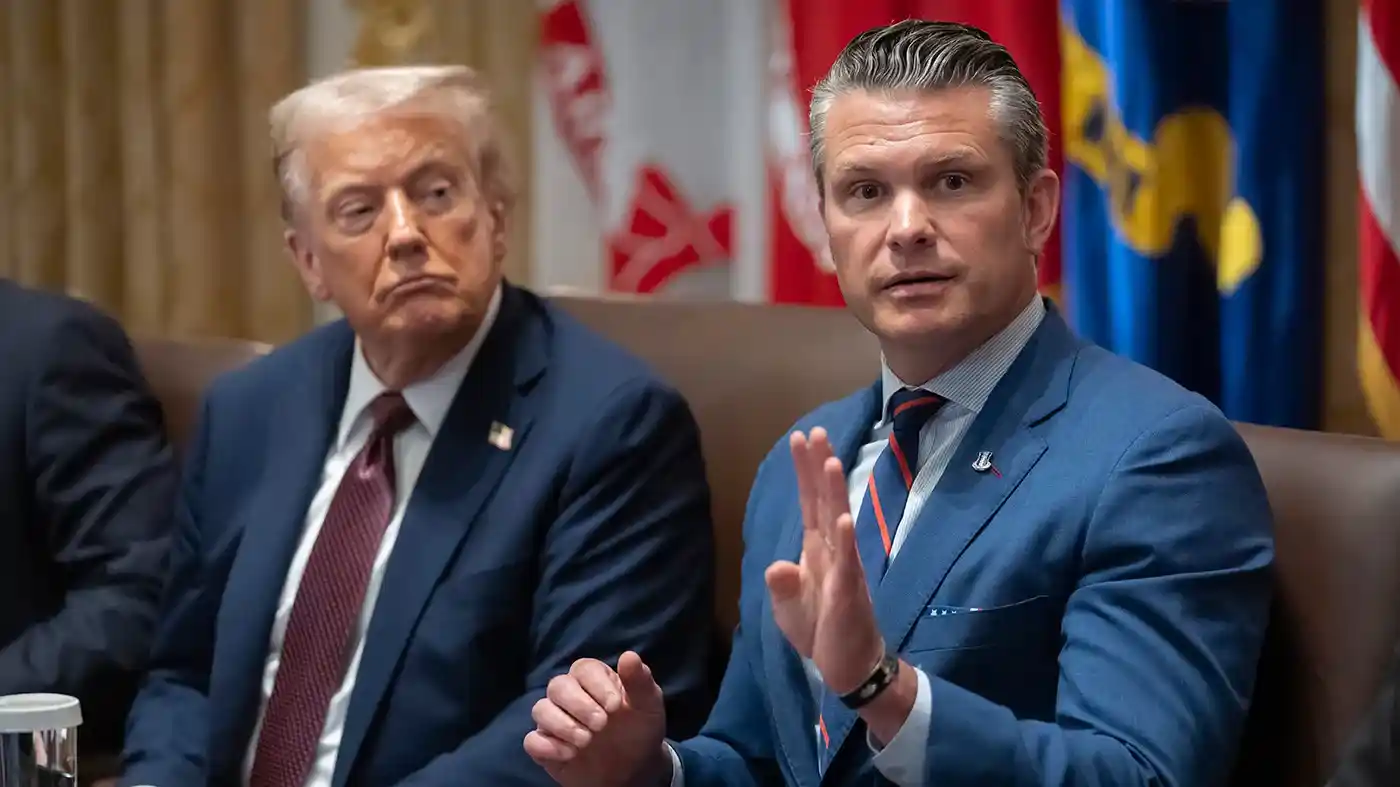
The stunning U.S. military operation in Venezuela, culminating in the capture of President Nicolás Maduro, marks a critical escalation in President Donald Trump’s foreign policy. More than just a surgical geopolitical strike, this action signals the revival of aggressive U.S. interventionism across Latin America and an open challenge to the BRICS alliance and the Global South’s sovereignty.
The Spectacle in Caracas: A Show of Force
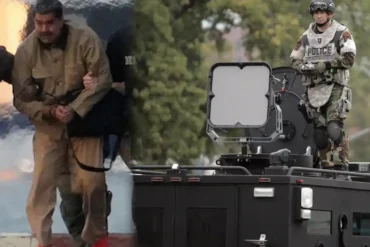
Within just 24 hours, the U.S. executed a raid in Caracas that stunned the world. Maduro and his wife were detained in what Trump has described as a necessary step to restore “stability and energy security” in the Western Hemisphere. But beneath this narrative lies a more aggressive strategy. Venezuela, a country long pushing for full BRICS membership, had increasingly aligned itself with China and Russia, conducting oil trade in non-dollar currencies such as the Yuan. The timing and execution of the raid is more than coincidental—it is a direct affront to BRICS’ influence.
A New Doctrine: From Monroe to ‘Donroe’
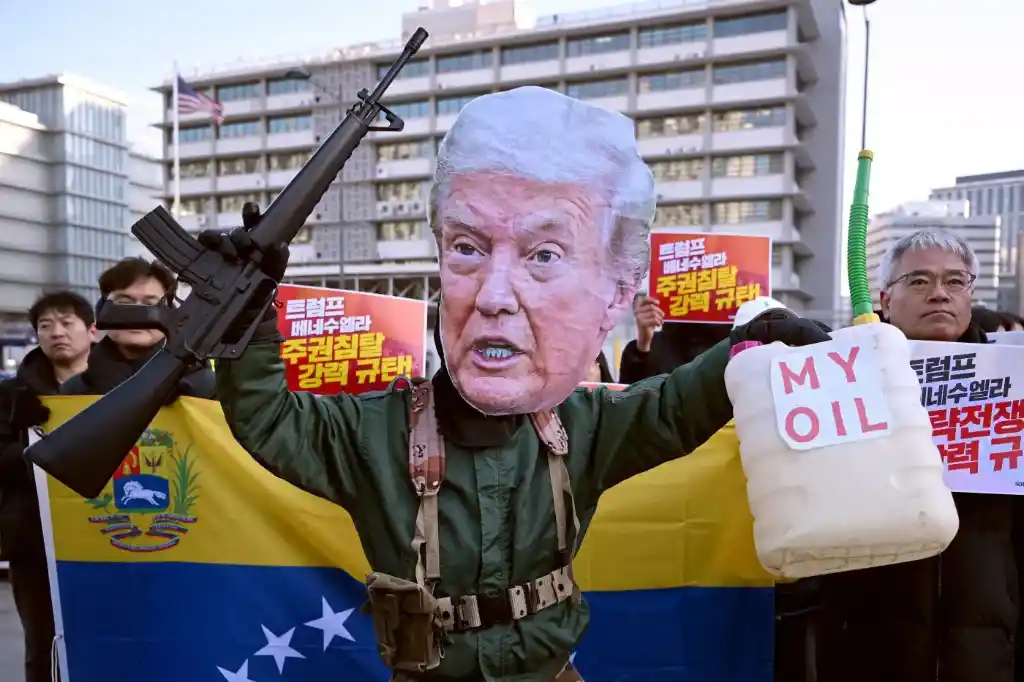
Trump’s post-raid rhetoric draws a straight line from history’s Monroe Doctrine to his self-proclaimed Donroe Doctrine—a modern reinterpretation laced with ultra-nationalism. The Monroe Doctrine, articulated in 1823, rejected European influence in the Americas. Trump’s updated version does the same but now targets non-Hemispheric competitors like China, Russia, and Iran. According to the U.S. National Security Strategy released in December 2025, American dominance in the region must be restored and reinforced.
In his words, “We’ve superseded it by a lot, by a real lot.” Trump’s message is not subtle—Latin America is once again U.S. turf, and any attempt by BRICS or other powers to intervene will be treated as an act of hostility.
Colombia, Cuba, and Greenland: The Next Targets?
Following the raid, Trump’s rhetoric turned ominously global. On Air Force One, he stated that Colombia and Venezuela were “very sick,” accusing Colombian President Gustavo Petro of manufacturing and exporting cocaine. His tone was menacing:
“Sounds good to me,” he said when asked about a possible U.S. operation against Colombia.
On Cuba, Trump described the nation as “ready to fall” following the collapse of Venezuelan oil support. He and Secretary of State Marco Rubio warned of imminent consequences. Even Greenland, a Danish territory, wasn’t spared. Trump renewed his calls for American acquisition, citing strategic threats from Russian and Chinese presence.
Trump’s justifications are multifaceted—national security, drug interdiction, economic interests—but the underlying intent is unmistakable: to reclaim geopolitical control over what he calls America’s backyard.
Crushing BRICS: The Silent Battlefront
While Trump has not overtly named BRICS in his aggressive posturing, the implications are glaring. Venezuela’s move toward BRICS membership and its defiance of dollar hegemony likely sealed Maduro’s fate. The raid sends a chilling message to the rest of the BRICS nations—defiance has consequences.
Yet BRICS finds itself hamstrung. The bloc is not a military alliance. Its power lies in economic cooperation, diplomatic engagement, and institutional influence. In this new climate of unilateral aggression, BRICS’ reliance on multilateralism appears alarmingly outdated. The group has yet to issue a unified statement condemning U.S. actions in Venezuela—a silence that speaks volumes.
Strategic Weaknesses in the BRICS Framework
The BRICS bloc—Brazil, Russia, India, China, South Africa—has always been a fragile coalition. National interests often diverge, particularly between India and China, whose geopolitical rivalry undermines cohesion. While these countries share an ambition to challenge Western hegemony, they lack the military integration and collective defense mechanisms of an alliance like NATO.
Moreover, Trump’s policies are systematically undermining BRICS economies:
- Russia: Sanctioned to the brink over Ukraine.
- China: Facing a 47.5% tariff.
- India and Brazil: Slapped with 50% tariffs.
- South Africa: Hit with 30% tariffs and aid suspensions over alleged “White Genocide.”
These economic chokeholds are more than protectionist moves—they’re weapons of attrition. Trump is weakening BRICS not through war but through financial asphyxiation.
Latin America as the Battleground
Trump’s regional focus aligns with a broader ideological goal: the promotion of right-wing regimes and suppression of left-wing populism across Latin America. His pardoning of ex-Honduran President Juan Orlando Hernandez, accused of drug trafficking, is telling. He has voiced support for Argentina’s Javier Milei, and clashed repeatedly with Colombia’s Petro and Brazilian judiciary officials critical of Jair Bolsonaro.
“We want to surround ourselves with good neighbors, we want to surround ourselves with stability,” Trump declared.
In practice, this means eliminating any government not aligned with U.S. commercial and strategic interests. The Donroe Doctrine isn’t about defense—it’s about domination.
The Global South’s Disillusionment
The Global South, for decades burdened by the structural inequalities of international order, had looked to BRICS for representation and reform. Venezuela’s fall, however, lays bare the limits of this dream. Trump’s militarized assertion of power has gone largely uncontested. International law is being rewritten through force, and sovereignty has become a conditional privilege.
This new world order brings questions of security, autonomy, and survival to the forefront. Can countries like Mexico, Peru, Nicaragua, or even Panama remain untouched? The Western Hemisphere, once a realm of rhetorical Cold War battles, is again becoming a hotbed of real conflict—only now, the enemy is internal dissent.
Monroe Doctrine Rebranded: Legalizing Imperialism
Experts note that Trump’s invocations of the Monroe Doctrine mimic historical abuses of the policy. Historian Gretchen Murphy compares this revival to Teddy Roosevelt’s corollary, which justified U.S. interventionism to police the Americas. Trump’s interpretation does not even pretend to be neutral—it is imperialist in intent and execution.
“He’s jumping on a familiar pattern—citing the Monroe Doctrine to justify interventions that undermine real democracy,” said Murphy.
The Donroe Doctrine may be an invention of Trumpian bravado, but its implications are deadly serious. If it goes unchallenged, it becomes a precedent, and precedents become policy.
A World Redrawn in Real Time
The international community now faces a stark choice: accept Trump’s version of international order or construct an effective counterweight. For BRICS, this means reevaluating its foundational premise. Relying on institutional diplomacy in the face of armed interventionism is not just naïve—it’s a gamble with national sovereignty.
Can BRICS evolve into a more robust strategic alliance? Can China and India set aside border disputes in favor of hemispheric solidarity? Can Brazil, under Lula, reclaim regional leadership? Without answers to these questions, the alliance risks irrelevance.
Conclusion: A Global Crossroads
The U.S. raid on Venezuela under Trump’s leadership marks the beginning of a new imperial arc. The Global South, long shackled by economic and political dependencies, now faces a direct military threat. Meanwhile, BRICS, once the emblem of a multipolar future, is being tested like never before.
The question is not just who’s next on Trump’s list—it is whether the world will allow a return to an era where might makes right, and international law is dictated by presidential fiat.
For now, Trump is winning, not only with firepower but with narrative control. Unless countered, the Donroe Doctrine may soon become the dominant philosophy of global governance, reshaping borders, alliances, and futures.