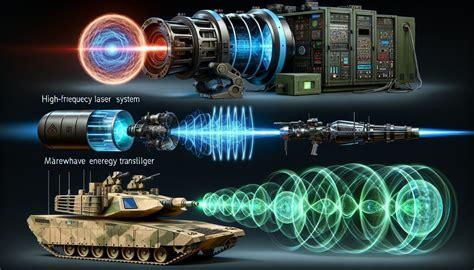
The United States’ lightning-fast operation in Venezuela did not merely remove a head of state under the cover of darkness. It signaled something far more consequential: the operational debut of AI-driven warfare, Directed Energy Weapons (DEW), and sonic disruption systems at the very core of a coordinated military campaign. If the official hints and technical disclosures are interpreted together, this was not just a raid. It was a demonstration of a new battlespace architecture—one in which electrons, algorithms, and invisible energy beams take precedence over traditional explosives.
For decades, military strategists speculated about “non-kinetic dominance.” In January’s Venezuela operation, that abstract concept appears to have materialized into reality. Power grids collapsed without bombs. Air defenses failed without missile strikes. Elite guards were incapacitated without conventional gunfire. The implications stretch far beyond Caracas.
The Three-Hour Operation That Rewrote Modern Warfare
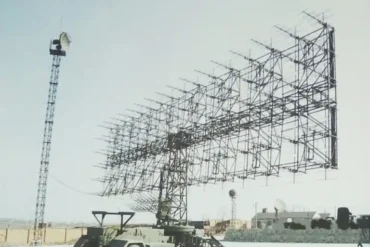
The mission reportedly lasted less than three hours. Yet its geopolitical aftershocks may echo for generations. Venezuela possessed a layered and formidable air defense umbrella, including Russian S-300 systems, Buk-M2E, Pantsir-S1, S-125 Pechora, Igla-S MANPADS, and Chinese platforms such as HQ-9, JYL-1, and the JY-27A anti-stealth radar. On paper, penetrating such a network should have required extensive suppression of enemy air defenses (SEAD) using kinetic strikes.
Instead, U.S. aircraft entered, executed their objective, and exited without reported casualties.
The phrase used by officials—“layering different effects”—is revealing. U.S. Cyber Command, Space Command, and combatant forces allegedly coordinated in real time. That suggests a synchronized orchestration of cyber intrusions, electromagnetic interference, AI-powered battlefield analysis, and possibly high-powered microwave deployment.
The Venezuelan grid failure at precisely 2:00 AM, followed by helicopter insertion at 2:01 AM, underscores extraordinary synchronization between digital sabotage and physical maneuver. Such timing implies pre-positioned access inside Venezuela’s infrastructure—likely through compromised supply chains, maintenance channels, or embedded malware activated at a predetermined moment.
Caracas did not fall silent because of bombs. It went dark because its nervous system was digitally severed.
AI as the Invisible Commander
Artificial Intelligence was not merely a support tool in this operation; it appears to have functioned as a decision-accelerator across domains. Reports indicate that Anthropic’s Claude AI model was utilized during planning and execution phases.
Historically, AI assisted logistics in the 1991 Gulf War and aided target identification in later conflicts. However, this operation may represent the first instance where an entire mission architecture was built around AI-enhanced command integration. That distinction matters.
AI excels in pattern recognition, predictive modeling, and real-time threat prioritization. In a dense urban environment like Caracas—filled with radar signatures, communication signals, troop movements, and electronic noise—human cognition alone cannot process the data stream quickly enough. AI systems can simulate multiple operational branches within seconds, identify optimal ingress routes, and calculate probability-weighted outcomes for enemy responses.
If AI determined when the grid would fail, when helicopters would launch, and when electromagnetic disruption would peak, then warfare has entered a new cognitive phase. Humans become overseers; algorithms shape tempo.
Directed Energy Weapons: The Silent Disabler
Testimonies describing intense pressure, piercing sounds, nosebleeds, disorientation, and incapacitation align with documented effects of pulsed microwave or directed energy exposure.
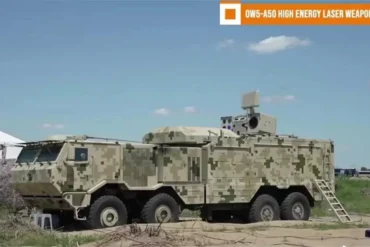
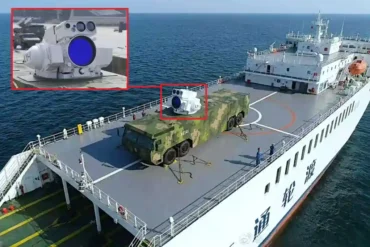
Directed Energy Weapons operate by focusing electromagnetic energy—often in microwave or laser frequency bands—onto a target. Unlike kinetic munitions, DEWs do not explode. They disrupt.
High-powered microwaves can fry circuits, overload electronics, and disable command systems without visible destruction. At certain intensities, they may also interact with biological tissue, producing neurological symptoms consistent with reports from Havana Syndrome investigations.
The 2020 National Academies report identified pulsed electromagnetic energy as a plausible cause for symptoms such as vestibular disruption, cognitive dysfunction, and cranial pressure sensations. The parallels to descriptions from Venezuelan guards are striking.
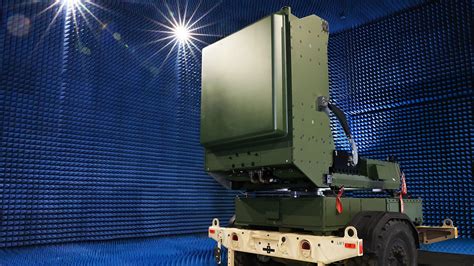
Programs such as CHAMP (Counter-electronics High Power Microwave Advanced Missile Project) and HIJENKS (High-Powered Joint Electromagnetic Non-Kinetic Strike) demonstrate that the U.S. military has invested heavily in these capabilities. CHAMP simulations previously depicted city-wide blackouts via targeted microwave bursts. HIJENKS testing confirmed non-kinetic disabling of electronics.
The phrase allegedly used—“They pressed buttons, and nothing worked”—is precisely the outcome high-powered microwave weapons are designed to achieve.
Sonic Weapons and Neurological Shock
Sonic and acoustic systems have long been used in crowd control under the category of Long Range Acoustic Devices (LRAD). However, advanced pulsed-energy systems operate beyond simple sound projection. They can induce localized pressure waves and sensory overload.
The description of sudden cranial pain, bleeding, and collapse suggests exposure to either focused acoustic shock or electromagnetic interference affecting neural processing. While conclusive proof remains absent, such symptoms align with documented research into microwave auditory effects—where electromagnetic waves create perceived sound within the human skull by inducing rapid thermal expansion in brain tissue.
This is not science fiction. It is physics.
If confirmed, the Venezuela operation marks the first widely acknowledged combat use of integrated sonic-energy incapacitation at scale. That would represent a paradigm shift from lethal firepower to temporary—or permanent—neurological neutralization.
Cyber Warfare: The Trigger That Turned Off a Capital
Power grids are often perceived as isolated from the internet. Yet modern infrastructure relies on programmable logic controllers (PLCs), firmware updates, and supply-chain components that create hidden digital dependencies.
Embedding malware months in advance would allow a synchronized shutdown triggered remotely or automatically. The fact that southern Caracas lost power at the exact moment needed indicates premeditated cyber infiltration.

The ability to collapse urban infrastructure without kinetic bombing avoids immediate civilian casualties while achieving strategic paralysis. It is politically deniable, technologically precise, and operationally devastating.
The Global Directed Energy Arms Race
The global market for directed energy weapons is projected to surge from $7.1 billion in 2024 to $32.5 billion by 2033. Such growth forecasts are not speculative fantasy—they reflect intensifying investment by major powers including the United States, China, and Russia.
Once one state demonstrates battlefield efficacy, others accelerate replication. The Venezuela operation, if interpreted as a successful proof of concept, will likely catalyze procurement, research funding, and rapid deployment elsewhere.
Energy-based weapons offer advantages that traditional munitions cannot match:
- Near-instantaneous engagement speed
- Minimal collateral structural damage
- Lower logistical burden compared to missile stockpiles
- Plausible deniability in gray-zone operations
The shift from explosive destruction to electromagnetic dominance mirrors earlier revolutions in gunpowder and nuclear physics.
Iran: The Strategic Question
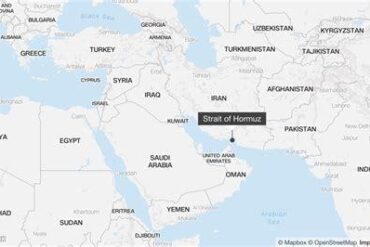
With Venezuela behind it, speculation turns toward Iran. Tehran fields sophisticated Russian air defense systems, hardened facilities, and asymmetric drone capabilities. A direct kinetic strike risks regional escalation.
However, a campaign centered on AI-enabled targeting, electromagnetic grid disruption, and directed energy suppression could theoretically neutralize defenses without triggering full-scale conventional war.
The feasibility depends on several variables: cyber access depth, satellite positioning, electromagnetic range limitations, and escalation thresholds. Unlike Venezuela, Iran’s infrastructure and counterintelligence posture are more robust. Retaliatory cyber capability is also significant.
Yet the psychological dimension cannot be ignored. Demonstrating that advanced air defenses can be silently disabled undermines deterrence credibility. If radar screens go dark without warning, traditional military doctrine loses its anchor.
The Transformation of Warfare Doctrine
This operation suggests a doctrinal pivot from destruction to disablement. The objective was not to flatten Caracas or annihilate Venezuelan forces. It was to neutralize, extract, and exit.
That is precision dominance.
Wars may increasingly resemble complex system hacks rather than trench battles. Satellites feed AI models. AI coordinates drones. Drones deploy microwaves. Microwaves collapse electronics. Cyber tools darken cities. Helicopters insert and withdraw before defenders regain equilibrium.
It is warfare as choreography rather than attrition.
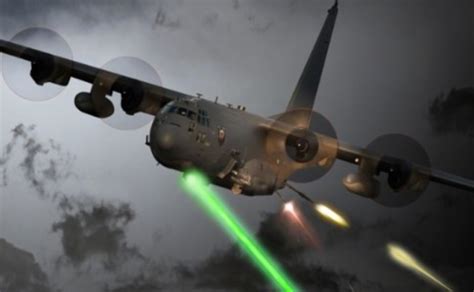
The integration of space assets, cyber commands, and electromagnetic strike platforms into a unified kill chain—or disable chain—creates a multidimensional battlefield invisible to civilians watching from the ground.
Ethical and Strategic Implications
Directed energy and AI weapons blur lines between lethal and non-lethal force. If a microwave beam incapacitates without visible injury but causes lasting neurological damage, is it humane? If AI autonomously prioritizes targets, who bears accountability for errors?
The opacity of such systems complicates international law. Unlike ballistic missiles, energy beams leave minimal forensic evidence. Attribution becomes difficult. Escalation becomes ambiguous.
Furthermore, the democratization of AI tools raises proliferation risks. Non-state actors could theoretically adapt commercial AI for targeting, while smaller nations invest in electromagnetic disruption as a cost-effective counter to superior air forces.
The arms race may not be measured in missiles, but in algorithms and gigawatts.
Conclusion: The Dawn of the Electromagnetic Battlefield
The Venezuela raid may represent the public unveiling of a strategic revolution long incubating within classified research labs. Artificial Intelligence, Directed Energy Weapons, and Sonic Systems have transitioned from experimental curiosities to operational pillars.
If replicated against Iran or elsewhere, the world may witness a transformation in how power is projected and resisted. Cities could fall silent without explosions. Defenses could fail without impact craters. Combatants could collapse without bullet wounds.
This is the electromagnetic battlefield—where wars are fought at the speed of light, guided by code, and decided by whoever masters invisible energy first.
History rarely announces its turning points in advance. Sometimes, it simply flicks off the lights.