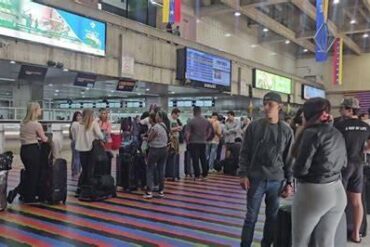
American Airlines is preparing for a potential return to Venezuela, positioning itself to become the first US carrier to restart nonstop service to the country since flights were suspended in 2019. The move follows recent US military action and Washington’s decision to reopen commercial access to Venezuelan airspace, a shift that has immediately reignited interest among airlines, businesses, and diaspora travelers watching the market closely.
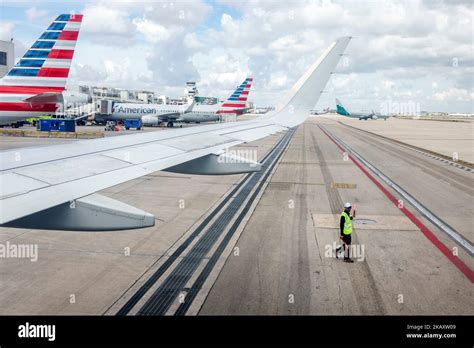
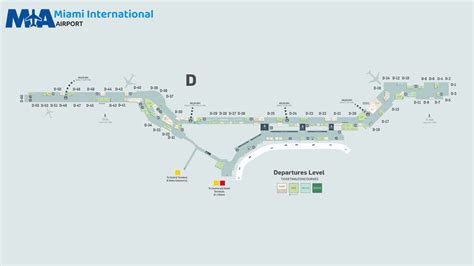
For American Airlines, the strategy is direct and unapologetically opportunistic. The carrier has confirmed it is ready to launch daily nonstop flights between the United States and Venezuela once it receives formal government authorization and completes comprehensive security assessments. This is not a symbolic gesture. It is a calculated attempt to reclaim a market where American once dominated, reconnecting a route network that historically fed significant traffic through Miami International Airport, its most powerful Latin American gateway.
The airline’s leadership has been explicit that nothing will move forward without regulatory approval. Coordination with federal authorities, aviation regulators, labor partners, and frontline operational teams remains ongoing. That caution reflects the reality that Venezuela’s reopening is unfolding under intense scrutiny, with safety and stability still central to every decision.
American’s relationship with Venezuela stretches back decades. The airline first entered the market in 1987 and, before suspending operations in 2019, had grown into the largest US airline serving the country. Flights connected Caracas and Maracaibo directly with Miami, creating vital links for business travelers, visiting friends and relatives traffic, and high-yield cargo. Walking away was not a commercial choice; it was a necessity driven by security concerns and deteriorating political conditions.
Industry analysts now view the potential return as a test case for how quickly US aviation can re-engage with Venezuela. No launch date has been announced, and FAA evaluations will ultimately shape the timeline. Current expectations suggest that service could resume within months if airspace guidance and security reviews align. American has made clear it intends to serve a broad mix of business, leisure, and humanitarian travel, restoring connectivity that has been absent for nearly six years.
Latin America remains American Airlines’ strongest regional theater. While competitors may outmaneuver it in domestic or transatlantic markets, American’s north–south network is built on scale, frequency, and connectivity. Miami acts as a funnel, pulling passengers from across the United States and redistributing them efficiently to the Caribbean and Latin America. Venezuela fits neatly into that architecture, offering dense demand patterns that favor hub-based carriers with deep local knowledge.
From a commercial perspective, Venezuela brings a familiar blend of traffic types. Corporate travel linked to energy, logistics, and reconstruction could rebound quickly. Diaspora demand remains structurally strong, driven by family ties and limited alternatives. Cargo, especially belly freight on passenger aircraft, adds another layer of revenue that can stabilize route economics in volatile markets. American understands this balance well, having refined it across dozens of Latin American destinations.
Being first carries tangible advantages. Early entrants often lock in corporate contracts, rebuild brand loyalty, and secure the most favorable departure and arrival slots. Schedules can be designed to optimize hub connectivity rather than reacting to competitors’ moves. American’s willingness to step forward now signals confidence in its operational playbook, even as it publicly frames the decision as conditional and data-driven.
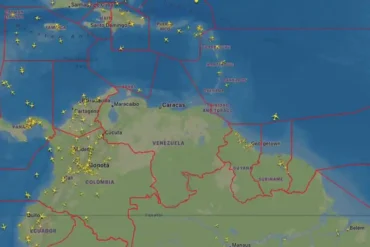
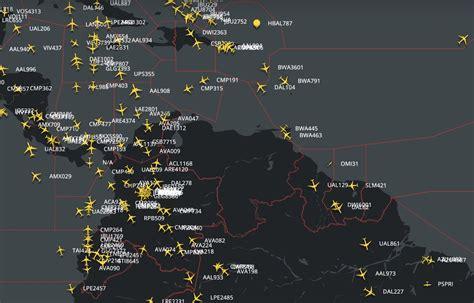
The broader context, however, remains fluid. American’s potential return comes just weeks after a US military operation removed President Nicolás Maduro and triggered Washington’s decision to reopen Venezuelan airspace. That reopening is not a blanket clearance. The FAA must still assess conditions on the ground and in the sky before US airlines can resume routine service. Military activity, GPS interference, and regional instability all remain credible risks to commercial operations.
On the ground, risk perception continues to shape traveler behavior. The US State Department’s do-not-travel advisory for Venezuela remains in place, citing concerns ranging from wrongful detention to kidnapping. For airlines, these warnings translate into higher insurance costs, stricter crew protocols, and more complex operational planning. American’s emphasis on security assessments reflects an understanding that reputational damage from a misstep would far outweigh short-term gains.
Still, aviation history suggests that airlines often move ahead of sentiment when they see structural demand. Reopening air links can become a catalyst rather than a consequence of normalization. For Venezuela, the return of a major US carrier would signal a tentative re-entry into global aviation networks. For American Airlines, it would reaffirm its identity as the dominant bridge between the United States and Latin America.
This is not a promise of imminent flights, but it is a clear declaration of intent. American Airlines has laid out its conditions, aligned its stakeholders, and positioned its aircraft and crews for a rapid restart if approvals arrive. In a region where timing matters as much as scale, that readiness may prove decisive, reshaping US–Venezuela air travel sooner than many expect.